Category Archives: trees

Another tree I have known.

November 2015

This morning I got out into the fresh fresh, rain washed air, still damp and loaded with nourishment from a mysterious and secret recipe, and I walked to and along the creek, and heard an unfamiliar and curious bird song. I wasn’t prepared for that, not having my phone and its Merlin bird app with me — I was trying to be a little bit un-modern.

I heard several bird songs, as it turned out, and saw a flurry of tiny birds on the paved path, scurrying under the privets. There was to be no sunshine today, but I still felt the pull of the reality, “Light of Light, True God of True God,” my own Source of Life.

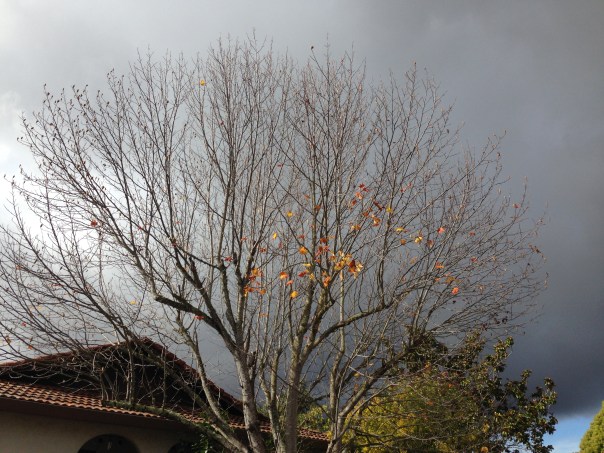
I looked forward to a lunch date in a short while, so I couldn’t explore as long as I’d have liked; I turned back, along my usual route, past the pineapple guava that I have known and noticed for as long as I can remember. Many huge fruits were on the ground, much larger than anything mine ever produces… probably because it gets full sun all day long. I bent over to pick up one that hadn’t been bruised, but it was hard. Odd, that it hadn’t ripened….  and then I saw, a few feet away, the horror: the whole tree had been hacked to the ground, and I became aware of a large empty space above me.

Construction workers — or was it a demolition crew? — were in the driveway of the property on which the tree had lived, modestly, on the very corner of the lot, where it was not in the way of anything. Maybe a new owner was starting Something New. There the Modern attitude hit me where it had hit the feijoa, the idea we have of thinking that the best way is, Cut it all down and start over.

I looked through my old posts just now for a picture of that tall bush. I had mentioned it several times, but never took its picture. The owner of the property did not live in the house on that property, I learned that much some years ago. I also know that he never appreciated the guava for what it was; he always pruned it at exactly the wrong time, so that it rarely had a chance to show how many fruits all that sunshine could have sweetened to lusciousness.

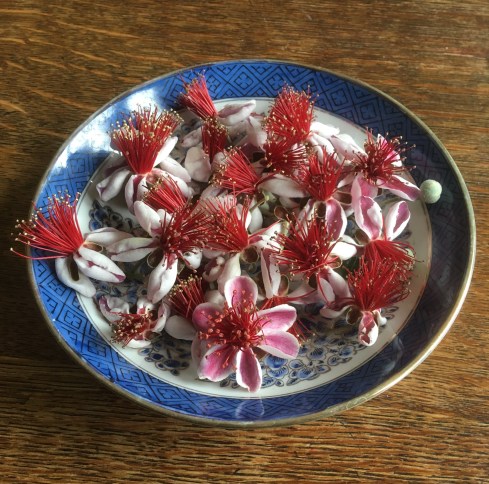
I did love that tree. A few times I gathered a few of its fruits off the ground, and once my grandson and I picked its blooms to take home and add to our breakfast. I wonder if anyone else in the neighborhood will notice its absence?
Eat a picnic, kick a puffball.

We all drove to the closest Giant Sequoia Redwood grove for a picnic among those mighty trees.

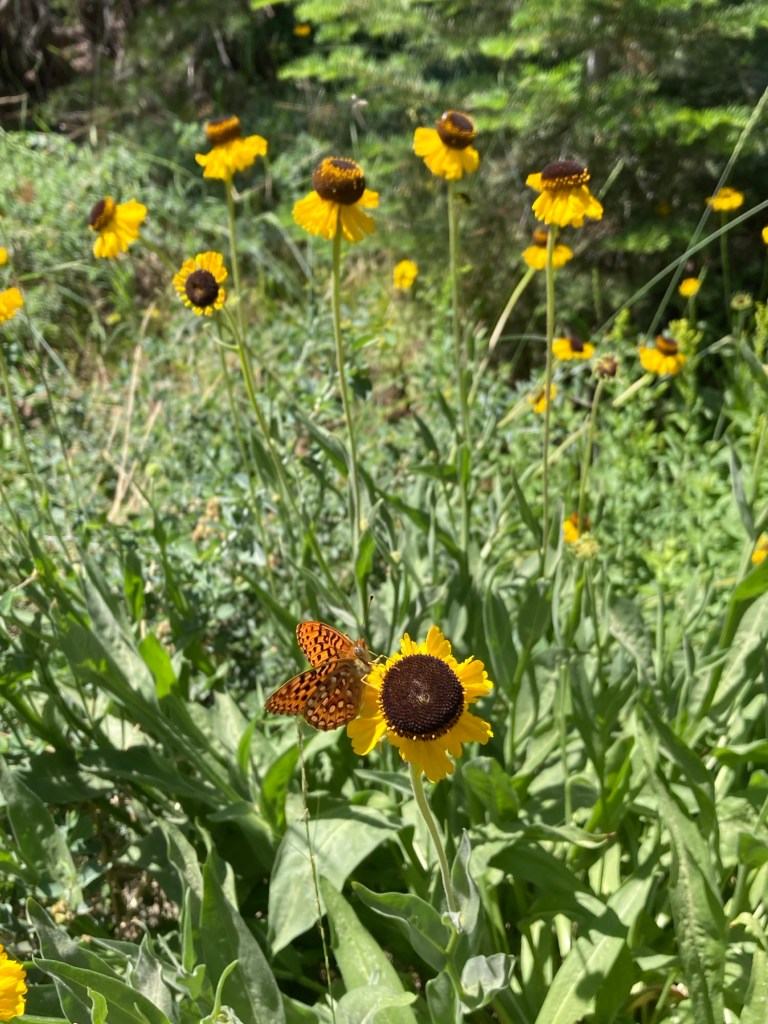
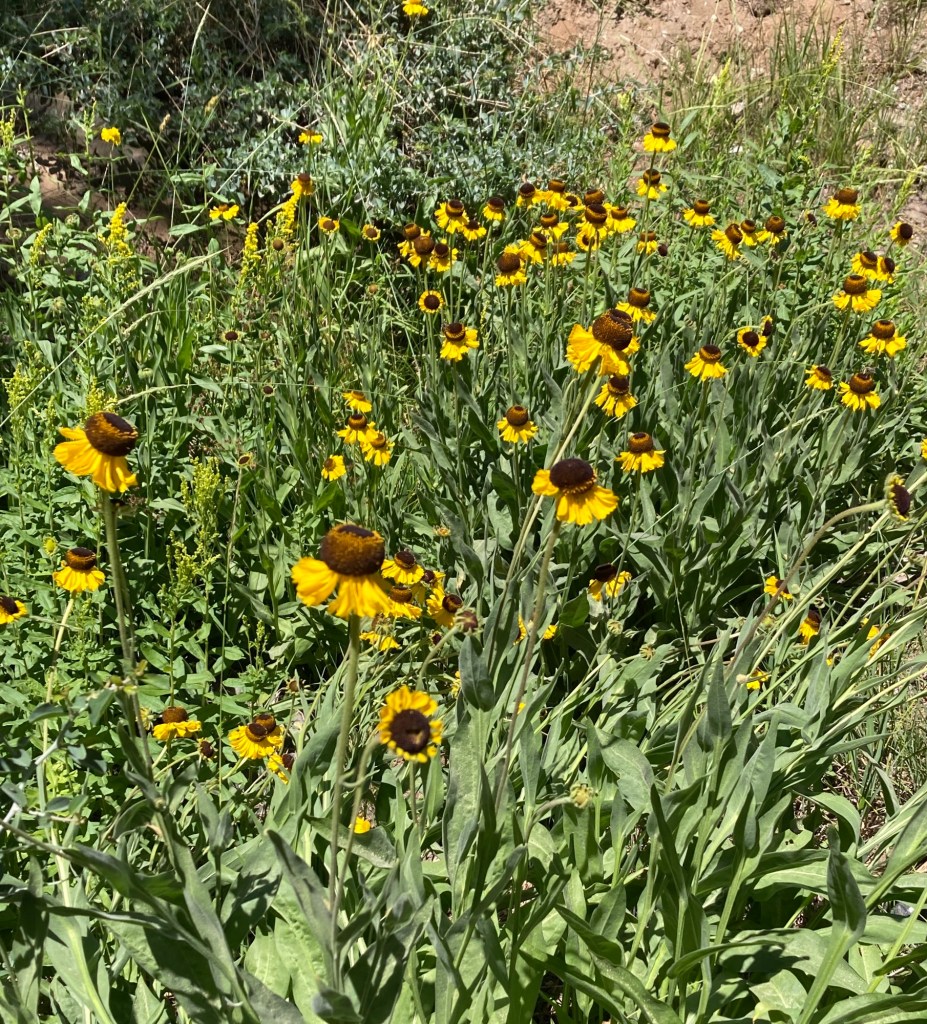
Bigelow’s Sneezeweed

On the way, I showed the family the place where my favorite patch of Sneezeweed can always be found, though I’m rarely able to see them at the peak of bloom as they are right now.

In the redwood grove as well, more flowers were in bloom midsummer than in September when I often come.

Western Azalea

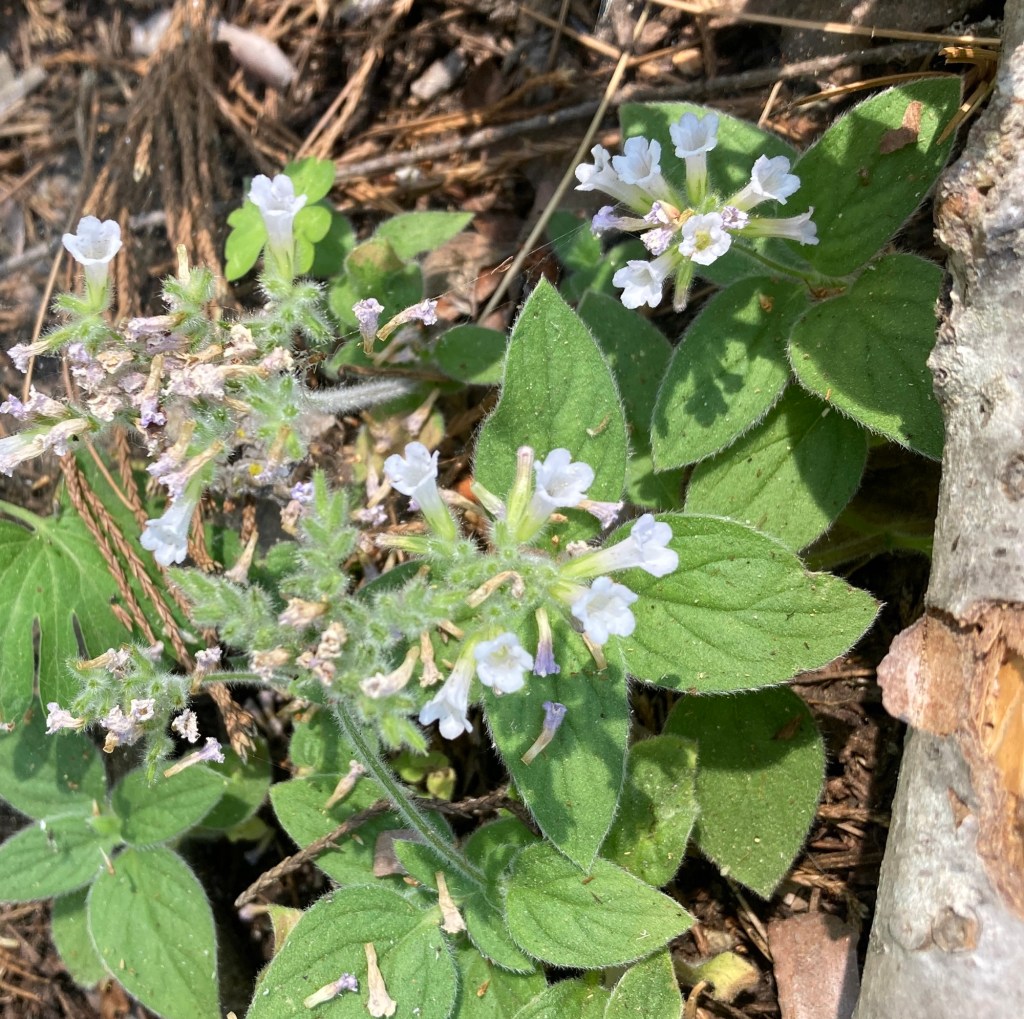
Most, like the wintergreen and Violet Draperia, were past their prime, but I was still excited to encounter the plants at this stage when they are saying in color, “Look here!”

Violet Draperia

If I would ever make it up in June, I might see the dogwoods when they are beginning to bloom —

Pacific Dogwood

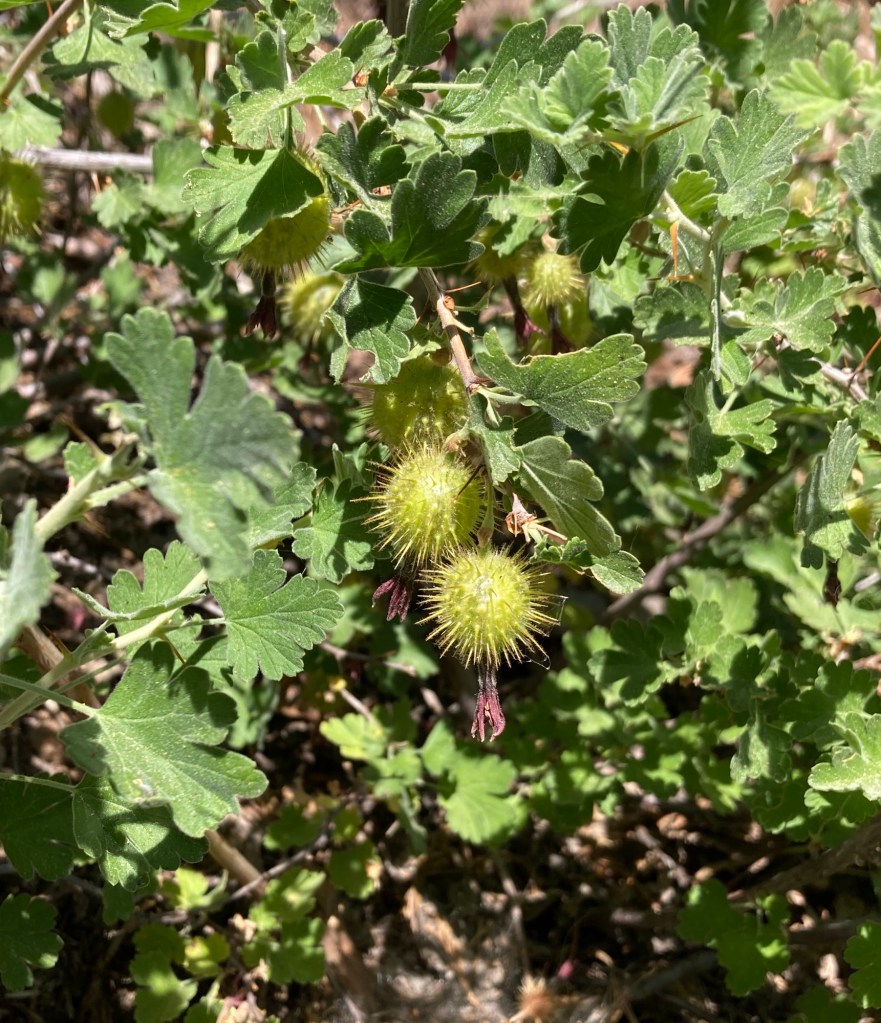
Though most of their petals are browned and fallen, the graceful lines of trunk and limbs are as elegant as ever. The gooseberry and currant bushes are loaded but the berries are not ready to eat.

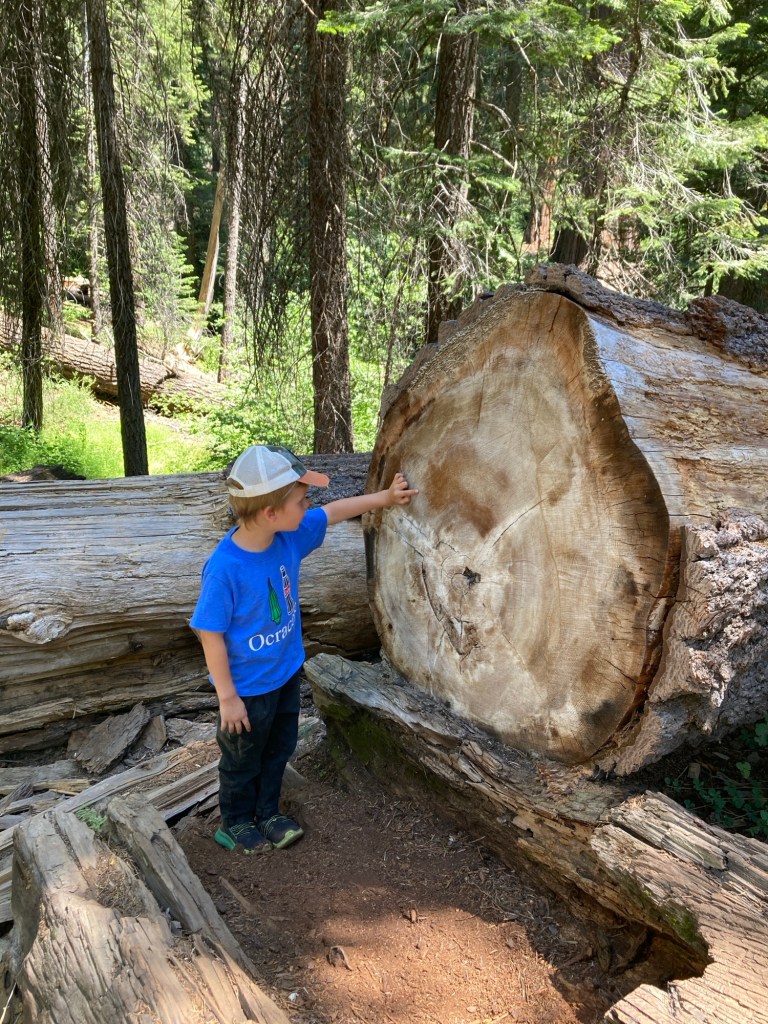
Rigo patiently counted 242 tree rings:

Back at the cabin, we like to throw seeds off the deck for the chipmunks and Golden Mantled Ground Squirrels. Then the boys spent time looking under currant bushes for the critters’ hole. Raj came across a puffball under the deck, and never having seen one before, instinctively thought it was some kind of strange ball, and kicked it.

From the deck above, I heard his surprised voice saying, “Something’s wrong… there’s a problem — Grandma, please come down here!”

When I saw what had happened I explained to him about how it works with this kind of fungus; we arranged the unripe pieces to show that it’s a Sculpted Puffball.

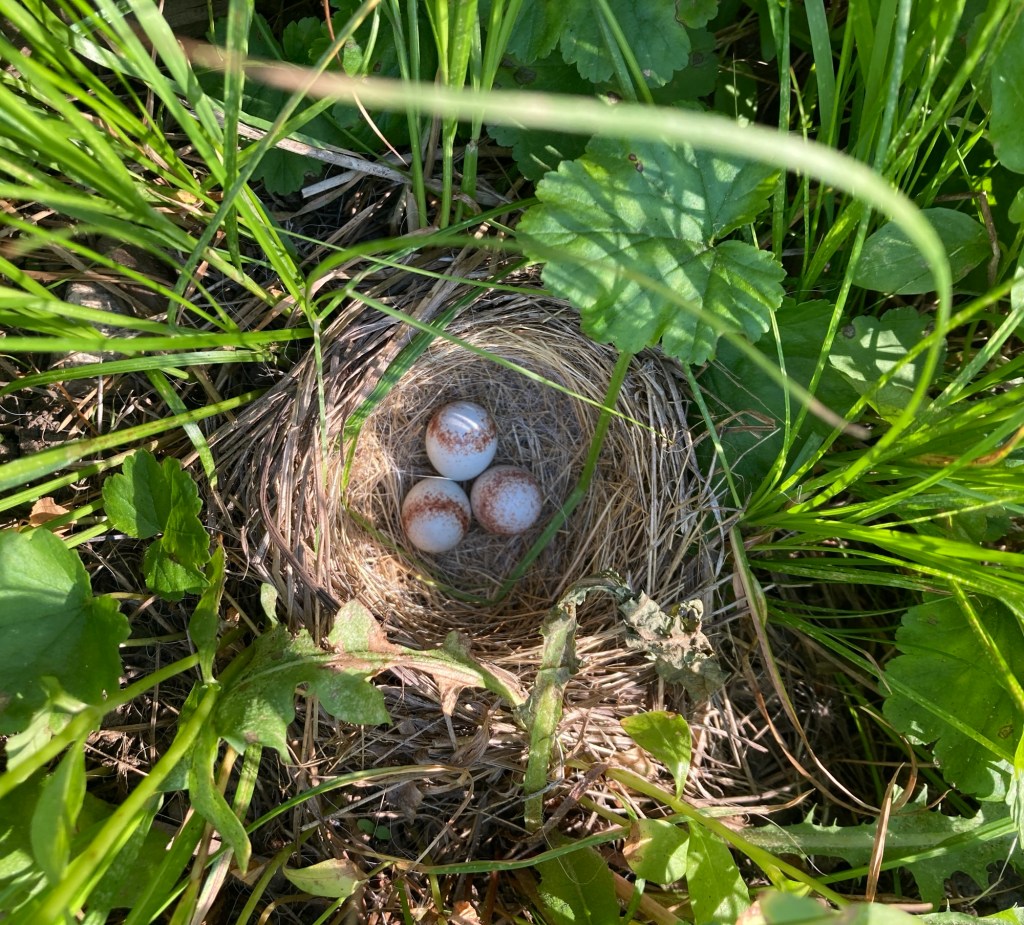
Rigo thought that one of his Pokémon cards had blown off the deck, so while Kate and I were hunting around for that, and I was keeping an eye open for more puffballs, suddenly a bird flew up at my feet and revealed this nest in the grass:

As I’m writing the story next morning, I went out to look down at the nest; I had pushed a couple of sticks in the ground on either side to keep us from stepping on it. It looks like the mother bird is still sitting on her clutch of pretty eggs. [Update: I think they might be the eggs of a Dark-Eyed Junco.]

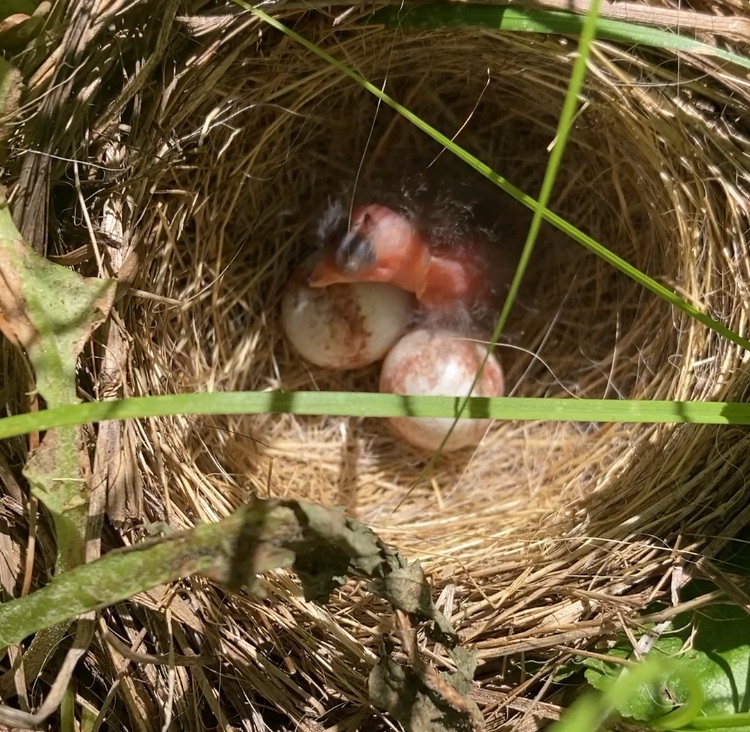
Breaking news: A few hours later, a baby bird has hatched!

Evening explorations with grasses.

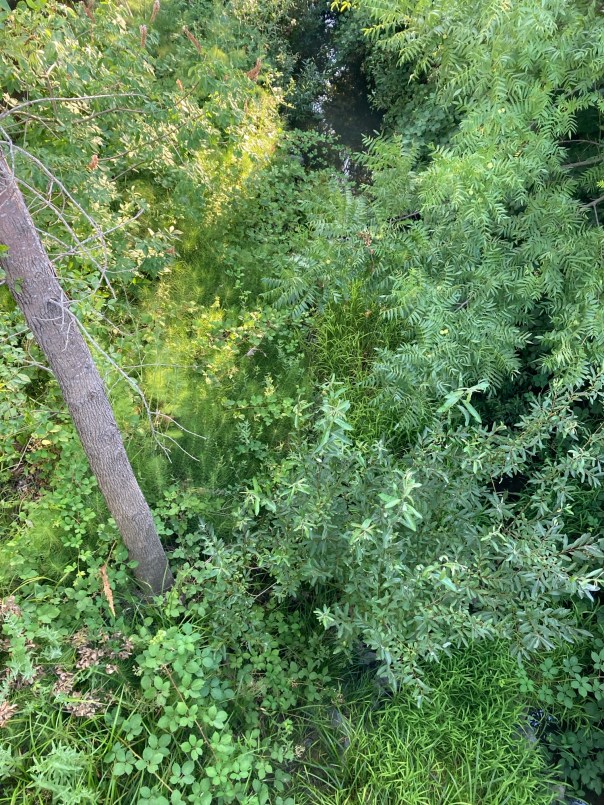
In the summer it’s relatively easy to take a walk after dinner, if I put my mind to it. The last two evenings I did manage to do my 30-minute creek path walk; for some reason it doesn’t feel like a chore at that time of day. There was plenty of light, and time to stop to look at interesting plants. But first I paused on the bridge and looked over… It’s always amazing how much plant matter grows up in springtime and early summer and fills the channel so that it’s hard to see the water down below:

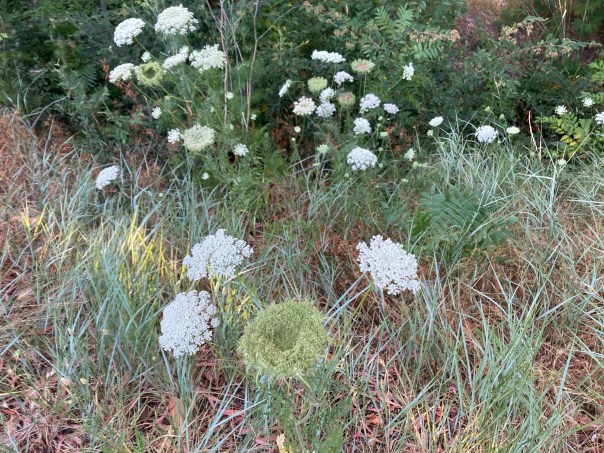
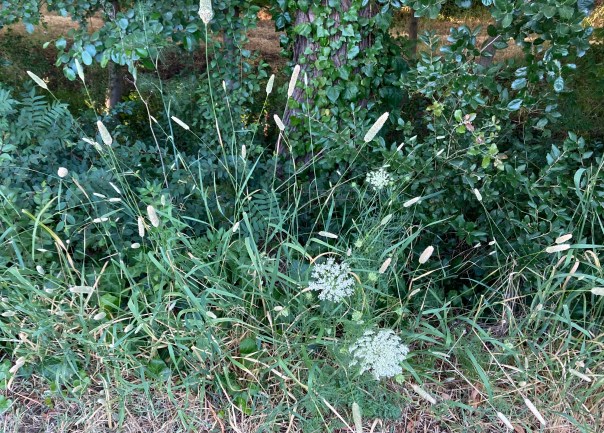
Harding Grass and Queen Anne’s Lace

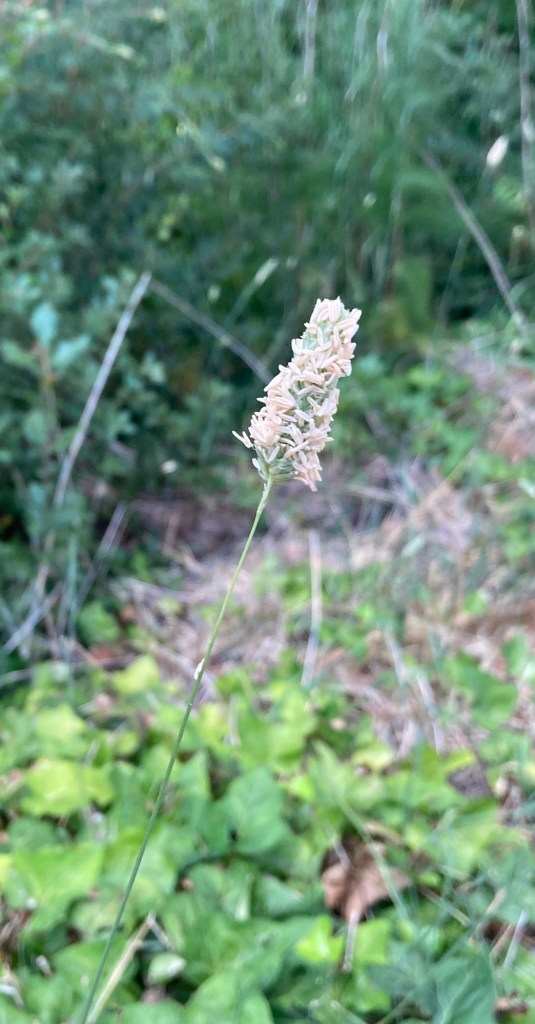
Harding Grass

During my visit to Greece last month, I really enjoyed the exploratory nature of all the walking I did, in a place where so much was going on, and ancient history was confronting me around every corner. Since I returned it’s been hard to get back into walking along my old home ways, just to be walking. But this evening I did a little exploring, too, of the botanical sort, using the Seek app on my phone. Usually it can’t identify grasses, but this time it confidently told me about two of them.

First the Harding Grass, Phalaris aquatica. You can see it blowing around the Queen Anne’s Lace in the picture above, the breeze making it very hard to get a crisp picture of the seed heads waving on their slender four-foot stalks.

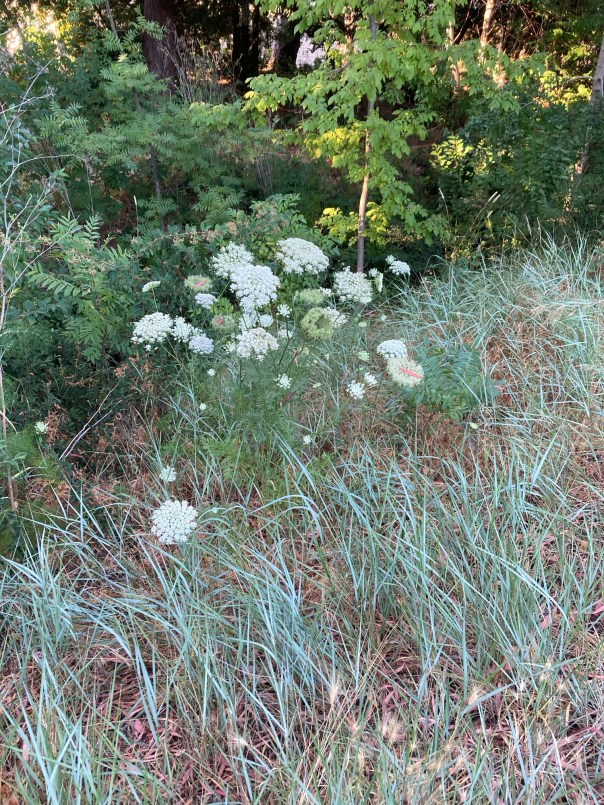
Then I noticed the way the blue grass was contrasting with the same white flowers. Seek says that is Creeping Wild Rye or Leymus triticoides:

Creeping Wild Rye and Queen Anne’s Lace

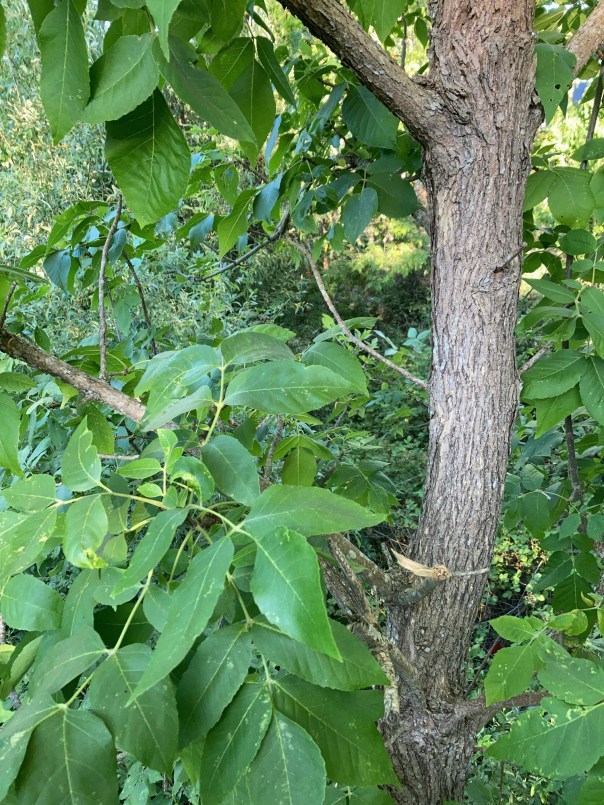
I noticed lots of young black walnut trees growing on the banks of the stream, and on my way back I met a big tree growing out of the creek bed and way taller than the bridge. Surely I’d learned what it was before? But evidently not — Seek told me it’s a Box Elder, and I read later that they do like wet areas, and grow fast. Maybe it’s California Box Elder. I wonder, when the city’s maintenance crew dredges the creek this year or next, if they will take out such a big tree?

Box Elder

I meant to write about my discoveries earlier, and go to bed at a reasonable time, but I started researching small drought-tolerant trees suitable for a garden like mine. I’ll have more to tell you about why I need such a thing. For now I’m content to have become further acquainted with two plants, reaching the stage of knowing their names. I will count the Box Elder as a new tree friend, and fall asleep late, but happy.

The way the linden tree whispers.

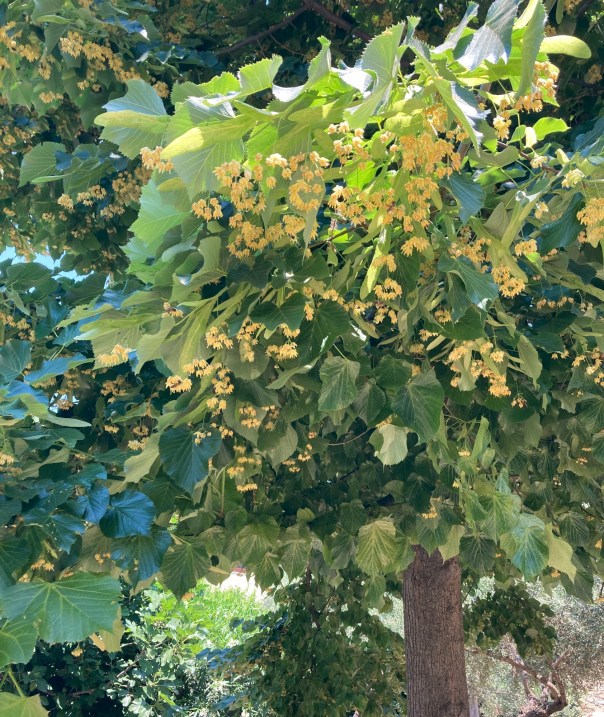
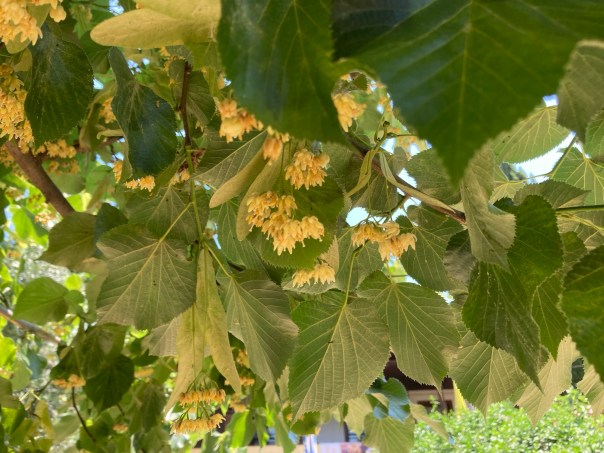
I was delighted to discover linden trees, Tilia tomentosa, in Thessaloniki last month, and in bloom, smelling so sweet. This month I came across a poem about them.

Linden Tree in Thessaloniki

LINDEN TREE WHISPERS

You know how the linden tree whispers
In the springtime, at night, by the light of the moon?
My love sleeps, my love sleeps,
Let’s go and wake her up, kiss her eyes.
My love sleeps . . .
You heard because of the way the linden tree whispers.

Do you know how the old grove sleeps?
It sees everything, even through the fog.
Here is the moon, here are the stars, the nightingales.
“I am yours,” overheard the old grove.
And those nightingales . . .
Well! You already know, how the old grove sleeps!

-Pavlo Tychyna (1891-1967) Ukraine

Linden tree, Thessaloniki