Category Archives: trees

Trees who are themselves.

This morning my walk took me down by the creek, where after the recent rains the leaves on the trees glowed in their contentment at having been washed and well-watered. Lots of light was coming through the gray atmosphere, though the drizzle was thickening. I thought of the Psalm that speaks of us being like trees, “planted by the rivers of water, whose leaf also shall not wither….”

Most of the time I do not feel like a tree! I’m too wispy and bendy, like grass. I won’t say I’m ever a weed, because that concept doesn’t fit with the reality of us being made in God’s image. But the trees are themselves, without fretting over their self-concept, as long as their roots go down where their nourishment lies.

After I came home I made a nice soup breakfast, but before I sat down at the kitchen table facing the garden and the birds — oh! a crow is visiting…. I looked at the books on my mobile bookshelf for something new to read. This was the first page of the one I opened:

“Every creature has in it the instinct to be as true as possible to what God created it to be. Even plants have this directive in them. All nature stretches toward the nurture it requires for its fulfillment — the daily bread, so to speak, that it needs for its survival.

“One spring, we planted a tuberous begonia upside down. When we dug it up in the fall, we saw that it had started growing downward into the earth, but had soon made a U turn and brought itself up into the daylight and blossomed with the other begonias. We have, every one of us, been planted facing the earthly  darkness of sin and death. This business of making our way upward and into the daylight, to blossom forth as the individuals God made us to be — this is the enlightened life to which our inborn instinct calls us.

“As daylight reached through four inches of dark soil to draw the begonia toward it, so the Lord Jesus Christ is always reaching even into the darkest places on earth and inside our souls to draw us into a blessed life. Holy people understand it. They say, He has called you out of darkness into his marvelous light (I Peter 2:9). The Prophet told of it: Upon those who sat in the dark region and shadow of death the light has shined (Matthew 4:16; Isaiah 9:2)”

A few pages further in we read:

“When is a soul mentally fit? When it knows a lot about itself (that is, what God made it to be and how to work with God), say holy counselors. When it readily sees and accepts reality. When it is able to prevail against whatever psychological and spiritual obstacles it may face. When it can protect itself from spiritual harm. When it is using its free will for its own greatest benefit…. The greatest benefit we’re capable of achieving is being in harmony with God’s perfect (all-loving and divinely wise) will for us.”

Dee Pennock, the author of this book, God’s Path to Sanity, calls this health of soul, “sanity.” The idea brings to mind what I’ve read elsewhere, how it is truly irrational to sin against our loving Father, not that we don’t often have perfectly good (irrational) reasons for turning away from His love.

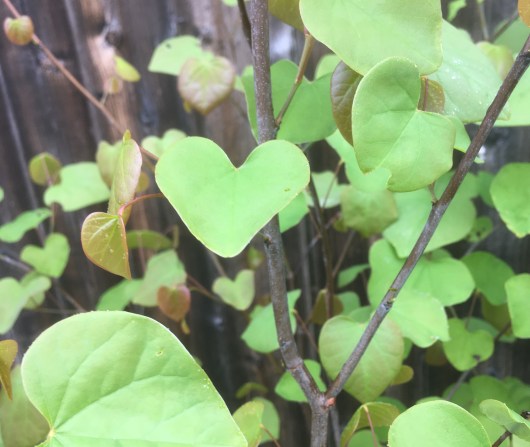
I wanted to drink this book in big gulps, but I restrained myself and will take sips of the tonic. God provided the the fittingly beautiful illustrations before I ever saw the text, and those will, I am sure, be part of my ongoing treatment plan.

Ho, every one that thirsteth,
come ye to the waters,
and he that hath no money;
come ye, buy, and eat;
yea, come, buy wine and milk
without money and without price.

Wherefore do ye spend money
for that which is not bread?
and your labour
for that which satisfieth not?
hearken diligently unto me,
and eat ye that which is good,
and let your soul delight itself
in fatness.

– from Isaiah 55
The balm of thistles and a mighty tree.

tarweed

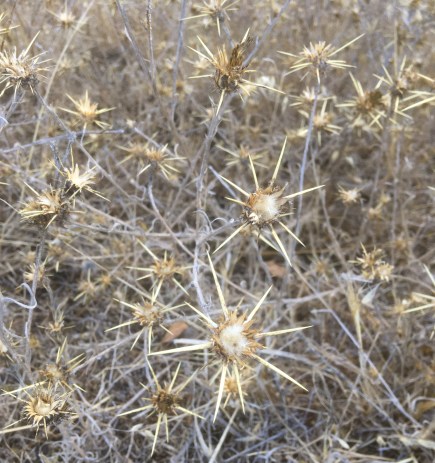
“Mmm-mmm, star thistle and tarweed — the scents of fall!” That’s what my daughter Pippin said as we started out from the trailhead on our latest outing together. Every time I am outdoors with her I learn something new. I should say, I don’t remember being introduced to tarweed  before, and that feels as exciting as brand new.

Pippin and the Professor had come from their home in more northern California for the weekend. Saturday we hung around my neighborhood in the morning, and went afield in the afternoon.

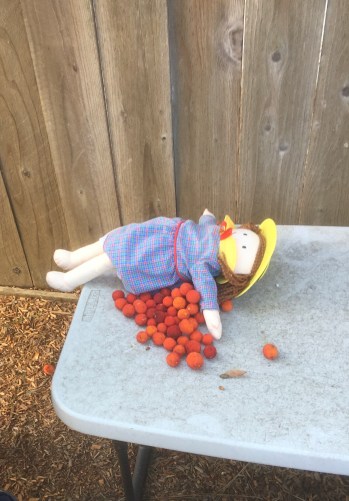
Ivy adopted the doll Madeleine for the day and took her out to gather strawberry tree fruit. Scout dissected the ripest-looking dwarf pomegranate, and we decided it was almost sweet enough to be worth the bother. We walked along the creek path to the playground at the park, but probably the “playground” on the way was the most fun. In two places kids had hung rigging from big trees, from which you could swing out into the space where the ground fell away steeply toward the creek channel. Pippin was the only one with the strength and length to hoist herself up on to what seemed to be a launching platform. Jamie tried to be patient, but reminded us, “Let’s go, to the park!”

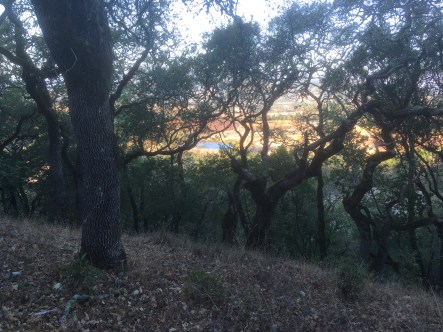
Our destination in the afternoon was a giant California bay laurel tree that may be the largest of its species. I had visited this particular tree at least twice before, but probably not since the 80’s.

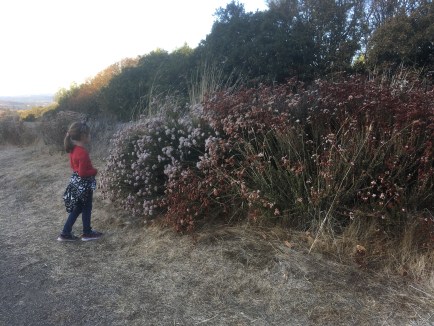
Our short walk up the hill stretched out, as we stopped to observe lichens and poison oak, the tarweed and star thistle. Two of us had painful feet that slowed us down. We saw a wild buckwheat, Eriogonum, taller and bushier than the species we were familiar with. From my reading today I think it might be California Buckwheat. But as you can probably guess, the first photos below are of star thistle, a plant you never want to have to break a trail through.

Eventually we came out of the woods onto the grassy hilltop where lots of cows were grazing with their calves, and bellowing almost without stopping. There was The Tree on the horizon, and a smaller companion alongside.

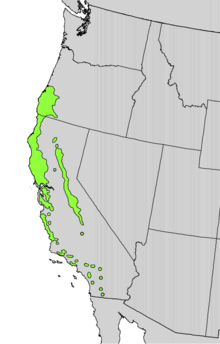
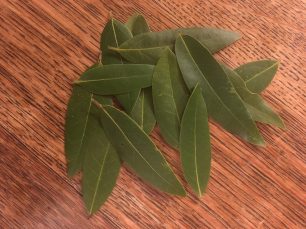
Umbellularia californica is the only species in its genus, in Oregon known as the Oregon myrtle. It’s been called by several other names including pepperwood and balm of heaven. The flavor of its leaves is similar to the true bay leaves from Laurus nobilis, only stronger, and most of my life I’ve used leaves from the abundant local “bay” trees in cooking. For a long time I didn’t know they were not the real thing. The map shows its natural range.

Umbellularia californica range map.png

I hadn’t read that nickname “balm of heaven” before our outing, but standing under the massive canopy with thousands and thousands of leaves exuding their aromatic oil, I definitely felt the olfactory presence as a balm, its scent filling my nostrils as hugely as its image filled my vision.

The children right away began to climb, and to stake out their “houses” in the several neighborhoods that have been formed under branches as thick as big tree trunks, some of them weighing themselves down horizontal with the ground. The adults took pictures of the wide views of the landscape below. Pippin and I studied the tree’s flowers, trying to figure out where they are in their bloom cycle. If it hadn’t been late in the day it would have been the perfect place to have a picnic and linger a while.

In the last few years I’ve been buying the few bay leaves I need. But I brought home a handful of the mega-flavored, special California-and-Oregon pepperwood/balm of heaven leaves, and will simmer them in a winter soup. When I get a whiff of their essence in the steam that rises from my bowl, it will keep me connected to that magnificent tree until I can get back for a longer visit.

Pink flowers are not all she gives.


It may not have been fellowship exactly, but my time today with my fellow creatures the plants was intimate and  lovely, and I spent hours pruning three of the trees. That is something God does to us, and maybe that’s why it makes me feel particularly tenderhearted toward my horticultural “children.”

First the plums, for which I had to move up their solstice pruning a week because I won’t be here at the summer solstice. Lots of other weeding, feeding, planting — and naturally, trying to take pictures of insects. I was eating breakfast in the garden when I noticed syrphid flies on the toadflax, and wondered how I could ever have confused them with bees. They don’t have the same flight pattern at all, and they even buzz more like flies.


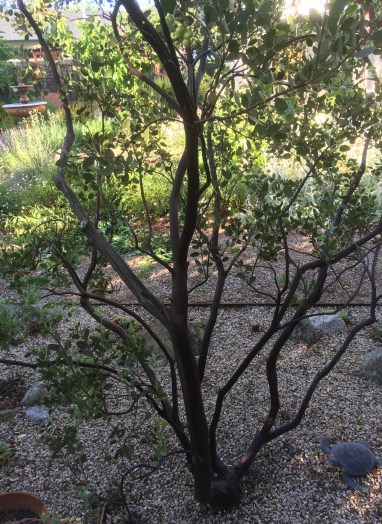
The last thing I did was to spend an hour with the manzanita bush that I’d named Margarita a few years ago, about the same time I told her history. (You can see more pictures of her via that link.) It was this task that brought me into the sweet communion with the plant that is enjoying her 15th spring on the property! I can tell she is happy because she’s putting out lots of new green leaves, while the berries are still mostly green, too. I must never have paid much attention to this tree in other Junes, because I hadn’t seen the contrast of the new growth with the old leathery leaves, many of which are turning brown, which is normal.

In order to survey the wandering branches and find the dead wood and make decisions about how to thin Margarita while keeping her twisty and graceful form, I must have walked around and around her a dozen times, noticing and snipping twigs and whole branches that were revealed as needing removal, one by one with each changed view. I mused about how she has grown and changed; countless parts of her have died and been cut away, but she gradually has become a little taller. Since her youth when I realized that she wanted to grow northward, time and again I have helped her to do it in a nice way, and every year she gives me pink flowers for Valentine’s Day.

She is a dear.