Category Archives: wildflowers

California Mountains – Tiny Finds and Large Views

My husband called to me as I was lagging behind on the loop trail, “Why do you keep looking at the ground?! Look up at the mountains, and the trees!”

We were in the Patriarch Grove of the Bristlecone Pines, at 11,000 feet, in the White Mountains, with dolomite rock as far as the eye could see, as in the photo above. One might well wonder why I would look down at it.

But if you click on that photo to enlarge it you will see that there are vague greenish splotches all over the place. Those are clumps of wildflowers, hugging the ground in mats barely taller than my living room carpet.

I was finding whole worlds of flower gardens tucked under rocks, where several species of the most diminutive blooms would pack themselves together in a jumble. I noticed them, but the sun was so bright, and they were so little, that I couldn’t actually see them very well, or know if my photo was decent.

And I didn’t want to make us too late for dinner in Lee Vining that night, a few hours’ drive down the mountain and up the highway. But now I wish I had taken more pictures.

Lewisia, I think…

I’m home, and the photos are uploaded to the computer where I can zoom in on them and reveal more details, but usually I find that they are overexposed and/or a bit blurry from the wind, and identification is hard. The plants seem to be stunted variations of more common forms, likely resulting from living where there is so much sun and wind, but little warmth and moisture. In this high place the temperature rarely gets above 70° even in midsummer, and frost can happen any night of the year.

milkvetch and an old cone

The purple milkvetch pictured (in the Astragalus family), for example, is a shy and minimalist version of other forms that grow above treeline; technically, we are not above treeline or alpine here, because the Bristlecones are of course trees, but all the wildflowers in this area are listed in the Alpine section of my guide, and the conditions are similar to those in the Sierras above 11, 500 feet.

Pippin sent me to a link from an area in Utah where more Bristlecones grow, and to the Table Cliff Milkvetch that looks pretty similar. But from my poor photo, I’m not confident to claim a perfect match.

Maybe it’s even a version of the Whitney’s Locoweed (Astragalus whitneyi) I saw in the lower grove. That one (below) was past flowering and was showing its crazily colorful pods, and this one 1,000 feet higher doesn’t have any pods yet.

Whitney’s Locoweed and Dwarf Alpine Daisy

Mr. Glad was trying to figure out which White Mountain peaks were which; on the way up to the Bristlecones we’d done a lot of that kind of thing when we stopped at Sierra View Point. Here is a movie I found online, showing what we saw across the Owens Valley: the eastern escarpment of the Sierra Nevada. We had been over there somewhere as little hiker specks just the day before.

The starting image of the movie looks similar to the still shot Mr. G took, but not quite as nice, so I posted his version at the bottom of this post.

Another view that was a quiet and calming feast for the eyes was of these sagebrush-covered slopes, as we traveled that gravel road. The total effect was so much more green and lively-looking than what we saw going west up from Bishop. Maybe it’s a different species of sagebrush?

After this day with the Bristlecones and their tiny ground-hugging companions, we went back over the mountains and then north for the last hilly adventure of our July vacation.

View of Sierras from White Mountains

California Mountains – Gnarly Patriarchs

(6th in the “California Mountains” diary of our July 2011 vacation)

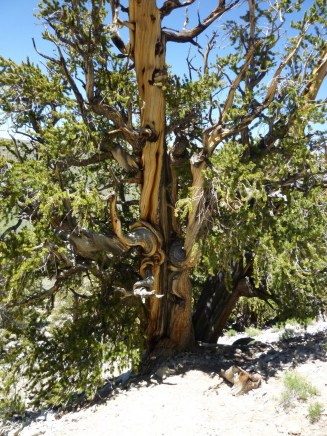
If the Bristlecone Pines were humans, I’m pretty sure they would be ascetic saints like Father Seraphim of Sarov or Mary of Egypt, people who lived in the wilderness and had “meat to eat that we know not of.”
Stanleya pinnata; Desert Plume

It was to visit these inspiring creatures that Mr. Glad and I drove up into the White Mountains that rise up east of the Sierra Nevada on the other side of the Owens Valley. The climbing part was a repeat of the previous day’s experience of a quick uphill, and this time it took just 24 miles for us to traverse zones of desert and sagebrush steppe, and come to a land where alpine wildflowers live stunted lives.

Mormon Tea

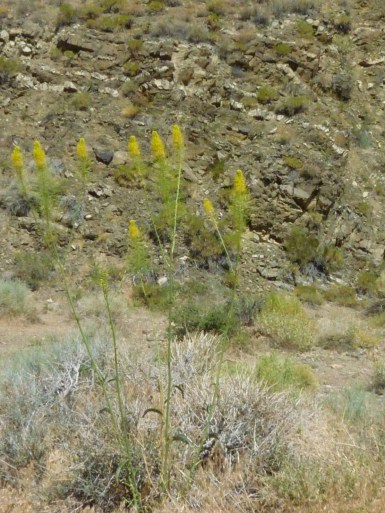
On the way up through the forbiddingly dry and rugged desert region, waving yellow plumes were the first vegetation to get my attention. Now I know where Dr. Seuss got the images for some of his crazy drawings.
Purple Sage; Salvia dorri

Another drought-tolerant plant we ran across is called Mormon Tea, though it has other common names that aren’t as folksy. It’s a member of the Ephedra family of plants, perhaps milder — and safer? — than the Chinese herb. I didn’t collect any.

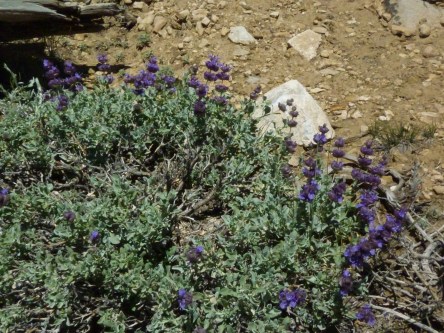
The uglier plants passed from view as we entered the steppe zone, and we began to get our eye-fill of gorgeous purple sage, the very flower referred to in the five movie versions of Zane Grey’s novel Riders of the Purple Sage; I haven’t seen the the movies or read the book, but just now learned that there is a Mormon element to that story. This area is geographically part of the Great Basin Desert that covers much of the state of Nevada, and of which Utah’s Great Salt Lake Desert is a part, so the Mormon connection to the natural history makes sense.

Bristlecone Pines grow in other areas of the Great Basin, too, and maybe on less steep roads. The ones in California aren’t on the way to anywhere, but they are well worth the worry of hearing your car’s engine groan a bit on the sharp inclines.

The longevity of these trees is the primary fact one learns right off. Except for cloning plants, the Bristlecones are the oldest living plants. The current oldest one is known to be 4,788 years old, and as many as 19 of them are over 4,000 years old.

Not only are they of great age, but they keep their vitality. While other trees show changes in their DNA or produce fewer cones, the Bristlecones are just as healthy and fruitful at 4,000 years as they were at 1,000.

They have ways of dealing with the severe climate, and with seasons that are harder than usual. How to determine what is a particularly hard year in their habitat seems to me difficult, seeing how they always have to do with very little water, and with freezing temperatures much of the year, and soil that is poor. Some of the oldest trees grow in “soil” that is a form of limestone called dolomite, shallow and infertile white rock. The sun is relentless in summer, and the winds are often brutal.
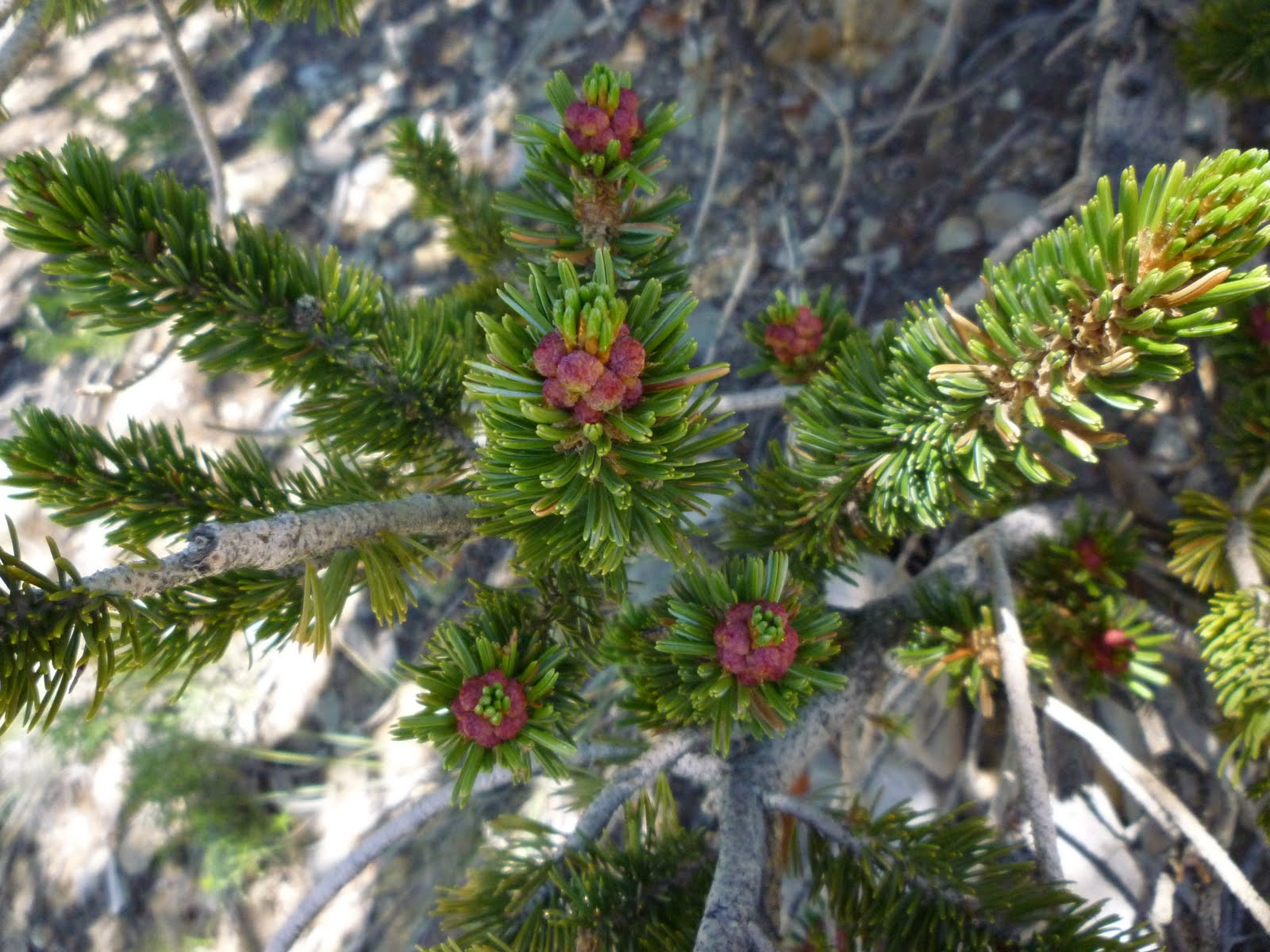
Clearly their youth is renewed not by superfoods and a friendly environment but by a meager diet and suffering — and yes, by their genetic predisposition to “behaviors” that conserve nutrients and strength. For example, instead of dropping needles and replacing them every year or two, they hold their needles for up to 45 years, and it requires less energy to renew the old ones than to grow completely new ones.

If they suffer unusually severe drought or stress, they put some limbs into dormancy so that they can keep producing the maximum number of cones. If we compare them to humans, they are fertile even longer than the biblical patriarchs, or our mother in the faith, Sarah.

The white rock actually reflects some of the sun so that more moisture is retained in the soil, and the trees tend to live relatively far apart from each other in their forests, so they don’t have to compete for light and food. In this way they are the opposite of redwood trees, which need the moisture that collects between trees in the grove if they are going to be their healthiest.

These trees make me think of Bible verses about youth being renewed, but also the ones about hoary heads and the dignity of age. The old and weather-worn patriarchs have a beauty of a sort we don’t see in young upstarts or in overfed and coddled 20-somethings. Even in death the wood is so dense that it remains for centuries and doesn’t decay, much as some saints’ bodies remain incorrupt.

I so love the Bristlecones! I can’t figure out all that they are telling me, but I know it’s something about God and the Christian life. Maybe if I grow really old I will understand more.

The main grove is at 10,000 ft. elevation. After walking the loop trail there we decided to get in the car again and crunch over gravel up another 1,000 feet in a cloud of dust to the Patriarch Grove. It’s only twelve miles, but takes at least 45 minutes. The next installment of this series will tell what I saw there.

California Mountains – Snow in Springtime

Spring was a happening thing in the high Sierra. Last winter extended well into June, and on at least one date that month the snowpack was the highest on record. This means that at the end of July when we were there, quite a bit of snow was still melting.

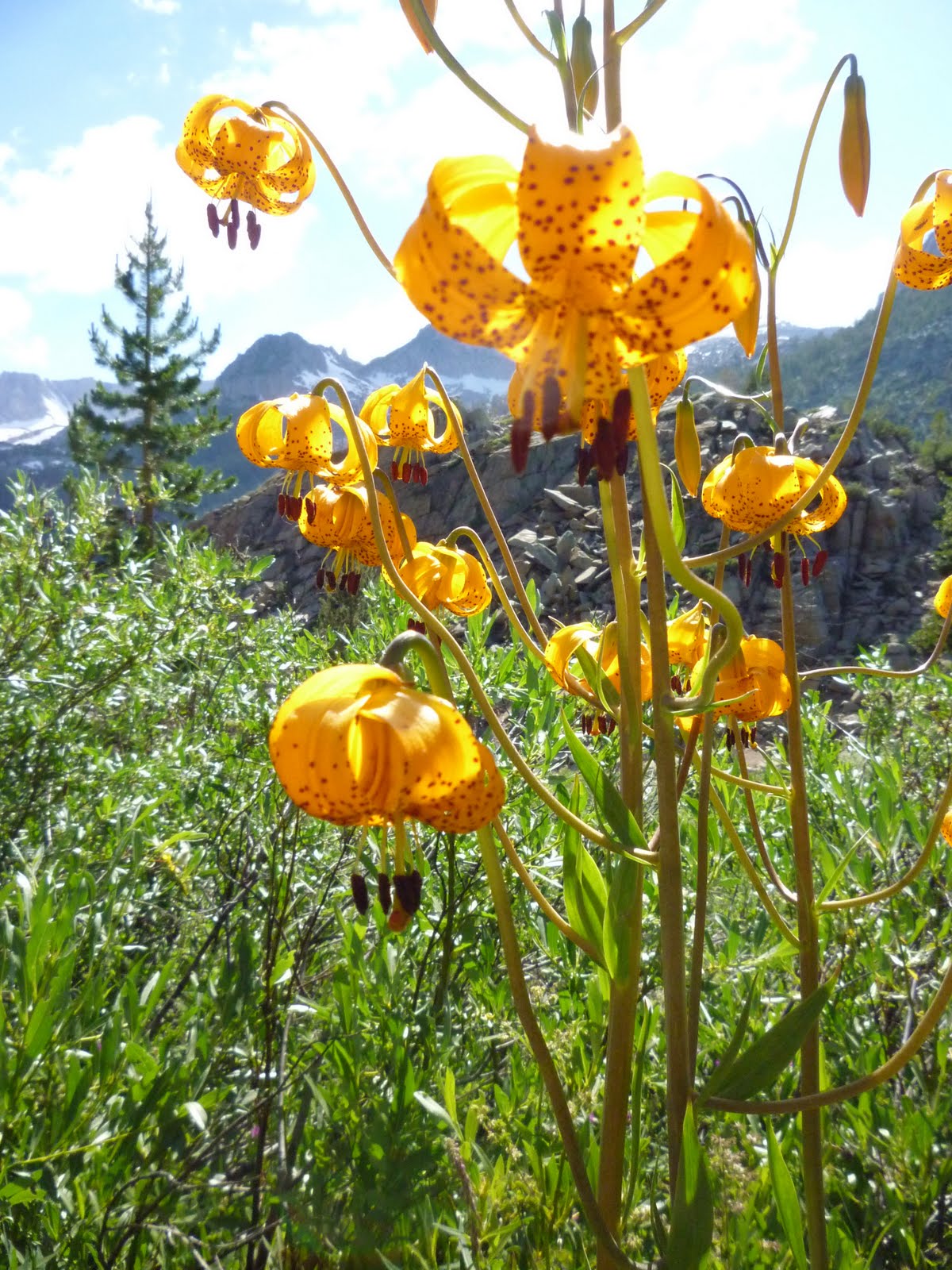
Leopard Lily

From our trailhead at nearly 10,000 feet, we only ascended another 1,000 feet or so, but the difference in the flora was notable. Higher up, the flowers and shrubs were still in bud; the snow hadn’t been gone long.

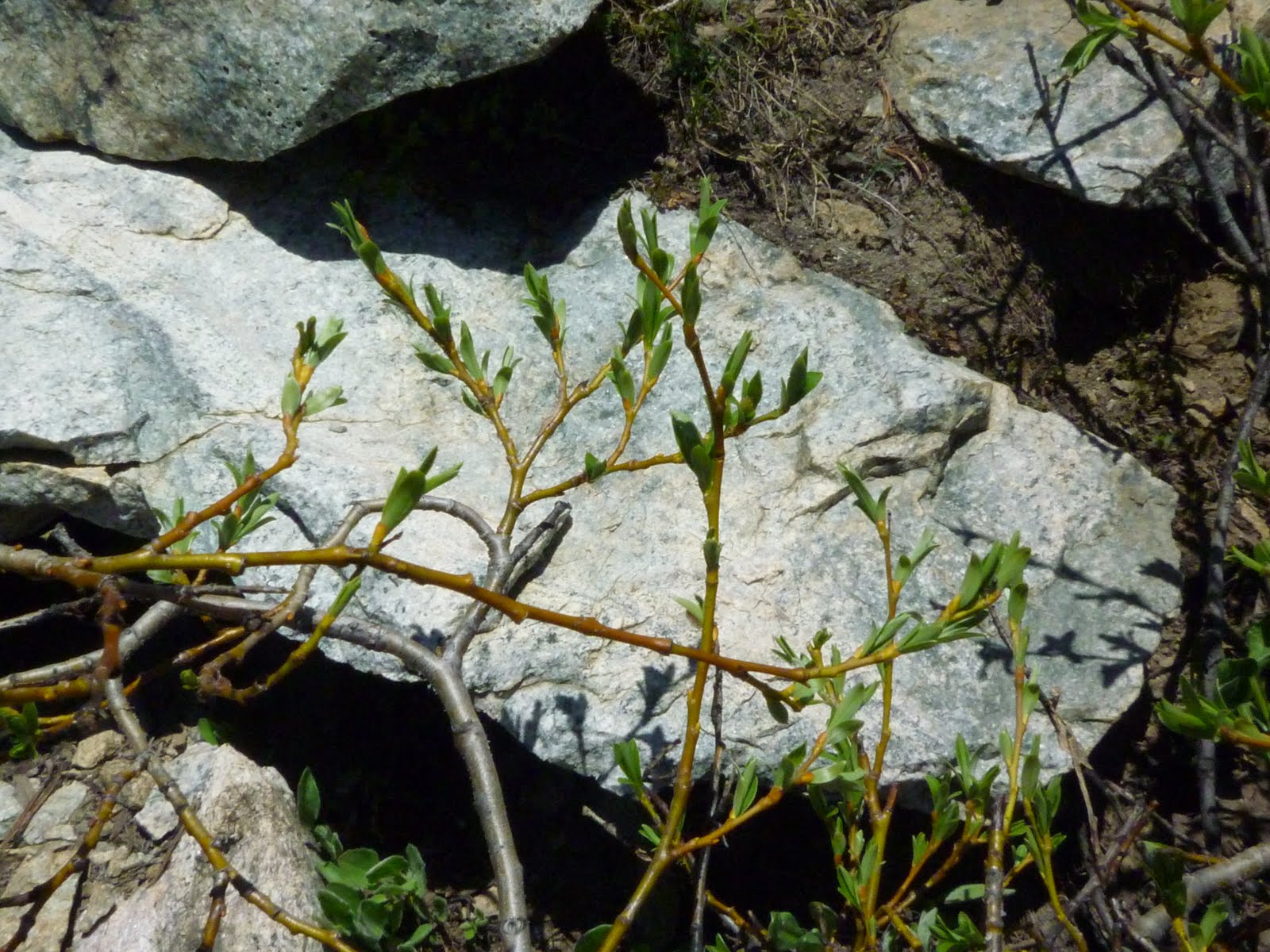
Willow buds
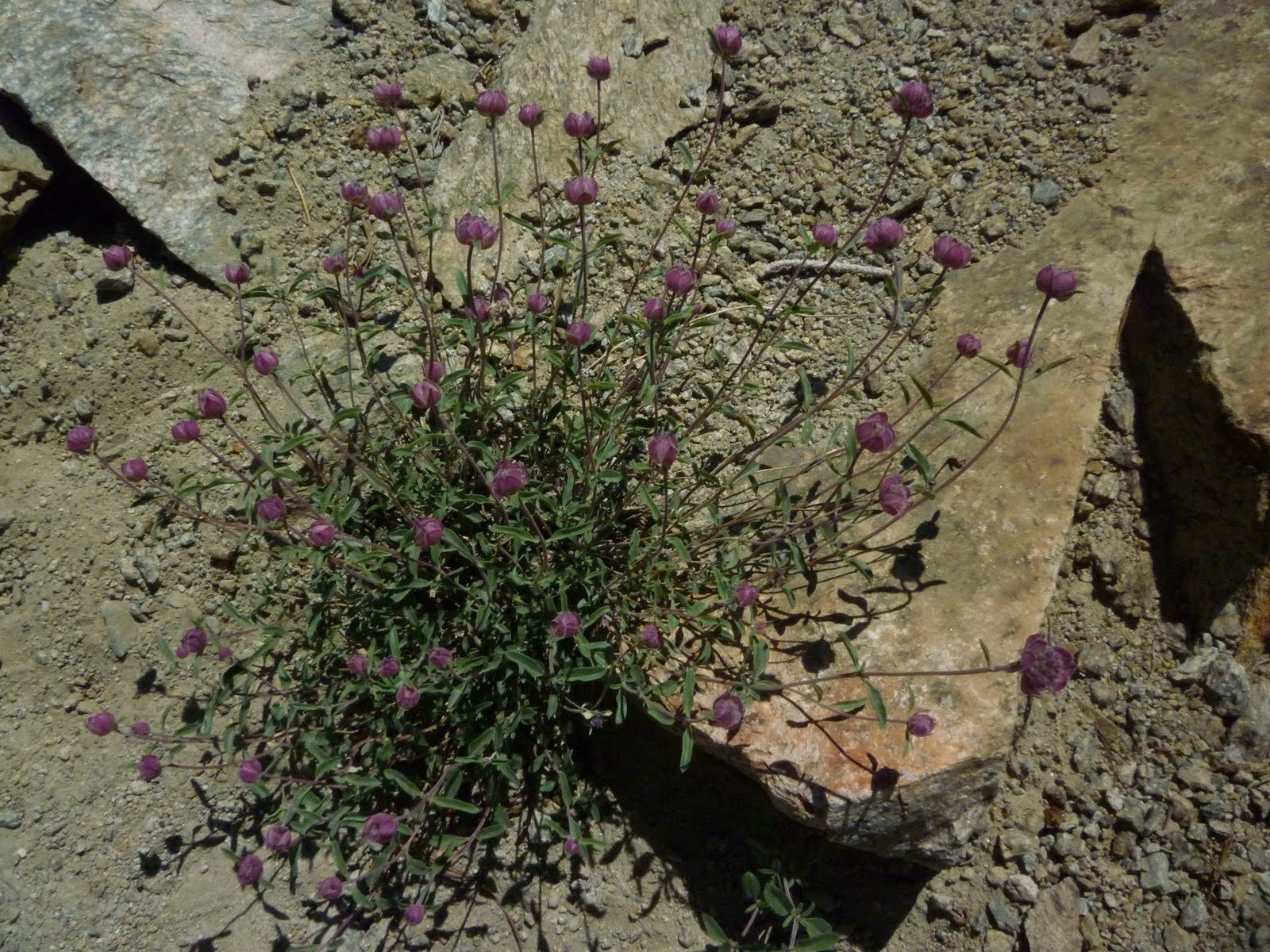
Mountain Pennyroyal in bud


The violent weight of snow had deformed this cluster of trees in such a symmetric way as to be artistic.


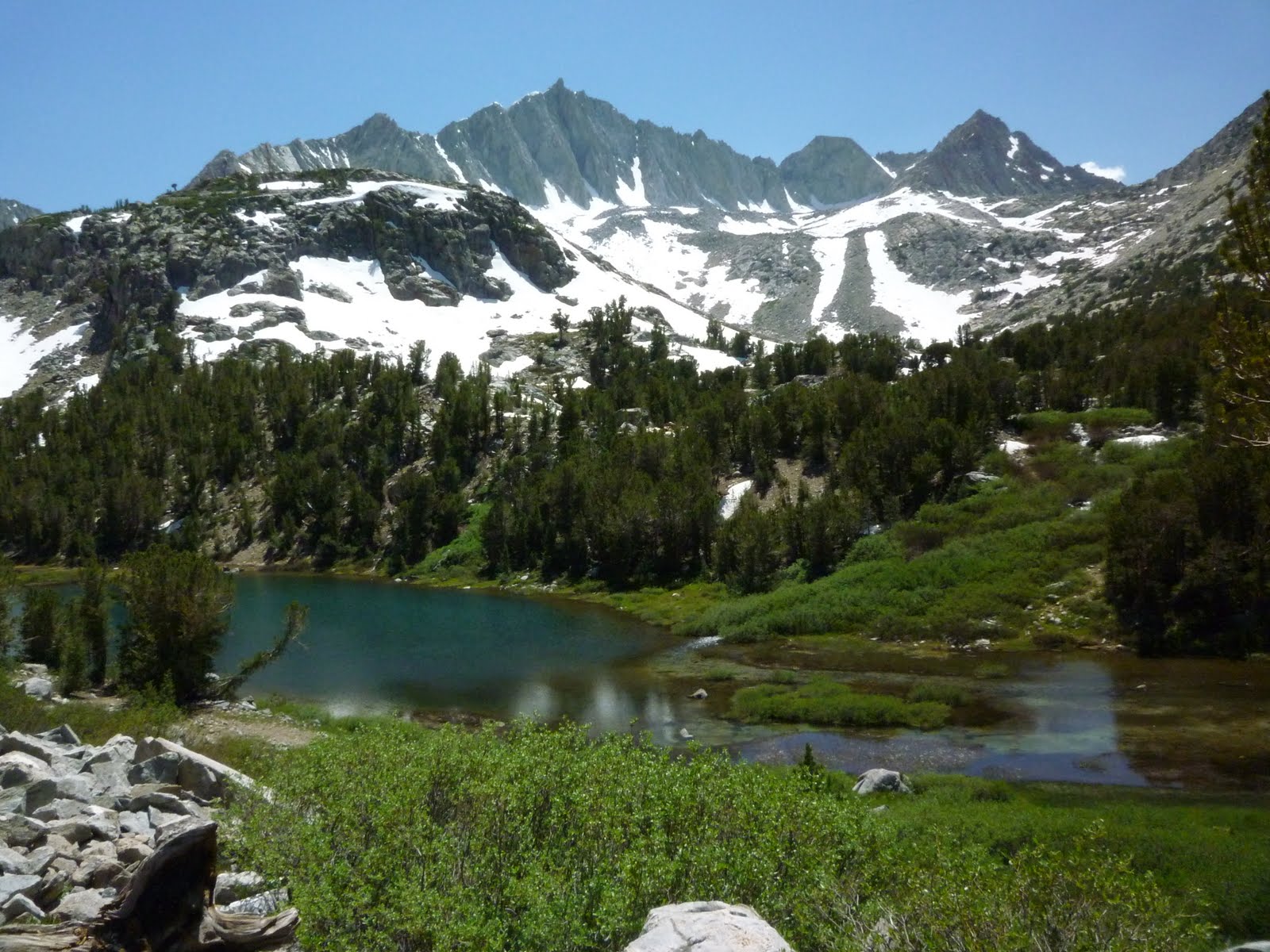
Spearhead Lake


Rosy Sedum with Buttercups

At the highest elevations, every lovely bloom seems like a miracle, when you consider how much of the year the plants are just roots or seeds under the snow, how quickly they are required to respond to the light and warmth and come into their glory.

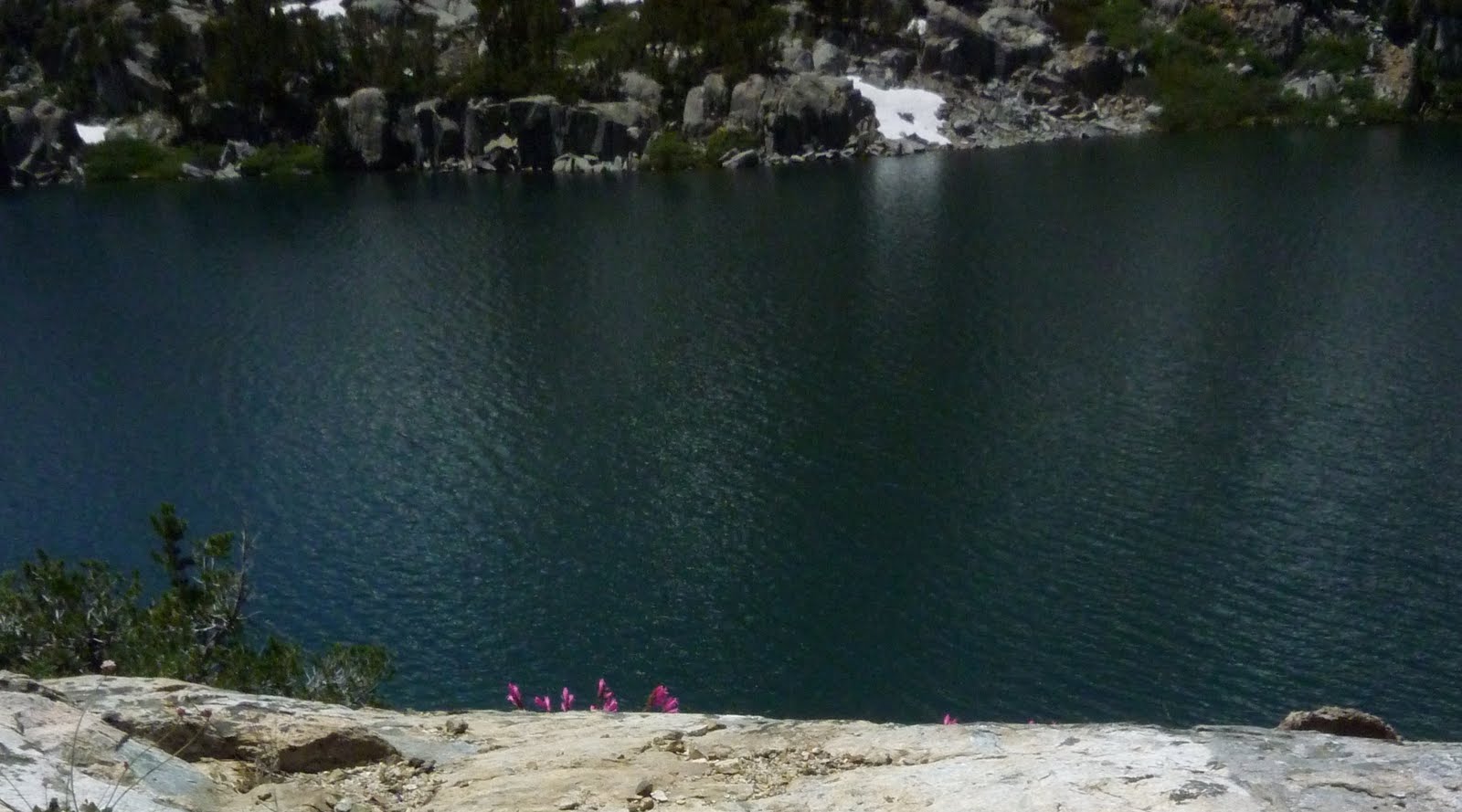
In some places they were sprouting out of a puddle where snow had likely been lying a few days previous, like in this low place I had to hop over to reach a spot overlooking Long Lake. You can see Mr. G. in the distance ready to spread out our picnic of cheese and crackers.

Around us and at our feet hot pink penstemon was making for a brilliant contrast with the midnight blue water and the granite rocks.


Sunless and Satisfying Day

The beach cottage is next to a creek that forms a lagoon at this time of the year, cut off from the frigid Northern California ocean water by sand dunes and therefore swimmably warm, if you don’t mind the algae.

The whole place is full of memories for me, going back more than 20 years to the first time I was here with our children, who with their homeschooling friends built rafts of driftwood and punted around, while their baby sister crawled through the sand.

Those are abalone shells lined up on the fence.

We’ve come many, many times to this sleepy village, and this week it was to be with our friends who lived full-time in the house for a spell but now only vacation there. Mr. Glad and I are normally just a couple these days, but they were lucky enough to have four of their five daughters with them.

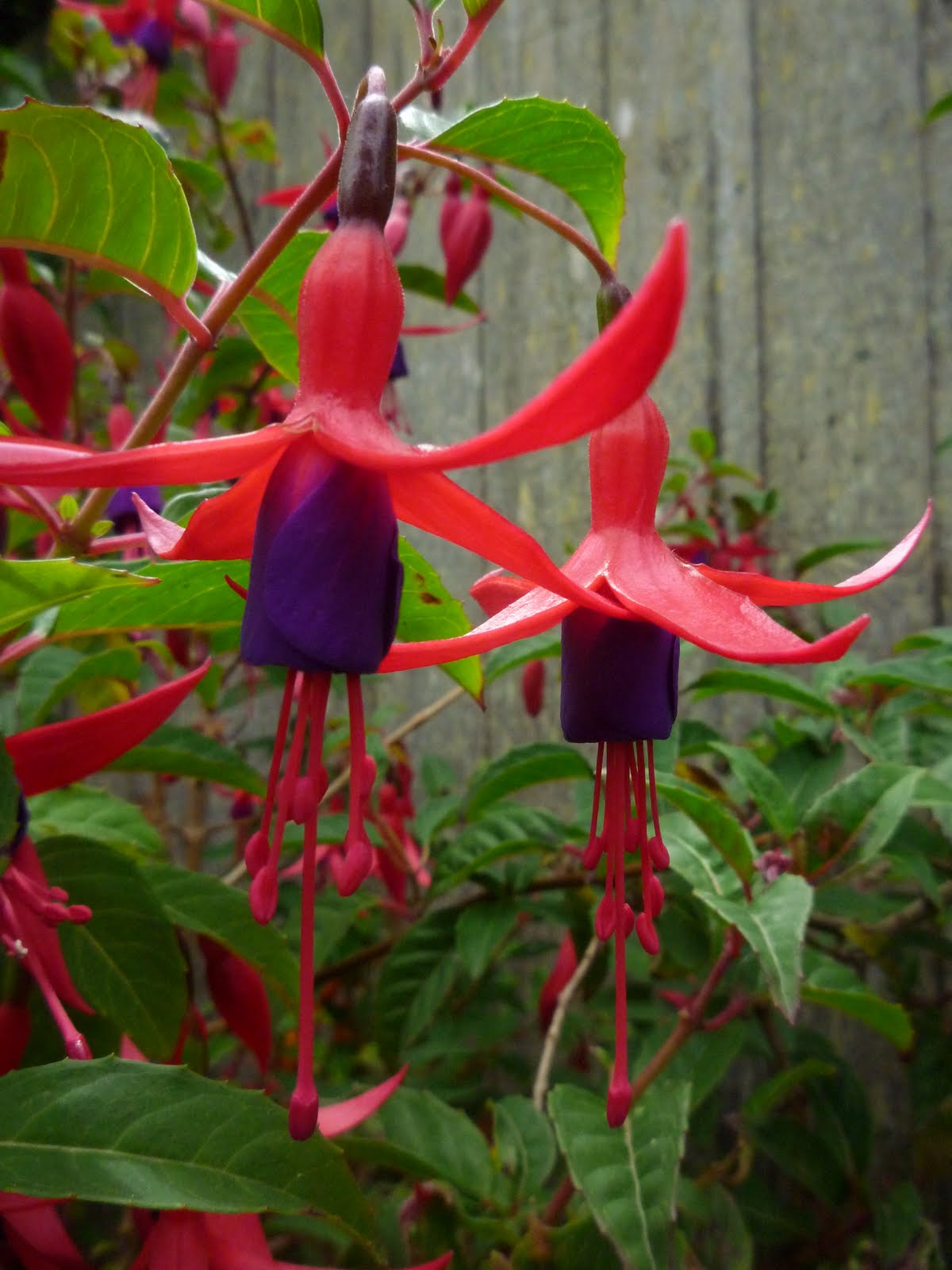
No sooner had we arrived than I discovered the fuchsias and Chinese firecrackers that had enthusiastically taken over the mostly untended yard. They make you think you are in a tropical paradise, until you look up and notice the fog and the golden hills.

In the background of the third fuchsia pic, you can see the wild fennel reaching for the skies. A lot of it has already dried and is getting mildewed.

The fields of rattlesnake grass a block away also contradict the tropical theme. I picked bundles of the stuff before I came to the conclusion that it’s really past its prime and that I should just come back next June to get it when it is still green and the “rattles” are whole.

Sand Art by Mr. G

We packed up some cheese, French and Italian breads, and watermelon, and drove up the coast to another beach just for fun.


One can’t easily predict how grey and cool the days will be out there, but we expected the sun to come out by the afternoon, and we pointed out the little patches of blue we could see here and there near the horizon.

At least it wasn’t terribly cold, though I did keep my sweatshirt on all day. The fog did not lift, but the sun burned some young chests right through it. And I was so happy and busy smelling the seaweed and the beach plants that I didn’t even notice the weather change that never happened.


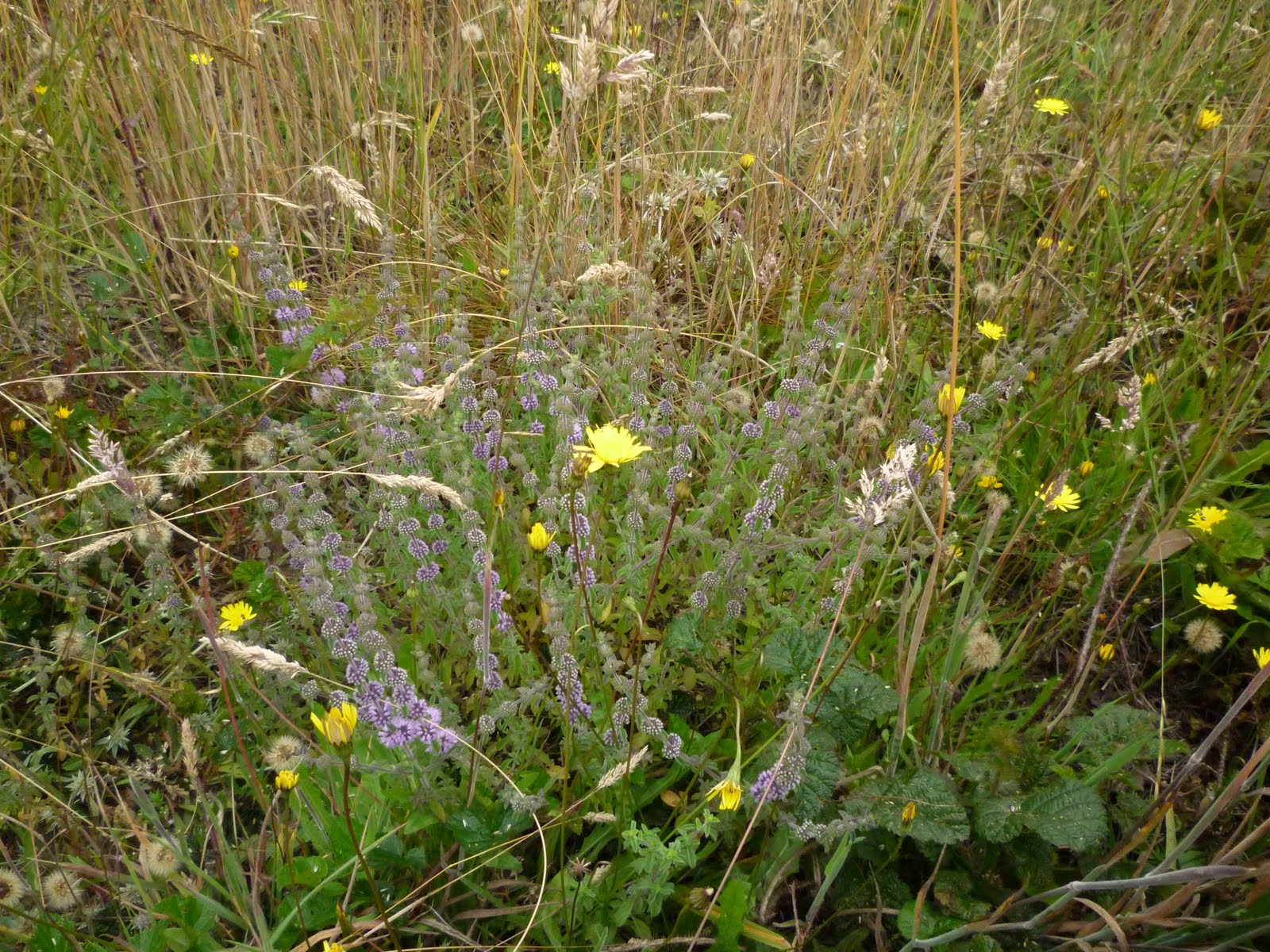
Some of us took a walk along the bluffs, where I found so many interesting things to see and click my camera at, including stickers and a minty purple flower that filled the low moist places.

Rattlesnake grass and cow parsnip

When we returned to the cottage it was to cook together and cozy up with a big dinner and loving camaraderie — lively talk and laughing followed by sitting on couches and in rockers. Mr. G and I couldn’t help ourselves, taking lots of pictures of the girls so clearly content and comfortable with each other, tucked in with overlapping arms and legs and smiling so much you wouldn’t believe it.

I didn’t mind the grey skies, because the flowers and friendship made the best kind of sunshine.