Category Archives: writing

One keeps emerging.

… in grief nothing “stays put.” One keeps on emerging from a phase, but it always recurs. Round and round. Everything repeats. Am I going in circles, or dare I hope I am on a spiral? But if a spiral, am I going up or down it? How often — will it be for always? — how often will the vast emptiness astonish me like a complete novelty and make me say, “I never realized my loss till this moment”? The same leg is cut off time after time.
― C.S. Lewis, A Grief Observed

In reading quotes about grief, I notice that many of the ones that ring true are from Lewis’s book about his wife’s death. I downloaded it to my Kindle so I will start reading the whole thing tonight.

Many things keep me from writing about my own grief, but the biggest hindrance may be the strangeness of it. Every day I am startled and disturbed by a new discovery — of an ache or a gaping hole or a missing component of myself. I am helpless against the ambush of thoughts and emotions whether it comes just as it did yesterday, or by a fresh route.

That all sounds like grief is something outside of me, but of course it’s what is going on in my heart; it is Me. This Me is a woman I don’t really know; she is mystifying and unpredictable. I don’t know what else to write about her, but I pray for her.

Poetry for Supper

The metaphor of windows in this poem by R.S. Thomas I find to be brilliant. I know I have a lot of nerve writing about poetry, because I am fairly ignorant, and do not show myself to be a dedicated or persevering student of the art. I also don’t write it, though I wish I did, because I appreciate the economy of words and the respect for the language that a good poem demonstrates.

That is, when it serves as a window, a possible purpose of a poem that one of the “old poets” in Thomas’s poem mentions. From my limited experience, it seems that many poem-windows are only good for being in a window museum. Someone puts a variable amount of work and skill into a poem, and many times all they end up with is an artsy window frame that is indeed unique and an expression of the hopeful poet’s individuality, but has nothing to do with light. It may be interesting, it may have been fulfilling for the artist, but it completely fails as something useful to anyone else; it has no “beauty of function.”

Easy for me to say, who might be described by the last line of this poem, “glib with prose.” I do find it challenging to talk about poetry, but talking is always easier than writing it.

POETRY for SUPPER

‘Listen, now, verse should be as natural
As the small tuber that feeds on muck
And grows slowly from obtuse soil
To the white flower of immortal beauty.’

‘Natural, hell! What was it Chaucer
Said once about the long toil
That goes like blood to the poem’s making?
Leave it to nature and the verse sprawls,
Limp as bindweed, if it break at all
Life’s iron crust. Man, you must sweat
And rhyme your guts taut, if you’d build
Your verse a ladder.’

‘You speak as though
No sunlight ever surprised the mind
Groping on its cloudy path.’

‘Sunlight’s a thing that needs a window
Before it enter a dark room.
Windows don’t happen.’

So two old poets,
Hunched at their beer in the low haze
Of an inn parlour, while the talk ran
Noisily by them, glib with prose.

— R.S. Thomas

r.s. thomas_photo_large

I communicate vintage style in small bits.

This week the discussion of Hidden Art of Homemaking is on chapter 9 – Writing Prose and Poetry. I haven’t kept up with the conversation at Ordo Amoris for a week or more, and for this chapter I’m just re-posting this from August 2009. Don’t be misled by the now-obsolete references to postage rates!

Old-Fashioned Correspondence


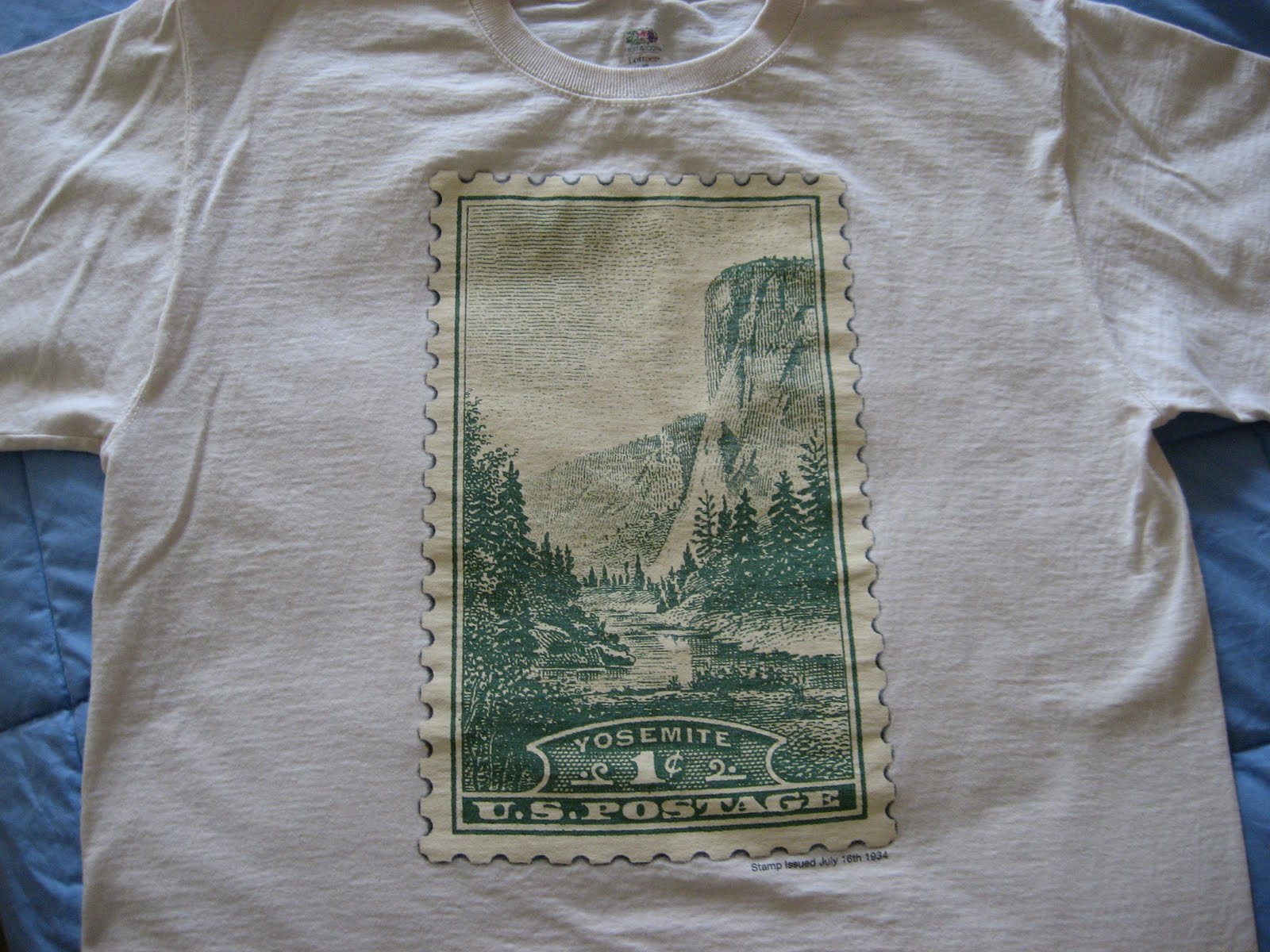
To introduce the postal theme– and for a few moments just forget about the concept of mail that can’t be carried in from the mail box in one’s real hands–I show you this T-shirt we bought in Yosemite last month, at the post office. It was the best clothing deal in the park, and an unusual and historic design: a reproduction of a stamp that was issued in 1936, showing–Yes! my beloved El Capitan! If you have ever beheld that rock I trust you won’t find its frequent appearance here tiresome.

I mostly wanted to tell about postcard-writing, and the shirt isn’t very pertinent to that…though it just occurred to me that one might buy the shirt at the Yosemite post office and then write a postcard sort of message on the fabric before mailing it in its more personalized form. I don’t think I’ll run right back there and pick up a few more, though.


When I was a child, my maternal grandmother would send postcards to me and my siblings from wherever she was traveling. I recall receiving word from Turkey, Norway, Mexico, and Hawaii. She also wrote very entertaining letters from home. As she has been a major role model for me, it’s no wonder that I feel it a natural activity as a human being to share my life in this way with those I love.

It’s easy when on a journey, away from the usual housekeeping duties, to remember friends and family and take the opportunity to let them know I do think of them. A trip just doesn’t satisfy if I haven’t dropped a dozen cards in the letter-box.

This picture was taken at the Grand Canyon. When others in our party were hiking down into the gorge one morning, I walked all over the place looking for a picnic table with a view, from which I might write my cards. That was not to be found, but in a sheltered courtyard I did find a good spot, away from wind and next to a big stone with rain water pooled in a depression on the top. I didn’t notice this rock until I was startled by a raven who swooped down to drink.

Postage “just” went up again. It now costs 28 cents to mail a postcard. On those first envelopes carrying my grandmother’s address in the corner, the stamps on the other corner said “4 cents.” I can’t imagine that a postcard was more than a penny.

One thing I inherited from my father recently was the stamps from his desk drawer. There are some pretty old ones, from when a letter was 25 cents. If they still have stickum on them I use that, and if not, I apply a little Elmer’s glue and save my pennies by using these old stamps.

I also “inherit” stamps from my father-in-law, who gets them (less and less, now that he responds infrequently) from charitable organizations that want him to send donations. They come to him already sticking to envelopes, but I cut them off and glue them on to our own bill payments. Some of my collection are in the photograph above. If you want to see the stamps up close, just click on the picture and you can see an enlarged version.

In California it seems that every town is a tourist town. At least, I find postcards in all the stores. But in some locales, the market has yet to be discovered, and I have to make my own postcards, which I learned to do from Martha Stewart, who gives us this handy template and instructions for using it. I’ve made these one-of-a-kind cards with photos of someone’s backyard, or a lake that is small and unknown, or a town that is seemingly too plain for the professional postcard people.

But why restrict this fun habit to traveling days? I started sending postcards to the grandchildren and friends any old time. A postcard is small enough that I can find time to write a few words while the iron or computer is warming up or perhaps even in the middle of the night when sleep won’t come. I don’t think old-fashioned correspondence of this sort will ever become obsolete or unwelcome.

I consider my difficulties.

My current difficulties stem from these realities:

1) The world is so full of a number of things
    I’m sure we should all be as happy as kings.

This rhyme has played in my head a million times since I learned it as a little girl. Maybe even then I suspected in my childish way the layers of truth in the sing-song, the irony of too-muchness.

2) I have been traveling a lot, and that brings me into contact with even more numbers of “things,” like real people, people in books, ideas in books, and new places I’ve visited. This summer, for example, I sat on airplanes for more than ten hours, and many of those hours were spent in the company of Alain de Botton as I read his book The Art of Travel. As I drifted off to sleep at night in a house not my own, I was soaking up the coastal delights of George Howe Colt’s childhood summer place, The Big House.

In the spaces between these literary adventures my more physical self was learning to reach right instead of left for a stirring spoon, and to relax in the hot tub of the Eastern summer atmosphere.

3) I need — o.k., I feel the need! — to write about at least some of the experiences in order to process the information and be restored from the overload/exhaustion of so much excitement. As Alain and I were musing together over the meaning of our travels, I scribbled notes in the margins and made a list in the back of the book of all the blog post ideas that were generated from our “discussion.” Every night for a week or two I have spent at least fifteen minutes writing and rewriting in my mind, in the dark, my review of the Colt book.

Even Archimandrite Sophrony is reported to have said, “Arrange whatever pieces come your way.” [update: It seems to be Virginia Woolf who said that.] I don’t know what the context of this quote was, but the urge is a basic, human, compelling one, and applies to just about everything I know.

4) When I am on the trip, just returned from a trip, or packing my bags and boxes to set off again, there is less time than ever for this kind of writing, and also less mental energy. When I hear Thomas Mann say, “A writer is somebody for whom writing is more difficult than it is for other people,” I feel that I am certainly one of those. I could coin my own saying: “A homemaker-writer with a large family is somebody for whom writing is even more more more difficult than it is for other people.”

I hope I am not complaining, by using the word difficulties. I could say challenges, or pieces. Or thoughts, as in “Bring every thought captive to Christ.” In my mind I have more challenging pieces of thoughts and prayers and connections to be made than there are dust bunnies floating up and down the stairs.

This morning it all seemed too much, as I add another item to the list of things that make us happy as kings: We are going to the cabin! There will be stimulating conversation on the way, as our numbers will be doubled by the presence of our dear Art and Di. (That will add pieces, to be sure.)

Stars will shine crisply in the black sky at night, and in the mornings chipmunks will scurry in the brush below the house. Humans will eat cookies and bacon and drink coffee on the deck while we watch the hummingbirds squabble, and we’ll paddle our canoe quietly over the lake.

(Past posts about our Sierra cabin: 2009  2010  and  2011 )

Though I have picked up only a few pieces here to tie in my bundle, it’s been quite comforting. Now I can face my lists of more practical things like dinner menus, shopping needs, and what to put in my book bag. That won’t be too difficult.