Florentine picnic food

Pippin and family were in town for a day. In the evening I went to a birthP1000393crpday party for The Professor that featured a wild cake. Scout decorated it in a fashion that made lighting the candles a little challenging.

But before that, in the afternoon Pippin and I took the kids to the beach for the kind of bread-cheese-grapes picnic that can be thrown into a shopping bag at the market and taken as-is to dig into on the beach blanket.


P1000385

This is what a June afternoon often looks like on our North Coast beaches. At least the wind wasn’t blowing, until later when it was time to leave anyway, so as we ate we didn’t consume too much sand. Pippin had to reassure Ivy several times, “At the beach, sand is o.k. on your bread.”

Though it wasn’t ideal picnic weather, it reminded me that I’ve been wanting to Florentine pasties 09post this recipe that is one of my favorite things to take on a summer outing, though maybe not to the beach, where the fruits of my labors always risk spoiling by incoming grit.

The source of this recipe is unusual: a newsletter that our power company used to send with the bill, and which always included a recipe or two. They stopped this practice 20 years ago, but these pies became a tradition for me. They keep well and I think they taste best at room (or picnic cloth) temperature.
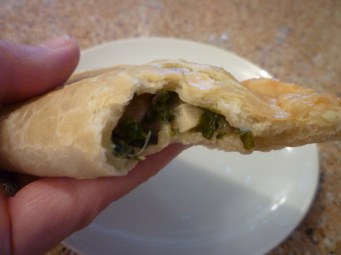
Florentine pastie bitten

Changes I made to the recipe below: Use butter, of course, never margarine, and add some salt to the pastry dough. Or just use your own recipe for pie dough. I like to make the filling the day before assembling the pies. I thought of trying to use fresh spinach next time, but I don’t know how I would figure out the conversion ratio.

Also, I would never say “pah-stees,” because my husband’s Cornish ancestors made pasties nearly every day for the men to take into the mines for their midday meal, and they pronounced the word “past-ease.” Are we to think that Florentines would say anything different?

Florentine Pasties crp

wandering in dreams

The following paragraph comes at the end of Part I of David Bentley Hart’s The Experience of God: Being, Consciousness, Bliss. Perhaps some readers wonder why he didn’t make a stronger case for the theistic point of view while he was comparing humans’ pictures of the world; here he explains:

…as I have begun to grow somewhat older than I really want to be, I have also begun to vest less faith in certain forms of argument, or at least in their power to persuade the unwilling, and more in certain sorts of experience — certain ways of encountering reality, to phrase the matter with infuriating vagueness. My chief desire is to show that what is most mysterious and most exalted is also that which, strangely enough, turns out to be most ordinary and nearest to hand, and that what is most glorious in its transcendence is also that which is humblest in its wonderful immediacy, and that we know far more than we are usually aware of knowing, in large part because we labor to forget what is laid out before us in every moment, and because we spend so much of our lives wandering in dreams, in a deep but fitful sleep. 

–David Bentley Hart

Surveying my pithy army.

I’ve been meaning for years to create a Quotes page on my blog, and I did it today, in the course of helping a friend with her own blog pages. Then it was easy to start randomly loading content from my vast treasure store of worthy lines.

I always think of good succinct quotes as miniature philosophy exercises that beg me to muse on the statement as to its possible meanings and truthfulness and ramifications. The following is a good example of a pithy thought, and it also illustrates why I appreciate the quotes I collect:

chamfort
Chamfort

A man is not necessarily intelligent because he has plenty of ideas, anymore than he is a good general because he has plenty of soldiers.  ~Sebastien Chamfort

I am not a good general in this sense, but I think I know a capable soldier when I see one. Eventually I hope to put some order into the ranks of my army of quotes, of which only a small company have been assembled so far. In the meantime, anytime you want to mill about and look them over, you can click on the Quotes tab above.

If it’s evening where you are, you might especially like this one I just rediscovered and will close with:

Have courage for the great sorrows of life and patience for the small ones; and when you have laboriously accomplished your daily task, go to sleep in peace. God is awake.  ~Victor Hugo

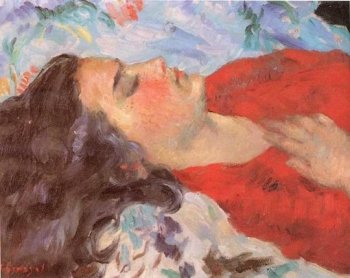
Sleeping Beauty by César Gemayel


painting: Sleeping Beauty by César Gemayel

What method can do and is not.

Quoting again from David Bentley Hart’s The Experience of God. Hart spends a good while comparing what he calls the naturalistic vs. the theistic pictures of the world, so that he can eventually get on with describing the theistic, as in the title of the book.

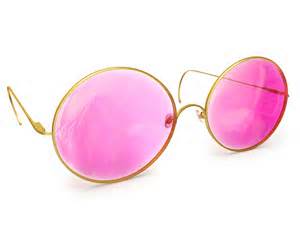
…we should not let ourselves forget precisely what method is and what it is not. A method, at least in the sciences, is a systematic set of limitations and constraints voluntarily assumed by a researcher in order to concentrate his or her investigations upon a strictly defined aspect of or approach to a clearly delineated object. As such, it allows one to see further and more perspicuously in one particular instance and in one particular way, but only because one has first consented to confine oneself to a narrow portion of the visible spectrum, so to speak. Moreover, while a given method may grant one a glimpse of truths that would remain otherwise obscure, that method is not itself a truth. This is crucial to understand. A method, considered in itself, may even in some ultimate sense be “false” as an explanation of things and yet still be probative as an instrument of investigation; some things are more easily seen through a red filter, but to go through life wearing rose-colored spectacles is not to see things as they truly are.Rosecolored-glasses