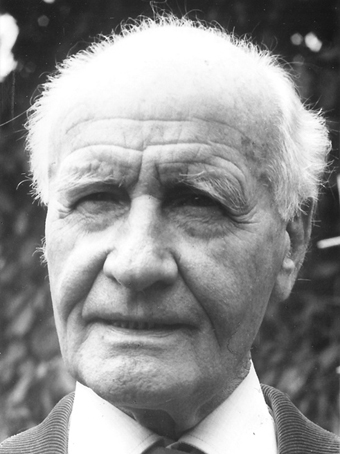
St. Hilary of Poitiers


A SONG OF DAWN

From  heaven has fled the starry night,
And startled sleep has taken flight;
The rosy morn, uprising, spills
Her crystal light o’er vales and hills.

Soon as the earliest ray we see,
Our souls are lifted, Lord, to thee;
Dear God, to thee, our prayers we bring;
To thee rejoicing hymns we sing.

Lord, be our hearts and hopes renewed
In light and love and gratitude,
So may our deeds, illumed by thee,
Worthy thy love and glory be.

We praise thee, Lord, forevermore;
Thee, with the Son our souls adore,
And with the Spirit, three in one,
Reigning while endless ages run.

-St. Hilary of Poitiers (310 – c. 367)
Translated by Daniel Joseph Donahoe

St. Hilary, Bishop of Poitiers in France, is known by some as the Athanasius of the West, for his defense of Nicene theology. This was before St. Ambrose became Bishop of Milan and rose to similar prominence and more fame. He wrote on many topics, including theosis, as below:

We shall be promoted to a glory conformable to that of Him Who became Man for us, being renewed unto the knowledge of God, and created again in the image of the Creator, as the Apostle says, Having put off the old man with his doings, and put on the new man, which is being renewed unto the knowledge of God, after the image of Him that created him. (Col. 3:9-10) Thus is man made the perfect image of God. For, being conformed to the glory of the body of God, he is exalted to the image of the Creator, after the pattern assigned to the first man. Leaving sin and the old man behind, he is made a new man unto the knowledge of God, and arrives at the perfection of his constitution, since through the knowledge of his God he becomes the perfect image of God. Through godliness he is promoted to immortality, through immortality he shall live forever as the image of his Creator. (On the Trinity 11.49)

You can read more about St. Hilary here.
He is remembered in the East and in the West on January 13.
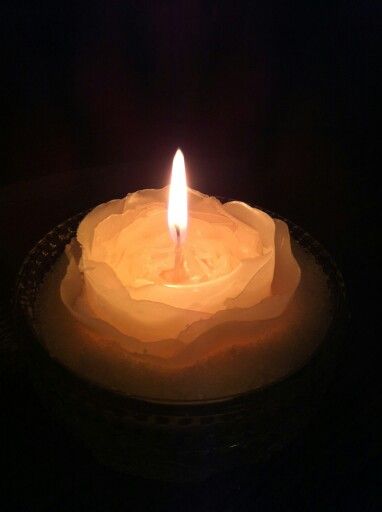

White is a Cloud Dancer.

I ran across the news that Pantone’s choice for Color of the Year 2026 is WHITE! No, not just white, of course, but “Cloud Dancer” white. This is the first time they have chosen a shade of white as the color of the year. I’ve never heard about this practice before, in the 25 years that the company has done it, but that’s because the colors I am interested in are in my garden or my clothes closet, not in a lab.

I personally wouldn’t want to take too much time thinking about one shade of one color, because God has generously given us so many, all day every day, unless we are living in the Arctic. White is a color many of you are seeing a lot of already right now, and not on your walls. Have you thought about giving names to the different shades of snow you are shoveling, or watching fall outside your window?

It’s not because of my lack of snow that I take the trouble to post about this, but because of G.K. Chesterton. He probably wouldn’t think much of someone choosing a Color of the Year, but he did himself write about one color in particular, without regard to style or global trends. For him, it was not merely about things seen, but things unseen, the Cosmos and the Kingdom of God:

“White is a colour. It is not a mere absence of colour; it is a shining and affirmative thing, as fierce as red, as definite as black. When, so to speak, your pencil grows red-hot, it draws roses; when it grows white-hot, it draws stars.

“And one of the two or three defiant verities of the best religious morality, of real Christianity, for example, is exactly this same thing; the chief assertion of religious morality is that white is a colour. Virtue is not the absence of vices or the avoidance of moral dangers; virtue is a vivid and separate thing, like pain or a particular smell. Mercy does not mean not being cruel or sparing people revenge or punishment; it means a plain and positive thing like the sun, which one has either seen or not seen. Chastity does not mean abstention from sexual wrong; it means something flaming, like Joan of Arc.

“In a word, God paints in many colours; but He never paints so gorgeously, I had almost said so gaudily, as when He paints in white.”

-G.K. Chesterton, “A Piece of Chalk,” in Tremendous Trifles


Betting crust and crumb.

ECCLESIASTES 11:1

We must cast our bread
Upon the waters
 as the

Ancient preacher said,

Trusting that it may
Amply be restored to us
After many a day.

That old metaphor,
Drawn from rice farming on the
River’s flooded shore,

Helps us to believe
That it’s no great sin to give,
Hoping to receive.

Therefore I shall throw
Broken bread, this sullen day,
Out across the snow,

Betting crust and crumb
That birds will gather, and that
One more spring will come.

-Richard Wilbur

At Pearl’s in Wisconsin.