Tag Archives: acanthus

Chocolates and swans in the garden.

I noticed recently that I am always writing the same words about my garden. Things have changed a bit in the last year, though. I’m not sure the net result is positive, but maybe it will all lead to me saying something new eventually.

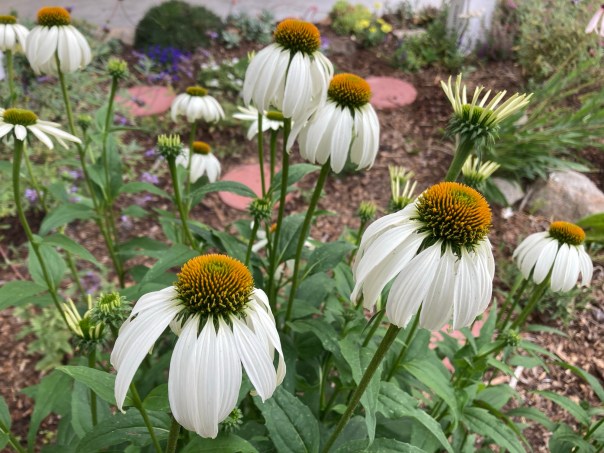
Echinacea with teucrium in background.

The new landscaper is soon going to be the former landscaper. He just doesn’t have a vision of garden beauty that matches mine, and I haven’t been won over. Unfortunately, I had to actually see his ideas “leafed out” before I could know how wrong they are; now I need to fix some design problems by moving plants in the fall, and buying a couple of new ones. I’d hoped to have all this done by last fall and to be enjoying the refurbished areas by now.

Chocolate Cosmos with an Iceland Poppy behind.

Oh, well, a garden is always a process, and I suppose it’s like with so many projects: everything takes longer than expected. And it is a joy to work out there, or to wander. I took a walk in a more upscale neighborhood near mine, and noticed that some front yards are tidy and boring, and some are a bit messy or hodgepodge-y. The latter are obviously houses where the owner(s) like gardening and are trying out different things, and don’t have the time or know-how to do the successive plantings or the upkeep to keep it looking interesting and orderly at the same time. So I won’t worry too much if mine is not perfect, either… It’s just that I thought the area right by the front door should look more put together than it does.

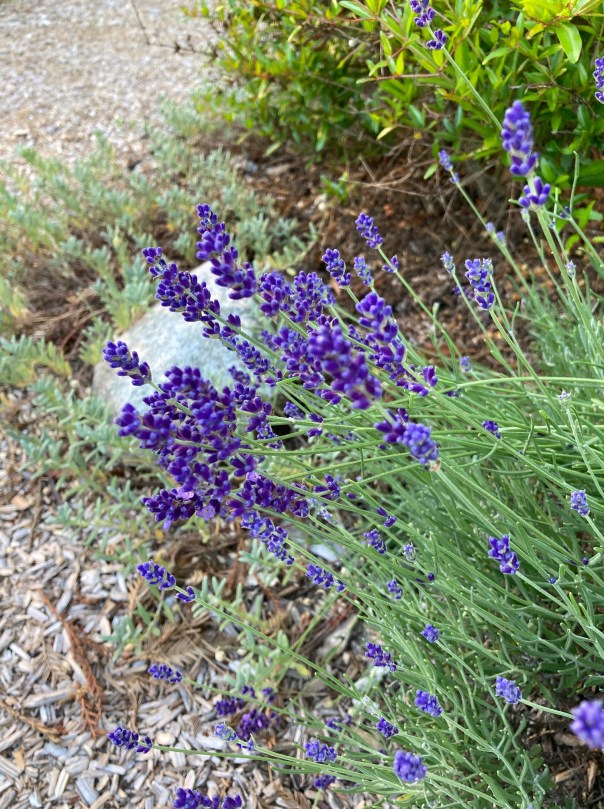
Lavender and fig tree

Depending on the viewing angle and size of frame you are focusing on, there are still some very nice scenes, front and back. Those are the ones I’m sharing in this post. My own hodgepodge I will ignore for now.
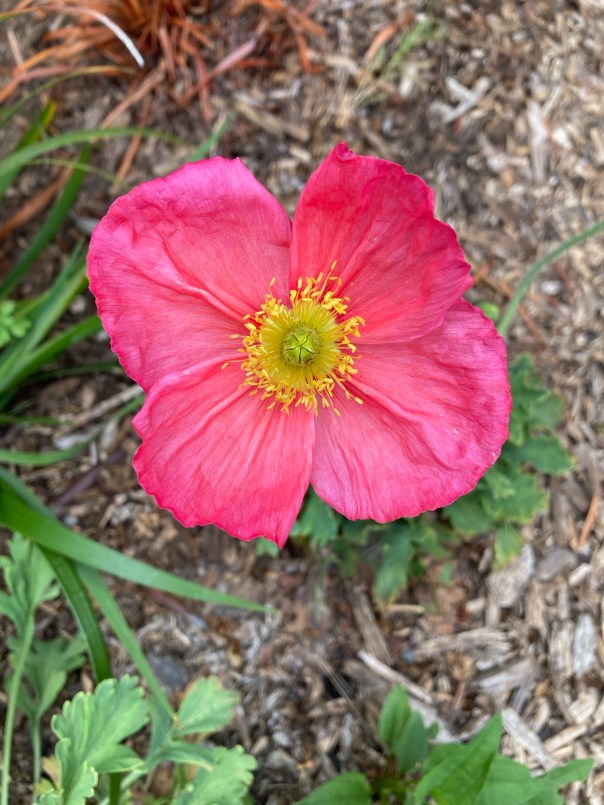
The Chocolate Cosmos is new to me and to the garden. There are three shades of color, and the plants I bought are medium-dark chocolate. They are perennials with a tuberous root, and reports conflict about whether they will even like winters here. I had to take out some very happy Iceland poppies to make a place for them; it must be that the poppies are getting enough shade there to keep blooming, and I’m glad I didn’t have to take them all out yet.

One thing I like is that the landscaper divided the White Swan echinacea so that I have more of it now; likewise a favorite violet salvia. I’m working on getting even more of those White Swans to plant in a couple of months before they go dormant.
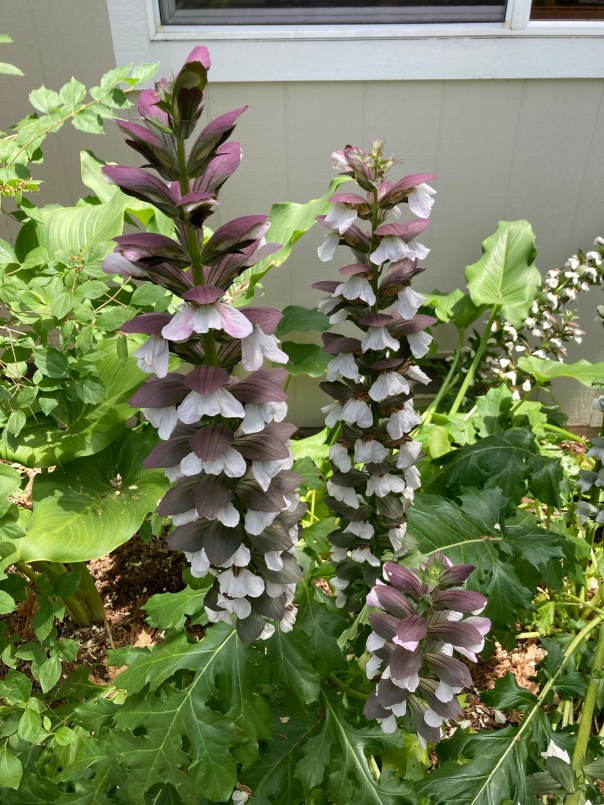
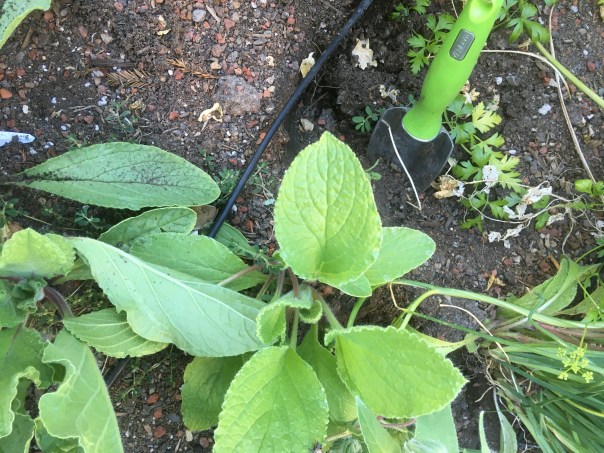
Today I cleaned up around some plants, like the acanthus above, taking away dead leaves and pulling out little grass sprouts that are remnants of big ornamental grasses that I removed last year. The grass shoots were growing out of the Yerba Buena ground cover, too, so as I knelt on it or moved the long stems aside, its most delicious scents were released into the atmosphere.

It was only recently that I learned, or remembered, that these white echinaceas are called Swans. It really is the perfect name for them, and makes me love them more. My garden is overflowing with gifts

Thorny and Byzantine

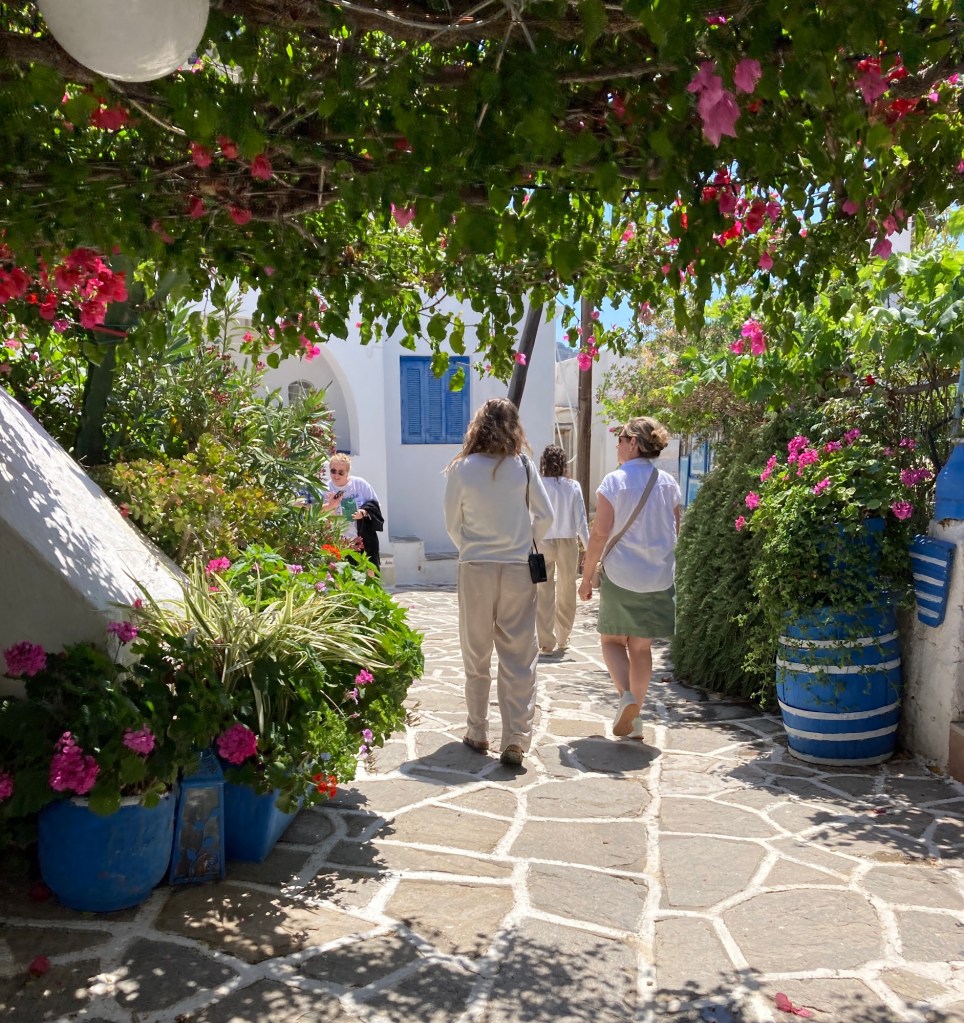
In Lefkes

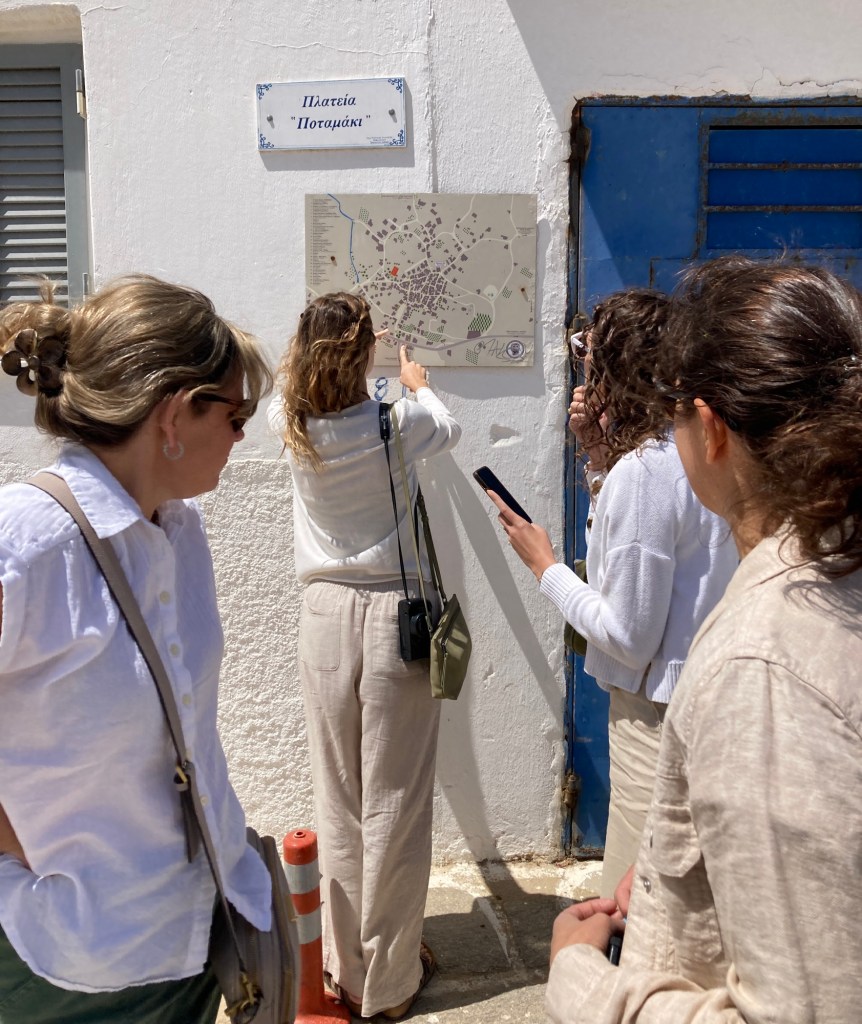
The skies had cleared and the wind was still blowing when we set off for the high country of Paros, on our first whole day here. In the village of Prodromos signs for Public Parking led us to a dirt lot, and the bus stop a short walk from there, where we hoped to catch a bus up to the town of Lefkes.

We could make out from the roadside sign, conveniently right outside a bakery, that our bus would not arrive for another hour and a half, so we did a little shopping —yes, including of pastries — and found a taverna where we could have an unfortunately quick lunch in the meantime.

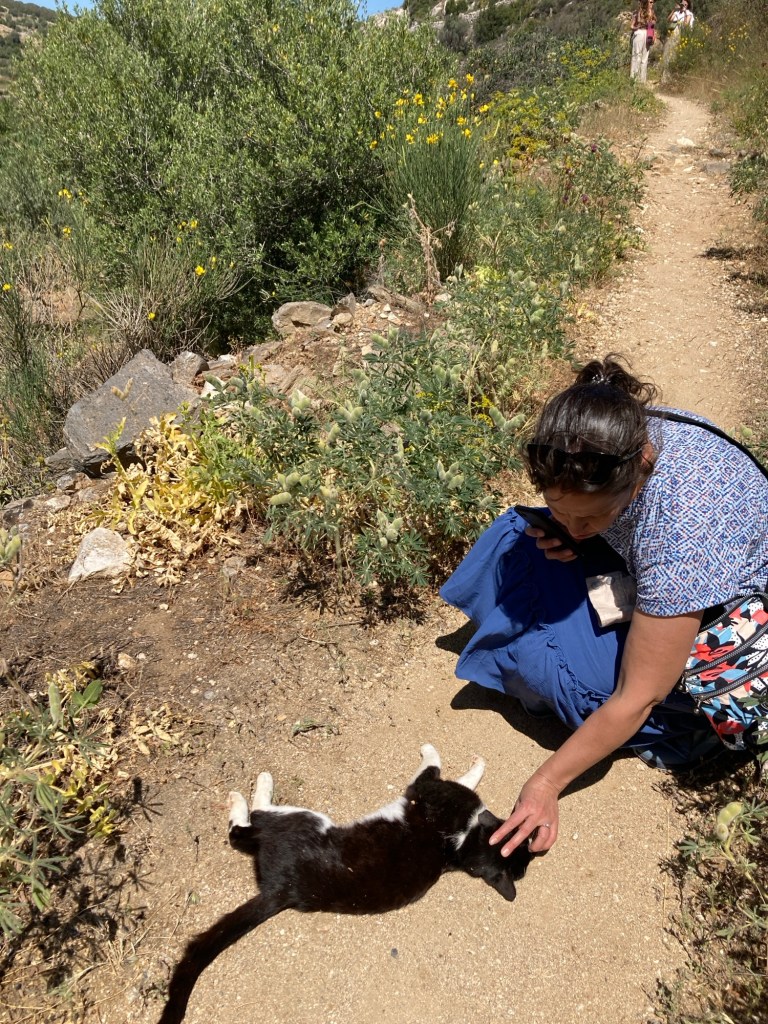
The only other people in the restaurant were five older Greek men in a traditional and more relaxed midday gathering, for whom the five of us chatting and laughing over our menus clearly provided an interesting diversion; they couldn’t stop watching us. We petted the cat while waiting for our orders, and kept an eye on the time so we wouldn’t miss the one bus that we needed.

At every restaurant in Greece so far we’ve found that restaurant wait staff are reluctant to bring the check, which applies a gentle pressure to linger, and enjoy to the max the great food and ambiance. We felt ourselves to be rude and unappreciative of the chance to experience a village taverna complete with cat, and old men gossiping over their coffee.

We even had to leave an entire kebab untouched, but I stuffed the extra bread in my shoulder bag to take along, with breakfast toast in mind.

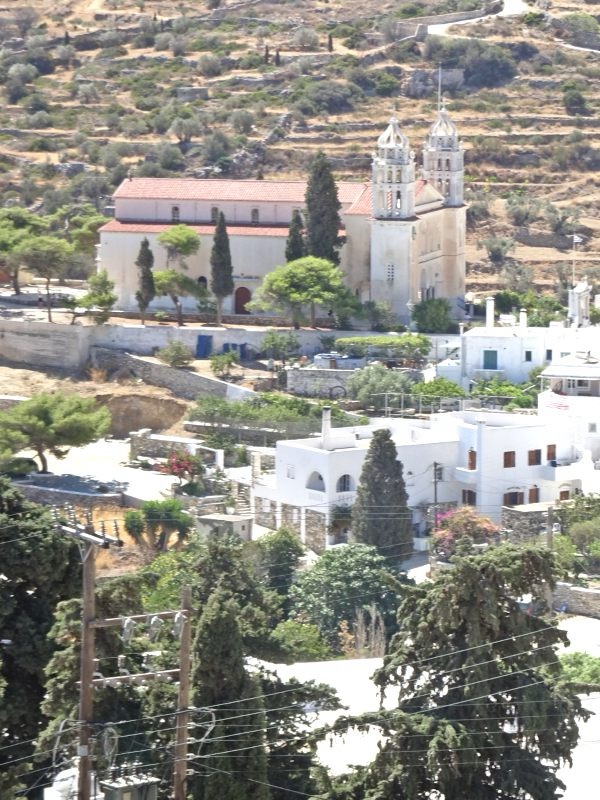
After a quick bus ride up to Lefkes, we strolled through the town, always heading gently downhill, on the Byzantine Trail, a thousand year old road that is by modern standards a path between Lefkes and Prodromos. The huge 19th century Agia Triada church that was built of local marble we found closed; reportedly services are held morning and evening every day.

Lefkes, Internet photo

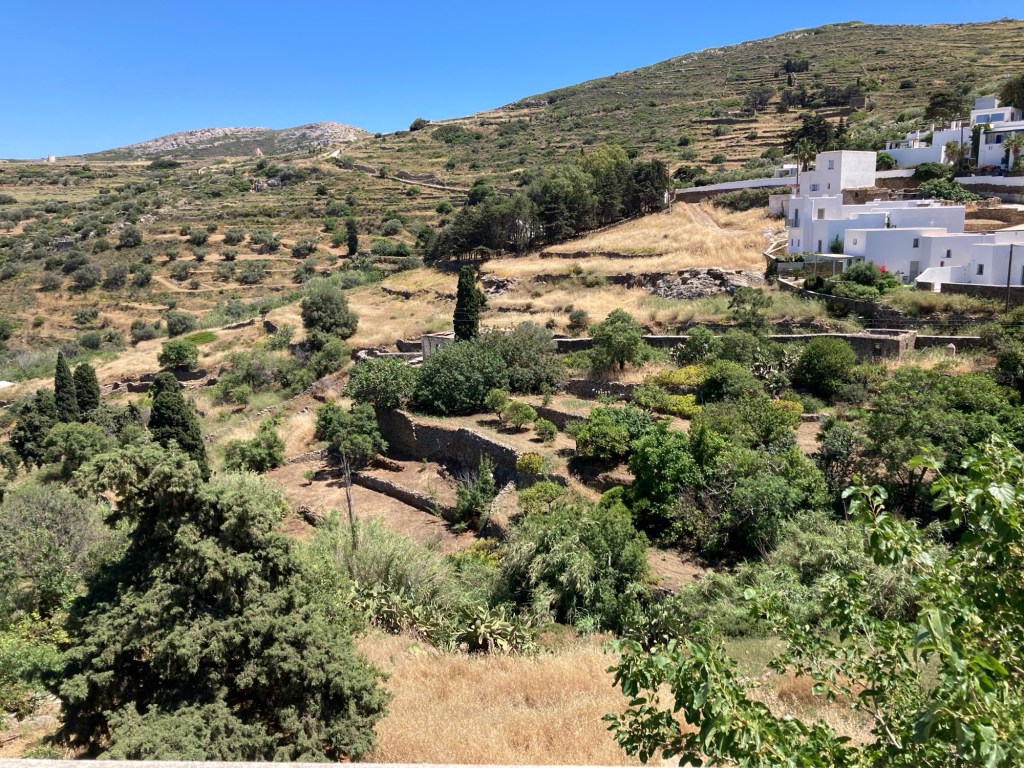
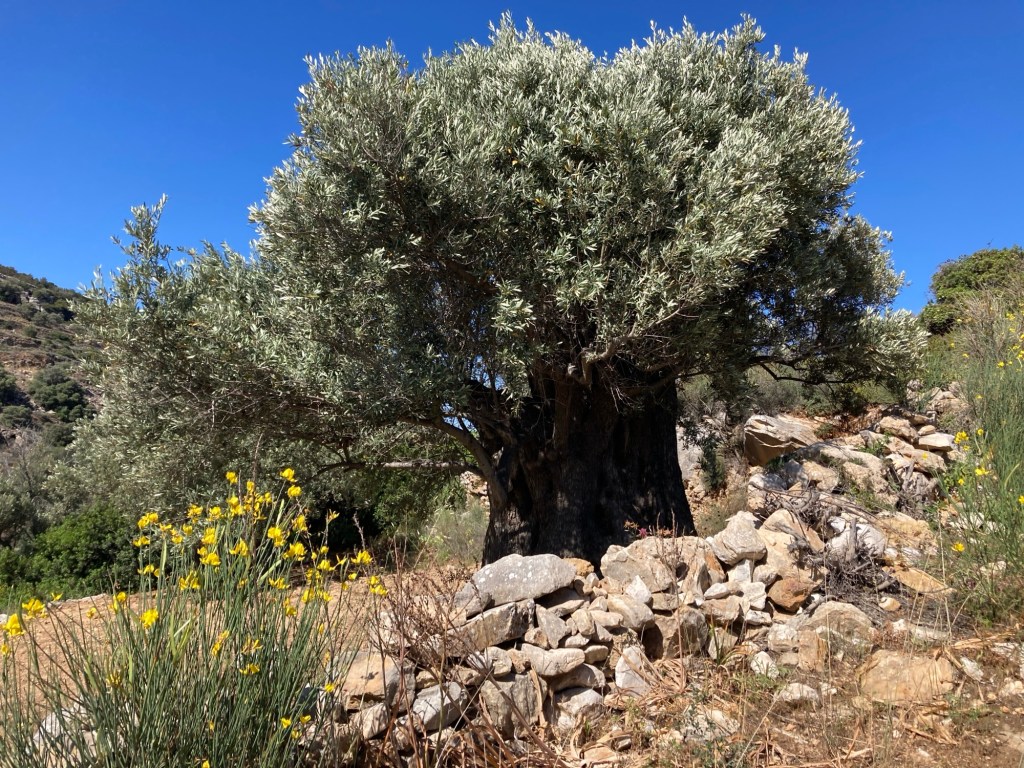
The trail soon left the town and wound on down the hill, with views on all sides of ancient terraces built of stones pulled from the earth that is rich with them, and naturally poor from the stoniness. A few of the thousands of plots are evidently being used again, though tourism has supplanted agriculture in the island economy.

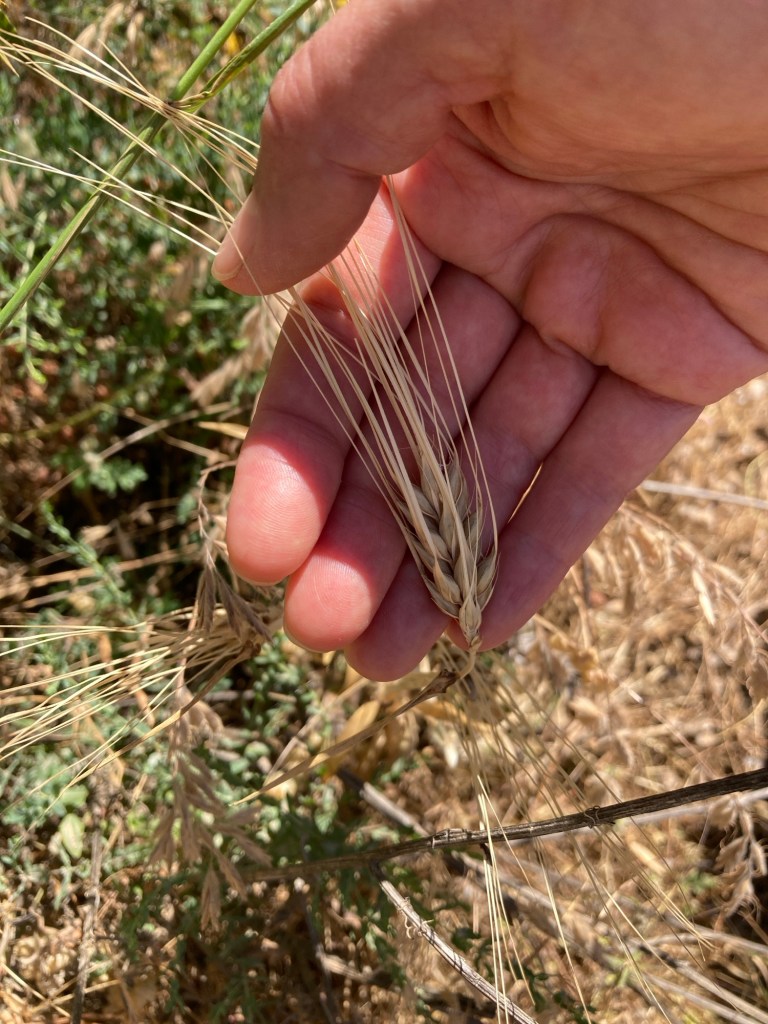
Barley

It is easy to imagine the farmers in the old days growing fava beans and keeping goats on those terraces. We did pass one old man keeping watch over his goats that very afternoon.

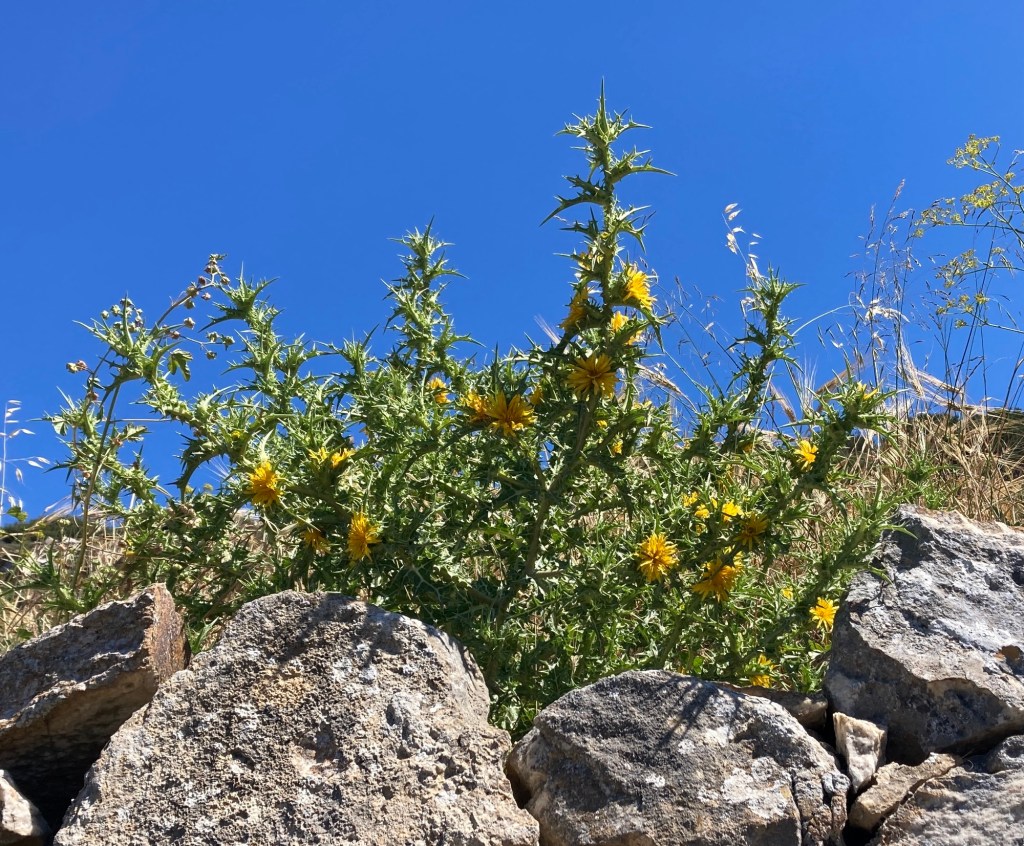
Pippin and I kept lagging behind the others to investigate all the strange or familiar plants along the path, which included at least a dozen species of prickly types.

Common Golden Thistle

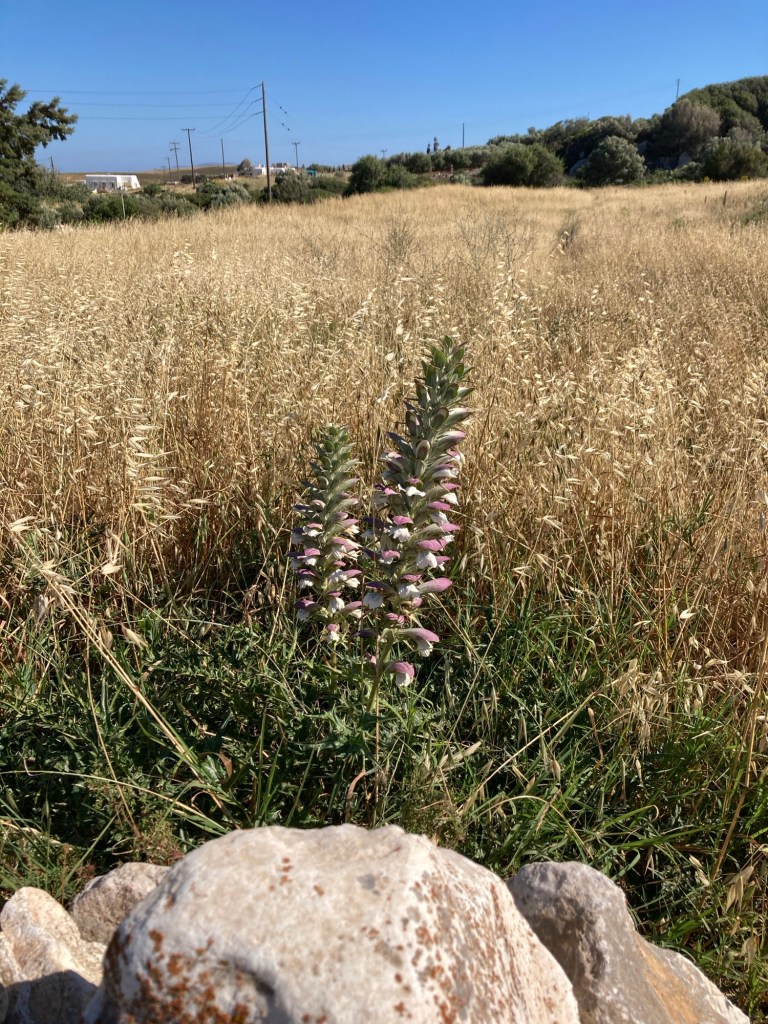
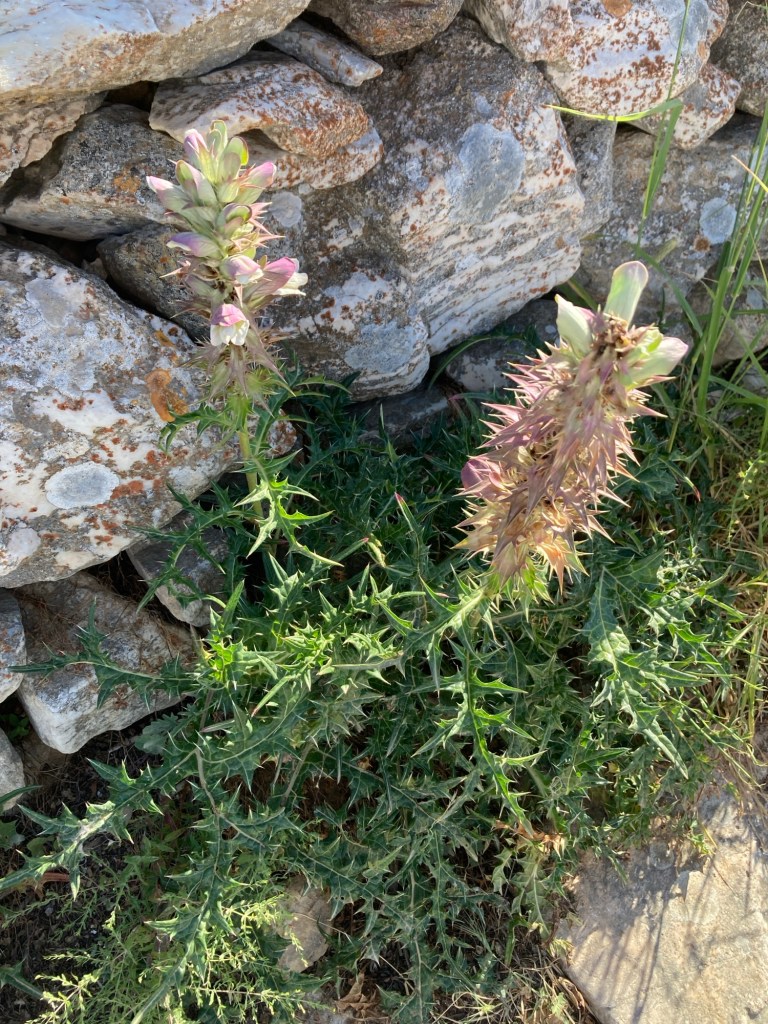
There was even a beautiful but thorny type of acanthus, which it took me a few sightings in different stages of its flowering to recognize as being related to the majestic version in its glory right now, back home in my garden.

Acanthus

I was so happy to be wearing my new hiking boots that kept me comfortable and mostly steady on the road that was sometimes dirt, sometimes roughly rocky and uneven, and often paved with wide and flat marble that had been polished smooth over the centuries.

Phoenician Juniper

The ubiquitous cats greeted us on the Byzantine Road, begging attention, which at least a couple of us were happy to give.

I was in my element, under the warm sun, so many interesting plants to see, with my favorite botanist partner and in the company of other family favorites, getting good exercise among terraced hills — it all was so healthy and alive that I could forgive the wind that tangled my hair, and the thistles that grabbed at my legs.

Yellow Spine Thistle

I hadn’t known ahead of time just how much of a nature walk this trail was going to be, and I couldn’t get over my good fortune at being the recipient of this blessing, accomplished through the labors of my girls, from Kate who was willing to drive to Maggie who buys us pastries.

Eventually our walking trail brought us back to our car in Prodromos, and we returned to our house across the island. At the end of the day we had walked more than five miles, and we all slept very well that night under Aegean skies.

A gardener’s work and prayer.

I’ve been in the garden every day, at least a little, and often a lot. When I come downstairs in the morning and realize that it’s already warm enough that I can slide the glass door open, without thinking about it I slide open the screen door, too, and go out to have a look.

The bluebird parents can be seen flying back and forth to feed the peeping infants. Finches, sparrows, hummingbirds and even the flirty Bewick’s Wren fill the space with their songs. Oh, and crows. It is a new thing the last few years to have crows in my yard. I prefer the old way, and I politely ask them to leave. They leave but they come back.

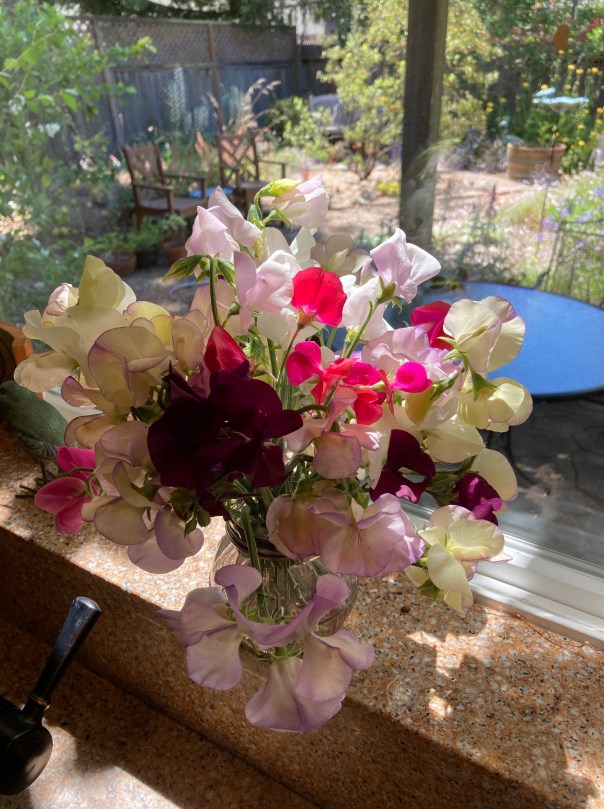
Often in the morning I will put water in the fountain, and trim a little here or pull a weed there. Most days I seem to spend quite a while picking sweet peas.

The sweet peas have become very intimate with the perennial runner beans. The sweet peas were up on the trellis months earlier, and were covered with flowers when the bean stems emerged at three corners of the planter boxes and started climbing. They mostly twist their stems around the pea vines as they climb, and quickly they have outclimbed the peas.

The pea vines responded in kind, continuing their reach for the sky by holding on to the beans. This relationship has to end, though, because the peas are expiring while the beans are only now putting out a few flowers. So, the last couple of days when I pick the flowers, I’m also going to a lot of trouble to break up this love affair without breaking the bean stems. Let’s hope I can plan better and not let this situation develop next spring.

When the sun gets too high and I start to droop, I go indoors and do housework. Or read poems. I’ve been bingeing on them in the last week, and hope to share my favorites here eventually. Maybe in the fall when I have finished my Big Sort, the organizing of all my Stuff: rooms, closets, cabinets, drawers and belongings to throw, give or put away. I hope the Big Sort will be done long before that, but there is the garden…

Acanthus

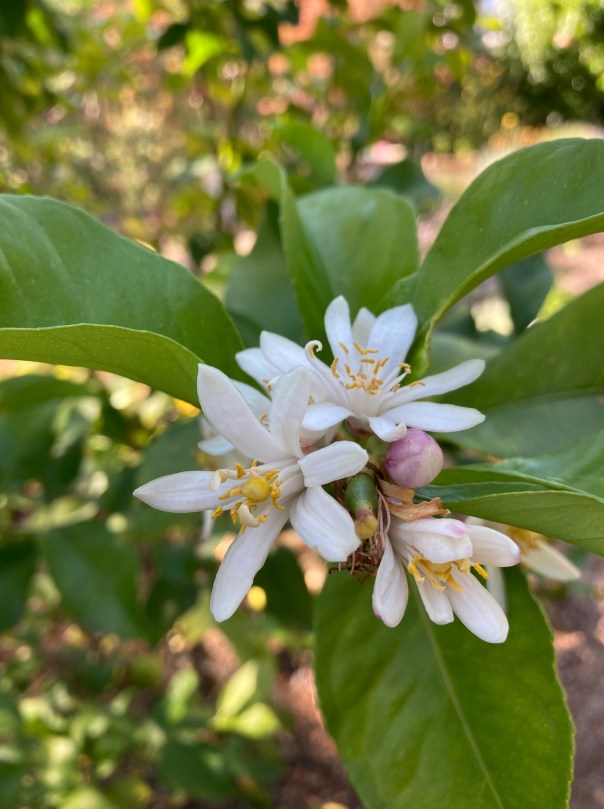
Lemon

Lavender

I mixed up some fish emulsion and fed the lemon tree today. I wanted to give it more iron, too, but I read on the bottle that you should not apply that until late evening. It was time for a break, anyway, so here I am. And here is a poem I read last night, which I hope you like:

GARDENER’S PRAYER

O Lord, grant that in some way
it may rain every day,
Say from about midnight until three o’clock
in the morning,
But, You see, it must be gentle and warm
so that it can soak in;
Grant that at the same time it would not rain on
campion, alyssum, helianthus, lavendar, and others which
You in Your infinite wisdom know
are drought-loving plants-
I will write their names on a bit of paper
if you like-
And grant that the sun may shine
the whole day long,
But not everywhere (not, for instance, on the
gentian, plantain lily, and rhododendron)
and not too much;
That there may be plenty of dew and little wind,
enough worms, no lice and snails, or mildew,
and that once a week thin liquid manure and guano
may fall from heaven.
Amen.

-Karel Matej Capek Chod
(1860 -1927) Czech Republic

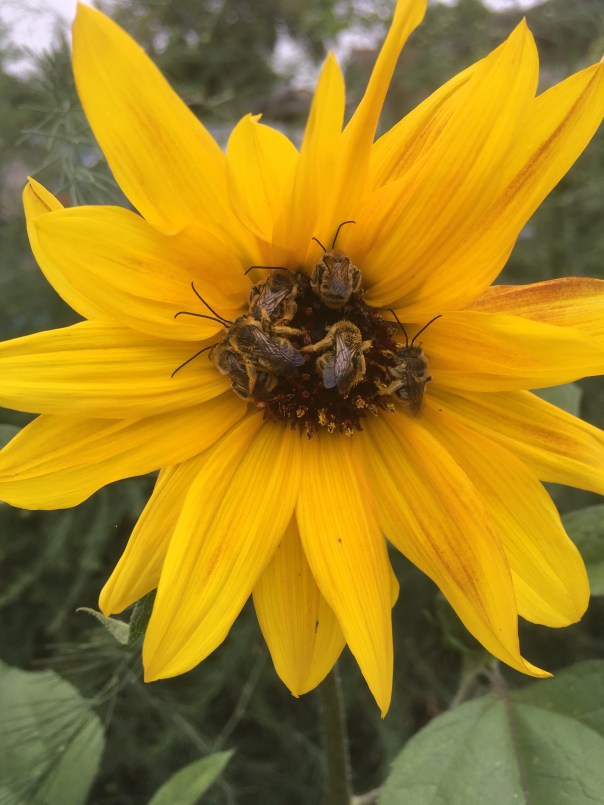
Joanna and the sleeping bees.

It felt very coastal this morning with high fog and chill breeze. Along the front walk where I have allowed a volunteer sunflower to grow in the middle of the germander, one flower was close enough for me to notice the cluster of bees.

How did they happen to all bed down for the night on that one flower? Were they even alive? A half-hour later on my way to the car to drive to church I stopped by again; one or two had left, and the others had shifted position, but were quite motionless. About noon, not one remained. [Update: the next morning they were back, and after watching them off and on for an hour, I think they are not bees, but hoverflies. I’ve mistaken them for bees before.] [UPDATE No. 2: I was right the first time. They are bees. They fold their wings over each other, but flies leave theirs splayed out. I think I’ve learned this more than once, on a site such as Beekeeping Like a Girl. And other differences…]

Today was the day we celebrated St. Joanna, and it was also the meeting of our parish women’s book group — in my garden! The weather was as perfect as could be for that. Our group of six included several gardeners who didn’t sit down until we’d discussed borage and the borage flowers hanging into the pathway. The bees draw your attention to them! I quickly dug up a few of the many little borage volunteers for a couple of women to take home later.
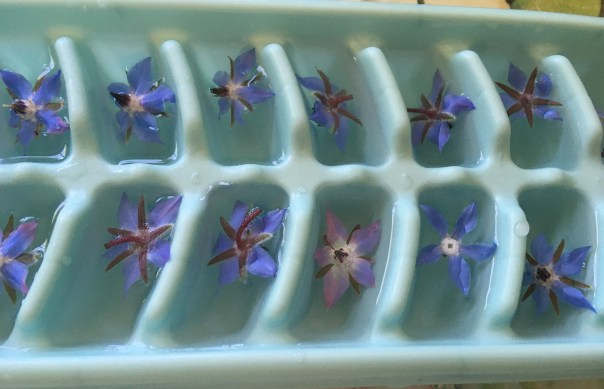
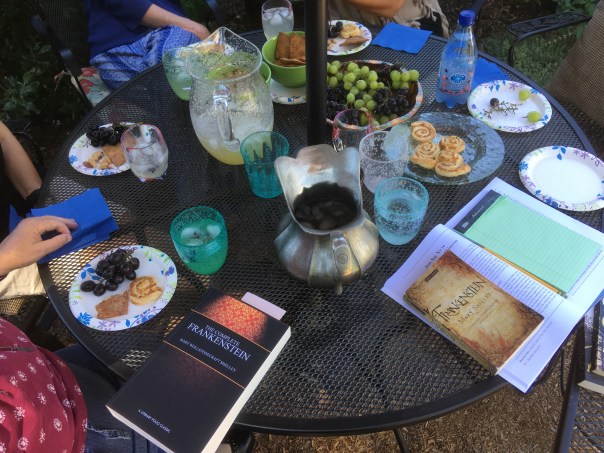
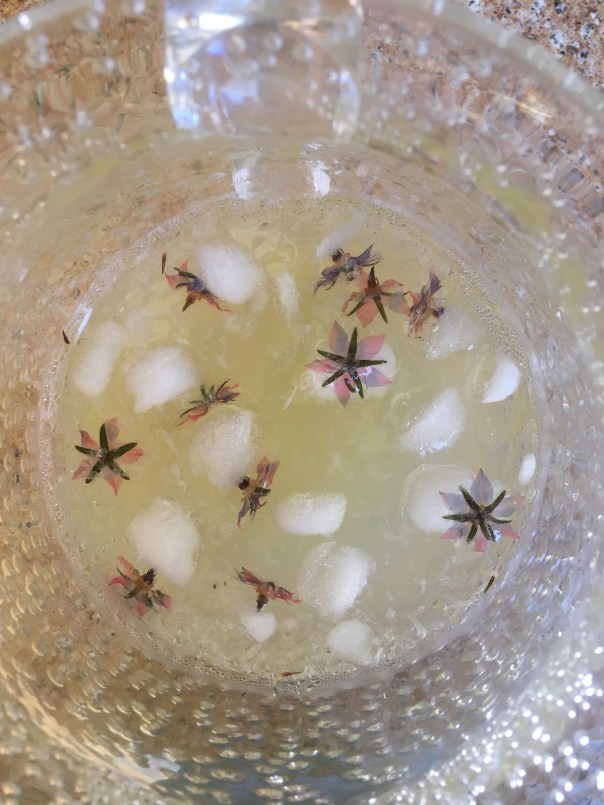
It just so happened I had made two trays of borage ice cubes and it was time for me to add them to the lemonade so we could start talking about Frankenstein.

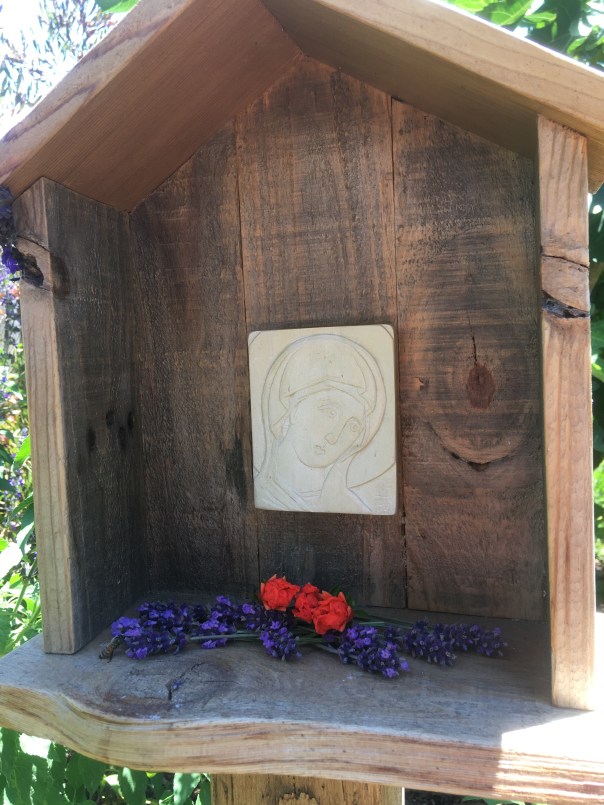
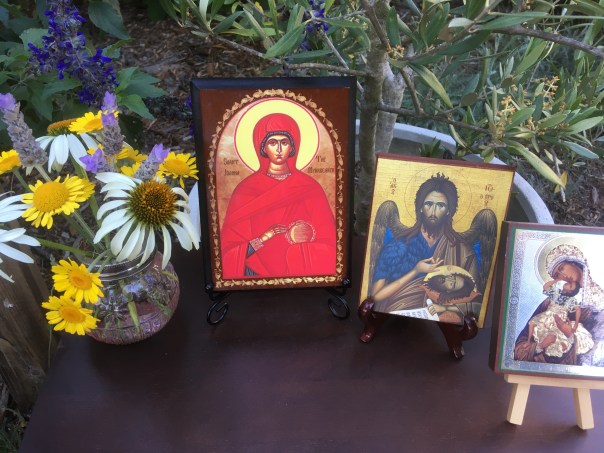
The table where we sat is near my garden icon stand with the stone icon of Christ’s mother; for the day’s commemoration I nestled a TV tray under the olive tree to hold a few more icons. You can read here why I included St. John the Baptist among them.

Early in our talk about Frankenstein I showed the group this adaptation of the novel that had been given to me, and it got passed around the table so that everyone could take a look at the illustrations.

We had a lively discussion about elements of the story, and also concerning ethical questions about the uses of science that are still pertinent in our day. I read only a few lines to the group from this article in the current issue of The New Atlantis about recent questionable experiments.

Various of the readers in our group knew more than I about the historical and philosophical context in which Frankenstein was written, which made it a pleasure to be with them and muse about much more than what had impressed me personally. I think we all were glad to have read the book, especially those who before had only known the movies, but no one exactly loved it.

It didn’t have a satisfying ending, in that, as our moderator said, she had hoped for redemption and there was none. We all agreed it was too long and repetitive. Several women said they definitely wanted to read something “lighter” next time. What constitutes a light novel? Here are the (not necessarily light) possibilities we had brought with us. As we went around the table making our suggestions, it seemed to me that the enthusiasm mounted with each one.

  1. A Long Walk with Mary by Brandi Schreiber
  2. My Cousin Rachel by Daphne De Maurier
  3. The Giver by Lois Lowry
  4. Shades of Milk and Honey
  5. The Guernsey Literary and Potato Peel Pie Society
  6. The Scent of Water by Elizabeth Goudge

My Cousin Rachel and The Giver were deemed too heavy. Milk and Honey didn’t engender any discussion, and I was personally torn between Potato Peel Society and Scent. Several had already read Potato Peel so they were leaning toward Scent; I was the only one who had read it, and I told them what I loved about Goudge’s books generally. A Long Walk with Mary seemed like a good one to read during our Orthodox Dormition Fast.
So, we voted in a very informal way, and decided that in six weeks we will meet again and discuss two books: The Scent of Water and A Long Walk with Mary.

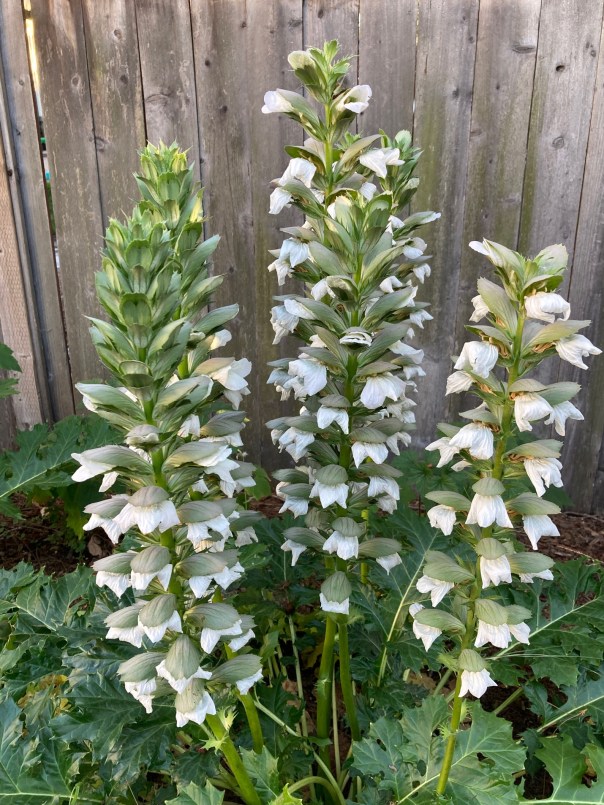
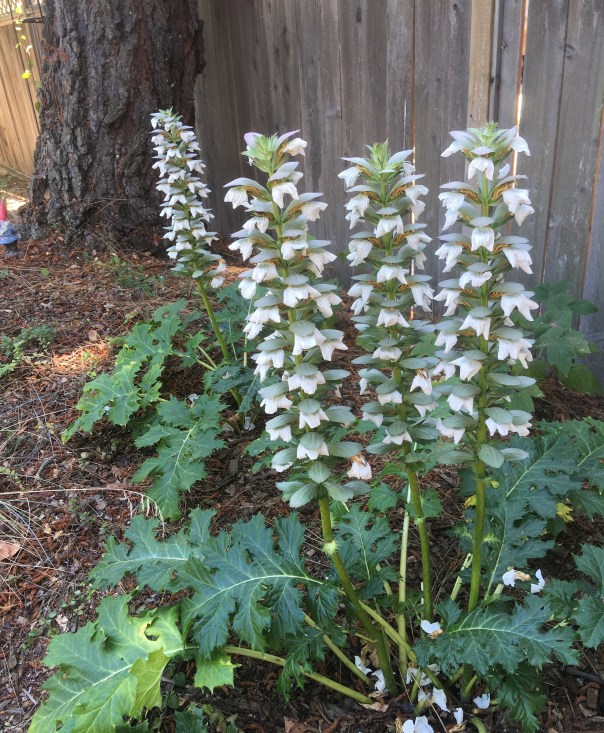
Before everyone went home, we toured the other side of my garden, and I told them about acanthus and why I used to not like it, but now I do. The acanthus is more beautiful than ever, its spires taller, and in their prime right now. My 24 lavender bushes are at the height of bloom, too. We got to hear from our sheep farmer lady how she made lavender simple syrup to use in cool summer drinks.

How sweet it was to have these friends to be with me for my name day. After they were gone, there was still lemonade left in the pitcher, and floating among the melting ice cubes, the lemon-bleached borage blossoms.