LAZARUS SATURDAY
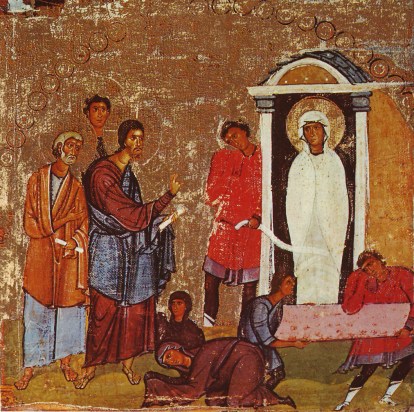
“’It stinketh,’ say the Jews trying to prevent Jesus from approaching the corpse, and this awful warning applies to the whole world, to all life. God is Life and the Giver of Life. He called man into the Divine reality of Life and behold ‘it stinketh’…The world was created to reflect and proclaim the glory of God and ‘it stinketh.’
“At the grave of Lazarus God encounters Death, the reality of anti-life, of destruction and despair. He meets His Enemy, who has taken away from Him His World and become its prince. And we who follow Jesus, as He approaches the grave, enter with Him into that hour of His, which He announced so often as the climax and the fulfillment of his whole work. The Cross, its necessity and universal meaning are announced in the shortest verse of the Gospel: ‘and Jesus wept’ …We understand now that it is because He wept, i.e., loved His friend Lazarus, that Jesus had the power of calling him back to life.
“The power of Resurrection is not a Divine ‘power in itself,’ but power of love, or rather love as power. God is Love and Love is Life, Love creates Life…It is Love that weeps at the grave and it is Love that restores life. This is the meaning of the Divine tears of Jesus. In them love is at work again—recreating, redeeming, restoring the darkened life of man: ‘Lazarus, come forth!…’ And this is why Lazarus Saturday is the beginning of both: the Cross, as the Supreme sacrifice of love, the Resurrection, as the ultimate triumph of love.”
-Fr. Alexander Schmemann
It is the end of Lent in the Orthodox Church. We enter Holy Week with Lazarus Saturday, and though we do fast until Pascha, it’s not technically Lent anymore for us. We now stop thinking about whether we succeeded or failed at Lent, because we need to focus on what God has done and be fully present for these last days of the remembering of the death and resurrection of the Lord.
Matins of Lazarus Saturday is a time to remember the whole story of how Lazarus had been dead four days when Jesus came into town and his friends said, “If only you had been here, he wouldn’t have died.” And Jesus wept. Then He showed his power over death, and raised Lazarus. And then followed the events that sent Him to His own death, which He also overcame for our sakes. His powerful beauty is still filling this world.
“Despite the effects of the Fall and despite our deep sinfulness, the world continues to be God’s creation. It has not ceased to be ‘altogether beautiful.’ Despite human alienation and suffering, the Divine Beauty is still present in our midst and still remains ever active, incessantly performing its work of healing and transfiguration. Even now beauty is saving the world, and it will always continue to do so. But it is the beauty of a God who is totally involved in the pain of the world that He has made, of a God who died on the Cross and on the third day rose victorious from the dead.”
–Metropolitan Kallistos
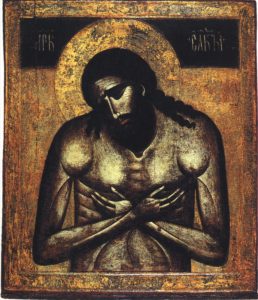
(Old material from the archives, but Life ever new.)
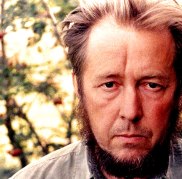 . However, it was not he who created this world, nor does he control it; there can be no doubts about its foundations. It is merely given to the artist to sense more keenly than others the harmony of the world, the beauty and ugliness of man’s role in it—and to vividly communicate this to mankind. Even amid failure and at the lower depths of existence— in poverty, in prison, and in illness—a sense of enduring harmony cannot abandon him.”
 We’re coming to the end of what is the “school year” for most families, and often thoughts are on what options will be best for the children next year. I offer excerpts from what I found to be a very encouraging article, for all of you loving and diligent parents out there! (And pictorial “excerpts” from the lives of homeschoolers I’ve known. 🙂 )
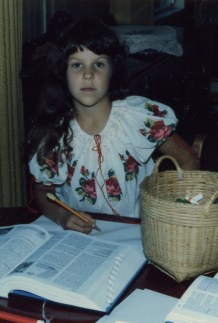 “…No doubt there are conservative and conscientious redoubts here and there in the bleak landscape of public schooling, but if it seems to you that your child is being transformed for the worse by attending school, you are likely correct.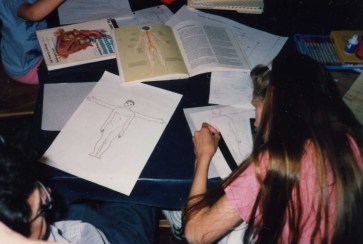

 wound the entire human community. Real educators see something beautiful in us, and long to bring it into the light. Yeats calls it an ‘image that blossoms, a rose in the deeps of his heart.'”
 none of the dire consequences predicted came to pass. Our children are well-adjusted. They love God, and they love life. And they are doing well enough in life, even as the world measures these things.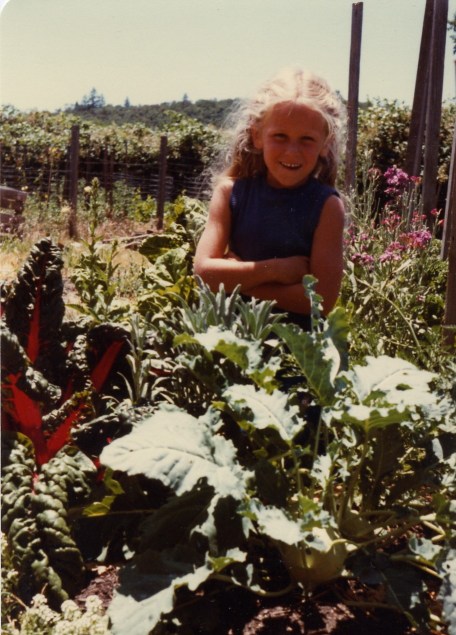
 Gladsome Lights