Tag Archives: beauty

Possessing Beauty

No changing of place at a hundred miles an hour will make us the one whit stronger, happier, or wiser. There was always more in the world than men could see, walked they ever so slowly; they will see it no better for going fast. The really precious things  are thought and sight, not pace. It does a bullet no good to go fast, and a man, if he be truly a man, no harm to go slow; for his glory is not at all in going, but in being.

      –John Ruskin, quoted in The Art of Travel by Alain de Botton
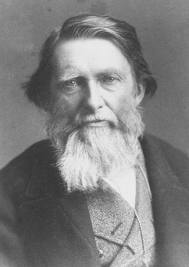
John Ruskin

Ruskin is one of the “guides” the author takes as a teacher in his study of this art of travel; this particular guide yearns to give us his students the tools to understand and possess beauty. Ruskin believed that we can only understand beauty by paying close attention to it, and that attempting to describe nature through writing or drawing was the surest way to focus the mind sharply enough.

On the topic of drawing Ruskin published two books in the 1850’s and gave lectures in London, but the point of his instruction was never to produce students who could draw well. He wanted to teach people to notice, and to “direct people’s attention accurately to the beauty of God’s work in the material universe.”

Right here is a good place to propose that we who believe in God the Creator also take as our teacher John Ruskin, rather than Mr. de Botton, because I doubt that we can learn much directly on the subject of beauty, especially on how to possess it, from a man who doesn’t understand that beauty, and in fact all that he possesses, are gifts from his Father God.

De Botton’s most recent book is Religion for Atheists, which he wrote from the conviction that a disbelief in God should not prevent atheists such as himself from making use of various aspects of the major world religions to better their lives. No doubt many professing Christians have a similar pragmatic outlook, and are missing out on the essence of the faith, Who is Christ Himself, the Bread of Life, the Glory of God the Father.

In musing about the beauty of God, I came upon a website with that title, featuring quotes from Jonathan Edwards. Many people have caught a bad impression of Edwards from those who speak of what they know not, but long ago I learned that the most frequent word in the preacher’s sermons was “sweet,” in reference to God and fellowship with Him. It’s not surprising that he had something to say about beauty as well. (The following paragraphs from Edwards were taken from his writings “The Mind” and “True Virtue” and bundled on the webpage with the added headings.)

God is Beautiful: “For as God is infinitely the greatest Being, so he is allowed to be infinitely the most beautiful and excellent; and all the beauty to be found throughout the whole creation, is but the reflection of the diffused beams of that Being who hath an infinite fulness of brightness and glory.”

Jonathan Edwards

Beauty is a kind of consent or harmony: “[Beauty is] a mutual consent and agreement of different things, in form, manner, quantity and visible end or design; called by the various names of regularity, order, uniformity, symmetry, proportion, harmony, &c. . .”

“One alone, without any reference to any more, cannot be excellent; for in such case there can be no manner of relation no way, and therefore no such thing as Consent. Indeed what we call One, may be excellent because of a consent of parts, or some consent of those in that being, that are distinguished into a plurality in some way or other. But in a being that is absolutely without any plurality, there cannot be Excellency, for there can be no such thing as consent or agreement.”

Love is the highest kind of beauty: “The reason, or at least one reason, why God has made this kind of mutual agreement of things beautiful and grateful to those intelligent beings that perceive it, probably is, that there is in it some image of the true, spiritual, original beauty, which has been spoken of; consisting in being’s consent to being, or the union of spiritual beings in a mutual propensity and affection of heart. . . . And so [God] has constituted the external world in analogy to the spiritual world in numberless instances. . . . [He] makes an agreement of different things, in their form, manner, measure, &c. to appear beautiful, because here is some image of an higher kind of agreement and consent of spiritual beings.”

“When we spake of Excellence in Bodies, we were obliged to borrow the word Consent, from Spiritual things; but Excellence in and among Spirits is, in its prime and proper sense, Being’s consent to Being. There is no other proper consent but that of Minds, even of their Will; which, when it is of Minds towards Minds, it is Love, and when of Minds towards other things, it is Choice. Wherefore all the Primary and Original beauty or excellence, that is among Minds, is Love.”
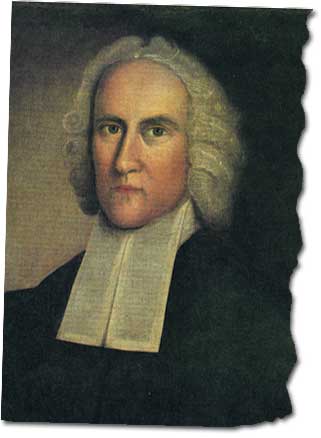
God is beautiful because He is a Trinity: “As to God’s Excellence, it is evident it consists in the Love of himself; for he was as excellent before he created the Universe, as he is now. But if the Excellence of Spirits consists in their disposition and action, God could be excellent no other way at that time; for all the exertions of himself were towards himself. But he exerts himself towards himself, no other way, than in infinitely loving and delighting in himself; in the mutual love of the Father and the Son. This makes the Third, the Personal Holy Spirit, or the Holiness of God, which is his infinite Beauty; and this is God’s Infinite Consent to Being in general. And his love to the creature is his excellence, or the communication of himself, his complacency in them, according as they partake of more or less of Excellence and beauty, that is, of holiness (which consists in love); that is, according as he communicates more or less of his Holy Spirit.”

Jonathan Edwards did not have a perfect understanding of Trinitarian doctrine, but I am still very blessed by his giving glory to the Holy Trinity for Beauty, which of course can have its source and perfect demonstration no where else. For readings on the Holy Trinity I commend to you these pages.
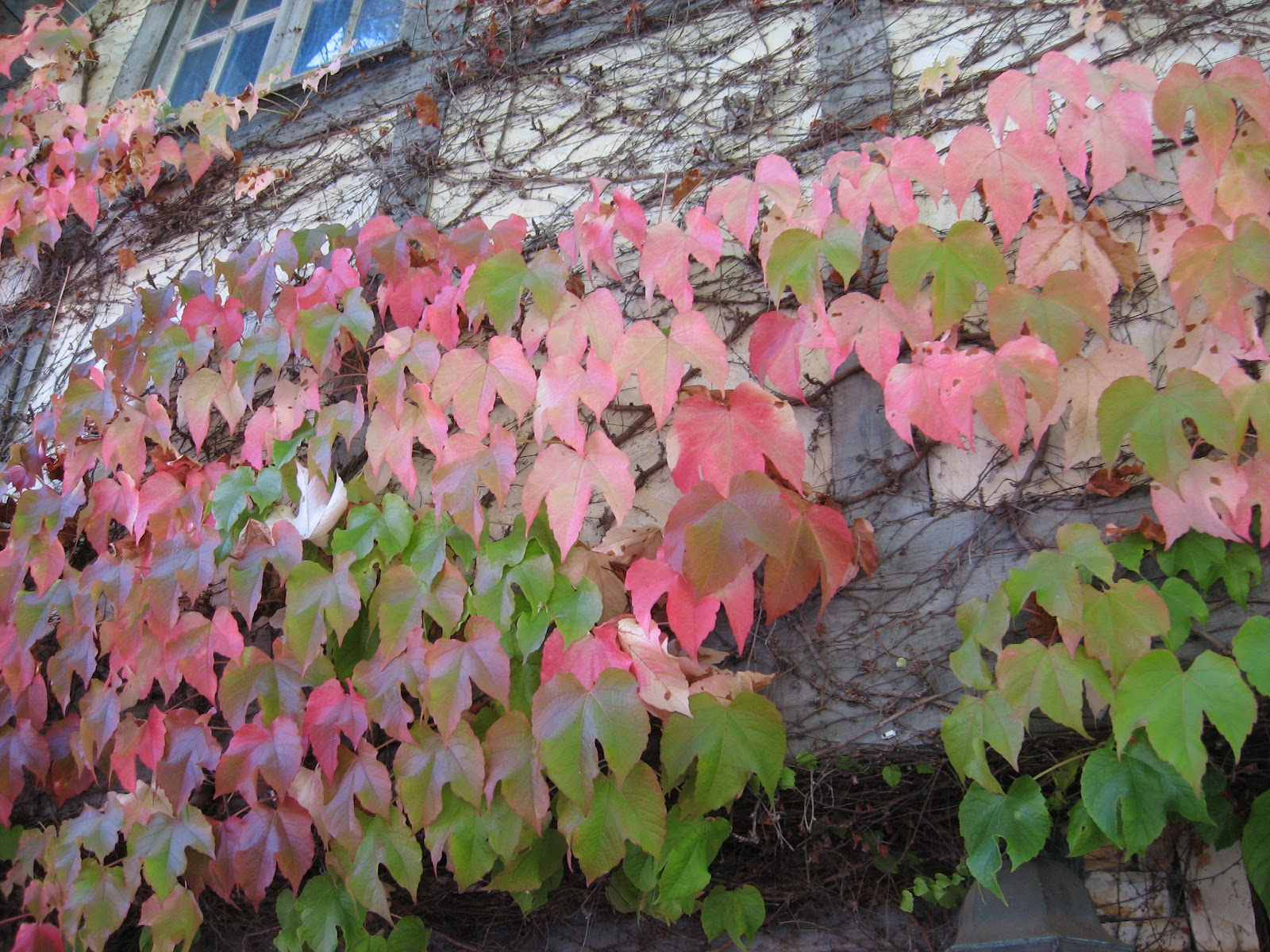
Above a storefront in Carmel, California

Now, back to the subject of travel…I suppose no one wonders what all this beauty-talk has to do with our goings, because don’t we all like to look at beautiful things when we travel? And when we have to move on, we also like to keep something to take home with us. How to not lose everything of the experience of a new place?

De Botton suggests three ways that we often try: 1) Taking pictures with a camera, 2) imprinting ourselves physically, as in carving our names in a tree trunk and thereby leaving a bit of ourselves behind, 3) buying something, “to be reminded of what we have lost.” And none of these actions can have as much effect on the whole person as drawing.

In explaining his love of drawing (it was rare for him to travel anywhere without sketching something), Ruskin once remarked that it arose from a desire, “not for reputation, nor for the good of others, nor for my own advantage, but from a sort of instinct like that of eating or drinking.” What unites the three activities is that they all involve assimilations by the self of desirable elements from the world, a transfer of goodness from without to within. As a child, Ruskin had so loved the look of grass that he had frequently wanted to eat it, he said, but he had gradually discovered that it would be better to try to draw it: “I used to lie down on it and draw the blades as they grew — until every square foot of meadow, or mossy bank, became a possession to me.”

De Botton chronicles his own efforts to follow Ruskin’s advice, and when he attempts to draw a window frame in his hotel he finds that he had never actually looked at one before, in all its complexity of construction.

Many passages in the book also paint exemplary word-pictures, such as a paragraph on olive trees, of which the author at first “dismissed one example as a squat bush-like thing.” On closer consideration, with the help of Van Gogh’s art as well as Ruskin’s tools, he sees the trees in all their magnificence, telling us that “the taut silvery leaves give an impression of alertness and contained energy.”

There is another way that this description by de Botton follows Ruskin: in his anthropomorphizing of natural objects, attributing to them qualities that only humans or at least animals would actually have, and feeling that “they embody a value or mood of importance to us.”

In the Alps, he described pine trees and rocks in similarly psychological terms: “I can never stay long without awe under an Alpine cliff, looking up to its pines, as they stand on the inaccessible juts and perilous ledges of an enormous wall, in quiet multitudes, each like the shadow of the one beside it — upright, fixed, not knowing each other. You cannot reach them, cannot cry to them; — those trees never heard human voice; they are far above all sound but of the winds.”

My two-year-old grandson Scout is already a traveler following in Ruskin’s (and his mother’s) footsteps. He loves to hike and to stop and look at everything. On a recent outing he said, as he wandered off, “I’m going to climb up here, Mama, and the rocks will take care of me…”

That’s what I call the spirit of good old-fashioned traveling. Not the sort that Ruskin himself decried, in the 19th century: “Modern travelling is not travelling at all; it is merely being sent to a place, and very little different from becoming a parcel.” 

When I am loaded on to a jet plane, I confess to feeling a bit like a parcel squeezed into a big crate of parcels. But Ruskin, and yes, even de Botton are helping me to be a more joyful and observant traveler, even if it’s only on a trip down the neighborhood footpath.

Before I had read just the small number of Ruskin’s words that are in The Art of Travel, I didn’t have the nerve to try my patience with drawing anything. But the man who wanted to teach me to notice has given me a vision of myself drawing a flower or a rock or a building. On my last car trip, I was even so bold as to pack into my bag a box of colored pencils.

Quote of the Week – beauty hidden there

“Unless we look at a person and see the beauty there is in this person, we can contribute nothing to him. One does not help a person by discerning what is wrong, what is ugly, what is distorted. Christ looked at everyone he met, at the prostitute, at the thief, and saw the beauty hidden there. Perhaps it was distorted, perhaps damaged, but it was beauty none the less, and what he did was to call out this beauty.” 

~ Metropolitan Anthony of Sourozh of blessed memory.

Mostly I know Metropolitan Father Anthony Bloom from his writings on prayer, which have been very encouraging. They convey a fatherly exhortation, as much as to say, as our Father might, “Child, why have you delayed so long coming to sit on my lap?” There is a flash of sadness that you did wait so long, but it is swallowed up in the joy and comfort of sitting there, and the love that flows, even though, like a child, you are fidgety and not paying attention as closely as could be desired. You find that you have hopped off His lap, hardly noticing yourself, but He smiles and enfolds you the moment you climb back up. 

Fr. Anthony shows you how this is so, and makes you want to get on with the work of repentance, of coming back into God’s presence again and again. Of course it is from Him that I have any hope of acquiring the loving attitude toward people that he talks about in the quote above. So the topics are connected.

This afternoon I went to a lecture by Father Mel Webber, author of Bread and Water, Wine and Oil. When he speaks I want to write down every word, which of course I can’t. But I hope to glean at least one good quote from my notes for next week’s posting.

Animal, Vegetable, Weed

When my husband saw the sizable box of books I had packed for this trip to my daughter’s house, he wondered why I would need so many. My answer, “Because my brain is so tired right now, I can’t imagine wanting to read any of them, so I can’t know what my appetite will be when it returns, and I want to be prepared.”

I came prepared for the journey, too, with The Message Bible on CD, My Antonia, Miles Gone By, and the latest Mars Hill Audio Journal on CD’s to choose from. I started out with the Mars Hill disk, because it’s usually very relaxing for me to stretch my brain, gentle as the exercise is when one is only eavesdropping on other people’s conversations.

This edition had a lot of discussions on the topic of beauty, the host said in the introduction, and in a small panic, I hit the button to eject. No, I wasn’t up for that–it sounded too difficult to even follow along with. What would be easier? How about, Tell Me a Story, and one I am already familiar with. My Antonia was a good choice, as it turned out, very soul-nourishing in the story and the lovely writing. And it was Beauty–not discussed, but the reality.

The last few days I’ve been living in the reality of beauty and a lot of other things that people, including me, like to theorize and philosophize about. I haven’t picked up any of those books that I thought I might read or think about or write thoughtful reviews of. I’ve been chasing around a ten-month-old who is a major explorer of his world, and maybe it is in two ways keeping me in the Grammar phase of my stunted version of classical education. You know, where you learn the facts and language and data that you will work with later.

It’s always a blessing to have little children around who are discovering everything for the first time, as it makes me notice the details of my surroundings freshly. Today I gave this guy, whom I will nickname Scout, a piece of used waxed paper that wasn’t really dirty, and after he fiddled with it a minute or two it tore in two. He had been looking at one piece of paper, and suddenly there were two pieces, and he was obviously surprised to see the smaller piece move in his hand far away from the original.

Babies aren’t wondering philosophers. They are scientists without even a theory, in the research stage, gathering information. I’ve been able to do some of that kind of mental work this week, as in learning the names of oak trees. I also took a picture in the forest of a bush with pink flowers, and when I went looking for oaks in the shrub and tree guide there was a picture of it, and I have now memorized it–well, at least for this week–Douglas spiraea.

Douglas spiraea

When Scout was exploring the back yard he came upon a weed (spurge) that I knew I should know the name of, so I looked it up in Weeds of the West, a marvelous tome that I am very pleased is now in Pippin’s collection. It’s a book several of us in the family had our eye on for a long time before someone actually took the plunge to invest in such an unappealing title.

I looked quickly through the whole book yesterday, and learned quite a few facts that have no relevance to any philosophical book review I might write, but they were so pleasing to me! My objective was to make a list of all the weeds that I already knew by sight, which surprised me by how long it was. A whole series of Weeds blogposts could be written on the links to childhood memories and events.

Then I was surprised to find in the weed book a flower that is also always in the mountain wildflower guides I’ve been consulting for years, Corn Lily or False Hellebore. It was about then I suspect I was moving into the Logic Stage, making connections and comparing one word with another, drawing conclusions using my data.

This plant is deadly and noxious, for a fact (Here’s a historical bit about that from Wikipedia: “The plant was used by some [Native American] tribes to elect a new leader. All the candidates would eat the root, and the last to start vomiting would become the new leader.”), but some of the things I thought I knew about it aren’t true, and in the middle of writing this blog I am realizing that I still don’t have the facts straight enough to tell any more about it.

About other weeds, I learned that what I thought was Black Mustard was actually Radish; these are cousins someone got mixed up and taught me wrong. Nutsedge is a cute name for an ugly weed in my own garden. I’ll be content to study the most broad Grammar of Plants for the rest of my stay here on earth.

Which brings me to the second reason hanging out with children keeps me at their level: time. When I am scurrying about during naptimes to do little pieces of chores, just keeping up with the physical bare necessities, my mind is flitting about and not in the mood for a certain kind of thinking, which I hesitate to call “higher.”

I don’t seem to be able to settle in, under deadlines, and tackle a question of theology or philosophy in such a way that I can write about it. I’m using all my mental resources doing philosophy and theology on a fundamental level that is more in keeping with my stage in life, when my body demands more sleep, and my brain loses thoughts instead of holding them. When I wake up from a nap, or when Scout goes down for a nap, the names of the flowers are still there in the nature guide, the trees and clouds are still handy for contemplating right outside the door.

Play–what Scout does–is when you do things with no immediate goal in mind. I can’t have an agenda or a syllabus when I am minding Scout while he experiments. So I try to look around and pay attention at least as well as he is doing. I’m glad I’ve arrived at a place in life where the order and complexity of the universe are certainties to me, and every flower and rock is a gift from the Creator with the potential to draw me to Himself. It might even be an advantage to have a tired brain when enjoying that kind of Beauty.

The Promise of Happiness

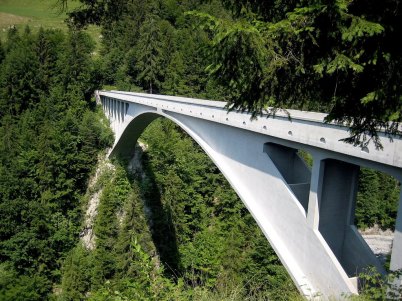
Salginatobel Bridge, Switzerland

“Beauty is the promise of Happiness,” said Stendhal, quoted in The Architecture of Happiness by Alain De Botton.

Written in this 21st century, it is billed as an introduction to architecture. As for decades I have been discovering an appreciation for buildings, and at the same time have been realizing my ignorance of artistic principles generally, I was really ready for De Botton’s helpful study, which doesn’t catalog architectural styles –I seem to have a mental block against learning these—but explains why we humans might like or dislike particular buildings:

“We are drawn to call something beautiful whenever we detect that it contains in concentrated form those qualities in which we personally, or our societies more generally, are deficient.”

John Ruskin said that we want our buildings to shelter us and to speak to us, of what we find important and need reminders of. These values can change somewhat across centuries and cultures, but de Botton lists several “virtues of buildings” that are required if they are to be beautiful.

1) Order. But not over-simplified. We like to see complex elements arranged in a regular pattern.

What the author calls the “perverse dogma” from the Romantic Period, that all edifices must be of original design, led to chaos in the landscape. “Architecture should have the confidence and the kindness to be a little boring.”

2) Balance. Some concepts to be mediated are old and new, natural and man-made, luxurious and modest, masculine and feminine. This chapter gave me the most trouble. The photographs showed supposed balance that looked incongruous to me. I don’t like bare concrete, to start with. My tastes prove the point made by another quote from Stendhal: “There are as many styles of beauty as there are visions of happiness.”

3) Elegance. When the achievement of strength or energy looks effortless and modest as in the Salginatobel Bridge in Switzerland, above.

4) Coherence. The building should not be a hodgepodge of styles. I’ll say it should be a clear declarative sentence. [I must like those a lot; I wrote this months before my last book review.] And that “sentence” should make sense in the context of its “paragraph.” As Louis Sullivan said, for example, tall buildings are all about loftiness, and that statement is made by every line of a skyscraper contributing to its being “a proud and soaring thing, rising in sheer exultation….”

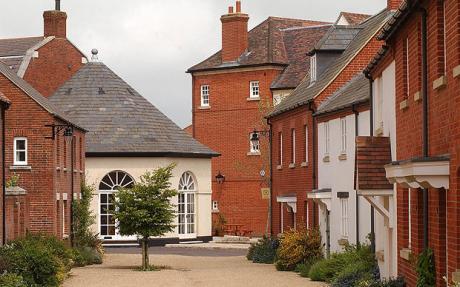
Poundbury

A building should fit into its historical and cultural place as well as its physical setting. De Botton considers one failure in this regard to be the exact replica of an 18th century village style built in the late 20th century in Poundbury, Dorchester, a psychological and practical disconnect. Others have commented on this housing development’s good and bad aspects. It was the brainchild of Prince Charles, by the way, who seems to be always pulling weight against what he considers ugly modern architecture.

The author helped me understand why a building that I have enjoyed is not appreciated in its home town. After reading Death Comes for the Archbishop by Willa Cather many years ago, I was excited to visit the 19th-century cathedral that was actually commissioned by the priest who was somewhat fictionalized in the novel, in Santa Fe, New Mexico. At that time I thought the disregard of the beautiful building was likely because of its Christian history and purpose, in a town that is now in love with its more pagan native roots.

The Cathedral Basilica of Saint Francis of Assisi

Now I understand that while Fr. Lamy conceived of a church he knew to be beautiful, that of his beloved French homeland, if he had been of the modern architect’s sensibility he would have altered the design to reflect his new home and climate. But I don’t believe he was an architect in the first place.

I appreciated the building for its Christian and literary history, even if it is in the Romanesque Revival style. It at least is built of local New Mexican stone; I know of beautiful houses in California that have design elements that required the transport of huge stones from Japan, to keep the whole piece of art Japanese–but what about the context?

The Cathedral Basilica of Saint Francis of Assisi, as it was designated in 2005, looks more odd all the time in the town of Santa Fe, which has, perhaps somewhat in the spirit of Poundsbury, tried to homogenize its architectural style:

“By an ordinance passed in 1958, new and rebuilt buildings, especially those in designated historic districts, must exhibit a Spanish Territorial or Pueblo style of architecture, with flat roofs and other features suggestive of the area’s traditional adobe construction. However, many contemporary houses in the city are built from lumber, concrete blocks, and other common building materials, but with stucco surfaces (sometimes referred to as “faux-dobe”, pronounced as one word: “foe-dough-bee”) reflecting the historic style.” [from Wikipedia]

Of course, these efforts to “pueblofy” the city have meant a loss of the eclectic elements from the past, though it was all done in the interest of promoting tourism and preventing decline of another sort.

De Botton writes of buildings having an aesthetic mission, and if one is on a mission, the last listed quality is crucial:

5) Self-knowledge. When I first saw that heading, I thought, This is carrying the anthropomorphism too far. I was relieved to find that the author was by now speaking not of buildings but of us humans, especially of the architects among us.
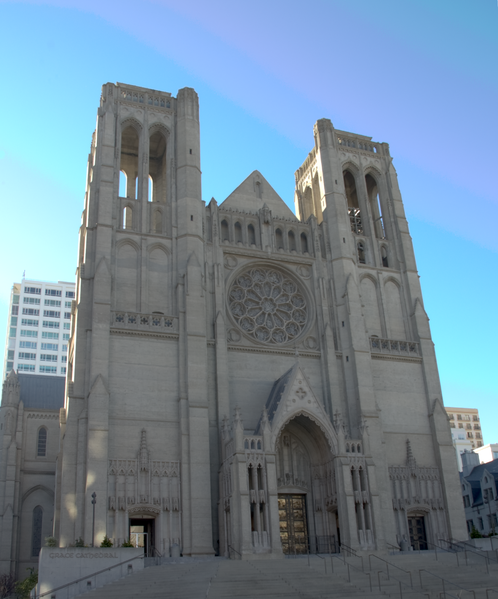
Grace Cathedral, San Francisco

We need to understand our human nature in all its complexity if we want to avoid the utopianism of the famous Swiss-French architect Le Corbusier, who seemed to have many radical plans, at least some of which we can be thankful were not accomplished, such as tearing out the heart of Paris in 1922 to replace it with 16 residential skyscrapers, some of which would house 40,000 people each. He wanted to eliminate suburbs, and abolish city streets, and glancing across the ocean, to raze Manhattan and start over. For one thing, its skyscrapers were too short.

Getting back to that quality of balance, I’m wondering if my own distaste for concrete is perhaps as closed minded as Prince Charles tends to be. My snobbishness made it hard to appreciate Grace Cathedral when I visited it last month, because though it has soaring arches and design beauty, it lacks the natural stone of the cathedrals I enjoyed in England.

I should remember that concrete is only a type of cast stone, which has a long history in antiquity, as I learned from reading The Pyramids: An Enigma Solved  by Joseph Davidovits. He argues that at least the outer casing stones of the pyramids themselves were built from a masonry product poured on-site. It’s been more than ten years since I read this book when the children and I were studying ancient history, and I plan to read it again soon.

My own church is built of concrete, though one can’t see any of that base material anymore, covered as it is now in plaster and icons and marble. And on the subject of church architecture, I hope to write more, as my excitement grows into deeper understanding.

Thanks to De Botton, I have a little more foundational knowledge to aid me in my explorations. His style is slow and thoroughgoing in explanations of concepts, so much so that it took some getting used to; but I soon came to appreciate his carefulness. He includes many photographs to flesh out the architectural ideas he presents to the reader.

Alain De Botton is a philosopher as much as an artist, and helped to found a school called The School of Life. He has written several books, and my intention is that The Architecture of Happiness will be just the first of other thought-provoking works of his that I read.