Tag Archives: birthdays

A radiant inheritance of goodness.

For various reasons, mostly laziness, it is usually a challenge on Sundays to drive back to my Orthodox church for an evening service. We don’t have such services routinely, but today was one of the exceptions: One of the Twelve Great Feasts happens on Monday this week. As the liturgical day begins in the evening, we started celebrating this (Sunday) evening, because it is already Monday  🙂


Today was blessedly different: it seemed easy to return, and because of that I can copy an old post just as it was, to share now. Happy Birthday to Mary!

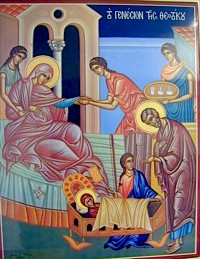
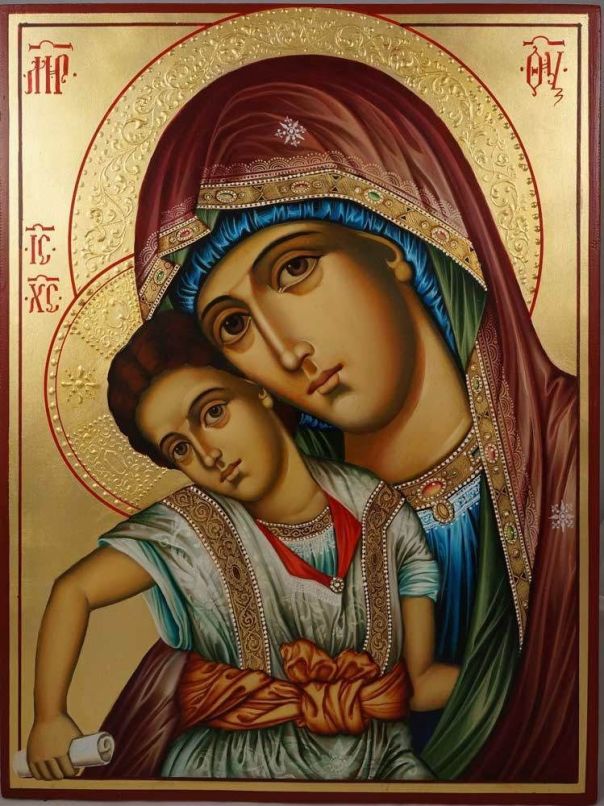
What a joy to be present at the “birthday party” for the beloved mother of our Lord! We began tonight, and will continue tomorrow, to rejoice at this first event of the church liturgical cycle, one of the 12 Great Feasts of the year. In honor and remembrance, I offer this sermon by Protopresbyter Alexander Schmemann:

SERMON ON THE NATIVITY OF THE THEOTOKOS

The Church’s veneration of Mary has always been rooted in her obedience to God, her willing choice to accept a humanly impossible calling. The Orthodox Church has always emphasized Mary’s connection to humanity and delighted in her as the best, purest, most sublime fruition of human history and of man’s quest for God, for ultimate meaning, for ultimate content of human life.

If in Western Christianity veneration of Mary was centered upon her perpetual virginity, the heart of the Orthodox Christian East’s devotion, contemplation, and joyful delight has always been her Motherhood, her flesh and blood connection to Jesus Christ. The East rejoices that the human role in the divine plan is pivotal. The Son of God comes to earth, appears in order to redeem the world, He becomes human to incorporate man into His divine vocation, but humanity takes part in this. If it is understood that Christ’s “co-nature” with us is as a human being and not some phantom or bodiless apparition, that He is one of us and forever united to us through His humanity, then devotion to Mary also becomes understandable, for she is the one who gave Him His human nature, His flesh and blood. She is the one through whom Christ can always call Himself “The Son of Man.”

Son of God, Son of Man…God descending and becoming man so that man could become divine, could become partaker of the divine nature (2 Peter 1:4), or as the teachers of Church expressed it, “deified.” Precisely here, in this extraordinary revelation of man’s authentic nature and calling, is the source of that gratitude and tenderness which cherishes Mary as our link to Christ and, in Him, to God. And nowhere is this reflected more clearly that in the Nativity of the Mother of God.

Nothing about this event is mentioned anywhere in the Holy Scriptures. But why should it be? Is there anything remarkable, anything especially unique about the normal birth of a child, a birth like any other? The Church began to commemorate the event with a special feast…because, on the contrary, the very fact that it is routine discloses something fresh and radiant about everything we call routine and ordinary, it gives new depth to the unremarkable details of human life…And with each birth the world is itself in some sense created anew and given as a gift to this new human being to be his life, his path, his creation.

This feast therefore is first a general celebration of Man’s birth, and we no longer remember the anguish, as the Gospel says, “for joy that a human being is born into the world” (Jn. 16:21). Secondly, we now know whose particular birth, whose coming we celebrate: Mary’s. We know the uniqueness, the beauty, the grace of precisely this child, her destiny, her meaning for us and for the whole world. And thirdly, we celebrate all who prepared the way for Mary, who contributed to her inheritance of grace and beauty…And therefore the Feast of her Nativity is also a celebration of human history, a celebration of faith in man, a celebration of man.

Sadly, the inheritance of evil is far more visible and better known. There is so much evil around us that this faith in man, in his freedom, in the possibility of handing down a radiant inheritance of goodness has almost evaporated and been replaced by cynicism and suspicion. This hostile cynicism and discouraging suspicion are precisely what seduce us to distance ourselves from the Church when it celebrates with such joy and faith this birth of a little girl in whom are concentrated all the goodness, spiritual beauty, harmony and perfection that are elements of genuine human nature. Thus, in celebrating Mary’s birth we find ourselves already on the road to Bethlehem, moving toward the joyful mystery of Mary as the Mother to God.

-Father Alexander Schmemman
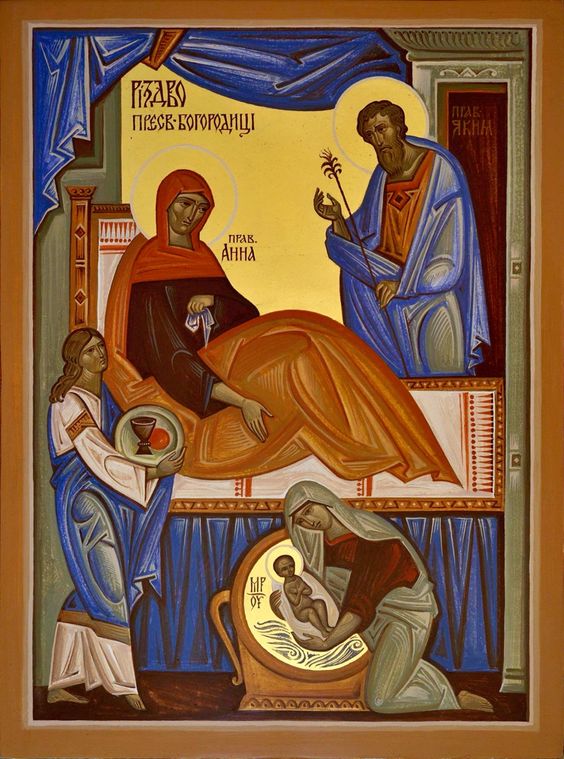
Nativity of Theotokos contemporary

Thy nativity, O Virgin,
has proclaimed joy to
the whole universe!
The Sun of Righteousness,
Christ our God,
has shone on thee,
O Theotokos!
By annulling the curse,
He bestowed a blessing.
By destroying death,
He has granted us
Eternal Life.

-Hymn for the feast
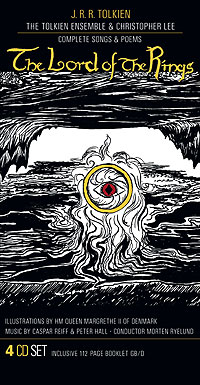
Elves and hobbits still sing.

tolk-ens-4-cdOn my last night with my family in Colorado, I took a turn along with their parents to read aloud to the children a chapter of The Hobbit. They had all been enjoying the book together before Christmas visitors and pastimes interrupted their usual routine, and the chapter we read that night took us suspensefully close to the end of the tale. 

 What a joy it was to read more of J.R.R. Tolkien’s sublime storytelling; I was uncommonly grateful to be a narrator of his prose, and by that means to take part in the culturally lifesaving work of telling good and true — and fun! — stories.

Since then I have been hoping to post something related on Tolkien’s birthday, but I almost missed it again — it is today! Instead of trying to come up with something new, I am re-posting this article that I wrote a few years ago about the Tolkien Ensemble: 

I feel a bit foolish, having written in my last book review that I had been put off from “all things Danish.” The fact is, I was that very week exulting in what I had forgotten was a Danish phenomenon, the Tolkien Ensemble and their achievement of composing and performing music for all of the songs in The Lord of the Rings trilogy.

It was a blog discussion of poetry that alerted me to the existence of this group, founded in 1995, and their recordings on four CD’s. I’m surprised that I never heard of them in the last fifteen years. As a mom reading the trilogy aloud to my children 25 years ago, I vaguely remember feeling inadequate when we came to one of the many songs in the novels. Tolkien’s verse has meter, and the poetry is affecting, but they are songs to the hobbits and other characters, and one longs to really sing them. I am not good at composing tunes on the spot; I wonder if Tolkien hummed appropriate melodies as he was writing? [Update: evidently he did!]

A 4-CD set was compiled after all of the recordings had been made over several years. There seem to be slight variations in the different editions and collections, but I have all four CD’s now, totaling 69 tracks, which I bought separately and mostly used. I’ve listened to some of songs many times, and I continue to be amazed at the quality of the music, and how each song is fitted with a composition that seems to me to be just right for it. I admit to being an amateur music critic, but I’m going to plow on ahead. If any of my readers are familiar with these recordings and know more about the field of music, maybe you can further instruct or correct me, or just tell me what are your favorite songs.

tolk-2000
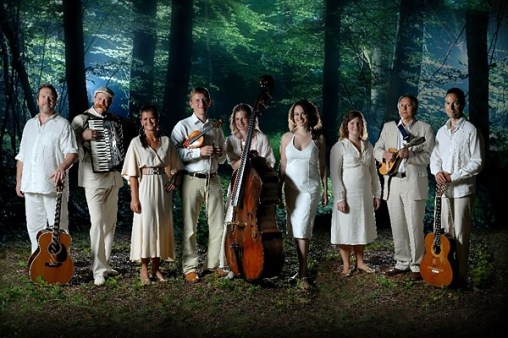
Tolkien Ensemble 2000

Caspar Reiff, one of the composers, founded the Tolkien Ensemble in Copenhagen when he was in his late 20’s and studying guitar at the Royal Danish Academy of Music. His former guitar teacher and “multi-musician” Peter Hall joined as co-composer, along with fellow students from the music academy. They are a convincing advertisement for that school.

The Ensemble manages to create a fitting expression for every mood and activity that was put to verse in these books. The song of “Tinúviel” captures the urgency and enchantment of Beren who falls in love with an Elven maid and chases her through the forest and the seasons, calling achingly, “Tinúviel! Tinúviel!” until she in turn falls under his spell, and in her eyes “The trembling starlight of the skies/He saw there mirrored shimmering.” The drinking song Frodo sings at the Inn of Bree is a lot of fun, with accordion and fiddle, spoons and dishes. There are riddles, laments, and even a bath song. We have a hearty upbeat walking song as the few Hobbits are starting out bravely:

Farewell we call to hearth and hall!
Though wind may blow and rain may fall,
We must away ere break of day
Far over the wood and mountain tall.
To Rivendell, where Elves yet dwell
In glades beneath the misty fell,
Through moor and waste we ride in haste,
And whither then we cannot tell.

With foes ahead, behind us dread,
Beneath the sky shall be our bed,
Until at last our toil be passed,
Our journey done, our errand sped.

We must away! We must away!
We ride before the break of day!

Contrast this with Frodo’s more melancholy mood when he sings alone the song he learned from Bilbo. Update: “Old Walking Song”  It seems like the theme song for the entire tale:

The road goes ever on and on
Down from the door where it began.
Now far ahead the road has gone,
And I must follow, if I can,
Pursuing it with weary feet,
Until it joins some larger way,
Where many paths and errands meet,
And whither then? I cannot say.

Many of the songs are sad. The whole story is rather bleak, of course, with the growing and unrelenting awareness that the former glory of kings and elves is fading fast and can’t be regained. The unhurried drama enacted in a lumbering musical conversation between the separated Ents and Entwives is heartbreaking, but it is one of my favorites.

They call to one another in their stately Ent voices that convey their tree-like, large physiques and great age. The Ent sings stanzas in a beautiful but heavy tone, with the refrain, “Come back to me,” and she replies, “I’ll linger here,” until the last verses when he says he will come to her, and then they sing in unison of a time when they will converge on a journey to where their hearts may be at rest.

The Elf Legolas sings a “Song of the Sea” that I didn’t like at first, I think because it put me off balance, as though I were on a ship being buffeted by the waves. But after a few times through, I got my sea legs and began to enjoy the feeling of the moist wind in my hair, and the sense of adventure.

The women of The Tolkien Ensemble have lovely voices that one imagines might be heard among those “misty glades” where Elves dwell and sing. They use them to good effect in several tracks about the lands and heroes of these wise and ageless creatures.

What might be called a Thinking Song, “Bilbo’s Song,” is one that he sings meditatively. The guitar accompaniment reminds me very much of the way my own mind can go round and round on a subject, ruminating. The strings are plucked in a quick and repetitive rhythm, perhaps with a drone note coming back frequently.

I sit beside the fire and think
of all that I have seen
of meadow-flowers and butterflies
in summers that have been;

Of yellow leaves and gossamer
in autumns that there were,
with morning mist and silver sun
and wind upon my hair.

I sit beside the fire and think
of how the world will be
when winter comes without a spring
that I shall ever see.

For still there are so many things
that I have never seen:
in every wood in every spring
there is a different green.

I sit beside the fire and think
of people long ago
and people who will see a world
that I shall never know.

But all the while I sit and think
of times there were before,
I listen for returning feet
and voices at the door.

tolk-2007
The group in 2007

gl-rivendell-i-ii

At right is the cover of the set of two disks I first bought, to find out if even liked them. It’s hard to find samples of the music online; you might pull up one or two on YouTube, and then you might find them taken down the next minute. If bought separately, the disks in order of production are:

1 An Evening in Rivendell
2 A Night in Rivendell
3 Dawn in Rivendell
4 Leaving Rivendell

But don’t worry – not all the action takes place in Rivendell. Those are just the disk titles, and the songs included on each disk are not necessarily in an obvious order, either.

I immediately found so much to love in those first two collections that I shopped sources for the other two disks. And after listening for a day or two, it was clear: I must read the trilogy again to put the newly appreciated songs in their context. That had been my desire after watching Peter Jackson’s film interpretation that was so disappointing, but I hadn’t followed through. So I dropped all my other Currently Reading books to read The Fellowship of the Ring. Now I am on to The Two Towers, still in the Company!

When I am listening to the recordings, and now reading the novel again, I often think about those days when I had my children gathered around me and we were all vicariously traveling across the mountains and wastes of Middle Earth. If it had been only ten years later, we could have paused at each song as it appeared in the story to play the companion track on a CD, and let the music sink into our consciousness and draw us deeper into the story. That kind of enrichment would have raised the quality of our literary immersion a notch, to be sure. The Tolkien Ensemble gave their final concert in 2008, but I’m confident that the fruits of their project will continue to give joy to Tolkien-lovers for a long time.

Update: At the time of the original posting of my music review, I couldn’t find any samples of the music to share, but just now I found the songs compiled on YouTube. Now you can listen for yourselves! 

middleearthlargelargerstill

From sunrise to sunset.

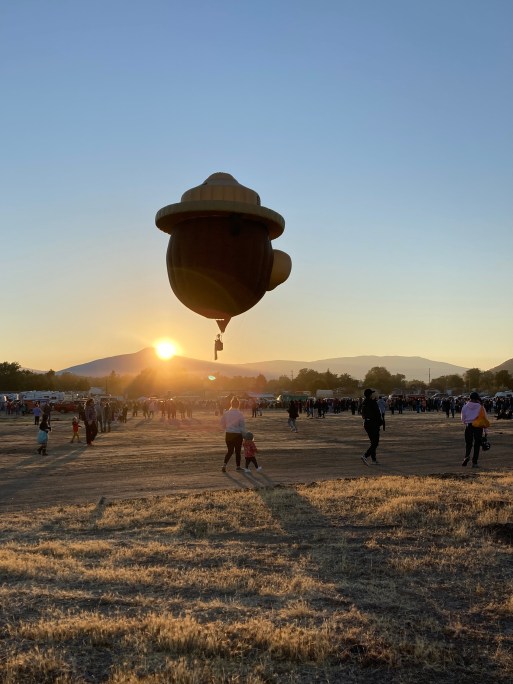
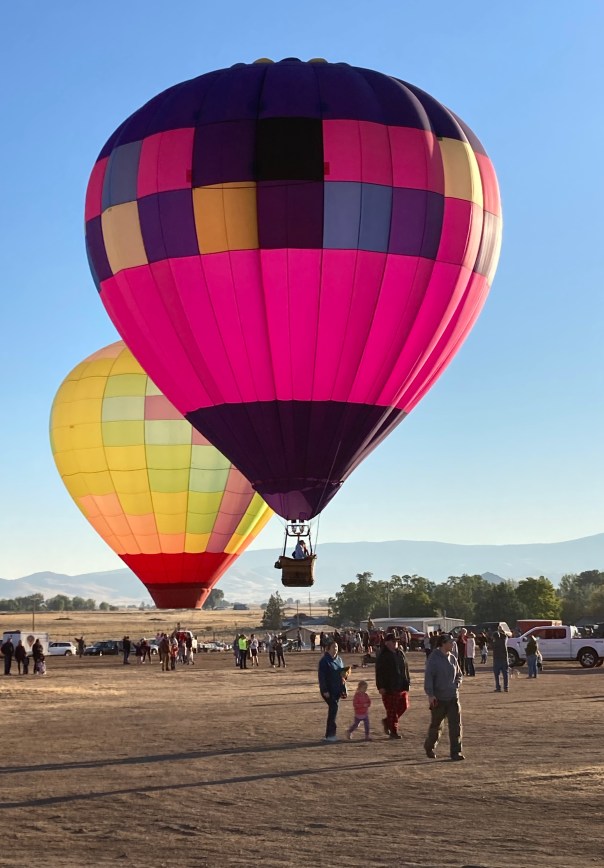
On Saturday we left the house early to get to the hot air balloon festival before the sun came up. Smokey the Bear was the first to get inflated and lift off. This is the same event I attended with Pippin seven years ago, and most of the balloons were the same, too.

In the middle of the day we took naps, and tended the garden. That is, Pippin gardened and I took pictures.

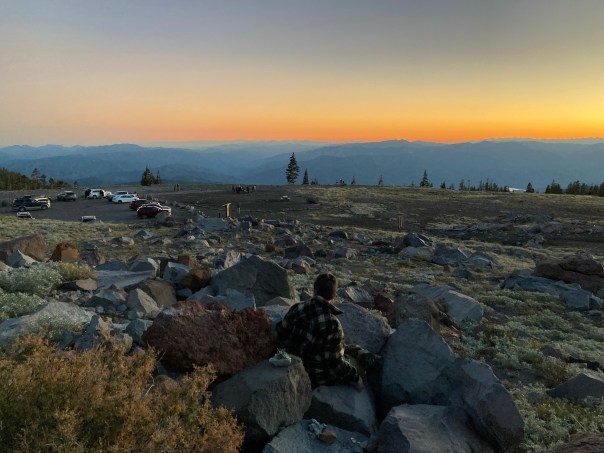
Late afternoon we took the camp stove and makings for Frito Pie up on the volcanic peak of Mount Shasta, to the Old Ski Bowl, 7800 ft. elevation (The top is almost twice that high). We ate our picnic dinner and stayed for the sunset.

The children took me up a ways to a place among the rocks that they call the Sunset Cafe, and we pretend feasted on plates of salad, strawberry bread and chocolatey desserts, artfully arranged from whatever vegetable and mineral materials could be found lying nearby:

We gazed off toward the west…

And when it was starting to get dark, both Ivy and Jamie fell within about ten minutes of each other, and cried for a while in pain from the shock of sharp rocks slamming into knees and ribs. Jamie had tripped over the giant rock loaf of “strawberry bread.” But they were soon done with that and we set off down the mountain again.

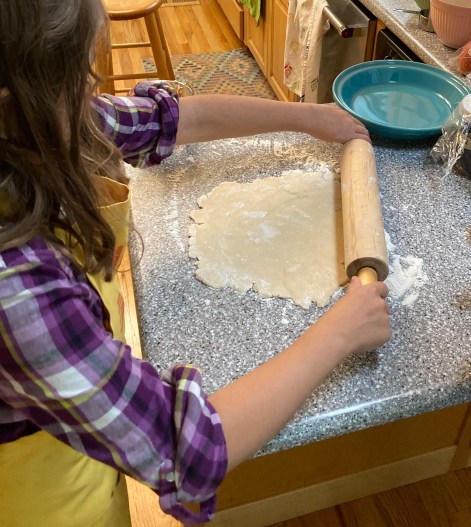
Today was full. This is the first year Ivy didn’t have a themed cake, and the first year she helped make her birthday pie.

Everything has been delicious.

Each day adds its weight.

If your beloved has a birthday this month, or you and your beloved have an anniversary in June, you might especially like this poem.

ON YOUR BIRTHDAY, TODAY

On your birthday, today, there is time to reflect
On the essence of our intimacy,
From a beginning in the spring-tide of youth
To an afterward secured in the distant mist,
And for what reason and to what end it endures.
Each year I feel the consequence, keen
With up-welling of sentiment,
Where new love springs before the old
Has run its course (but its course is never run),
And each day adds its weight to the sum
We bear on that date this day in June,
To solidify with birthdays gone by
In an endless, banquet bequest.
Today we take time out to renew
And revisit the mood of our youthful love.
Tomorrow, with the same tremulous excitement
As beset us when we danced on its eve ‘til dawn
We will wed again.

-Ivan Donn Carswell