Tag Archives: bread

Homebodiness was the reason…

Pineapple Juice Starter Start

…Homebodiness was the reason I spent so much time stirring and sniffing my sourdough over the last weeks, instead of making dolls. I keep telling everyone that I want to make dolls, but I end up doing a little of this and a little of that.

In this case I was researching sourdough and baking. I could have made several dolls during the time it took me to do all this baking-related stuff, including a huge Pizza Project as it became known in my mind. We had invited friend Tim the Sailor for lunch, and I said brightly and optimistically to my husband, “I could make pizza!”

But that’s a side story. It’s the fact of me being a Homebody that got me into the baking, because I lack a dollmaker’s needle at the least, to begin on my dolls, which I have been reading up about, by the way. Reading about projects is also easy to do at home. But I can’t seem to kick myself out the door to drive five minutes to the craft store for the needle.
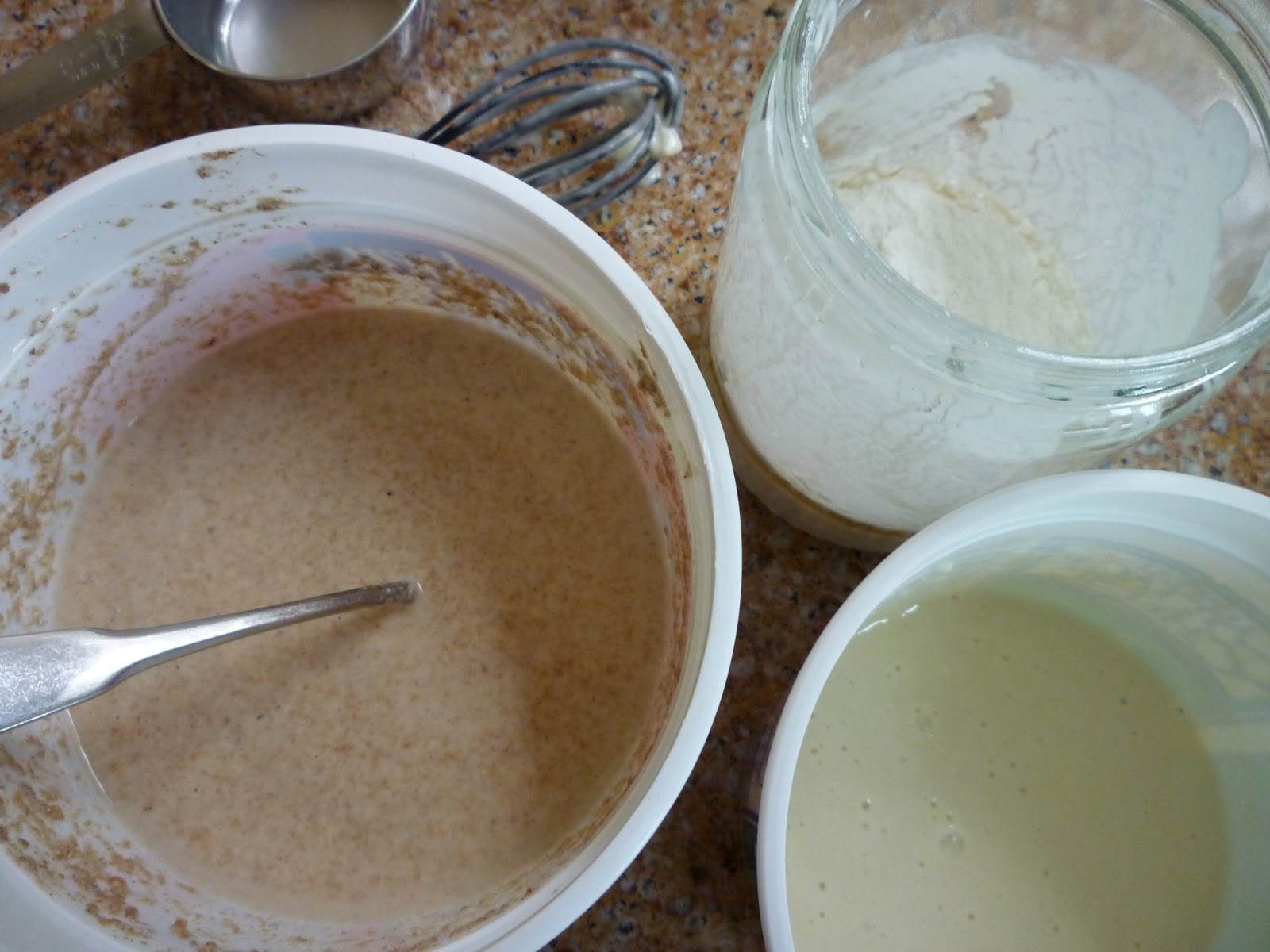
Two Starters in Three Containers

And for old time’s sake I did want to make some sourdough bread. For a few years at least — maybe even a dozen? — my kitchen would churn out several loaves a month of the most sour bread you can imagine. The children liked it that way, as dense as pumpernickel but light colored and tasting almost vinegary if you were not in the right mood. I was always trying to get the crumb of a sourdough French such as our San Francisco Bay Area is famous for, but then I would lose the intense flavor.

Later we lost all the biggest bread-eaters, and then I let the starter die. It had never been my own baby — the starter always had its beginning in someone else’s kitchen. In about 1975 I had been given my first batch by a church friend, and I used it for a few years until it was neglected (notice the passive and guilt-free voice) into oblivion. My neighbor Linda gave me my next sourdough, and I began using that in earnest.

We’d eat sourdough pancakes for breakfast, sourdough biscuits for dinner, and slices of the tangy bread in the car on extended trips into town. One time a couple of slices were forgotten in the glove compartment for several weeks and when discovered they were not even dried out or moldy.
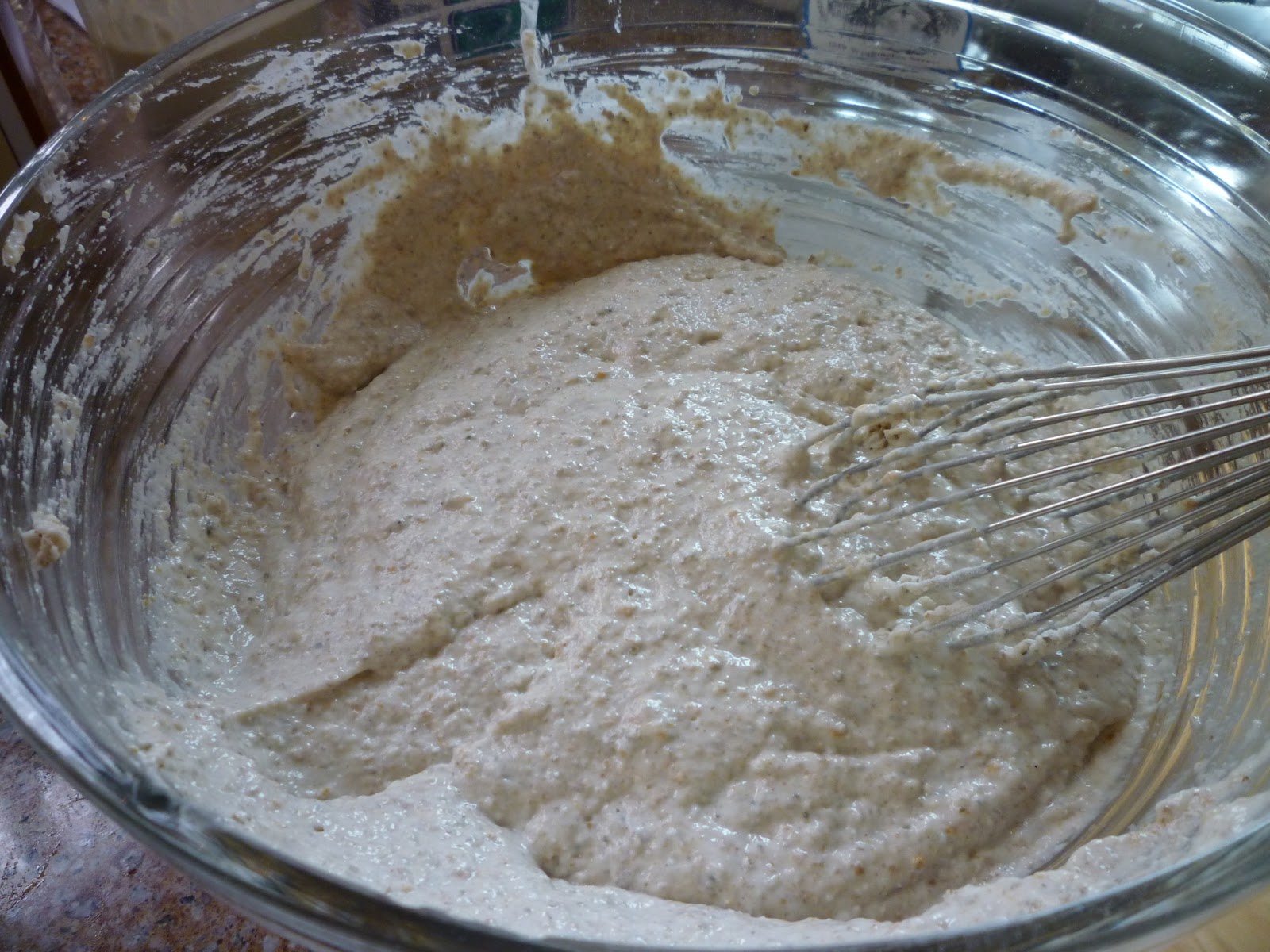
Sourdough Sponge

I gave a jar of my starter to my neighbor Sarah, and when mine was forgotten for a time and died she gave me some back. But when I moved over the mountains to my present town my starter changed its personality and never was much fun again. I hadn’t really missed it until last month, when Jody’s fiddling with sourdough inspired me. I put together the recipes for two different versions on the same day, just to have a better chance of ending up with at least one active starter after a few days.

The Ancient and Convoluted Instructions

The one I was most confident in is called Manuel’s Rye Sour, a recipe I had seen decades ago in my Laurel’s Kitchen Bread Book. I happened to have more of that pumpernickel rye flour around so it was a natural to use it. The second recipe I found online uses some pineapple juice along with the flour and water. That one is only now after about 10 days starting to have a good sour smell, so I’m glad I didn’t have to twiddle my thumbs waiting for it.

Sourdough Sponge after several hours

Manuel’s starter was usable after about five days. I used it as I had my old starters: to get the strong flavor I’d add six or eight cups of flour and some water to a cup or two of the starter and let that sponge sit on the kitchen counter for 24 -72 hours until the whole big bowl was busy growing the desired yeasts.

It didn’t take long for Manuel’s Sour to get to working. The sponge rose with the activity of the sour bugs, and then fell again, but it kept developing flavor for another day until I could get to it. This whole description is beyond anyone’s ability and probably desire to duplicate, so I won’t give you a recipe, but I will say that to this sponge I added a small amount of yeast, sugar, salt and oil, and enough flour to make a smooth dough.

Many years ago after a couple of friends asked me about my method of making sourdough bread, I wrote a long description of the process that is so complicated and variable, “sometimes this” and “sometimes that,” I can hardly plough through it today. But I referred to it when baking this time.
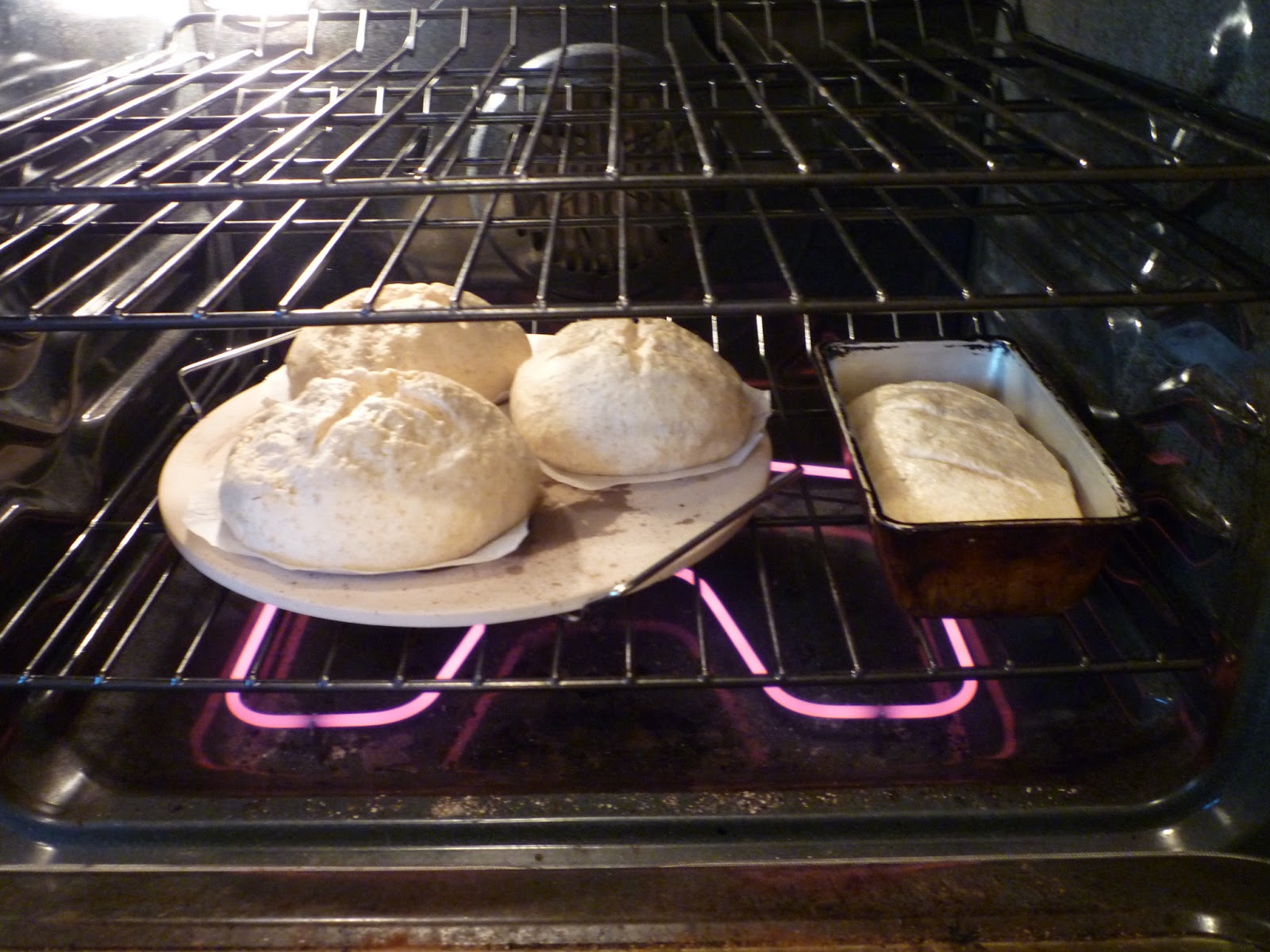
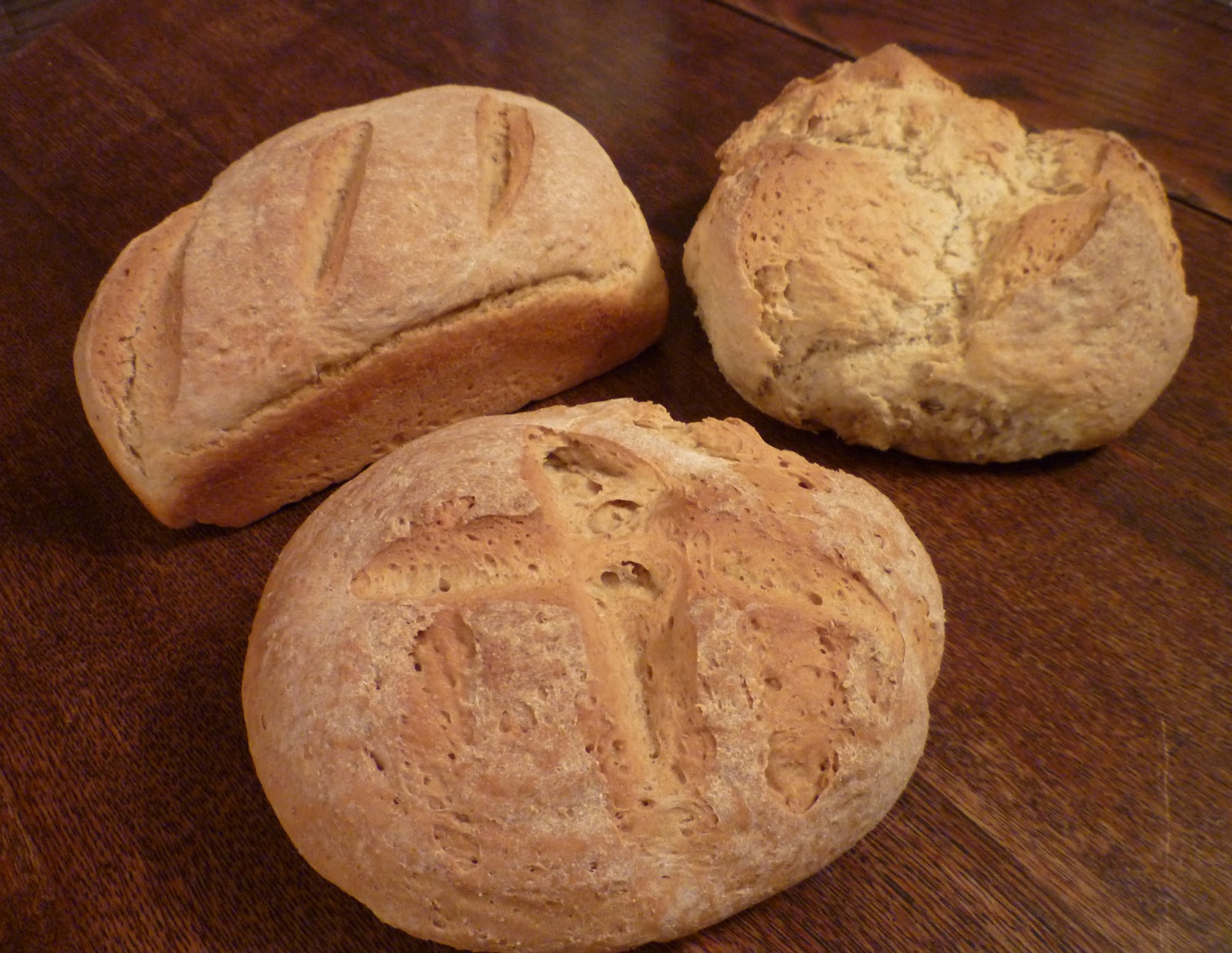
After kneading my dough I didn’t let it rise in the bowl again. I just formed the loaves, which weighed just over a pound each, and set them to rise. In the distant past the proofing would often take all day, whether or not I added commercial yeast to assist the wild. This time, Mr. Glad and I took a 40-minute walk around the neighborhood, and when we got back they were ready to put in the oven.

My pizza stone was still around from the pizza lunch, so I baked some rounds on it, and the remainder of dough in a loaf pan. I used parchment paper to slide them on to the stone. They took an hour at 375°F to bake. I was pleased enough with the bread….It wasn’t as sour as I might have liked, and the addition of rye flour made it less chewy than my ideal — I had intended to add some gluten flour for chewiness but forgot.

So now I’ve begun my series of experiments, as I’ll think of these cooking adventures. I managed to give away the prettiest round loaf today, and if I can find enough gluten-tolerant people around to give bread to I’ll be happy. Tomorrow, tomorrow — “I love you, Tomorrow!” — it’s off to the craft store for a needle. Then next time my Homebody Self can sit stitching at my doll while the bread bakes and the house fills with its good and toasty smells.
 

Amazing Lenten Spinach – and Himbasha

Batch made with frozen spinach.

AMAZING SPINACH!

The main ingredient is spinach, but the other ingredients in this dish, which can be a vegetable side or a spread for bread or crackers, make it very unusual and in my case, addictive. I know, eating in an uncontrolled manner is the opposite of what Lent is about, but maybe overdoing it on spinach is not as bad as some things. And to reduce temptation, so far I have made sure to take this dish to potlucks where I would be embarrassed to hover over the plate and reveal my piggishness. My husband could not believe that there was no cream cheese in this dish. He likes it very well, too.

The origin of pkhali is the Republic of Georgia. Though I have a Georgian acquaintance at church, I found the recipe on The Traveler’s Lunchbox blog, about a year ago. I’ve made it several times since then, at least twice using frozen chopped spinach, and most recently with fresh spinach.

The recipe, pasted from the link above:

Spinach Pkhali

Pkhali (the ‘kh’ is pronounced as a deep, guttural ‘h’) is a whole class of Georgian vegetable dishes that straddle the line between salad and dip. The constant is the walnut sauce, and the fact that the vegetable is cut very, very finely – almost (but not quite) to a puree. 

Beet pkhali is also very popular, and is often served alongside the spinach; to prepare beets this way, wrap 3 large ones in foil and bake until soft, then peel and finely chop (or pulse in a food processor) before mixing with the sauce. 

If you’d like to substitute frozen spinach in this recipe, I imagine it would work, though I’m not sure about the amount; maybe start with a pound (half a kilo) of the frozen stuff and add more as needed to balance out the flavors. [I used 2 -10 oz. packages, which was a bit much. -GJ]

p.s. After making this again, I’ve decided I like a slightly smaller amount of spinach, to let the flavors of the walnut sauce really shine. Alternatively, you could use the full 2 pounds and make one and a half times the sauce. 

Source: adapted from Anya von Bremzen’s Please to the Table
serves: 4-6 as an hors d’oeuvre or side dish

1.5-2 pounds (.75-1 kilo) fresh spinach, stems removed and washed in several      changes of water
1 cup (100g) walnuts
4 cloves garlic
1/4 teaspoon ground coriander
1/4 teaspoon ground fenugreek
pinch cayenne
1 1/2 tablespoons white wine vinegar, or to taste
1 small onion, minced
3 tablespoons finely-chopped fresh cilantro (coriander)
1 1/2 tablespoons finely-chopped fresh tarragon
salt
pomegranate seeds, for garnish

Bring a large pot of salted water to a boil, add the spinach and cook just until tender, about one minute. Drain well and let cool. When manageable, wrap the spinach in a clean kitchen towel and squeeze until nearly dry. Chop it as finely as possible (don’t use a food processor or blender, which may puree it; it should have texture) and set aside.

In a blender [I used a food processor. -GJ], combine the walnuts, garlic, coriander, fenugreek, cayenne and vinegar. Add 3 tablespoons of warm water and blend until you have a smooth, creamy sauce about the consistency of mayonnaise, adding a little more water if needed to get things moving.

Add the walnut sauce to the spinach and stir until thoroughly blended and smooth. Stir in the minced onion, cilantro and tarragon, and season with salt to taste. Cover and refrigerate for 6 to 8 hours to allow the flavors to blend. Taste again before serving and adjust the salt and vinegar if needed.

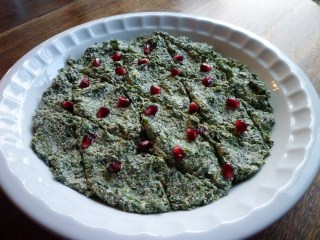
To serve, spread the pkhali on a plate and smooth the top with a spatula. With a knife, make a pattern of diamonds in the top, and sprinkle with pomegranate seeds (or, in a pinch, walnut pieces). Serve with bread.

(Me again) Using the fresh vegetable took more time, though boxes of Costco baby spinach make it easy; the result was definitely a refinement of the dish, as it did away with the many pieces of stem that you get in the frozen greens. As to quantities of all the ingredients, they are fairly flexible, and I did a lot of tasting at the end to make sure there was enough salt and spreadability.

The last time I took it to a community dinner, I also brought along a loaf of the Eritrean flatbread called himbasha, which dark-skinned parishioners in flowing white gauze bring to our church dinners every week to pass around in baskets. I always make sure to reach in and tear off a piece.

It was the first time I’d tried making it at my house. My loaf came out a little thick compared to what I think are the best versions I’ve eaten, because I didn’t notice I was supposed to make 2 loaves with the dough, and I put the whole thing into one large skillet. But it was wonderfully chewy and flavorful all the same, and my tasters loved it still warm from the pan with some of the pkhali spread on.

Here is that recipe from a book I helped to compile, a small collection of international dishes that are cooked and served by members of each ethnic community (we are truly a pan-Orthodox group) for my church’s yearly food festival. 

Himbasha

Makes two 12″ round breads
3 pounds flour
2 1/2 teaspoons instant yeast
1 tablespoon sugar
2 tablespoons vegetable oil
4 cups water, at room temperature
1 teaspoon salt
1/2 cup raisins (optional)


1. In a large bowl, whisk together flour, yeast and sugar. Dissolve salt in water. Add oil and water/salt mixture to flour mixture, and mix until you have a stiff dough. Add raisins and mix until incorporated.

2. Cover and let rise at room temperature until doubled in bulk, about 1 hour.

3. Turn dough out onto a lightly floured board. Form into one or two large circles the diameter of your frying pans and up to 1″ thick.

4. Lightly grease electric frying pan or cast iron skillet or paella pan. Heat over medium heat (about 300 degrees on an electric skillet) until a drop of water dances on it. Place dough carefully in pan, cover and cook about 15 minutes, until bottom is golden brown. Turn and cook another 15 minutes. Remove from pan and let cool on wire rack.

And at right, a photo of the last plate of pkhali I accomplished, served in a pie plate. Pomegranates were not to be found in the supermarkets in March, so I used the walnut option for garnishing.

You can see the little pieces of onion that I hadn’t minced finely enough….I thought they would overwhelm the dish, but no, it was as addictive as ever. Still, I might put the onions in the food processor with the walnuts next time.

Will I have time to make this again during Lent? Probably not — but we spinach lovers don’t need to be fasting to enjoy something so yummy.

Bread for Sanity’s Sake

Many things I do are probably downright irresponsible and illogical. Like making bread and blogging about it, when large areas of the house are still scary to venture into because of the piles of this and that tottering around you. Just fixing that one many-faceted problem should take priority over any optional activities, but there’s more.

A party is being given for my husband this Saturday, for which actual cleaning would be in order, and maybe hanging some balloons in those places where we still don’t have pictures back up on the wall for several reasons. I don’t have all my wedding garments ready or chosen or shopped for, for my own son’s wedding that is in two weeks. The church garden needs some more things planted, so they’ll be ready for the big festival we have in two months, and my garden wants weeding. Grandchildren are having birthdays for which I mustn’t forget to send the gifts I do have around here somewhere.

If I say that some things must be done just to keep me sane, I hope it will make people think twice before they call me to account for what is probably laziness.

In any case, I’m glad I did make bread yesterday. I tried to come up with a sensational title to this post, seeing how breadmaking is so fundamental and important an activity in the history of the world. And I love to make bread, though I haven’t for a year or more…can’t remember the last time I took out the yeast. When God gives me a summer of fog, and goosebumps in my own house, perhaps I could make a case for it even being logical to make bread.

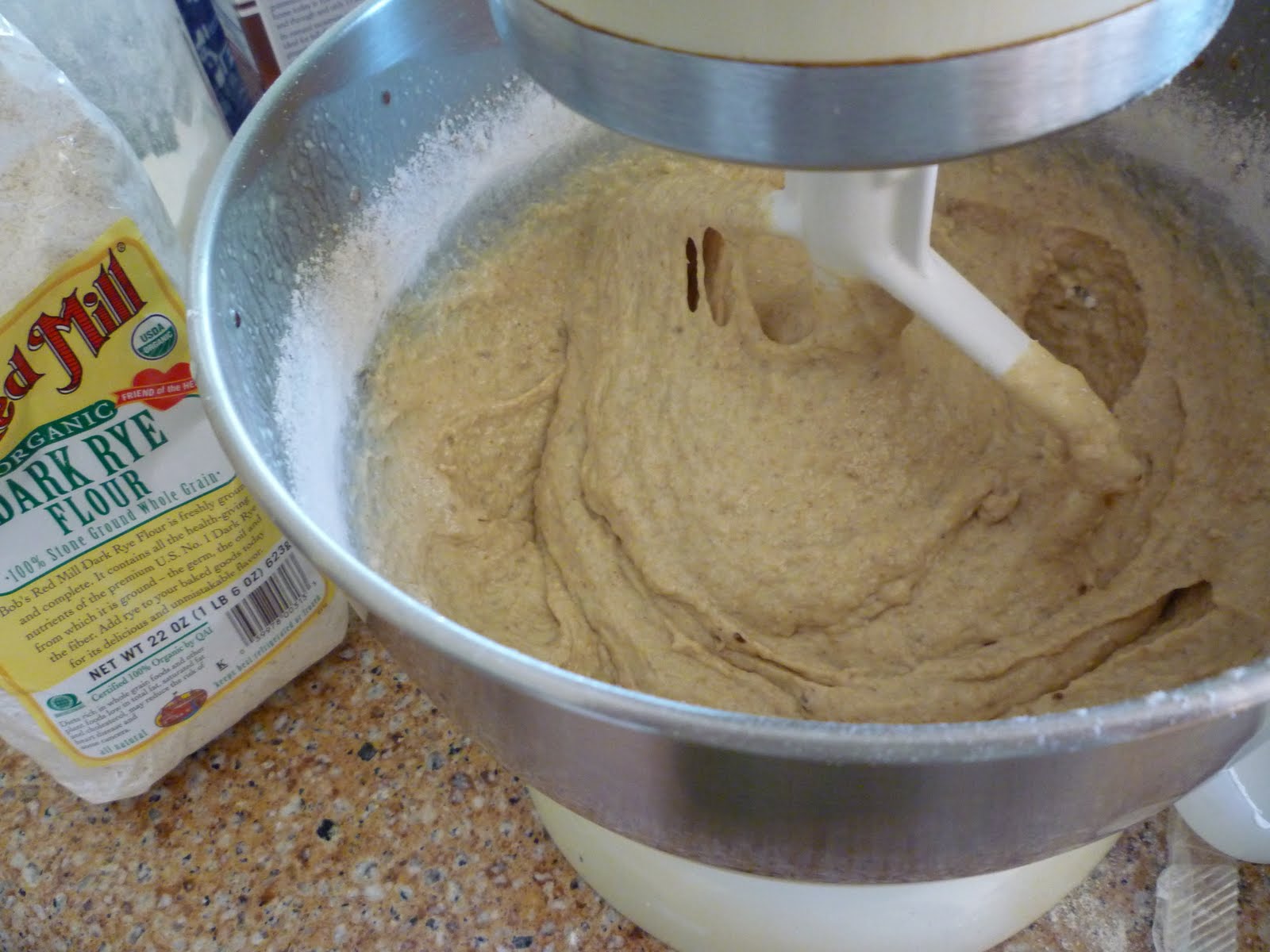
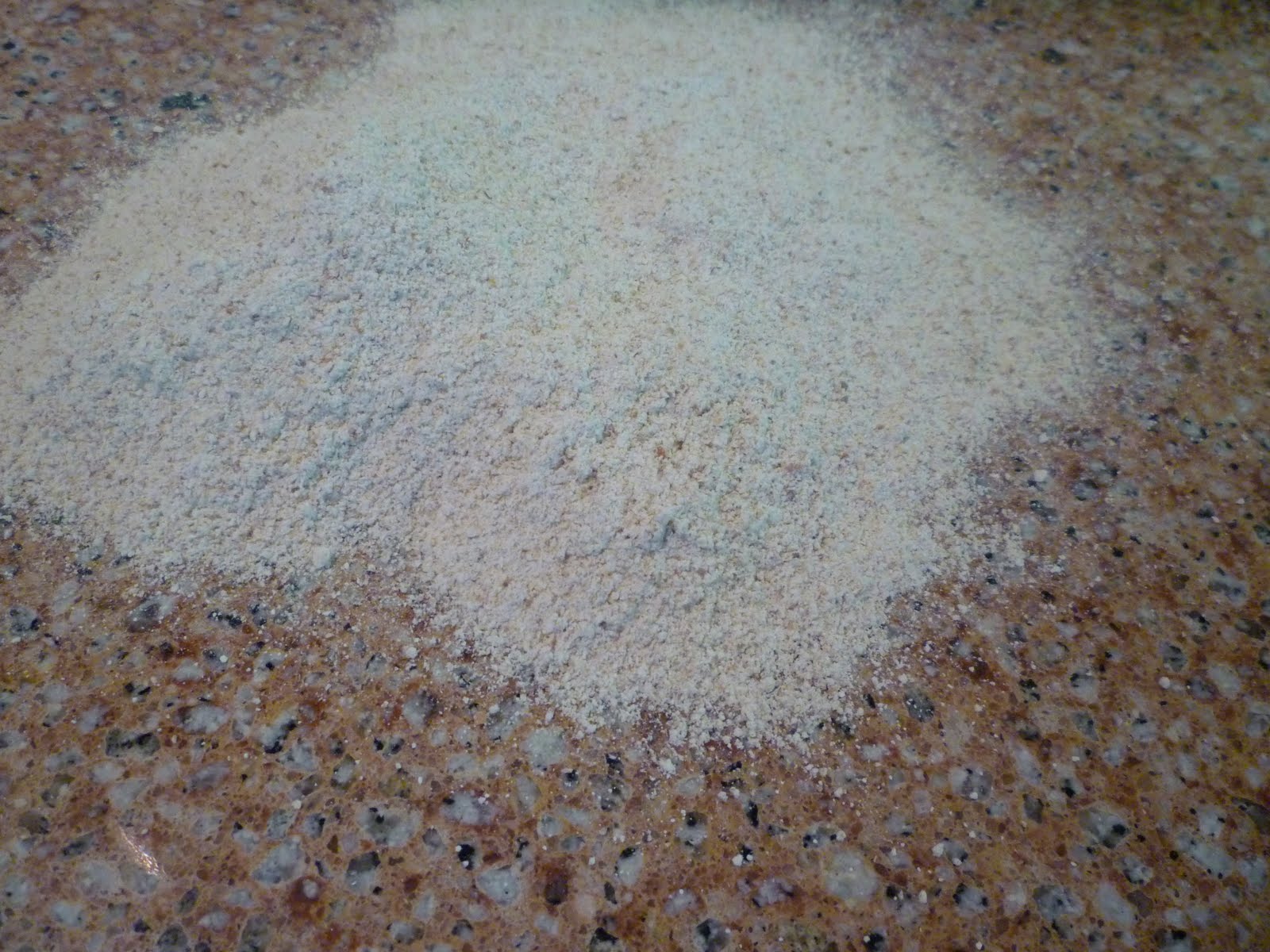
Any bread would do, the mood I was in, so I found this card in my recipe box, and rye flour in a drawer. I started by mixing a sponge in my Kitchen Aid, and would have done most of the kneading in there, too, but I couldn’t find my dough hook. It must be in one of those boxes I haven’t unpacked. So I initiated my new quartz countertops in a monochromatic kneading session that only hurt my wrists a little bit.

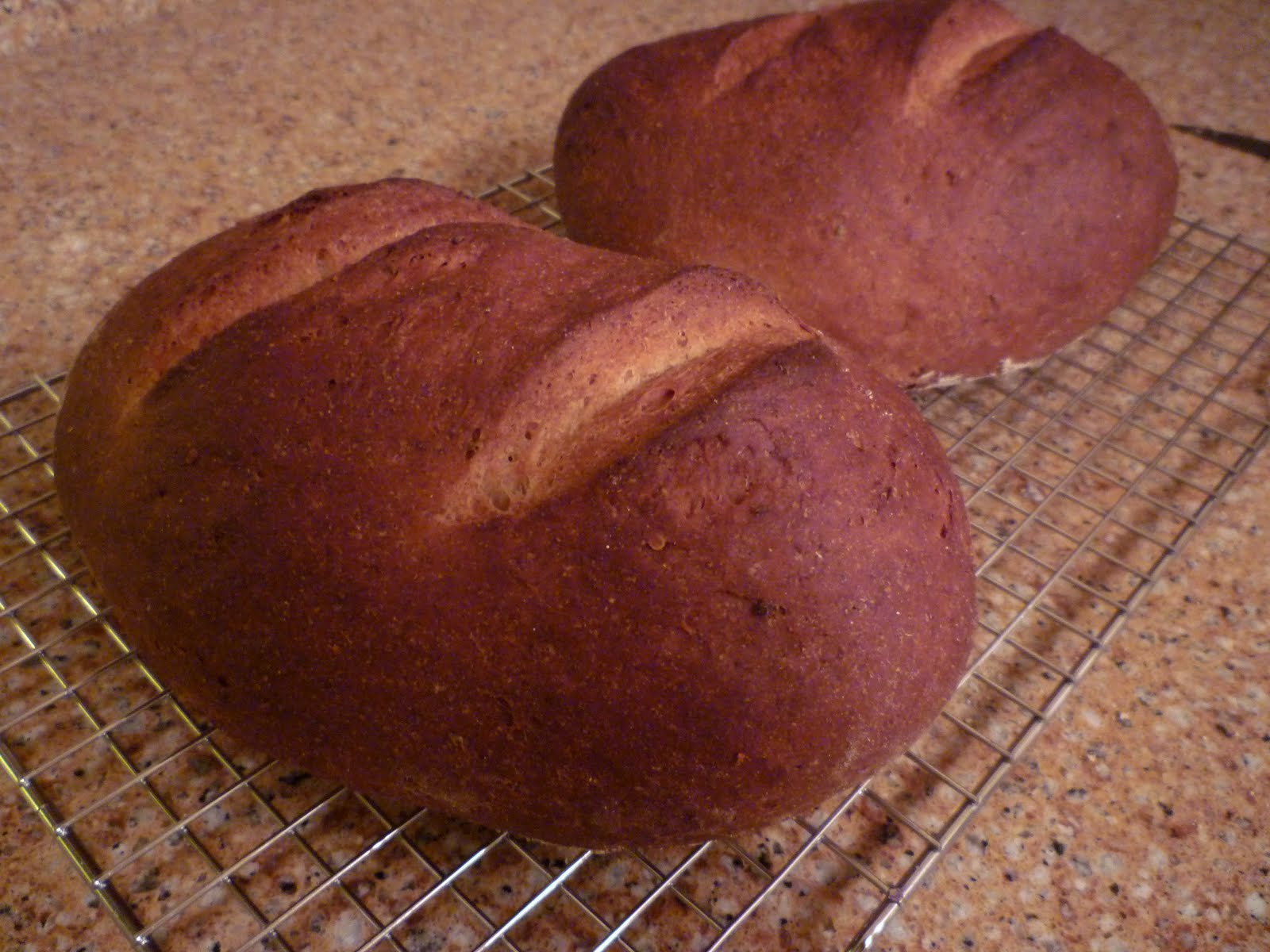
I stayed up late last night waiting to take this bread out of the oven, and I’d have blogged about it right then if my camera battery hadn’t been used up. The plan was to go right to bed as soon as I turned off the stove. But it didn’t seem long after I set the loaves on my new baking stone and shut the door before Mr. Glad called from upstairs to ask what that “strong” smell was; he hoped the bread wasn’t burning.

No, it wasn’t, but when I looked inside, I saw that it was browning more quickly than I expected. Must be the convection oven, or the amount of sugar in the dough. I put some foil loosely over the top and let it stay in the full 45 minutes, during which time the whole house filled with the heady anise smell on top of the plain wonderful bread smell.

When I did take it out, I must have been in the middle of reading something interesting; anyway, I didn’t go to bed, and before I knew it, the bread was cool enough to slice and eat, which I did. I’m glad to report that it wasn’t as exquisite eating as it was intoxicating to the olfactory senses, or I’d have gone to bed really late, with a tummy ache.

It’s a very nice bread, but a little too sweet and rich for my taste. I’ll have to make some adjustments if I use the recipe again. This morning I hope to take one loaf to a friend. Thank You, Lord!