 I was searching for a different recipe when I ran across this one for brownies, which I decided to take to a potluck last week. In reading the comments on the recipe, on the New York Times cooking site, I came upon the question of whether one could use “regular” cocoa powder instead of cacao in this recipe. Because the spelling is so similar, I hadn’t even noticed that the recipe called for cacao. Cocoa is what I always keep in my cupboard, so I needed to know.
The question wasn’t answered definitively enough for me, and I soon found a long discussion of cocoa vs. cacao on a different site, comments long ago closed. Most of the chefs and cooks on that site said there was no real difference besides the spelling, though a few insisted otherwise. My take is that at least some brands of “natural cacao powder” likely retain more nutrients than cocoa. Everyone did agree that you don’t want “Dutch process” cocoa because that is used to make poor quality cacao beans saleable.
When I went to the pantry for my cocoa powder, I saw that it was cacao powder after all, a big bag I’d bought at Costco without wondering why they were using that spelling. So I didn’t have to substitute that ingredient. If I’d had both cacao and cocoa on hand, I’d have baked one pan with each ingredient, for taste-testing purposes. Maybe next time.
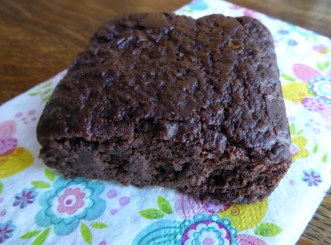
I loved these brownies. They seemed very rich in spite of having no butter or eggs. I ate one and a half, and felt buzzed by them, they were so chocolatey. But I slept well that night anyway.
MEXICAN BROWNIES
Vegan and gluten/grain-free; adapted from the NYT recipe which was adapted from Julie Piatt.
3 Tablespoons/14 grams ground flaxseed
6 tablespoons water
Coconut oil, for greasing pan
¾ cup chickpea flour (besan)
½ cup cacao powder
½ cup tapioca flour
1 teaspoon cinnamon
1 teaspoon mild chili powder
¾ teaspoon xanthan gum
½ teaspoon salt
¼ teaspoon baking soda
1 cup almond meal
1 1/3 cups sugar
8 oz. Earth Balance vegan butter, softened
½ cup unsweetened almond milk
1 teaspoon vanilla extract
5 oz. dark chocolate chips
1 ½ oz unsweetened chocolate
3 tablespoons olive oil
1) In a small bowl, whisk together the flaxseed and water until mixture has an egg-like consistency. Set aside.
2) Heat oven to 350 degrees. Lightly oil the bottom and sides of a 9-inch square pan, and line the bottom of the pan with parchment paper. Set aside.
3) In a large bowl, sift together the chickpea flour, cacao powder, tapioca flour, cinnamon, chili powder, xanthan gum, salt and baking soda. Add almond meal and stir until fully incorporated.
4) In a double boiler or in the microwave melt the unsweetened chocolate and stir until smooth. Set aside to cool.
5) Whisk the flaxseed “egg” again, then put in the bowl of a stand mixer along with the sugar, vegan butter, almond milk and vanilla. Stir on low. Gradually increase speed to medium-high and continue beating until mixture is fully combined and mostly smooth, 5-7 minutes. Add the melted chocolate and olive oil and beat for 15 seconds.
6) Add the wet ingredients to the dry ingredients and fold with a rubber spatula until fully combined and streak-free. The batter should be thick and gooey. Add additional almond milk if it seems too dry. Fold about half of the chocolate chips into the batter, then spread it in the prepared pan. Sprinkle the top with the remaining chocolate chips.
7) Bake until a toothpick inserted in the center of the brownies comes out mostly clean, 50-60 minutes.
The NYT recipe had more chocolate bar and chocolate chips. I added the olive oil to make up for the missing fat. I used unsweetened chocolate instead of a dark chocolate bar so I increased the sugar a tiny bit.
I doubled the recipe and baked it in a 9×13 Pyrex pan, which made for tall brownies and probably necessitated the full hour of baking.

For those interested generally in vegan cakes and brownies, this recipe, Chocolate Carrot Cake, is vegan, and has been accidentally, and then later intentionally, made into brownies. The brownie-eaters could not believe they were vegan. They are easier to make than the Mexican Brownies here in this post, but I like better the texture and complex flavors of the more involved recipe, the chili and cinnamon, almond and vanilla. Let me know if you try one or the other.



 Gladsome Lights