Tag Archives: Dana Gioia

Let them all go, the losers.

THE SEVEN DEADLY SINS

Forget about the other six, says Pride.
They’re only using you.
Admittedly, Lust is a looker,
but you can do better.

And why do they keep bringing us
to this cheesy dive?
The food’s so bad that even Gluttony
can’t finish his meal.

Notice how Avarice
keeps refilling his glass
whenever he thinks we’re not looking,
while Envy eyes your plate.

Hell, we’re not even done, and Anger
is already arguing about the bill.
I’m the only one who
ever leaves a decent tip.

Let them all go, the losers!
It’s a relief to see Sloth’s
fat ass go out the door.
But stick around. I have a story

that not everyone appreciates—
about the special satisfaction
of staying on board as the last
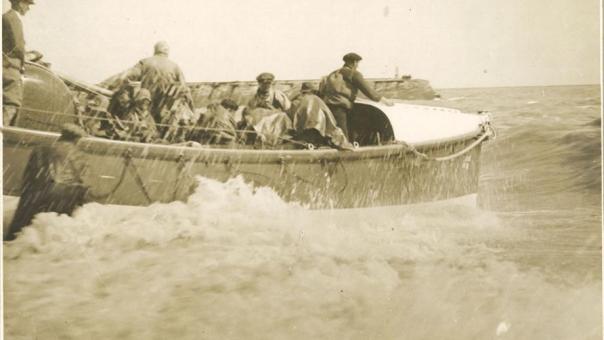
grubby lifeboat pushes away.

— Dana Gioia

Whole types of thought are impossible.

The following excerpt is from an interview with poet Dana Gioia that was, but is no longer, on the Fact and Arts website of the BBC, I think more than ten years ago. Gioia has been Chairman of the National Endowment for the Arts and Poet Laureate of California. I’m sorry I can no longer link to the whole interview, but I think this small part is worthwhile.

F&A: You’ve said, “I don’t think Americans are dumber than they were 25 years ago, but our culture is.” Tell me how our culture is dumber.

Dana Gioia: Our culture is vastly dumber. I’ll give you an example. If you’ve got a copy of The New Yorker from 30 years ago, it would have about six times as many words as it does now. The same thing for The Atlantic. With most of our newspapers, if somebody wrote a review of a book, it was thousands of words long. People would actually think through things in print in a serious way. Even if you didn’t like The New Yorker, you had to take it seriously.

Nowadays we have the USA Today version of culture. People have been trained by TV and the Internet to want an image and a headline. The notion of careful sequential thought contextualized historically, ideologically is a vanishing skill. When we collectively lose our ability to have sustained linear attention, whole types of thought are impossible. I see this in my students who are bright kids but have read very little.

All the airy words we summon.

Following on the theme of language, I’m re-posting this poem from Dana Gioia. As my situation is different from seven years ago when I first put it up here, so is my response to the poem. Then, I was often with my late husband, and we would tell each other the names of things, and amplify our knowledge and appreciation of the world together. Or, we would simply be together in silence, in those moments of happy existence in the world that does not need words.

Nowadays, I still have the impulse to tell all these things, or attempt to bring my readers into the wordless experiences I have — by means of words! Of course, I can’t even attempt to describe more than a fraction of the moments, the stones and sunlight and shadows. So I am learning — a little — to just sit with the things, “no less real for lying uncatalogued and uncounted.” There is Someone with me, after all, who doesn’t tell me the names of things, but Who is the Reality from which they came into being. He also needs no praise, so we praise Him always.

WORDS

The world does not need words. It articulates itself
in sunlight, leaves, and shadows. The stones on the path
are no less real for lying uncatalogued and uncounted.
The fluent leaves speak only the dialect of pure being.
The kiss is still fully itself though no words were spoken.

And one word transforms it into something less or other –
illicit, chaste, perfunctory, conjugal, covert.
Even calling it a kiss betrays the fluster of hands
glancing the skin or gripping a shoulder, the slow
arching of neck or knee, the silent touching of tongues.

Yet the stones remain less real to those who cannot
name them, or read the mute syllables graven in silica.
To see a red stone is less than seeing it as jasper –
metamorphic quartz, cousin to the flint the Kiowa
carved as arrowheads. To name is to know and remember.

The sunlight needs no praise piercing the rainclouds,
painting the rocks and leaves with light, then dissolving
each lucent droplet back into the clouds that engendered it.
The daylight needs no praise, and so we praise it always –
greater than ourselves and all the airy words we summon.

— Dana Gioia
 

Himself at last.

I would like to read more of Søren Kierkegaard’s writings. My intent is on display in the form of four titles by him that I have had sitting on the mobile bookshelf here in my kitchen/family room, for a year at least. I guess if I could decide which to read that would be a good start. A biography of him I am not likely to get to, but who knows…? In the meantime, I am reading this homage by Dana Gioia in the form of a poem. Seems like after this I owe it to Kierkegaard to read at least one more of his own works, though not in hopes of explaining any “riddles.” Only God can do that, and we know that He will — all of them, all of us.

HOMAGE TO SOREN KIERKEGAARD

Work out your own salvation
with fear and trembling.
—St. Paul

I was already an old man when I was born.
Small with a curved back, he dragged his leg when walking
the streets of Copenhagen. “Little Kierkegaard,”
they called him. Some meant it kindly. The more one suffers
the more one acquires a sense of the comic.
His hair rose in waves six inches above his head.
Save me, O God, from ever becoming sure.
What good is faith if it is not irrational?

Christianity requires a conviction of sin.
As a boy tending sheep on the frozen heath,
his starving father cursed God for his cruelty.
His fortunes changed. He grew rich and married well.
His father knew these blessings were God’s punishment.
All would be stripped away. His beautiful wife died,
then five of his children. Crippled Soren survived.
The self-consuming sickness unto death is despair.

What the age needs is not a genius but a martyr.
Soren fell in love, proposed, then broke the engagement.
No one, he thought, could bear his presence daily.
My sorrow is my castle. His books were read
but ridiculed. Cartoons mocked his deformities.
His private journals fill seven thousand pages.
You could read them all, he claimed, and still not know him.
He who explains this riddle explains my life.

When everyone is Christian, Christianity
does not exist. The crowd is untruth. Remember
we stand alone before God in fear and trembling.
At forty-two he collapsed on his daily walk.
Dying he seemed radiant. His skin had become
almost transparent. He refused communion
from the established church. His grave has no headstone.
Now with God’s help I shall at last become myself.

-Dana Gioia, 99 Poems