 In an essay titled “The Inside of Life,” G.K. Chesterton said that he envied Robinson Crusoe being shipwrecked on an island. He talks about “the poetry of limits,” which I am learning is the category where my own favorite life-poems are found. I found another one just last week.
At the beginning of our trip to Washington I was homesick — the first time I recall being plagued by that feeling when actually away from home, though I probably did complain over it right here at the peak of our remodeling project.
There’s never been a year when I took so many trips as 2010. It’s one of those things that is really different about my life nowadays and that I’m learning to adjust to. I’m just a homebody threatening to turn agoraphobic if I get pushed too far. The good old days were the ones when our family’s only car was not available to me and I didn’t have the option of driving to town. I “had to” stay home.
Time wasn’t enough for me to do a proper job preparing for our trip. As G.K.C. also says in that essay, “Life is too large for us as it is: we have all too many things to attend to.” I didn’t seem to have the right clothes, but when I noticed that, it was too late to buy or sew the right ones. I was self-conscious about looking odd until the day I could put on my hiking boots and paint-spattered fleece for the trail.
I always like to write postcards when traveling, so I packed a list of addresses along with some stamps into a zippered pouch along with my pocket calendar and a little prayer book; then the whole thing got left at home in the flurry of departure. All week I wondered if I had lost it at the airport or somewhere on the way, and I felt a bit lost without those props to my usual routine of being me. I couldn’t remember the addresses of most of the people I wanted to favor with a picture and note.
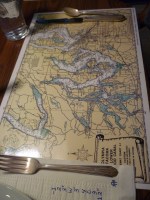 The first night of the journey we stayed with B.’s cousin and her husband who have a house looking out on Hammersley Inlet. They are warm and loving, and I was glad for the time to get to know them better. It was rejuvenative to walk along the shore and collect large oyster shells, in the company of someone else who appreciated their beauty. Anne didn’t think it strange that I deliberated so much over each one I picked up, and she actually seemed to like talking about the reasons why one or another would be more worthy of carrying around for the rest of the trip. After washing three of my favorite potential soap dishes in the kitchen sink I forgot to take them with me the next morning. Somehow that was o.k. The collecting had been the important part.
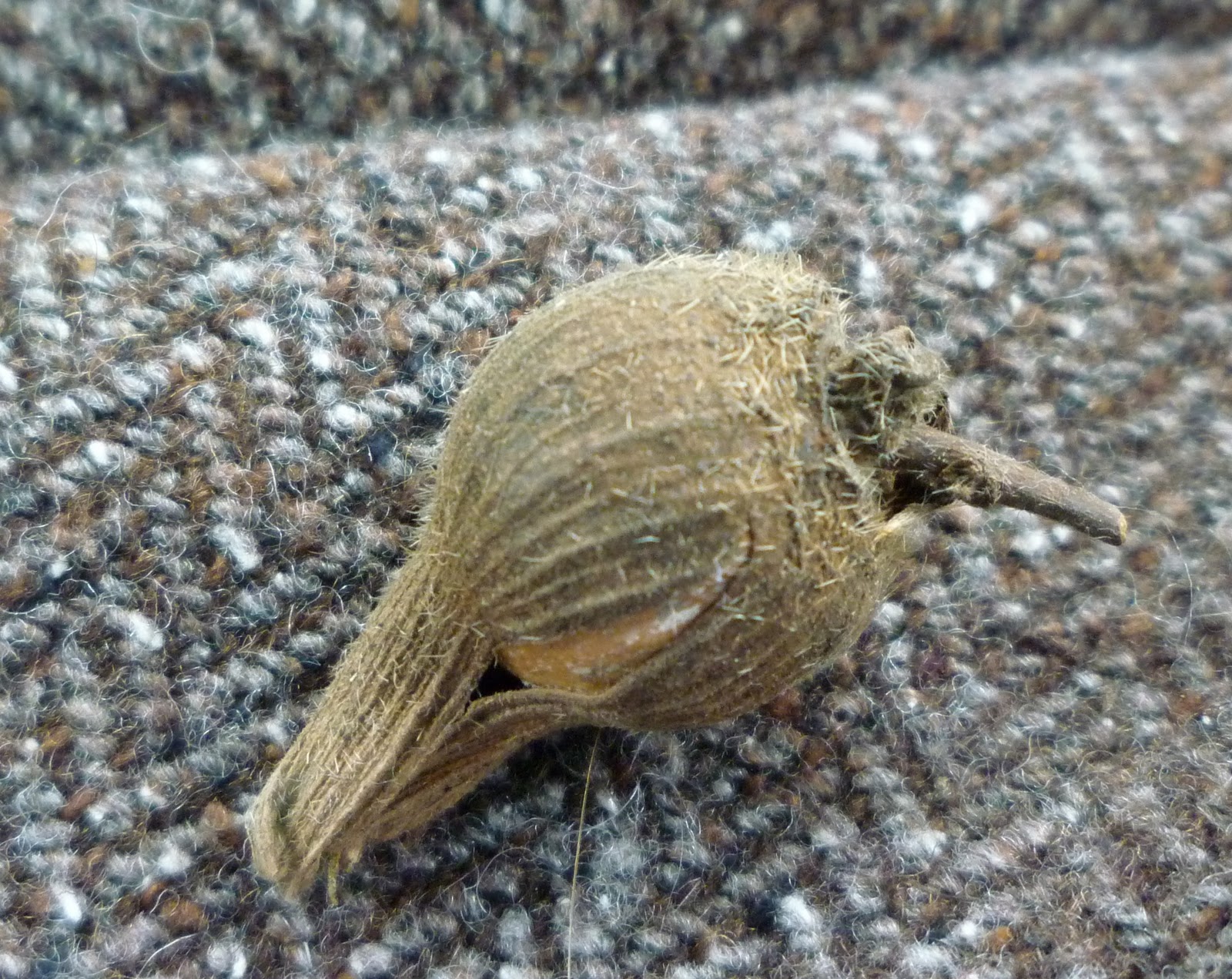
We walked with our Bremerton friends also, in the forest nearby, where my beloved “May” showed me piggy back plants, and filbert nuts hanging on the tree; a hazelnut went into my pocket and made it all the way home.
Just making the acquaintance of these tangible natural artifacts was comforting. If I had to leave their territories so soon and move on like an unwilling gypsy, at least I could snap a picture, or kidnap a small nut, to prolong the connection.
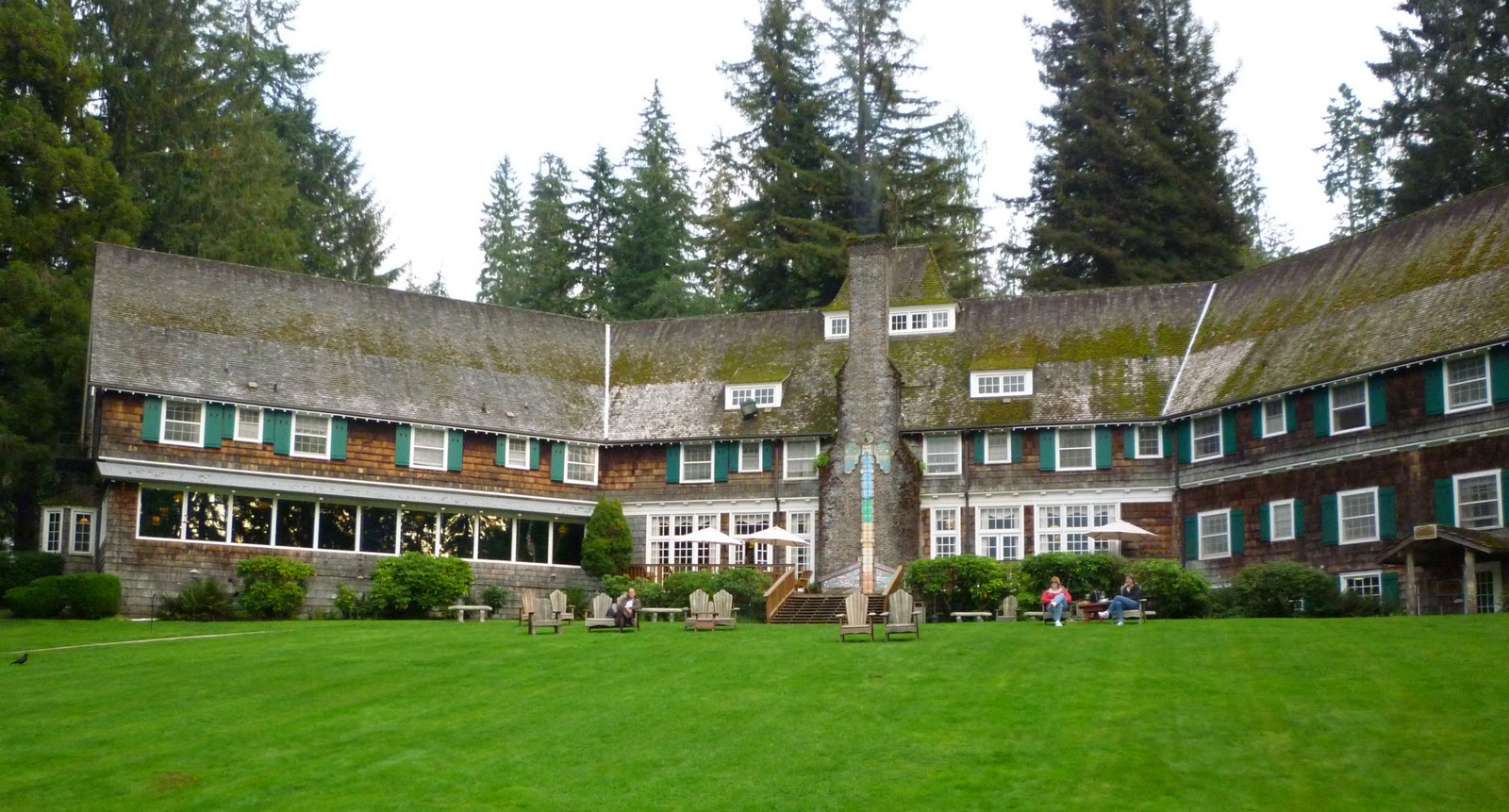
On our way to the Lake Quinault Lodge we got lost and spent a couple of hours getting back in the right direction. Rural Washington doesn’t have as many road signs as one could want, and of course, there are all those waterways that confused me when I was trying to be B.’s navigator. Robinson Crusoe didn’t have all this complexity of terrain, and what he had to deal with, he also had time aplenty for. Again, from G.K.C., “What dullness there is in our life arises mostly from its rapidity: people pass us too quickly to show us their interesting side.” Canals and roadsides, too, I find.
 We had a reservation for three nights where B. had stayed with his family long ago, a classic inn built in 1926. F.D.R. also stayed here in 1938 when he was considering whether to make a national park on the Olympic Peninsula. He decided yes, and the rain forest was preserved.
Olympic National Park is kind of like a wheel with spokes going in, but no hub; we had to drive long distances from the outer rim of the park into the choice areas. On the way along the rim to our first spoke, we spent time on Ruby Beach, where the surf crashed and the air was bracing. Just now I was wondering how it compares with the eastern coast in latitude, and after a bit of hunting and pecking around the Net I can tell you that it’s similar to Prince Edward Island, and still well south of the British Isles.
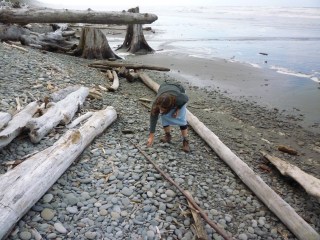
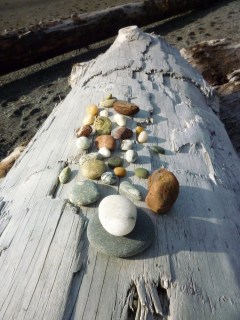
My attention was quickly drawn downward to the smooth and varied pebbles comprising the beach, and I picked up one after another as I noticed their peculiar colors and patterns. Quoting Chesterton, “This desire to be wrecked on an island partly arises from an idea which is at the root of all the arts–the idea of separation.” I removed some of these stones from their vast and cluttered background so I could consider each individually. And I myself had been separated from all my home responsibilities and from all but one talking human. No multitasking necessary.
In that essay that I had read only recently, Chesterton uses literature as a specific example of the artistic principle he’s considering, but it seems to me it is broadly useful for explaining why some activities are just as bracing to my mind and soul as that ocean air.
 According to this idea, one appeal of reading a novel is that the number of people we meet there is limited. “Romance seeks to divide certain people from the lump of humanity, as the statue is divided from the lump of marble. We read a good novel not in order to know more people, but in order to know fewer….instead of this bewildering human swarm which passes us every day, fiction asks us to follow one figure (say the postman) consistently through his ecstasies and agonies. That is what makes one so impatient with that type of pessimistic rebel who is always complaining of the narrowness of his life, and demanding a larger sphere. Life is too large for us as it is….All true romance is an attempt to simplify it, to cut it down to plainer and more pictorial proportions.”
Topographically, logistically, socially, the greater Seattle area is way too large for me. Its vastness and complexity weigh on me like an overcast day. Walking with one or two friends is good — more circumscribed and easier to enjoy. But a small pebble is just right. I stuffed my pockets with pebbles, and breathed as heartily as I could of that oxygen-rich and moist air. I sat on a log and did not want to leave.

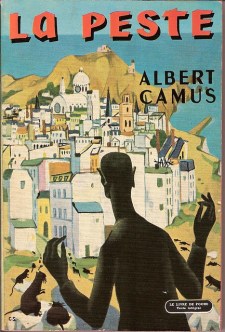 I ran into my dear homeschooling friend Debbie in the store and told her I was starting The Plague; she laughed her delightful laugh and said, “Oh, Gretchen, you are reading that right now??”




 Gladsome Lights