Tag Archives: Fr. Stephen Freeman

Death is a change, but not an end.

AT UNIVERSITY

Puritans reckoned the cadavers
in Anatomy were drunks off the street;
idealists said they were benefactors
who had willed their bodies to science,
but the averted manila-colored
people on the tables had pinned-back
graves excavated in them
around which they lay scattered in the end
as if exhumed from themselves.

-Les Murray

This month marks ten years since my husband’s departing from his earthly life, which leads me to meditate again on this topic. And today is one of the Memorial Saturdays we Orthodox have during Lent:

“Saturday is the day which the Church has set aside for the commemoration of faithful Orthodox Christians departed this life in the hope of resurrection to eternal life. Since the Divine Liturgy cannot be served on weekdays during Great Lent, the second, third, and fourth Saturdays of the Fast are appointed as Soul Saturdays when the departed are remembered at Liturgy.” (OCA)
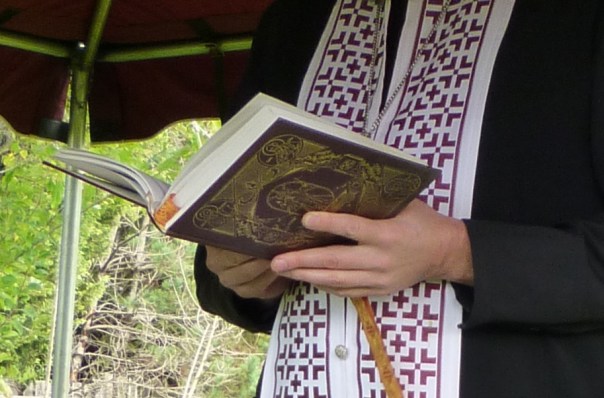
Les Murray’s poem recognizes something about human beings that our modern consciousness rarely grasps: the unity that exists between soul and body, and the brutality of violating the physical aspect of a fellow human.

Father John Whiteford writes that sometimes,

“…you will hear people say that the deceased is not in the coffin but with Christ, for example. However, if a person dies in Christ, their souls will be with Christ, but until the general resurrection, their body remains a part of them that will one day be reunited with their souls (though their body will be transformed) — and as such, the soul apart from the body is not the whole person (2 Corinthians 5:1-5). 

If you are interested to know more about the Orthodox perspective on end-of-life issues, you might check out the Ancient Faith podcast “A Christian Ending” from Deacon Mark Barna, who has also co-authored a book by that title. Episodes of the podcast include: “Understanding Death,” “Cremation,” and “Preparing the Body for Burial,” and about a dozen more.

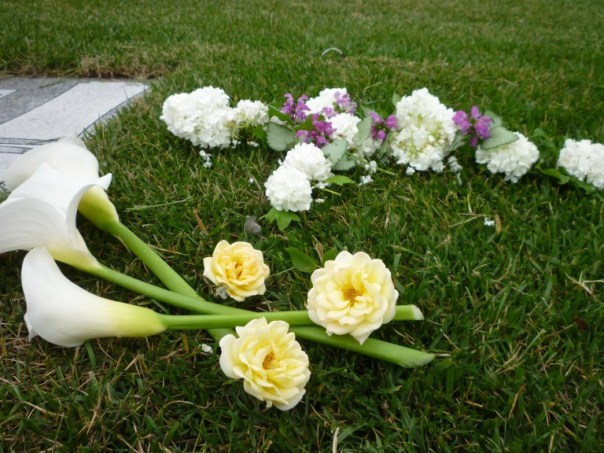
My late husband’s casket in our house.

In the wholeness of Orthodox vision and practice, “…death is a change, but not an end. That which we see, the body, remains important and worthy of honor. A funeral, the service of remembrance, is a sacramental gathering in the presence of God. The body is honored, even venerated. The life of remembrance, eternal remembrance, begins.”

-Father Stephen Freeman, “A Secular Death”
The victory hovers over our world.

It’s New Year’s Day according to our liturgical calendar, and special prayers for God’s blessing were included in our service this morning. What better time could there be for thinking about progress… or would devolution and even defeat be more realistic? I happened to read this passage today (I didn’t hear it in church) and just realized how it is connected, sort of. From a letter written by the Apostle Paul to his coworker Timothy:
“But know this, that in the last days perilous times will come: For men will be lovers of themselves, lovers of money, boasters, proud, blasphemers, disobedient to parents, unthankful, unholy, unloving, unforgiving, slanderers, without self-control, brutal, despisers of good, traitors, headstrong, haughty, lovers of pleasure rather than lovers of God, having a form of godliness but denying its power.

…Now as Jannes and Jambres resisted Moses, so do these also resist the truth: men of corrupt minds, disapproved concerning the faith; but they will progress no further, for their folly will be manifest to all, as theirs also was. But you have carefully followed my doctrine, manner of life, purpose, faith, longsuffering, love, perseverance, persecutions, afflictions, which happened to me at Antioch, at Iconium, at Lystra– what persecutions I endured. And out of them all the Lord delivered me. Yes, and all who desire to live godly in Christ Jesus will suffer persecution. But evil men and impostors will grow worse and worse, deceiving and being deceived.” (2 Timothy 3:1-13)

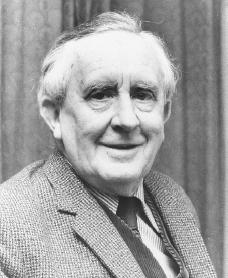
Father Stephen Freeman has written over the years about how this passage is in agreement with what J.R.R. Tolkien wrote in a letter many centuries later:
“Actually I am a Christian, and indeed a Roman Catholic, so that I do not expect ‘history’ to be anything but a ‘long defeat’— though it contains (and in legend may contain more clearly and movingly) some samples or glimpses of final victory” (Letters 255).

This narrative of a long defeat was assumed among ancient peoples, Fr. Stephen tells us, and only changed to one of progress in recent centuries, especially during the 19th century. But the defeat of history is not really pessimistic. It is part of the greater story of Christ’s Kingdom that has come, and is coming:

“I would go further and say that the final victory already “tabernacles” among us. It hovers within and over our world, shaping it and forming it, even within its defeat. For the nature of our salvation is a Defeat. Therefore the defeat within the world itself is not a tragic deviation from the end, but an End that was always foreseen and present within the Cross itself.” 

The whole article is here: “Tolkien’s Long Defeat and the Path of History.”

The liturgical calendar doesn’t have much to do with that long defeat. You can go to any timeline of history to see the kingdoms that have risen and fallen, and the many wars and tribulations, the violence and suffering that have filled the earth since the beginning. Taken as a whole it’s hard to see any true progress there, unless you are talking about Wonder Bread or flush toilets.

No, the liturgical New Year begins the commemorations of Great Feasts of the Orthodox Church, following the sequence of events in what is sometimes called our Salvation History. The birth of Christ’s mother, the birth of Christ, the Presentation of Christ in the Temple, and so on. The death and resurrection of Christ are the peak season on that calendar. Christ’s defeat, and death — swallowed up in victory. That is cause to say “Christ is risen!” and “Happy New Year!” God is with us.

A voluntary act of foolishness.

“We want to be safe. When we see that another person is sorry for what they have done to us, we begin to think that they will now become safe. We fear forgiving those who show no sorrow or who have not clearly repented of their actions towards us. And we do well to fear it. That is a completely rational, even “hard-wired,” instinctive response. But that tells us what forgiveness actually entails and what it is that Christ asks of us.”

The Orthodox Church starts Lent off with the Vespers of Forgiveness, which all are strongly encouraged to attend, and to participate in, by asking forgiveness of everyone else in the church, one by one.

Not everyone does this, and those who do likely go on struggling to forgive again and again as Lent continues*, and as we pray our daily Lenten prayer of St. Ephraim, in which one thing we ask God to give us is the spirit of “humility, patience, and love for mankind.”  So I am posting a link to this short meditation from Fr. Stephen on why it is so hard to forgive: “The Danger and Shame of Forgiveness.”

More from the article:

“Forgiveness in the Christian sense is properly an act of self-emptying. It is a voluntary act of foolishness in which we act in a manner contrary to the shame that has been cast upon us. Understood in this manner, forgiveness is of a piece with bearing the Cross itself. It is of paramount importance that the one act of general forgiveness offered by Christ is found in words spoken from the Cross. They could have been spoken from nowhere else.”

You can read the whole essay: here.

*(This year Easter in the Eastern Orthodox Church is May 5th,
so we are still in the middle of our Great Fast.)

Downingia

Shame and the modern identity.

Father Stephen Freeman by his writing has been helping us for a long time, to understand how shame motivates our behavior, both good and bad. There is both healthy shame, which we are “hardwired” with, and toxic shame, which often has unhealthy ramifications down through the generations.

One particular article, “Shame and the Modern Identity,” I’ve wanted to share a link to for some time. In it Fr. Stephen explains how it happens that we start with a necessary form of shame and end up with the painful and crippling emotion of shame.

“We could say that toxic shame, or damaging shame, is the abuse of something that is essential and necessary. That is a useful understanding, and points to just how tricky the acquisition and formation of identity is. It is a razor’s edge and pretty much no one survives the years of its acquisition without a legacy of unwanted shame. The years following that acquisition can often be occupied with the patient work of cleaning up the unwanted bits that shadow our existence. Adults gradually gain a sense of their identity, but very few feel entirely secure about it. ‘Who am I’ can be a haunting question, for example, for someone going through a divorce or a loss of employment. When the props that we have gathered in the establishment of an identity are removed, it’s easy to fall apart.”

If you read the article linked above and still want more, you are in luck. Just last spring Fr. Stephen’s book came out: Face to Face: Knowing God beyond Our Shame. It is good to have much of his wisdom on the subject gathered in one place. Even those of us who aren’t plagued with these emotions ourselves likely know someone who is, and could possibly benefit from more understanding for their sake.