Tag Archives: G.K. Chesterton

140th birthday of a star

g-k-chesterton at deskToday is the birthday of our dear friend G.K. Chesterton. He was born in 1874, which makes it 140 years since God gave him to the world. I’ve begun reading Chesterton’s autobiography two times, and it seems the least interesting of all his writings I’ve tried, because it doesn’t come naturally to the author to talk about himself. Much of what I read in the first chapters was about other people, perhaps well-known in his day but not to me.

Chesterton liked people, as this clip from The Daily Herald in 1913 attests:

“Quite a swamping majority of the men and women I have met in my life I have liked very much indeed. I have never met that Ordinary Man who seems to bore some people so much. All the men I have met have been the most extraordinary.”

It’s a good thing that the man’s own personality and character shine through his writings, so that we may know how extraordinary he was and is. He is for me a stellar example of the sort of writer with whom a reader can have a rich relationship. You might think from looking at my blog today that he is my literary Significant Other, being the author of my one current Bedside Book and my theme quote, and the subject of this post. He isn’t even my favorite author, but I happen to have put his birthday on my calendar.

A few years ago, for the July/August 2011 issue of Gilbert Magazine, the editors asked some Chesterton experts, “What is the most Chestertonian book you’ve ever read that was not by G.K. Chesterton?” A couple of them thought there was nothing else that could compare.

But James Woodruff named The Wind in the Willows, which happened to be published the same year as Chesterton’s Orthodoxy, because it is “a celebration of the primal things Chesterton loved — Home and Friendship and Adventure — all suffused with a sense of wonder and lived out by characters who write poetry and go forth to battle and wwind in the willows boatho eat and drink with right good will…”

Nathan Allen named The Abolition of Man by C.S. Lewis, “…because he deals with a lot of the issues that Chesterton cared about: education, the loss of a sense of a common culture, and so forth.” Other titles suggested were That Hideous Strength, also by Lewis; The Phantom Tollbooth by Norton Juster; The Restoration of Property by Hilaire Belloc; The Restoration of Christian Culture by John Senior; and Pinocchio!

I wish I had a tidy way to take a few thoughts from and about this hero of mine and craft them into a fitting birthday tribute, but my skill and understanding don’t come near the level of my appreciation. [To demonstrate that fact: when I wrote that sentence I wasn’t yet aware that I had somehow moved his birthday forward 20 years. Ack! I think it’s fixed now.] Maybe after some more years — for his 150th? — I will do better than this mishmash. For today I will stop and let Chesterton’s own words from What is Right With the World convey the kind of attitude that has made him a favorite of mine and of ever-increasing numbers of readers:

“We are to regard existence as a raid or great adventure; it is to be judged, therefore, not by what calamities it encounters, but by chesterton hair flyingwhat flag it follows and what high town it assaults. The most dangerous thing in the world is to be alive; one is always in danger of one’s life. But anyone who shrinks from that is a traitor to the great scheme and experiment of being.”
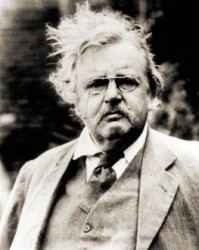
HAPPY BIRTHDAY, Mr. Chesterton!

(May 29, 1874-June 14, 1936)

Roses on My Path – flaming white

I’ll let G.K. Chesterton’s comments accompany this rose
that was on my path through the neighborhood:

rose white floribunda em av 2

“White is a colour. It is not a mere absence of colour; it is a shining and affirmative thing, as fierce as red, as definite as black. When, so to speak, your pencil grows red-hot, it draws roses; when it grows white-hot, it draws stars.

“And one of the two or three defiant verities of the best religious morality, of real Christianity, for example, is exactly this same thing; the chief assertion of religious morality is that white is a colour. Virtue is not the absence of vices or the avoidance of moral dangers; virtue is a vivid and separate thing, like pain or a particular smell. Mercy does not mean not being cruel or sparing people revenge or punishment; it means a plain and positive thing like the sun, which one has either seen or not seen. Chastity does not mean abstention from sexual wrong; it means something flaming, like Joan of Arc.

“In a word, God paints in many colours; but He never paints so gorgeously, I had almost said so gaudily, as when He paints in white.”

-G.K. Chesterton, “A Piece of Chalk,” in Tremendous Trifles

rose white floribunda em av 1crp

Space is the womb of life.

G.K. Chesterton said he believed that…the most practical and important thing about a man is still his view of the universe.” (I can’t find the source for that quote; does anyone know it?)

[update: The quote is from Heretics, and in larger context it goes,

“There are some people, nevertheless — and I am one of them — who think that the most practical and important thing about a man is still his view of the universe. … We think that for a general about to fight an enemy, it is important to know the enemy’s numbers, but still more important to know the enemy’s philosophy. We think the question is not whether the theory of the cosmos affects matters, but whether in the long run, anything else affects them.”]

He would have liked this article I read in Touchstone magazine, “Lost in Space.” In it Michael Baruzzini compares the viewpoints of Carl Sagan and C.S. Lewis’s Space Trilogy character Elwin Ransom, and relates what modern astronomers have discovered about just how empty it is out there.

Ransom’s thoughts are quoted in the article, and they are appealing in their expression of what seems to me the nurturing and provision of the Creator:

 “…the very name ‘Space’ seemed a blasphemous libel for this empyrean ocean of radiance in which they swam. He could not call it ‘dead’; he felt life pouring into him from it every moment. How indeed should it be otherwise, since out of this ocean the worlds and all their life had come? He had thought it was barren: he saw now that it was the womb of worlds, whose blazing and innumerable offspring looked down nightly even upon the earth with so many eyes….”

Baruzzini: “Where Lewis had Ransom find a life-giving environment, Sagan found affirmation of man’s essential loneliness. While Sagan’s picture of space focused on the vast distances and vacuity of the heavens, Lewis’s character, eschewing the nihilism of modern sentiment, focused on the connections between the planets and space.

“Who was right? Is space really just a vast, empty void, as Sagan imagined? Or is the earth not rolling through emptiness, but floating in a cosmic sea of light and radiance, as Lewis envisioned?

“It turns out that Lewis was largely right.”

space240-small-magellanic-cloud_66026_600x450

“Without the astrophysical processes that power the stars, the very matter that makes up our bodies would not be here. Science writer Simon Singh points out that this means we are made of nuclear waste; Carl Sagan for once got it right, and poetically so, when he stated that this means we are made of star-dust. In either case, Lewis’s instinct is confirmed: Space is the womb of life; it creates the very matter from which life and its home on earth is made.”

Read the whole article here.

Linking up to Weekends With Chesterton.

Whether eager or not – books.

There is a great deal of difference between
an eager man who wants to read a book,
and a tired man who wants a book to read.

— G.K. Chesterton in Charles Dickens

I can’t relate to the tired man mentioned in this quote, because if I am ever too tired to be eager about it, I don’t enjoy reading at all. Short of totally drained, my style of “deep reading,” which requires a pencil or red pen for underlining and note-taking even for novels, is what I most like to do when fatigue sets in. In the years when I was worn completely down by evening, having provided the education, meals and home base for a passel of children and a husband, the most calming thing was to get in bed with a book of theology.

But the comparison Chesterton makes leads me to think about uses of books. It sounds as though the Tired Man is using a book, whereas the Eager Man wants to engage with and receive from the author of a specific book.

All the same, when I am an Eager Woman I seem to need several choices, not always being in the mood for meeting up with any and every interesting author. My family have been very good to me of late, providing many of these options.

My sister-in-law gave me Feather Crowns by Bobbie Ann Mason, not a book I’d have picked up otherwise; I’d never heard of the author. The prose was lovely, and transported me to Kentucky in 1900, to the house of a woman truly great with child. When she gives birth to quintuplets her home and family become the center of a community effort on the part of the women to help her with the babies, at which point I could smell the cornbread and hear the household sounds and the birds outside her window.

The closeness of the community and the friendliness and openness of the country people that are initially so appealing in this story soon set off alarms in my mother’s heart, when complete strangers hop off the train and come right in without knocking, to pick up the babies without asking. This very domestic story became a thriller for me as I turned the pages wanting to find out how fame was going to affect the babies, the marriage, the community — and most of all, the mother. I can enjoy engaging with a writer of fiction if she does a good job, and Mason qualifies.

Poetry provides a different kind of connection with the author, a relationship in which I feel most like the receiver of gifts, though of course I can’t help but bring something to the encounter. That’s why I don’t bother with many of the poems that come my way: I don’t have whatever it takes to hear what is in that particular poem, and I can tell right away. On the other hand, maybe poetry books are the sort that I want to read when I am on the verge of exhaustion. A good poem can give at several levels, depending on my state of mind.
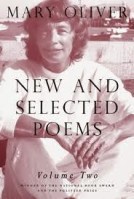
Mary Oliver has a higher-than-average success rate with me, so I’m looking foward to delving into this collection that was a birthday gift from my husband. I’ve posted some of her poems on my blog in the past, but right now I just want to share a quote from her that makes me feel a connection to her as a fellow-writer, too. The quote within a quote, from Wikipedia:

She commented in a rare interview, “When things are going well, you know, the walk does not get rapid or get anywhere: I finally just stop, and write. That’s a successful walk!” She says that she once found herself walking in the woods with no pen and later hid pencils in the trees so she would never be stuck in that place again.

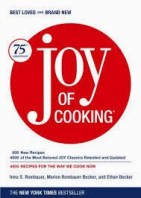
Another kind of book for less energetic times is a good cookbook, and The Joy of Cooking has been perfect for leisurely hours of perusal throughout my married life. Mr. Glad accommodated my desire for the 75th-anniversary edition, so I’ll be ready when that mood strikes.
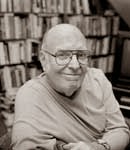
I get poems in my inbox every day from two poetry websites, and last month one of them was by X.J. Kennedy, whose name I recognized as co-editor with Dana Gioia of a poetry textbook I bought a  while back for the purpose of improving my receptivity to poems. I started reading about Kennedy and found that he himself has specialized in writing poems and stories for children.

So I borrowed a few of his books from the library and discovered some that I wanted to buy for my grandchildren. I read one of his stories, too, The Owlstone Crown, which I don’t think worth anyone’s time unless you have absolutely nothing else at hand.

My favorite by him was the children’s introduction to poetry that he wrote and compiled, Knock at a Star. I have now bought several copies on Amazon at one cent each, plus shipping, of course. The poems Kennedy collected are all of a sort that I would feel good about my children or grandchildren reading. I am not at home with the book at the moment so I will have to write another post about it when I can give some examples.

Where I am is at the home of Soldier and Joy and Liam. 21-month-old Liam and I are eagerly reading scores of books, but not always in the focused way I prefer. Often we get a page or three into the book when he gently closes that one and jumps down off my lap to bring a replacement from his bookshelf. But I am patient; so far I haven’t given up being an Eager Reader.

Linking up to Weekends With Chesterton