Tag Archives: G.K. Chesterton

On the value of philosophy.

“Suppose that a great commotion arises in the street about something, let us say a lamp-post, which many influential persons desire to pull down. A grey-clad monk, who is the spirit of the Middle Ages, is approached upon the matter, and begins to say, in the arid manner of the Schoolmen, “Let us first of all consider, my brethren, the value of Light. If Light be in itself good –.” At this point he is somewhat excusably knocked down. All the people make a rush for the lamp-post, the lamp-post is down in ten minutes, and they go about congratulating each other on their unmediaeval practicality. But as things go on they do not work out so easily.

“Some people have pulled the lamp-post down because they wanted the electric light; some because they wanted old iron; some because they wanted darkness, because their deeds were evil. Some thought it not enough of a lamp-post, some too much; some acted because they wanted to smash municipal machinery; some because they wanted to smash something. And there is war in the streets, no man knowing whom he strikes.

“So, gradually and inevitably, to-day, to-morrow, or the next day, there comes back the conviction that the monk was right after all, and that all depends on what is the philosophy of Light. Only what we might have discussed under the gas-lamp, we now must discuss in the dark.”

— G.K. Chesterton in Heretics
Linking up to Weekends With Chesterton, hosted by Mary this week.
defeat of the bogey

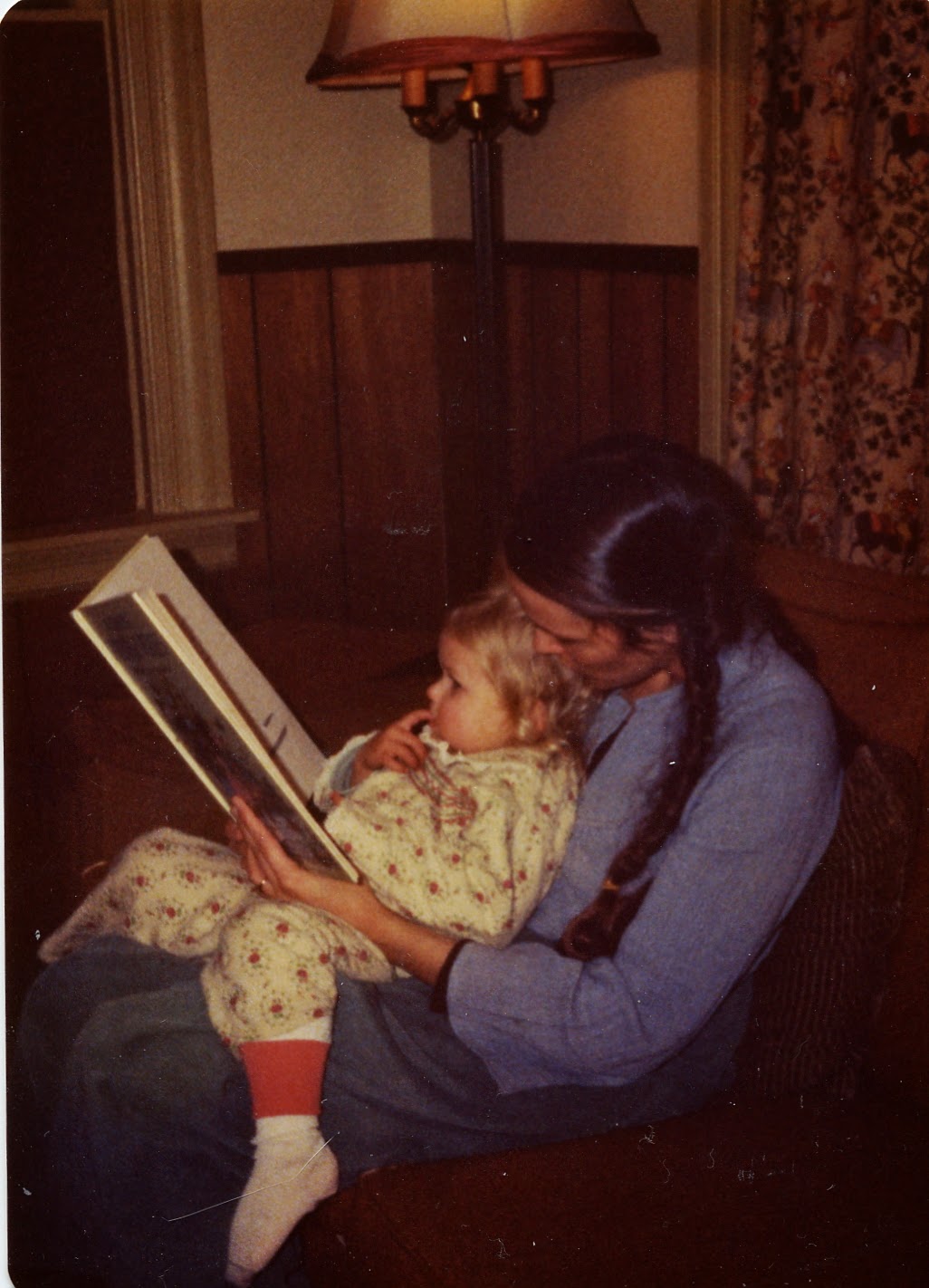
Fairy tales do not give the child his first idea of bogey. What fairy tales give the child is his first clear idea of the possible defeat of bogey. The baby has known the dragon intimately ever since he had an imagination. What the fairy tale provides for him is a St. George to kill the dragon.

― G.K. Chesterton, Tremendous Trifles

 Linking up to Weekends With Chesterton

On the ground with the White Horse.


Last week The Garners posted about G.K. Chesterton’s Ballad of the White Horse, which caused me to dig out my cassette tapes of the author reading his own poem — how thrilling! Too bad they were made from a scratchy recording so that it’s very hard to appreciate the poem itself. Still, the directness of the connection to the very voice and person of the poet mean a lot to me.

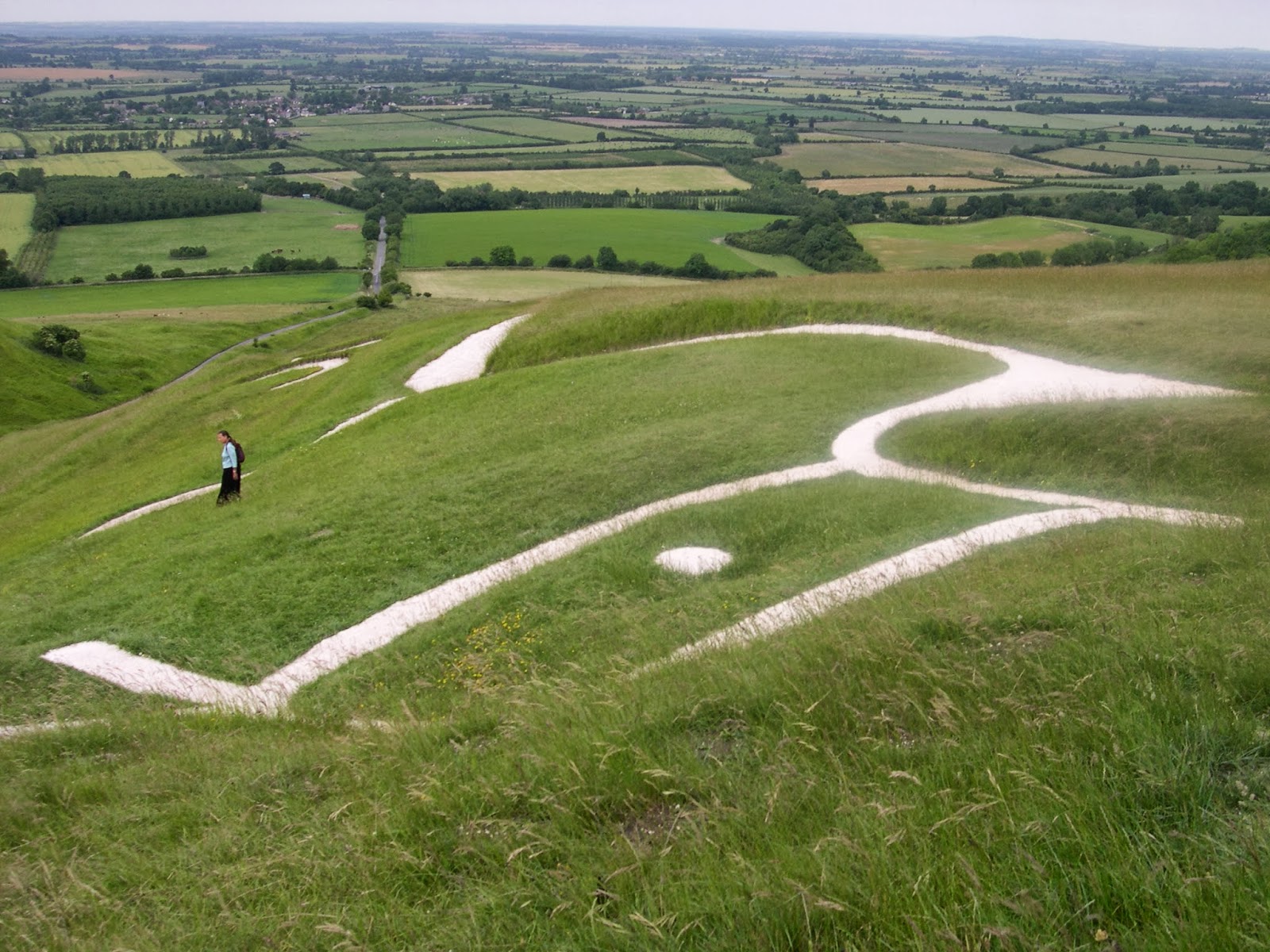
What made me interested in the Ballad in the first place was taking a trip to Britain with daughter Pippin nine years ago. We both very much wanted to see White Horse Hill in Uffington while we were there, and we found it quite empty of any other humans the day we visited. We hiked up the hill to the chalk art that is thought to be 2,000 to 3,000 years old, and wandered around the horse’s anatomy. We couldn’t pull ourselves away. I just could not get over — here it is again — the earthy material link to ancient peoples and the mysteries of their culture and history.

One thing we share with the ancient people who carved the trenches of this design is human nature, the gifts of the Creator who made us in His image, glorious even in a tarnished condition. The horse reveals the creative aspect of that image, and Chesterton’s ballad shows his own artistry while it tells a human and Christian tale set in King Alfred’s day. The imagery in this stanza, which I think pertinent to the Lenten season, illuminates another aspect of our humanity that we share with our ancestors: the impulse to stand before God in worship, fighting with the desire to be God:

Pride juggles with her toppling towers,
They strike the sun and cease,
But the firm feet of humility
They grip the ground like trees.

–G.K. Chesterton, The Ballad of the White Horse                 

Thinking again about this world history and my history, I want to revisit the horse vicariously, by means of the poem slightly more removed from the poet than my old cassettes. So I just ordered this edition of the book, which I think is the one I bought two copies of in the past for gifts. The American Chesterton Society will be sending me this CD, read by Aidan Mackey, who sounds as though he is very likely, once I put that disk in the player, to send me right back to England and White Horse Hill.
[update: the recording was annoyingly scratchy and almost as bad as the old one of GKC himself. 😦  ]

Linking up to Weekends With Chesterton

A little dancing sister.

>

…Nature is not our mother: Nature is our sister. We can be proud of her beauty, since we have the same father; but she has no authority over us; we have to admire, but not to imitate. This gives to the typically Christian pleasure in this earth a strange touch of lightness that is almost frivolity. Nature was a solemn mother to the worshipers of Isis and Cybele. Nature was a solemn mother to Wordsworth or to Emerson. But Nature is not solemn to Francis of Assisi or to George Herbert. To St. Francis, Nature is a sister, and even a younger sister: a little, dancing sister, to be laughed at as well as loved. -G.K. Chesterton

I’ve been enjoying my little sister in the garden this week. It started with a long weeding session, during which I rescued the sweet peas from a weed of which I don’t know the name. Does one of you know it?


It’s been growing taller than the peas, and even though I made some nice trellising for them, they have been confused by these weeds and are trying to climb on them instead.

The green and trailing weed is also flowering before the sweet peas bloom, and is not in any way an unpleasant weed to deal with.

How about this weed? Maybe someone can tell me its real name. We call it The Scattery Weed, because before the seeds are obviously ripe, when the plant still looks small and innocent, it waits with secret menace for the gardener to stroll by and brush it with her shoe or hand, then !!explosion!! of seeds in a several-foot radius.

I probably shouldn’t use the word menace when talking about my little sister. In this case she is only doing what is in her nature, and doing a good job of bearing many children for next year’s springtime.

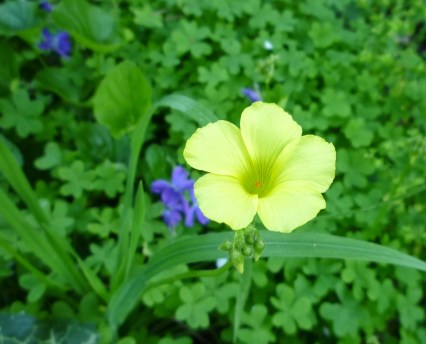
I found more signs of spring while I was out there, like this oxalis blooming among the violets…

…plum blossoms decorating violets, and the violets springing up tall to decorate an irrigation head.

Above is a field of manzanita blossoms fallen from the bush to make way for berries, and hanging over them are snowdrops, truly looking like little sisters dancing in their pretty spring petticoats.

I finished my garden work just ahead of the steady rain we’ve been getting today. God is watering the earth and sending His rain “on the just and the unjust.” Thank You, Lord!

Linking up to Weekends With Chesterton.