Tag Archives: Holy Week

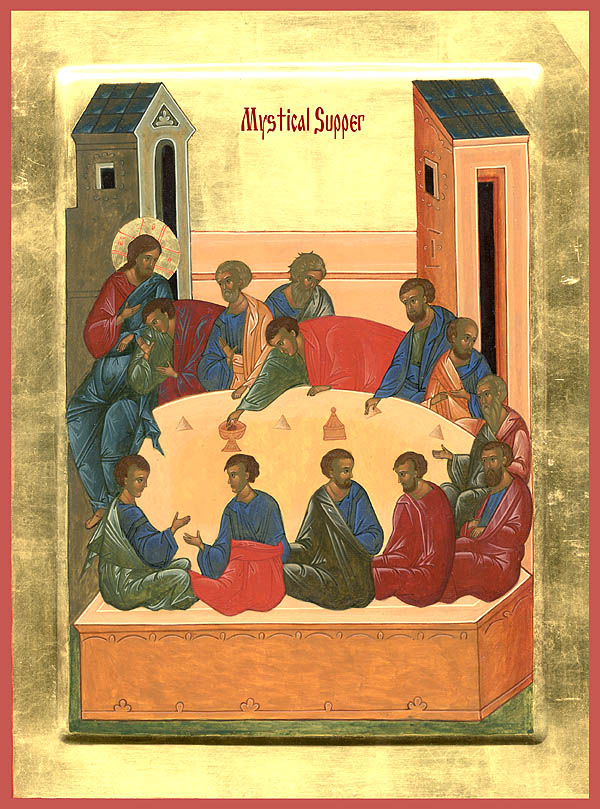
Mystical Supper

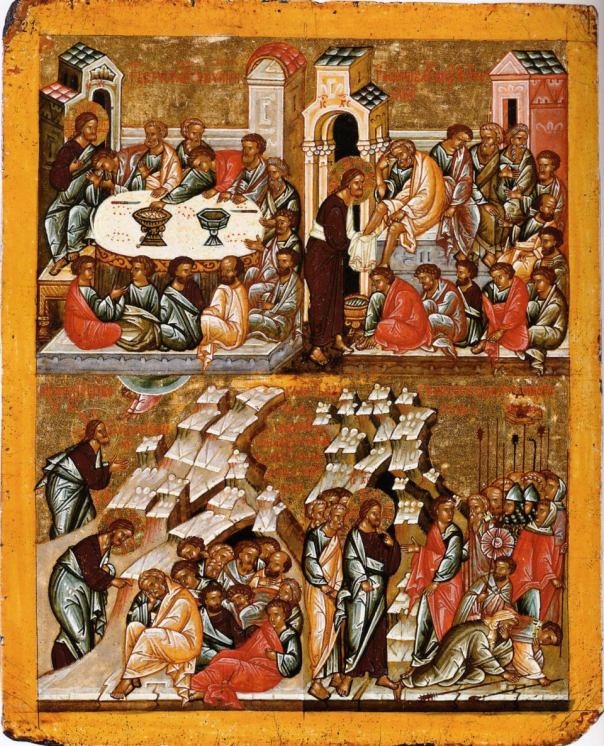
The Orthodox Church remembers so many events on Holy Thursday that it takes five mostly-long passages to comprise the Gospel reading. These events are: the washing of the disciples’ feet, the institution of the Sacrament of the Holy Eucharist at the Last Supper, the agony in the garden of Gethsemane, and the betrayal of Christ by Judas.

Icon Reader shares a 15th-century Russian icon that includes all of these events:

holythursday_15c_rus

This site explains at length all the commemorations of the day, including the Last Supper, which is our experience also in the Divine Liturgy as the article testifies: “In the Eucharist the Church remembers and enacts sacramentally the redemptive event of the Cross and participates in its saving grace.”

On his blog this week Fr. Stephen explores Judas’s “banal and prosaic” reason for betraying Jesus: the love of money. He writes: “Money is the anti-Eucharist. Like the Eucharist, it is a way of life.”

“Christ gives His disciples the Eucharist on the ‘night in which He was betrayed.’ … Christ loves the Father – and all that the Father has given to Him. The bread that Christ gives is life, and life more abundantly…God give us life!

mysticalsupper

Holy Week with children and silence.

P1090510I started this week with the blessed Entrance into Jerusalem, the waving of palms, and exhortations from our priests to the flock not to think we have arrived, not to relax and try to coast to Pascha. We ought rather to have the spirit of St. Paul when he said he was pressing on. We have a lot to enter into in this last intense week of Christ’s passion.

It was surely the grace of God that got me out of bed the next morning for Bridegroom Matins. It is very sweet to gather and sing lines such as these:P1090513

O Bridegroom, surpassing all in beauty,
Thou hast called us to the spiritual feast of Thy bridal chamber.
Strip from me the disfigurement of sin,
through participation in Thy sufferings;
clothe me in the glorious robe of Thy beauty,
and in Thy compassion make me feast with joy at Thy Kingdom.

We’ve had aP1090540nother kind of blessing this week, a visit from Pippin and family. It has been really good to spend time with little Ivy in particular, 18-months-old right now. And the group of us had a lovely outing to the redwoods and the beach.

Scout liked climbing on downed trees, and Ivy collected sticks. But this stick was still connected to the tree so she had to give up on it eventually.ivy branch crp 4-14

It’s very pretty the way the new lighter green fronds of fern contrast with the older ones.P1090580

P1090545
Poison oak is climbing gracefully up this redwood.

P1090554

On the bluffs above the ocean hundreds of wild irises were in bloom.

P1090598

When I moved in close to take their picture with an arched rock in the distance, I saw this blue-eyed grass almost hidden in the ferny turf nearby.

P1090602

We picnicked near the parking lot surrounded by giant yellow lupine bushes, before going down to the shore. You can see in the photo below that the fog was still hanging on past noon, typical for Northern California beaches.

P1090585

We spent a good while with the children digging and playing chase with the waves, and the adults taking pictures. Ivy liked to sit by herself and dig with her toes into the damp sand. She tasted it, too, but that wasn’t so satisfying. The sun came out.P1090581

Then everyone but me went for a walk. I don’t know how that happened, but I wasn’t disappointed to be left alone. I had just been reading Fr. Thomas Hopko’s “Precepts for Christian Living,” which Lisa thoughtfully posted recently, and I was struck by his admonition to “Sit in silence 20 to 30 minutes each day.”

I wasn’t sure when I read it what exactly would fit the description of this activity Fr. Tom recommends — it sounds like a big order. But sitting on the beach was obviously the perfect opportunity. When my husband returned he found me listening for God’s silence, surrounded by the roar of the sea.

P1090597

Palms and Flowers

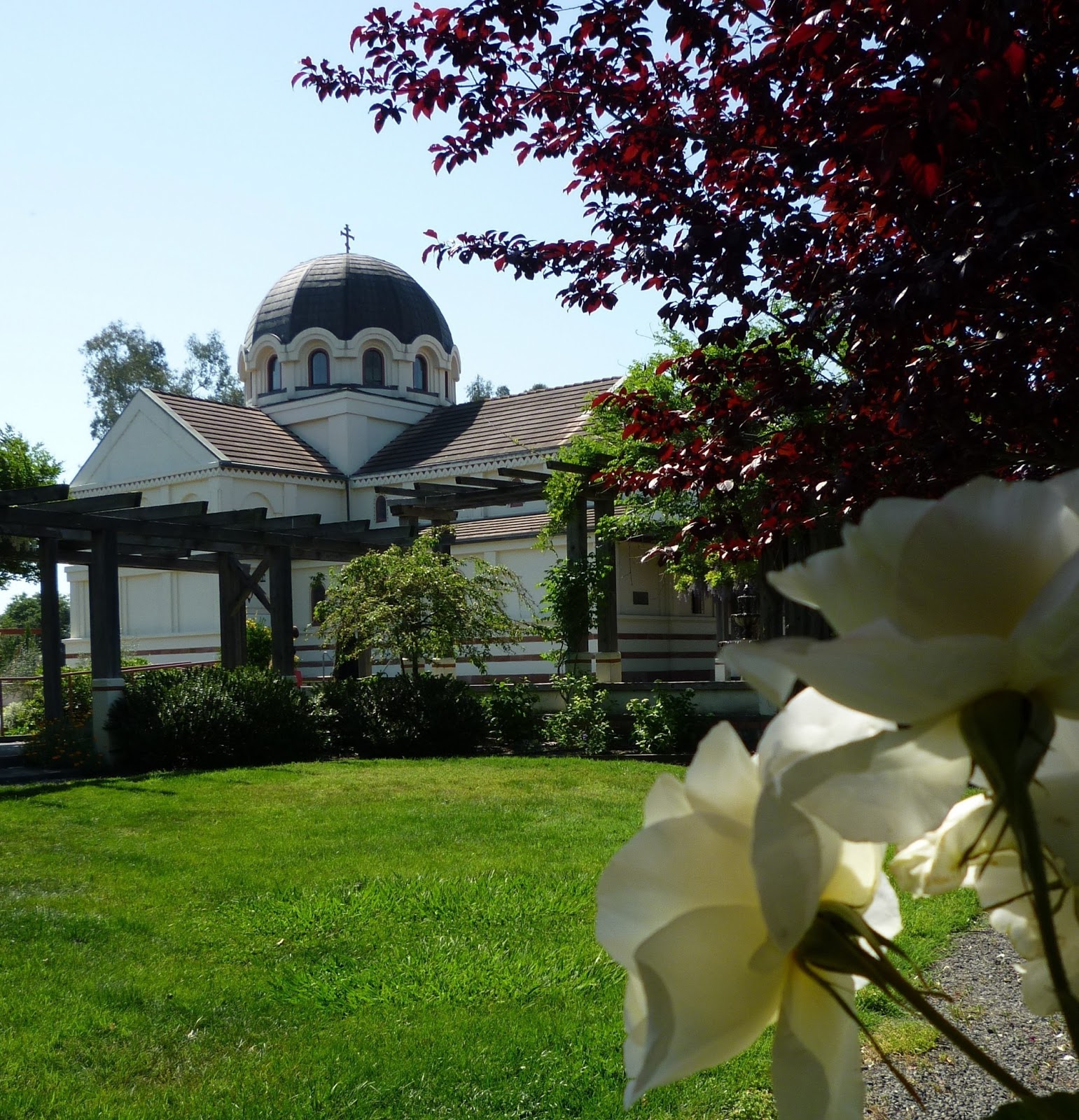
On this Palm Sunday, we were celebrating Christ’s entry into P1090482crpJerusalem. The church and grounds were all beautified by springtime and by the artistry of parishioners who arranged flowers and palm branches.

This year we even had some giant green fronds to soften the harsh lines of scaffolding that can’t be taken down for another couple of months. Last night those were being unloaded from a truck when I was leaving Matins.palms on truck 14

By the courtyard poppies and wisteria are blooming.wist & poppies Laz Sun 14

P1090496
My new god-daughter, baptized on Lazarus Saturday.


After liturgy this morning we waved our much smaller palm fronds in the air as we processed around the church singing, “Like the children with the palms of victory, we cry out to Thee, O Vanquisher of Death: Hosannah in the Highest! Blessed is He Who comes in the Name of the LORD!”


entry_into_jerusalem_giovanni_mezzalira

Incessantly and Altogether Beautiful

Tonight marks the end of Lent in the Orthodox Church. We enter Holy Week with Lazarus Saturday, and of course we do fast until Pascha, but it’s not technically Lent anymore for us. We now stop thinking about whether we succeeded or failed at Lent, because we need to focus on what God has done and be fully present for these last days of the remembering of the death and resurrection of the Lord.

In our parish we had Matins of Lazarus Saturday, a time to remember the whole story of how Lazarus had been dead four days when Jesus came into town and his friends said, “If only you had been here, he wouldn’t have died.” And Jesus wept. Then He showed his power over death, and raised Lazarus. And then followed the events that sent Him to His own death, which He also overcame for our sakes. His powerful beauty is still filling this world.

Despite the effects of the Fall and despite our deep sinfulness, the world continues to be God’s creation. It has not ceased to be “altogether beautiful.” Despite human alienation and suffering, the Divine Beauty is still present in our midst and still remains ever active, incessantly performing its work of healing and transfiguration. Even now beauty is saving the world, and it will always continue to do so. But it is the beauty of a God who is totally involved in the pain of the world that He has made, of a God who died on the Cross and on the third day rose victorious from the dead.

–Metropolitan Kallistos

christ passion