Tag Archives: hymns

Things above and things below.

In the fifth week of Lent we Orthodox have “Thursday of the Great Canon,” on which day the entire Great Canon of St. Andrew of Crete is sung. This penitential hymn is very long, and in the first week of Lent the singing of it is divided among four services. But today we hear and pray it all at once.

“A basic distinguishing feature of the Great Canon is its extremely broad use of images and subjects taken both from the Old and New Testaments. As the Canon progresses, the congregation encounters many biblical examples of sin and repentance. The Bible (and therefore, the Canon) speaks of some individuals in a positive light, and about others in a negative one—the penitents are expected to emulate the positive examples of sanctity and repentance, and to learn from and avoid the negative examples of sin, fallen nature and pride.” -Orthodox Wiki

Here is a small portion from Canticle Four:

“Thy Body and Thy Blood, O Word, Thou hast offered at Thy Crucifixion for the sake of all: Thy Body to refashion me, Thy Blood to wash me clean; and Thou hast given up Thy spirit, O Christ, to bring me to the Father.

“O Creator, Thou hast worked salvation in the midst of the earth, that we might be saved. Thou wast crucified of Thine own will upon the Tree; and Eden, closed till then, was opened. Things above and things below, the creation and all peoples have been saved and worship Thee.

“May the Blood from Thy side be to me a cleansing fount, and may the water that flows with it be a drink of forgiveness. May I be purified by both, O Word, anointed and refreshed, having as chrism and drink Thy words of life.”

All ye among the halls of heaven…

O SAVIOUR, FOUNT OF HEAVENLY LIFE

O Saviour, Fount of heavenly life,
Assist us in our earthly strife;
Thou pitying Virgin, hear our cries,
And raise us from our miseries.

Angelic hosts our needs attend;
Ye holy patriarchs, defend;
Ye choirs of prophets, by your prayers,
Protect us from unholy snares.

Herald of Christ, we call on thee;
And thou that hold’st the golden key;
Apostles all, your voice we claim,
Dissolve the bonds of sin and shame.

Triumphant martyrs of the Lord;
Ye holy preachers of the word;
And virgins chaste; to you we pray;
Wash all our sinful stains away.

All ye among the halls of heaven,
To whom the light of love is given,
In pity hear our cries, — that we
The glory of God’s face may see.

All praise and honour, power and love
To God the Sire who rules above,
Unto the Son like glory be
And Holy Ghost eternally.

-Rabanus Maurus (780 – 856) Germany
Translated by Daniel Joseph Donahoe

Rembrandt – St. Jerome in Prayer

The whiteness of the moon at even.

The first full moon in November is traditionally called the Beaver Moon in North America, and marks the season when we might be busy as beavers getting everything shored up against winter.

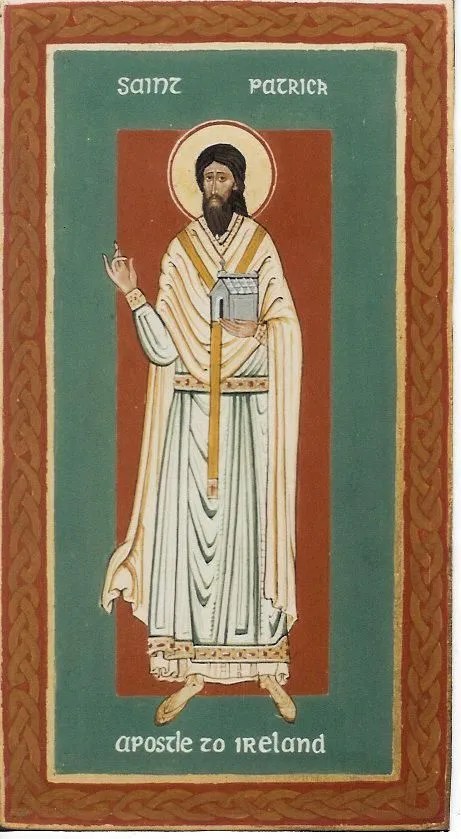
Lately I’ve been refreshing my memory of the hymn that I memorized soon after my husband’s passing, a version of St. Patrick’s Breastplate from Charles Villiers Stanford. He used two old Irish tunes to compose a majestic setting for Cecil Frances Alexander’s poetry. The YouTube version I learned from is still up: “St. Patrick’s Breastplate.”

On the occasion of the full moon I am sharing only the portion of the hymn that draws our spiritual eyes to the natural world.

I bind unto myself today
the virtues of the starlit heaven,
the glorious sun’s life-giving ray,
the whiteness of the moon at even;

the flashing of the lightning free,
the whirling wind’s tempestuous shocks,
the stable earth, the deep salt sea,
among the old eternal rocks.

Another version of this ancient hymn is “The Deer’s Cry,” and my favorite rendition of that one is sung by Lisa Kelly here: “The Deer’s Cry.”

What could I add to this prayer? The blessing is in the singing of it.

Darial Gorge, Moon Night by Ivan Aivazovsky, 1868

St. Kassiani the Hymnographer

On this feast day of St. Kassiani, I have a few items to share with you. Kassiani was a Byzantine abbess, poet, composer, and hymnographer, born at the beginning of the 9th century in Constantinople. This short biography is a good introduction: “Kassiani the Hymnographer.” 

So is this five-minute video: “The Story of the Hymn of Kassiani.” In either of those tellings you will learn about how she wounded the pride of the young emperor Theophilus when she appeared before him in a “bride show.” He rejected her because, as some put it, she was “too clever.”

In the Orthodox Church that particular hymn is sung during Holy Week, and more than twenty others have been included in liturgical books over the centuries. Fifty of her compositions are extant.

One of my favorite renditions of the most famous composition is this pure and simple one from a parish in Utah: “The Hymn of Kassiani”

But if you like a professional choir, Cappella Romana’s singing of it in Greek is is beautiful:

This long-playing collection of Kassiani’s hymns is also lovely if you want to soak up medieval music for a while: “Kassia Byzantine Hymns”

And this last one is a choir of men with big voices, who sound like they are singing in a huge old church: “Troparian of Kassiani”

Enjoy!