When a reader falls in love with a book, it leaves its essence inside him, like radioactive fallout in an arable field, and after that there are certain crops that will no longer grow in him, while other, stranger, more fantastic growths may occasionally be produced.
-Salmon Rushdie
Addendum from Vicky’s comment below, which helpfully develops Rushdie’s thought for those who want to deliberately cultivate “certain crops”:
Beautiful… as well as quite the vivid warning.
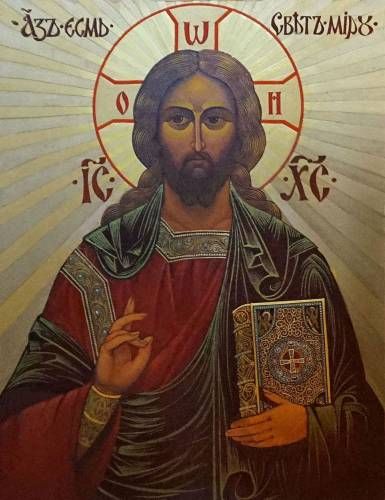
Matthew 6:22-23 “The lamp of the body is the eye. If therefore your eye is good, your whole body will be full of light. But if your eye is bad, your whole body will be full of darkness. If therefore the light that is in you is darkness, how great is that darkness!”
Commentary from the Orthodox Study Bible: “The mind (Gr. nous) is the spiritual eye of the soul; it illuminates the inner man and governs the will. Keeping the mind wholesome and pure is fundamental to the Christian life.“
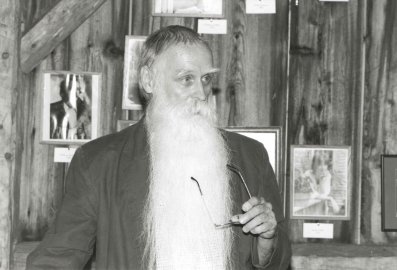
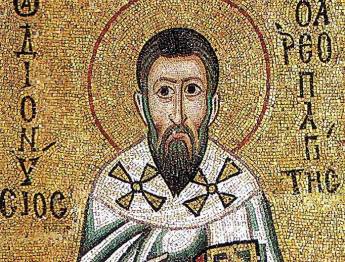
Some years ago Donald Sheehan’s widow Xenia shared on social media an excerpt from his book The Grace of Incorruption, a passage in which he links Robert Frost with St. Dionysius. She published it on the saint’s feast day in October, along with his icon below, but for re-posting Sheehan’s thoughts I have chosen today’s date, on which Robert Frost breathed his last, an appropriately wintry day in 1963. Xenia Sheehan:
This day the Orthodox Church celebrates St. Dionysius the Areopagite, 1st (or possibly 5th)-century poet of “Mystical Theology,” whom Donald Sheehan uniquely compares to American poet Robert Frost in his “deliberate turning out of all the lights of false knowing . . . in order to behold — in Dionysius’ astonishing words — ‘that darkness concealed from all the light among beings.'”
Don writes in The Grace of Incorruption that,
“…in order to know the personhood of another, we must unknow both the persona and the personality: we must let these lights go out. Again and again, in his finest poems, Robert Frost accomplishes precisely this unknowing, the deliberate extinguishing of all the false light, and a welcoming-in of the darkness in which true personhood can shine forth. And true personhood is, always, genuinely beautiful.
“I think what moves us so deeply about the poem ‘An Old Man’s Winter Night’ is Frost’s evocation of genuine personhood in the old man. The old man in Frost’s poem is not a persona nor a personality; he is, genuinely, a person. And as the lights go out in the poem, the more beautifully and movingly his personhood emerges. One vivid detail: when the log in the stove shifts with a jolt, we, too, are jolted into a deeper intimacy with the old man, an intimacy that gains in power because of the darkness.”
-Donald Sheehan
Text and icon from Donald’s widow Xenia Sheehan in 2018
AN OLD MAN’S WINTER NIGHT
All out-of-doors looked darkly in at him Through the thin frost, almost in separate stars, That gathers on the pane in empty rooms. What kept his eyes from giving back the gaze Was the lamp tilted near them in his hand. What kept him from remembering what it was That brought him to that creaking room was age. He stood with barrels round him—at a loss. And having scared the cellar under him In clomping there, he scared it once again In clomping off;—and scared the outer night, Which has its sounds, familiar, like the roar Of trees and crack of branches, common things, But nothing so like beating on a box. A light he was to no one but himself Where now he sat, concerned with he knew what, A quiet light, and then not even that. He consigned to the moon,—such as she was, So late-arising,—to the broken moon As better than the sun in any case For such a charge, his snow upon the roof, His icicles along the wall to keep; And slept. The log that shifted with a jolt Once in the stove, disturbed him and he shifted, And eased his heavy breathing, but still slept. One aged man—one man—can’t fill a house, A farm, a countryside, or if he can, It’s thus he does it of a winter night.
The light of Thy countenance
has been signed upon us.
Thou hast given gladness to my heart.
And let all them be glad
that hope in Thee;
they shall ever rejoice
and Thou shalt dwell among them.
O Lord, as with a shield of Thy good pleasure
hast Thou crowned us.