Tag Archives: nominalism

Why nominalism is important.

“Now, what do we mean by nominalism, and why is it important? There are many aspects of the nominalist position, but the main one is just the denial that this created world is an icon of a heavenly reality. Instead, nominalists hold this world’s form to be arbitrary, a product of sheer divine will.

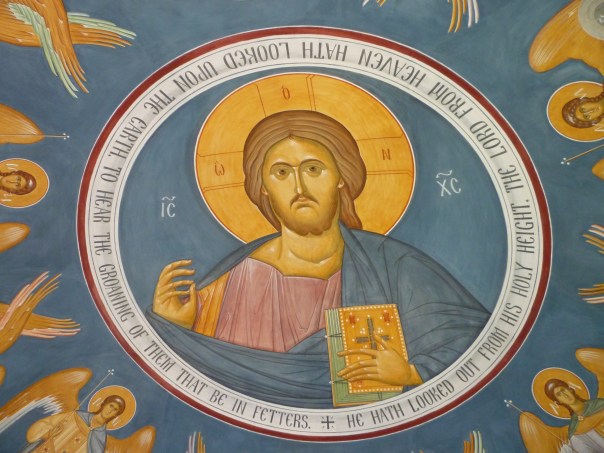
“As Orthodox, we still comfortably assert that the world is an icon of heaven, or is meant to be. But in the West this union of the symbolic and the real became rather vexed. Now, we have even developed this destructive iconoclasm around gender, the human body, human sexuality, and so forth. Outside the Church, we have come to think that we can simply posit whatever reality we wish about these things.

“The nominalist and the realist positions must be reconciled. We must see that the reality of the world depends upon its being a symbol of heavenly realities. If creation is not a symbol of heaven, then its essence, its substance, would be of little importance. For example, if the world is just the arbitrary product of God’s will, then God could have made some other world, or not have given us gender, and so forth. And if the world’s form is arbitrary, then it is no longer ‘good,’ no longer beautiful and holy.”

-Timothy G. Patitsas,  The Ethics of Beauty

Not an absence, but an antidote.

P1100719

From Father Stephen Freeman:

When the Fathers used the word “symbol,” they understood that something was actually, really and truly made present. A symbol makes present that which it represents. This is fundamental in the doctrine of the Holy Icons. In our modern world, a symbol represents something that is not there, it is a sign of absence. Indeed, because our modern world-view is essentially one of nominalism, we believe that the ancient notion of symbol is simply impossible. It feels like superstition to the modern consciousness.
…..
But this brings us to my description of sin as not being a “legal problem.” St. Justin says that “sin defiles a man and his being.” This is not contemporary language. He means exactly what he is saying. It is of a piece with St. Athanasius’ description of sin as death, corruption and non-being. Sin is something, not just a thought in the mind of God. It kills us, and not because God is doing the killing. Sin is death itself. The “lawlessness” of I John 3:4 is the anarchy, chaos, and disorder of death and corruption. Sin is utterly contrary to the life that is the gift of God.

This is why St. Justin (and the Church) can say that the remedy of sin is holiness, the “synthesis and unity of all the holy virtues and grace-filled energies.” When we partake of the holy mysteries of Christ’s Body and Blood, they “cleanse us from all sin.” This is not a simple change of our status in the mind of God. His Body and Blood are life. They are the antidote to death, decay, corruption and non-being. They destroy the lawlessness that is the anarchy, chaos and disorder of death and corruption.

You can read the entire article here: Secularized Sin