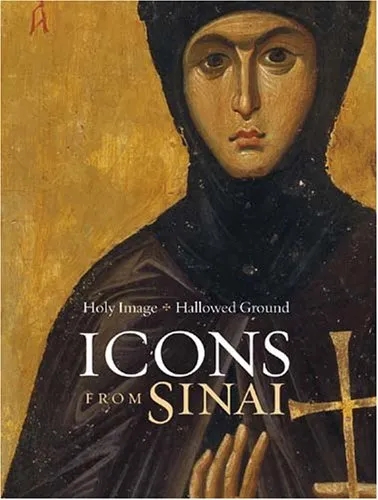
 When the Getty Museum in Los Angeles hosted the exhibition “Holy Image, Hallowed Ground: Icons From Sinai” in 2006-07, the courier and caretaker of the artifacts on display was Father Justin Sinaites.
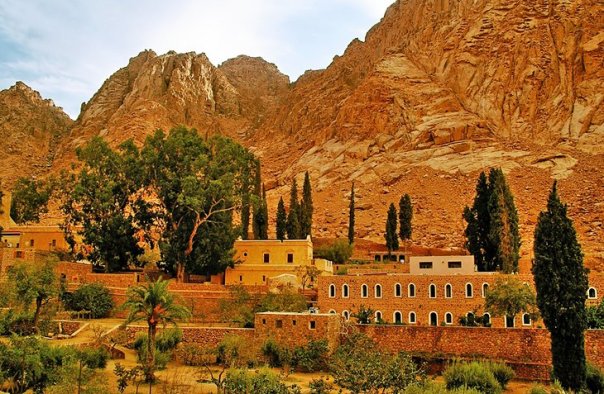
He is the librarian at Saint Catherine’s Monastery on Mount Sinai, where the extremely dry climate has kept ancient manuscripts from deteriorating the way they might in many places in the world. This monk librarian came from Texas to the Egyptian monastery many years ago; at least once before I mentioned him on my blog after my late husband and I heard him speak in Berkeley, California.
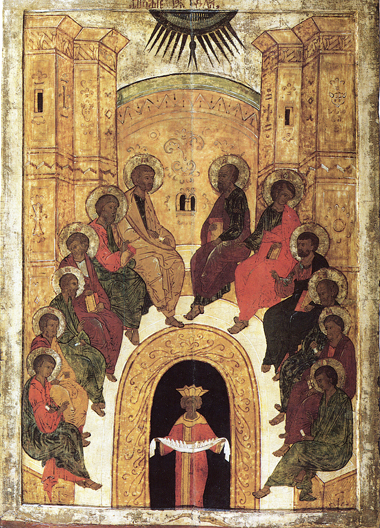
As I write, the sun has set on this Sunday of Pentecost, a celebration full of joy and light. So we are now, according to Church Time, in the day after, on which the Orthodox Church celebrates Holy Spirit Day; Father Justin has written a blog post about how they keep the feast at St. Catherine’s: “Liturgy at the Peak of Mount Sinai”:
“Every year, we celebrate the Divine Liturgy at the peak of Mount Sinai on the day after Pentecost, the Monday of the Holy Spirit. This year, we were joined by pilgrims from Greece and Russia. We made the ascent in the night, and began the Liturgy at 4:00 AM.”
The blog post consists mostly of Fr. Justin’s own photographs, which I always find very appealing. I learned more about the monk himself in this interview on the Travel Potpourri website: “Saint Catherine’s Monastery Interview with the Librarian Father Justin.”
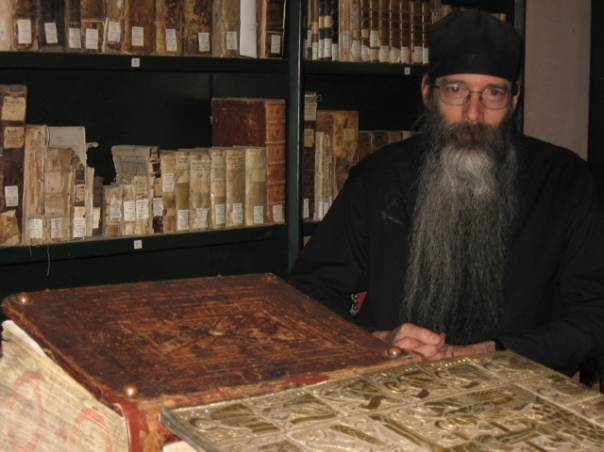
One paragraph:
“I didn’t go from El Paso, Texas, to Sinai, in one big step. There were lots of little steps. But even in El Paso, I read the account of Moses and the Exodus in the Bible. I saw Cecil B. DeMille’s “The Ten Commandments,” which contains scenes filmed at the traditional Sinai, with Charlton Heston climbing up the mountain, and walking along a ridge with the Sinai range in the background. Also, El Paso is a desert. I used to wander in the desert for hours and came to love the stark beauty of the desert landscape. All of this was in the background when I began to read about the history and the theology of the Orthodox Church.”
If you are interested in the manuscript collection itself, you may want to look at: This Reuters article, which explains that the abbot of the monstery feels an urgency about completing the project of digitizing all 4500 manuscripts in the library, many of which are in the Syriac and Arabic languages, and very rare.



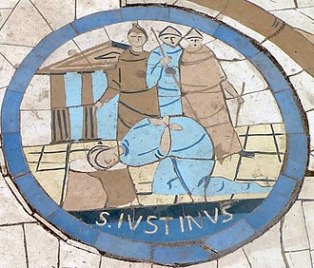 He lived in the second century, and wrote his second Apology, addressed to the Roman Senate, in 161, soon after Marcus Aurelius became emperor. He had been able to persuade the previous emperor, Antoninus Pius, to stop persecuting Christians, at least for a time. The Cynic philosopher Crescentius, who reportedly always lost debates against Justin, had a part in his death, as out of envy he denounced him to the Roman court, after which Justin and six friends were imprisoned, tried and beheaded. The following is considered to be the court record of the trial (Wikipedia):
 sacrifice to idols. The Prefect Rusticus read the sentence: Those who do not wish to sacrifice to the gods and to obey the emperor will be scourged and beheaded according to the laws. The holy martyrs glorifying God betook themselves to the customary place, where they were beheaded and consummated their martyrdom confessing their Saviour.
 Gladsome Lights