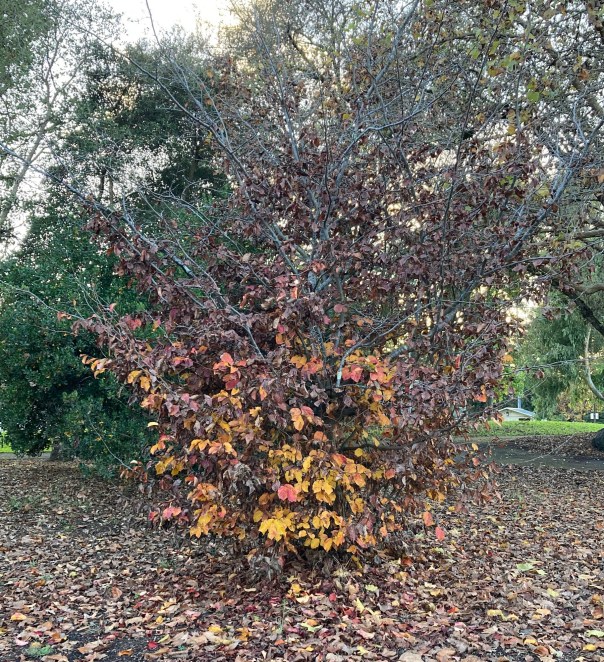
I’ve been admiring the fall colors of this bush for many years. For as long as I can remember it has looked like it’s dying — it’s supposed to be a tree, I think — and I wonder why none of the people who maintain the park ever bothers to at least prune off the dead wood. Maybe I should go over there with my loppers and do that in January.
NOVEMBER
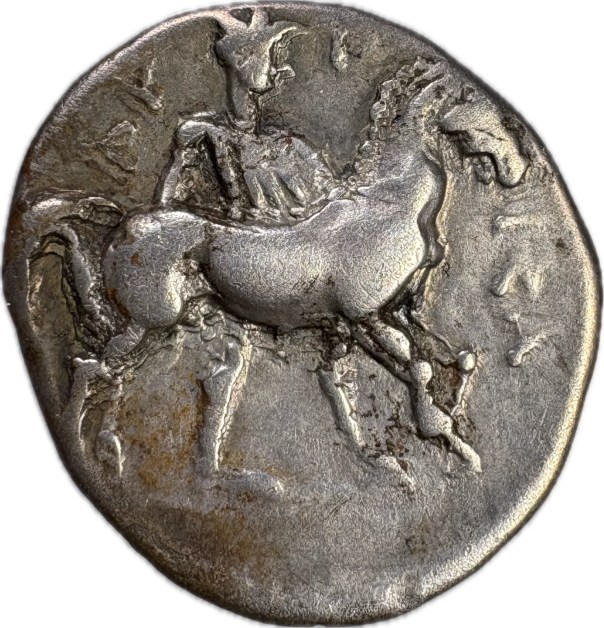
The Centaur, Sagittarius, am I,
Born of Ixion’s and the cloud’s embrace;
With sounding hoofs across the earth I fly,
A steed Thessalian with a human face.
Sharp winds the arrows are with which I chase
The leaves, half dead already with affright;
I shroud myself in gloom; and to the race
Of mortals bring nor comfort nor delight.
-Henry Wadsworth Longfellow, from “The Poet’s Calendar”
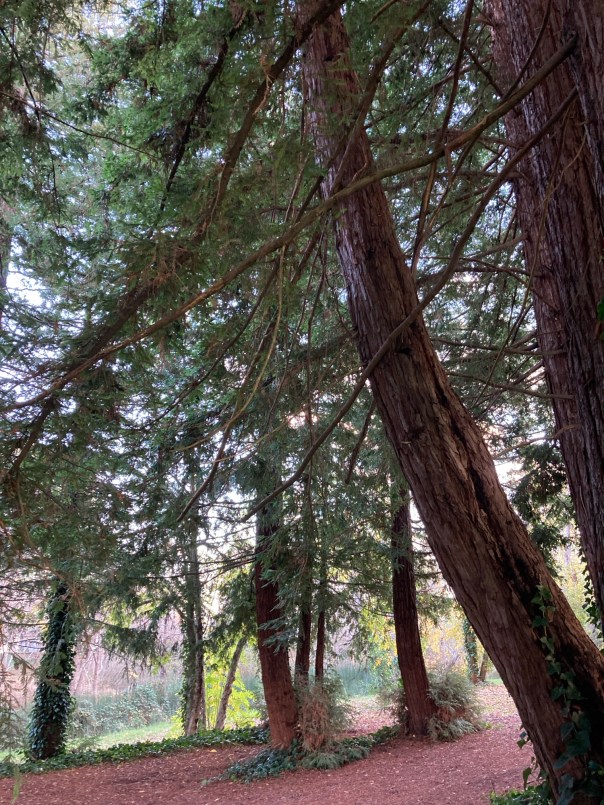
I was reviewing this poem from Longfellow’s 12-part calendar cycle this afternoon as I walked along a route that I used to do nearly daily, and sometimes twice a day, in the first several years after my husband died. It was a perfect day for it — sunny, not very cold, with many beautiful sights to see, and the air feeling oh so fresh from the recent rains.
Why do I like this poem so much? I have an aversion to centaurs, but if I focus my mind on the horsiness and not the weirdness of the creature, I enjoy the energy of the images, the action and drama. Embracing, flying with sounding hoofs, chasing, frightening and shrouding. My favorite are lines five and six, with the winds as arrows chasing the leaves.
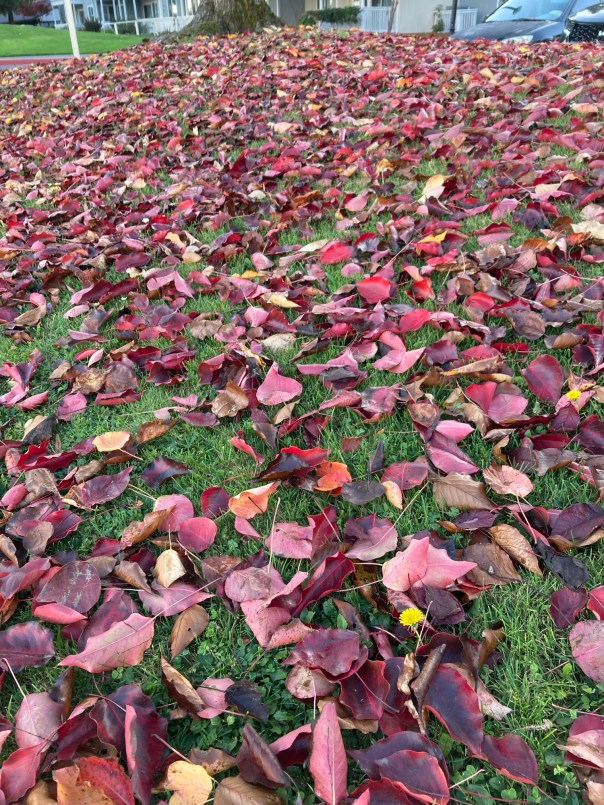
I can enjoy the sensory details somewhat theoretically, while I stroll along delighted by my climate’s more gentle changes of the season. If I lived in New England as Longfellow did, I doubt I would be out there at all, concentrating on a poem, what with Nor’easter winds threatening. The emotion here is of fear and gloom, but my emotions were of joy.
I wonder if the harshness of a New England November, and the thought of months of winter still to come, triggered the poet’s grief at the loss of his wife twenty years previous, making any comfort or delight impossible. It was only a little earlier that he wrote “The Cross of Snow,” a poem that expresses a chill, “sun-defying” grief that remains with him “through all the changing scenes/ And seasons, changeless since the day she died.”

In contrast, at an assisted living facility I passed, 80 cyclamen plants — I counted them — had been set out to defy winter, or at least to welcome Christmas.

And a hummingbird drank from the Mexican Sage.

