
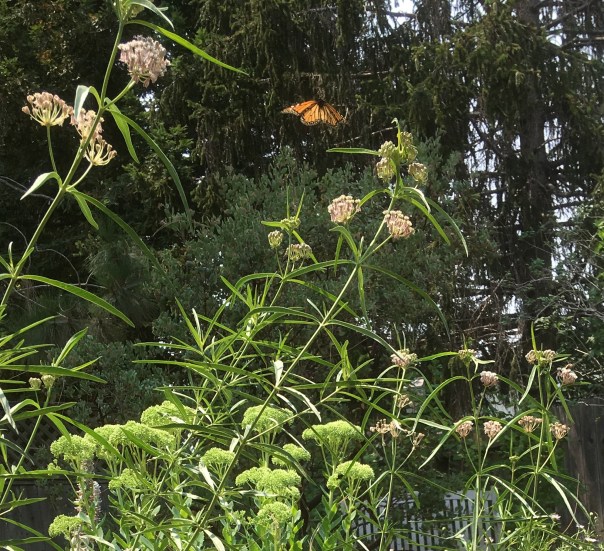
These narrowleaf milkweed flowers were the inspiration for the first draft of this blog post, which I thought to title “Wonders of the Universe.” Their intricacy and delicacy wowed me!

I had been thinking for some time about the gentle bombardment of the senses I experience in my garden, including how on warm days the space hums with the sound of busy insects. Just to sit out there is to listen to Life, and is a privilege. It’s also a sweet gift that God gave me, that I could have a tiny part in creating this environment, doing a little bit of planting and watering and seeing God give disproportionately generous increase.
I knew I wanted a Pollinator Garden, because I like the idea of helping the bees. But it was theoretical, and I didn’t begin to imagine what the physical reality would feel like when these fellow creatures buzzed their flight patterns in a rich tapestry of sight and sound throughout the garden. It fills my senses which in turn communicate with my soul.
“God is the Creator of the world. The world as cosmos, i.e. a created order with its own integrity, is a positive reality. It is the good work of the good God (Gen. 1), made by God for the blessed existence of humanity. The Cappadocian Fathers teach that God first creates the world and beautifies it like a palace, and then leads humanity into it. The genesis of the 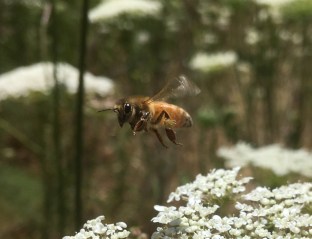 cosmos, being in becoming, is a mystery (mysterion) for the human mind, a genesis produced by the Word of God. As such, the world is a revelation of God (Rom. 1:19-20). Thus, when its intelligent inhabitants see it as cosmos, they come to learn about the Divine wisdom and the Divine energies. The cosmos is a coherent whole, a created synthesis, because all its elements are united and interrelated in time and space.” (From this site)
Now I often think of the book, My Family and Other Animals, which Gerald Durrell wrote about the Greek island of Corfu where he lived for a time as a boy. The one concrete image I’ve retained from my reading many years ago is of Durrell on a baking dirt road stooping to exa mine and collect whatever fascinating insects and other animals he could find. This quote I found I think is representative:
“…the incessant shimmering cries of the cicadas. If the curious, blurring heat haze produced a sound, it would be exactly the strange, chiming cries of these insects.”
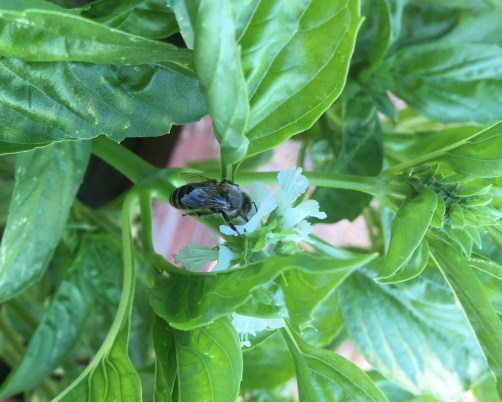
I do not have cicadas at present. I have quieter bees and flies, and nearly silent butterflies, and cries and songs from the bird kingdom as well, adorning my garden. A day or two after I took the picture at the top, I saw a Monarch butterfly near the narrowleaf milkweed. I watched out the window for a few minutes and then… yes! She had landed on the plant. So out I went with my camera, and crouched nearby.
She fluttered away, and circled the garden to come back and light again, but only for a few seconds, mostly hidden by leaves, and then off she flew, nearly grazing my head as she made the same circuit, repeating this behavior many times! My knees got a little tired, so I lay on the ground waiting with my camera at the ready. But that didn’t give me enough flexibility, and I moved to the plum tree nearby and leaned my back against it.
Was she laying eggs each time she landed on those narrow leaves? I gave up trying to get close enough, or to catch her at rest, and began to take shots as she was flying. And this is the best one I have to show, proof to myself that she was there. 🙂

A couple of weeks later, back from the mountains, I found the minutest caterpillar on one of those narrowleaf milkweeds. Quickly I went indoors to attach my new clip-on macro lens to my phone, such as son-in-law Tom showed me how to use months ago but which I hadn’t taken out of its box. I hope my one-and-lonesome caterpillar does not get eaten by a bird, and survives to grow large enough to use my camera alone on, because this is the best I could do:
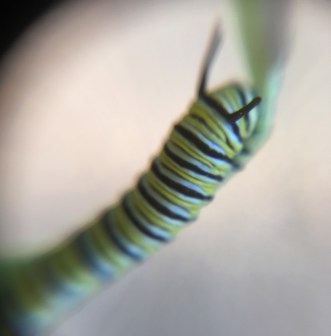
It seems this little lens is best for completely still shots, not flowers or creatures on long stems waving in the breeze. Here is a sharper image I captured using it:
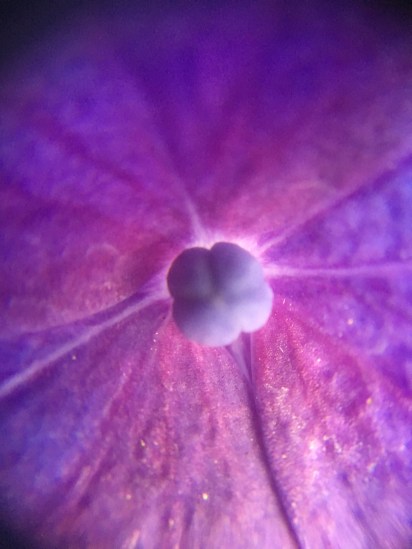
Can you guess what it is?
Clue: It is a closeup of a flower I showed you in a recent post…
You’re right! It’s the center of a hydrangea bloom!
It’s another decoration of this palace into which we have been led by God….
But bees have preferences, and I’ve never seen them interested in hydrangeas.
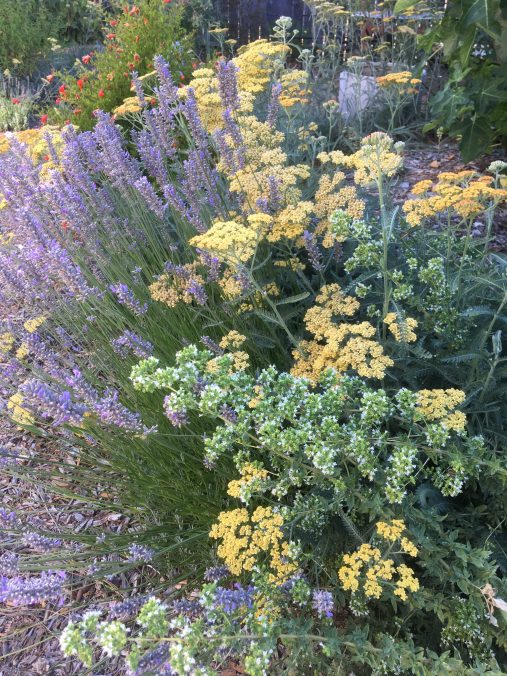
What they love is the echium! Remember when it looked like this?

Its flowers just kept opening on the ends of what I don’t think would be called a stem… so that those parts got longer and longer, with always new flowers that the bees never tired of.

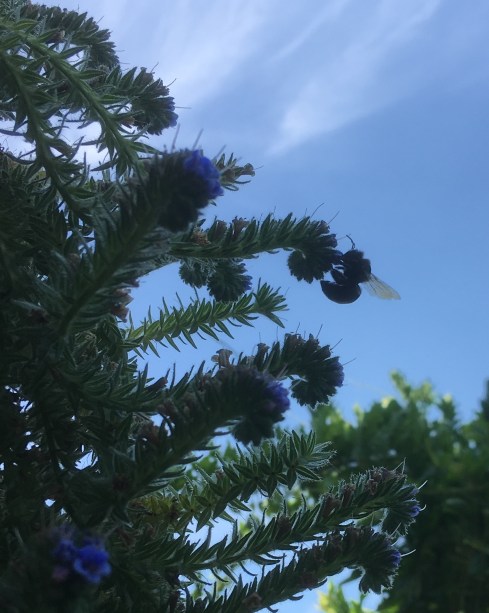
Until the Autumn Joy opened. Now the echium is deserted.



It has been two days since I wrote all of the above, and I’m sorry to say that my infant caterpillar has disappeared. If I’m around next August maybe I will bring some Monarch eggs into the house to safeguard the latter stages of this project of assisting the butterfly population. This year I will have to be content with having seen progress beyond the planting of the milkweed, my only direct contribution. I saw the milkweed thrive in its second season, I saw the Monarch laying eggs, I saw a caterpillar… and then, I fed a bird!
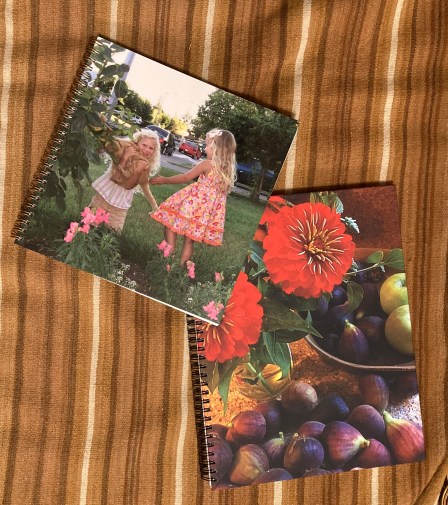


 Last year I spent quite a few hours sorting through photos of several generations of ancestors, my late husband’s family and mine, plus those of our own immediate family, children and grandchildren. I barely made a dent in the collections!





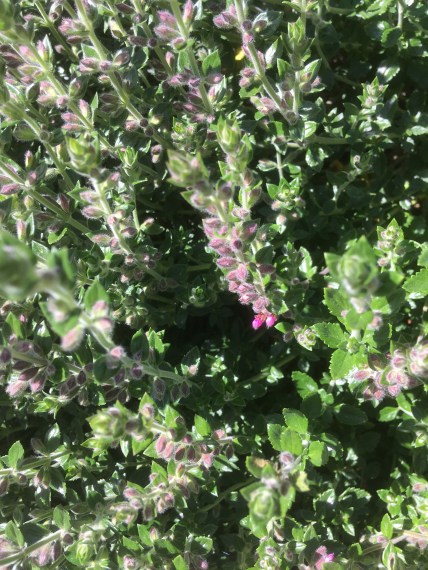
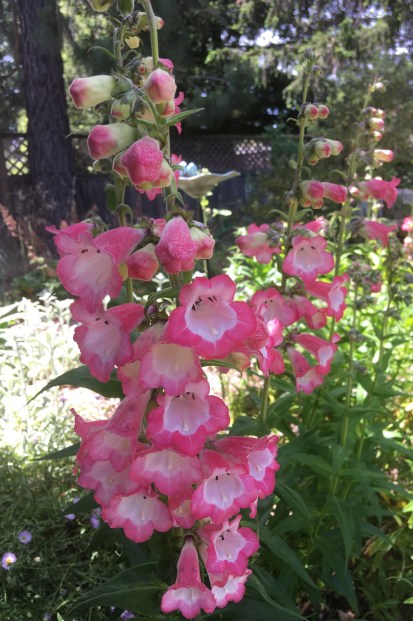
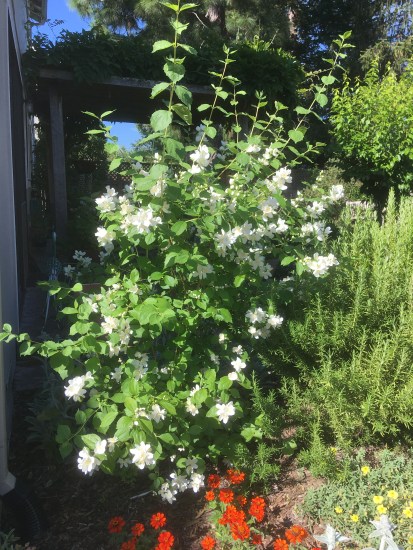

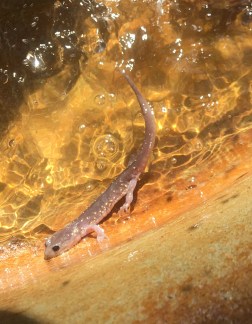 ro my sometimes gardener was here yesterday and we moved one of the big pots that hold olive trees, and found two salamanders underneath! How they ended up in this droughty place I don’t understand, but I didn’t think about that at the time.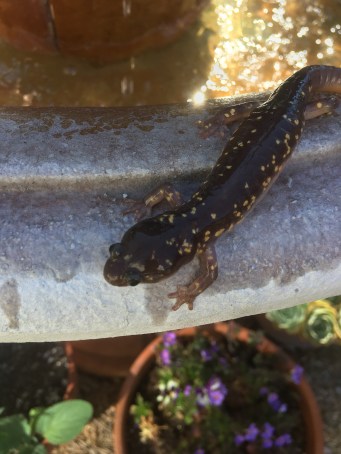

 Gladsome Lights