Tag Archives: pruning

Water music for workers and for hospitality.

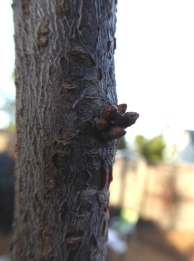
gl P1030388 plum bud
plum

Last week I felt such relief from having a load lifted from my mind, I was immediately energized to prune the plum trees. These are the Elephant Heart plums that I had to buy two of after all. You might remember that I polled the neighbors to see if anyone had a Santa Rosa plum or an Elephant Heart to be the pollinator for mine. Several did, but then I found out that the helper tree would have to be within 50-100 feet of whatever I planted in my space. That is, next door. Which they weren’t.

A pruned tree might not be a lovely thing if it were not demonstrating a great success to the pruner, that of surmounting my fears and inadequacies and ignorance and getting it accomplished. Landscape Lady had given me some tips, and then I rgl P1030363 pruned plumead quite a bit online and printed off some pictures and advice about how many inches between scaffold branches and what percentage of the length of the branch to cut off, etc. — things I don’t already know from pruning ornamentals.

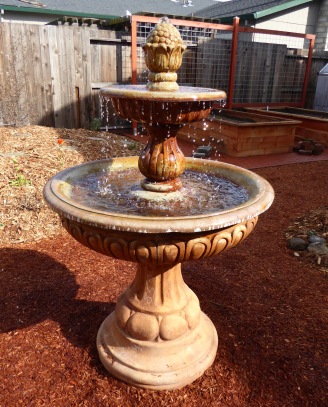
The relief I felt was over the completion of my fountain project. This was another story that was in process when I thought it was done, because the first fountain was found to be defective. The finish peeled off in big flakes before it had been here two months. The tasks of getting my money back and getting it taken away was hard enough, and then the shopping for a new one… I needed the help of two friends two days in a row to find what I wanted, and praise the Lord it was one I could buy right there, and have it set up within a few days. gl P1030392 hospitality
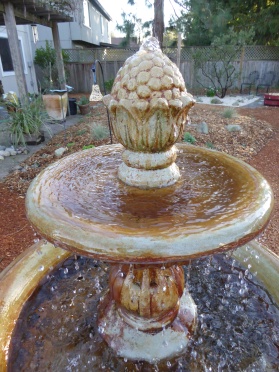
Now we garden workers and garden sitters can enjoy the accompaniment of the fountain song again. And I think I like this new one better than the first. I learned that the pineapple is a symbol of hospitality, which made me happy, because I want my new garden to be a place where I can be hospitable to my friends, both human and animal. If you look closely you can see the bell of bird seed on a pole in the distance behind the fountain, a gift to the birds from Kit.
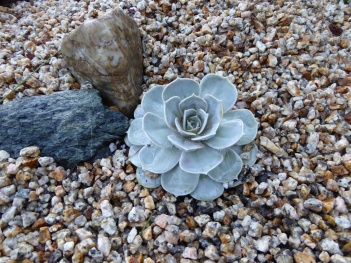
gl P1030389 new succulent

gl P1030409


Kit is also pruning, the wisteria, right at this moment while the warm air and the water music come in the open windows to where I am typing. I told her to prune it hard, that she couldn’t kill it, and she climbed up on the arbor and has given it a drastic haircut. Maybe the towhees won’t think us very hospitable for taking away a nice platform for their nests.


The last few days have been downright balmy. So when I finished pruning I did more things, like planting a succulent and a thyme plant, and weeding in the front yard. And taking pictures of buds.
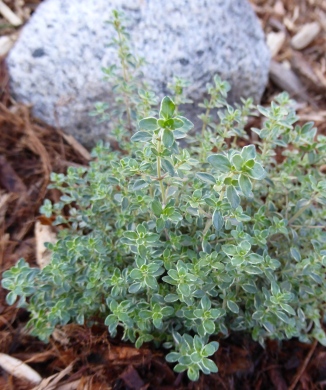
gl P1030396 thyme

gl P1030375 snowball bud

I dearly love the viburnum buds that come out the end of January, two-by-two along their gracefully curving stems. Even the dwarf pomegranate bushes have buds, which I was not sure about when I first saw them last week. I bent down to trim the ends of the tangly branches, and saw red dots that looked like mites, they were so tiny and bright; now they are easier to recognize for what they are, bold upspringings of pomegranate life. I have to use my hand as a background in order to get the camera to focus.gl P1030378 pom buds

This season when sprouts come up and out of everywhere — I never can get used to it! I will have to write about it every year.
gl P1030355 fountain

gl P1030404


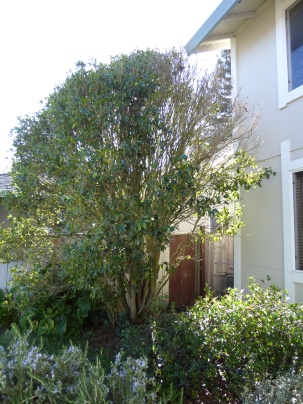
This week I made another bold move: to phone the “Oriental Gardener” who leaves flyers around the neighborhood from time to time advertising his services. I got a bid from him for pruning the osmanthus at the front of the house. It has dead wood from drought damage, and needs to be reduced in size. He will do it tomorrow, so I took a Before picture this afternoon.


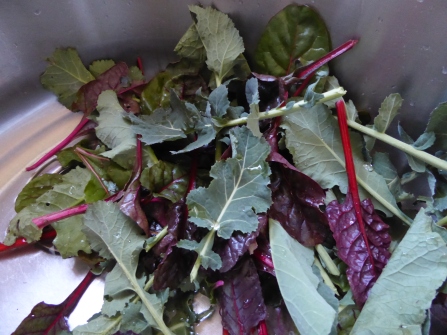
Housemate Susan told me that she used some kale from the front yard recently, and that pleased me very much, because I have not eaten one leaf of all the greens I planted last fall. While I was waiting for the Oriental Gardener to come by I picked my own bowlful of collards and Swiss chard and am looking forward to a good mess of greens real soon.
gl P1030400

January Surprises

P1120337
snowdrops

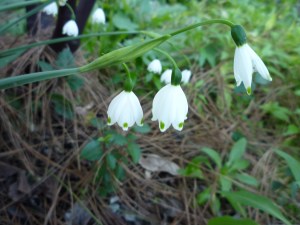
This week I was blessed by the usual end-of-January boost that we get around here. It always surprises me, because most of the month, and probably for a good bit of February, I am struggling against the dark and sometimes the cold. I think I am depending on the Christmas lights around my kitchen window to bolster my mood. But this is the time that we get some sunny days and I have to go into the back yard to do some kind of chore, and suddenly I see buds and flowers, and smell the fresh and cool air.

P1120299

P1120323 manzanita buds
manzanita – Arctostaphylos

On the Monday holiday, Soldier son came to prune the wisteria and the plum tree, but didn’t have time to cut up the branches and get them into the trash, so he made a tidy stack under the tree.

I considered hiring a young man from church to finish the job, but it seemed like that might be more trouble than tackling it myself; I have often done this part before. On Thursday I decided to have at it for 20 minutes and see how much progress I could make.

It was so lovely to be out there, I ended up spending more than an hour, and I reduced the stack by about half. This cherry plum sends up very straight branches every year and I always want to save a bunch of them, envisioning row markers or bean poles or even just kindling for the wood stove. So I made a separate pile of those. It makes me feel young and strong to work with those loppers and my leather gloves, and I even enjoy the slight muscle ache that arrives two days later. This afternoon I pretty much leveled the pile of trimmings.

snowball bush buds 1-24-15
snowball bush – viburnum macrocephalum

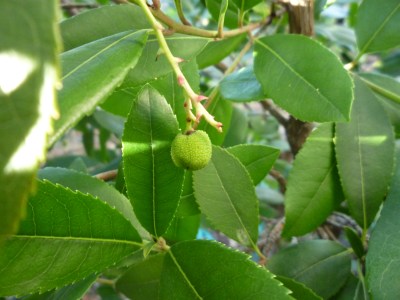
I kept brushing up against the strawberry tree, and its little pale green fruits dangled around. Pale green leaves are sprouting on the rose geranium, and I wandered around the garden to admire tiny buds on the snowball bush, the earliest spring flowers, and the beginnings of manzanita blooms.

P1120314 strawberry tree
strawberry tree – Arbutus unedo

Sara inspired me this week with her post about following a tree, and I thought of observing our strawberry tree. I think I won’t take part officially in the group project, but I have observed now in January, and that’s a start!P1120309

The yard waste bin was not big enough to hold all the twigs and branches I collected, so I filled a couple of these garden containers that are a modern form of trug. After the big bin is emptied next week I’ll dump the rest of the clippings in. And then I better prune my dear rose bush!


Every branch He prunes.

I traveled over the hill to the nearby monastery one morning last week and pruned roses for three hours. The sisters who came to this place inherited a big garden next to the river, with many plantings they are learning to manage. Sister Xenia is the chief gardener, and she spends a lot of time on the job, but it’s not the only task she’s assigned, and she appreciates any help outsiders can give.

Frost had to be scraped off my car before I left home. It was still below freezing at that time, and I wore my denim skirt, leggings, work boots and a thick flannel shirt over one of my old turtlenecks. But after I’d arrived and started in with my clippers, it wasn’t long before a springtime breeze began to blow.

So many roses! And most of them are not in a location that is good for roses; they are in the shade too much. Each bush was a big challenge to my skill and art, presenting one or more problems including:

1) Too tall and leggy, with no buds down low that my pruning might channel the lifeblood to.

2) Too many large canes and branches crowding each other, so that I had to thin drastically, after deciding based on uncertain parameters which ones to remove.

3) Bushes growing too close to another type of shrub or tree, as in the case of the one pictured, where a Pittosporum has surrounded one tall rosebush.

4) Growing close to the path or over the sidewalk, catching on the sisters’ habits or poking passersby.

5) Dead wood

It really was a joy to have quiet time to focus completely on a project like this, and I needed every bit of my mental resources and powers of concentration to do the work. Also my imagination, as I tried to envision what effect my cuts would have on each bush in the next months and even years.

Afterward when I was driving home, I began to ask myself why I hadn’t prayed while working, and quickly realized that it had taken all of my attention and creativity to do the task set before me. Is it perhaps a little like restoring a painting that has been severely damaged… a little like designing a building that must be raised on top of living ruins?  I wonder that, having no real knowledge of those types of art.

One thing for certain, the glory of this art won’t show until after many weeks the plants produce the actual rose flowers. I have just decided that a visit to the monastery is necessary when that brilliance begins, because I’ve never even seen these bushes in bloom. In the meantime I’m posting some old rose photos from my own parish church grounds, to keep me happily anticipating warmer weather.

At about noon the nuns gather for the 6th Hour prayers, and when the bell rang the announcement I laid down my tools and joined them. There was my chance to pray and soak up the Spirit, and the spirit of the place, and to stand up straight for a while and breathe the incense.

I hadn’t pruned all the roses, but I ate lunch with the sisters and went home anyway, meditating on what made the experience so fatiguing. Does it cause God this much trouble to prune us, as the Bible says he does: “Every branch that bears fruit He prunes, that it may bear more fruit. John 15:2” Does He say to Himself, “I did the best I could, under the circumstances.”? Maybe we grow all out of shape in odd ways, not getting enough of the Sun of Righteousness.

Speaking of sun, it had brought the temperature up to 79 degrees that afternoon. We are all aching for rain here in the West, as we suffer a terrible drought that makes it hard to enjoy those lovely warm rays. The drought is like a dark un-cloud looming behind the sun. Now that I am invested in a few dozen rosebushes, I am a little concerned that some of them might not make it through a water-rationed cycle of seasons to next January when I will try to get back and minister to them.

As we anticipate a possibly very long dry season, my motherly/sisterly feelings are reaching out to the plants and animals, and I’m praying more intently in Divine Liturgy along with the deacon, “For favorable weather, an abundance of the fruits of the earth, and temperate seasons, let us pray to the Lord.”

Unusual Monastery Visit


This time when I drove to the women’s monastery about an hour from here, it was not for a lecture or a service or for contemplative time; it was for a stint of strenuous gardening. The nuns had put out a call for helpers to get the woodsy place under control after the rainy winter and spring have brought out tall weeds of many sorts.

When I came through the open gate I didn’t see anyone around, so I wandered a bit in the direction of some hammering noise. It was Sister Xenia repairing a rabbit hutch. She took me to find Sister Mary, whose day it was for gardening, and she in turn led me to the area I’d be working in.

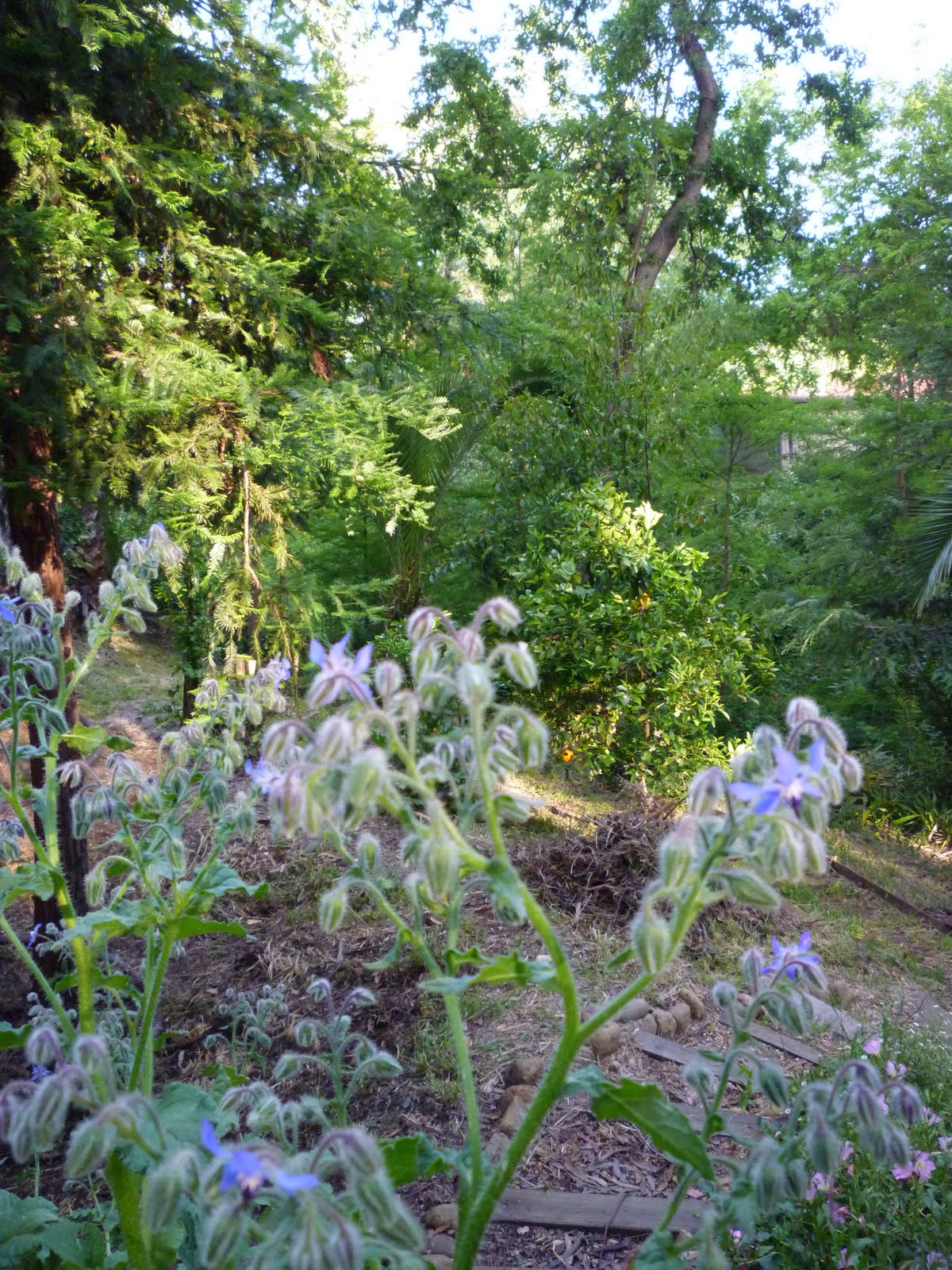
borage

“We got the weeds whacked down the other day, and now they need to be raked….This plant that is falling across the path needs to be trimmed back….Ivy is growing all over the quince tree and we want to get it out so the tree will have a better chance of bearing more than the three quinces it did last year.”

I put on my gloves, apron, and bandana to keep hair out of my face, and trimmed the blooming borage, leaving some branches so that the sisters could put the flowers in their salads.

Then the raking – whew! A giant eucalyptus tree stands above the monastery grounds and constantly drops pieces of bark, which combined with oak leaves and various other organic material have made a thick and tangled layer of debris that is turning into duff. On top of that were the strewn grassy weeds.

I pulled and yanked with my rake, and piles of scraped-up stuff grew tall in no time. “Someone” with a truck is now looked for both to haul all these piles away, and bring in some topsoil for the vegetable garden. I didn’t see the vegetable garden, but Sister Xenia said she works in it Wednesdays and Thursdays and maybe I would like to join her once a month or something like that? I always do think I can do anything, once a month. Maybe.

The poor quince tree took a long time. I hope he feels better and more fruitful. The sprucing-up was a challenge because on one side of the tree yard waste has been thrown down for many years, as we were led to understand (I had been joined by Tatiana and her son), creating a sort of man-made terrace. The ground level on that side is a several feet higher than on the other side, so that the tree is sort of growing out of a bank.

When I was below, I scrabbled up the “bank” that was mostly eucalyptus rubble, and stretched my tallest to pull as much ivy as I could from the branches. Sometimes three strands of ivy would be twisted round-and-round a thin branch, but at least this kind of ivy was tender and with care could be torn away.

Rescued quince

Then I walked back up the path to the other side and leaned way out, trying not to fall through the mulch, to pull at the ivy from that direction. After the ivy was gone, the many dead limbs were revealed, so I began pruning them out as well as I could with loppers. Several of them are so big they need to be sawed off, but I didn’t try doing it by myself in a precarious spot like that.

Galium aparine

Sticky weed is one plant that I went to war with at the monastery. Sister Mary called it that; I had never heard a name for it before, maybe because I never even saw it before a couple of years ago. Its usual common name is bedstraw or catchweed; it is Galium aparine. I pulled lots of this icky-sticky vine out of shrubs and flowers and everywhere, and it fought for its survival by depositing sticky little seeds all over my hair, gloves, socks….trying to come home and thrive here, no doubt.

Gardening is always a workout for me these days, given my age and the way the work always seems to have multiplied by the time I get there. A weed is easier to pull when it is small, to give a small example of what I’m talking about. Today was no different in that way, but the tasks I did made me use some different muscles, so I feel well exercised, shall we say.

It was lovely being at the monastery, and I’m glad I could be of use. I might have had some contemplative time while gardening if my mind hadn’t been so engrossed in solving garden problems and keeping my two feet under me. So if I go again, I’ll plan to spend the day and take breaks with the sisters in the church.