“Time marched on. Each day seemed long, each week short. It was already autumn. What is the salient characteristic of autumn? The spiders’ threads in the early morning frost. I am not thinking much of the circular networks, marvellous as these are, hung along the gate, but rather the threads that are strung across everything, so that if you bend down till your eye is level with the field you can see a white veil over the whole expanse. They are everywhere, on everything. ‘Do they drape the cannons in France?’ asked Mr Ralph Wightman, true poet, in a striking image, the other day. To look down at these things is like looking up at the stars — we are baffled by quantity.”
John Stewart Collis in The Worm Forgives the Plough
If I don’t write more often about moments like this one that I chronicled several years ago, it’s not because “happiness” does not continue to fall on me without warning. I’m glad the poet — and even I – did write about the phenomenon at one time, so we can go back for a washing of joy and thanksgiving. But there’s nothing like right now, for being receptive to our Father’s lavish dispensations. The original post:
As I drove away from the Office Max parking lot yesterday afternoon, “Scheherazade” was playing on the radio, and I crossed myself in a prayer, and immediately wondered why I did that. Why was I suddenly so full of joy and peace that I had to acknowledge the Holy Trinity and the fact that I was in His presence? It was a response to the beauty of the music, and a praise to the Creator of humans in His image, who are empowered to become co-creators after Him. But it was also a gift, unexplainable, this gladness to be alive. It is something to accept, and a place to live in, for however many moments I can keep it.
I have been reading a lot of poems lately. I want to say I’ve browsed through volumes large and small, collections by various poets….but I think a different word would be more honest, something like rummaged or skipped, or plowed. It doesn’t seem very respectful of the poets’ work, or quite civilized — until I find a poem to sink into, and then I am calmed and fed.
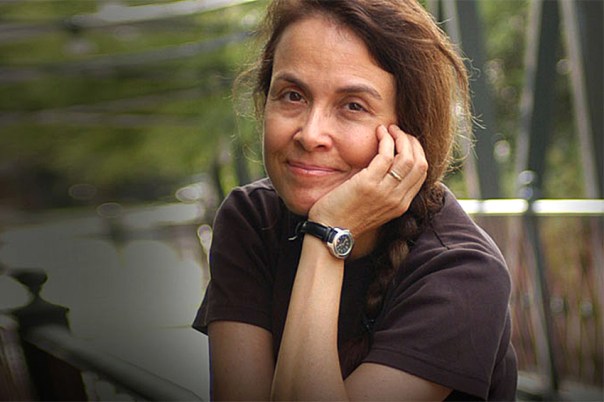
This morning I am sitting in the garden, listening to the fountain gurgle nearby. Also to the vague rock music coming through the walls of one neighbor’s house, and a saw sound buzzing over from another neighbor. After I finished breakfast I copied a couple of poems by Naomi Shihab Nye into my notebook, but this one I wanted to put up here instead, as it reminded me of that wonderful minute that I received. [Eight years ago — and such events as continue to happen remain mostly indescribable.]
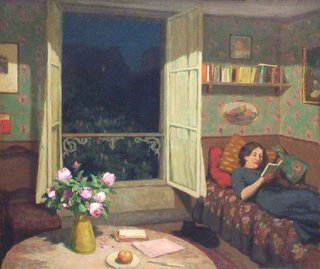
Star Dancer – by Marcel Marien
So Much Happiness
for Michael
It is difficult to know what to do with so much happiness.
With sadness there is something to rub against,
a wound to tend with lotion and cloth.
When the world falls in around you, you have pieces to pick up,
something to hold in your hands, like ticket stubs or change.
But happiness floats.
It doesn’t need you to hold it down.
It doesn’t need anything.
Happiness lands on the roof of the next house, singing,
and disappears when it wants to.
You are happy either way.
Even the fact that you once lived in a peaceful tree house
and now live over a quarry of noise and dust
cannot make you unhappy.
Everything has a life of its own,
it too could wake up filled with possibilities
of coffee cake and ripe peaches,
and love even the floor which needs to be swept,
the soiled linens and scratched records…..
Since there is no place large enough
to contain so much happiness,
you shrug, you raise your hands, and it flows out of you
into everything you touch. You are not responsible.
You take no credit, as the night sky takes no credit
for the moon, but continues to hold it, and share it,
and in that way, be known.
 “Time marched on. Each day seemed long, each week short. It was already autumn. What is the salient characteristic of autumn? The spiders’ threads in the early morning frost. I am not thinking much of the circular networks, marvellous as these are, hung along the gate, but rather the threads that are strung across everything, so that if you bend down till your eye is level with the field you can see a white veil over the whole expanse. They are everywhere, on everything. ‘Do they drape the cannons in France?’ asked Mr Ralph Wightman, true poet, in a striking image, the other day. To look down at these things is like looking up at the stars — we are baffled by quantity.”
 If I don’t write more often about moments like this one that I chronicled several years ago, it’s not because “happiness” does not continue to fall on me without warning. I’m glad the poet — and even I – did write about the phenomenon at one time, so we can go back for a washing of joy and thanksgiving. But there’s nothing like right now, for being receptive to our Father’s lavish dispensations. The original post: