Tag Archives: reading

Four Seasons in Rome

Only a few pages into Anthony Doerr’s Four Seasons in Rome, and I was enthralled; I began to want very much to make my own visit to that most historic and colorful city. But a chapter in, I realized that Doerr had brought me with him, and that my vicarious travels were so much more exciting and satisfying than anything I could accomplish in real life — all without the huge expense and strain of international travel.

“Energy pours off the traffic, off the sidewalks; it feels as if we are pumping through the interior of a living cell, mitochondria careering around, charged ions bouncing off membranes, everything arranging and rearranging. Here is a pair of stone lions with crossed paws; here is a Gypsy sleeping on a square of cardboard. Down the white throat of a street a church floats atop stairs.”

gld-stone-pine
Stone Pines, aka Umbrella Pines, of Rome (internet)

Doerr’s year in Rome was certainly stressful, but he was young and strong, and was able to take his adventures, which any of us might know in the present moment as anxieties, dilemmas, pain and suffering, and turn them into prose that conveys not just a complainy travelogue, but his own engagement with the sensory overload of living in Rome, combined with being a new father. Fatherhood alone is such a transformative experience, it would give such a writer plenty of material for a book, but to have twins, and then to take them at six months of age to live in Rome, where you don’t even know the language, is exciting to the point of crazy.

“What did Columbus write in his log as he set out from Spain? ‘Above all, it is fitting that I forget about sleeping and devote much attention to navigation in order to accomplish this.’ Henry wakes again at two. Owen is up at three. Each time, rising out of a half sleep, it takes a full minute to remember what I have forgotten: I am a father; we have moved to Italy. All night I carry one crying baby or the other onto the terrace. The air is warm and sweet. Stars burn here and there. In the distance little strands of glitter climb the hills.”

Last year I read Doerr’s 2014 novel All the Light We Cannot See. All I did was run my eyes along the words and lines, and the author did all the magic of transporting me to another place and time, to rooms in Germany and houses in France, to the beach and along streets and into human hearts beating with fear and hope. I couldn’t help but love them, we were that close – and it was the writer who had brought us together.

It seems that he was already working on All the Light ten years earlier, while in Rome on a literature fellowship at the American Academy. It was a good thing he didn’t have to show anyone a progress report, because Rome and twins were all-consuming. He did write a lot of journal entries, which eventually became this delightful book.

During the Doerr Family’s year in Rome the twins didn’t let their parents sleep much. They also were very sick for weeks, and then Doerr’s wife Shauna ended up in the hospital. Pope John Paul II died, and a new pope was elected. The seasons changed, the husband and wife went on outings to Umbria, and the babies learned to walk. They watched the pines out the window:

“Mediterranean pines, stone pines, parasol pines, and umbrella pines—all the same thing: Pinus pinea. Regal trees, astounding trees, trees both unruly and composed at once, like princes who sleep stock-still but dream swarming dreams.”

In another place I read that Anthony Doerr likes to quote Victor Shklovsky, who wrote 100 years ago: “Art exists that one may recover the sensation of life; it exists to make one feel things, to make the stone stony. The purpose of art is to impart the sensation of things as they are perceived and not as they are known.”

And this is what Doerr tries to do – but first he must shake himself out of the habit of not seeing, this habit that he explains is quite necessary:

“Without habit, the beauty of the world would overwhelm us. We’d pass out every time we saw—actually saw—a flower. Imagine if we only got to see a cumulonimbus cloud or Cassiopeia or a snowfall once a century: there’d be pandemonium in the streets. People would lie by the thousands in the fields on their backs…..

“’Habitualization,’ a Russian army-commissar-turned-literary-critic named Viktor Shklovsky wrote in 1917, ‘devours works, clothes, furniture, one’s wife, and the fear of war.’ What he argued is that, over time, we stop perceiving familiar things—words, friends, apartments—as they truly are.”

If I did go to Rome, I’m sure I would be shaken out of my everyday way of seeing things. This has happened to me many times, being in a new place without The Usual surroundings and schedule and people in my life. Even the air smells different, and seems to wake up the brain. Reading Doerr makes me want to take off the blinders more often and really be attentive to what is bombarding my senses.

It could be scary, I know – or exhausting, as he warns:

“The gaze widens and drifts; the eye is insatiable. The brain drowns.”
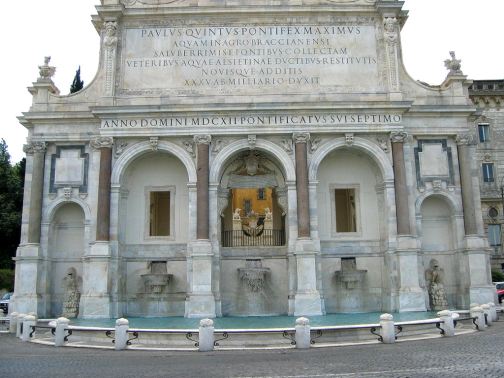
gld-fontana_dellacqua_paola01
“The Big Fountain” near the Doerrs’ apartment. Completed 1690.

So Anthony Doerr is very good at what he does, but he is more than a skilled observer and wordsmith; as he imparts to the reader what he receives from the world, his own warmth and humanity come with the package. He is a grateful and caring man who reveals his humble likableness in this very personal account. As he tells you what he sees, he can’t help but tell you who he is. When he looks at his little son:

“…his entire four-pound body motionless except his eyelids, it seemed he understood everything I was working so hard to understand: his mother’s love, his brother’s ceaseless crying; he was already forgiving me for my shortcomings as a father; he was the distillation of a dozen generations, my grandpa’s grandpa’s grandpa, all stripped into a single flame and stowed still-burning inside the thin slip of his ribs.”

When it is time for the Doerrs to return to their Idaho home, Anthony tries to put the experience of leaving Rome into words:

“I know nothing. I lived in Rome four seasons. I never made it through the gates between myself and the Italians. I cannot claim to have become, in even the smallest manner, Roman. And yet I can’t stop myself: a pen, a notebook, the urge to circumscribe experience. Roma, they say, non basta una vita. One life is not enough.”

I was grateful to visit Rome by means of this book, but of course, it was enough for me. I don’t have a bucket list of books or places to see or experiences to have, because if I ever start to think like that, I am reminded of the example of our Lord’s earthly life that was on the surface quite confined — He didn’t go to Rome, either — but was the expression of the best human life ever lived.

I could also be content not reading another book for the rest of my life, but I did just order Doerr’s collection of short stories, The Shell Collector, and in that way hope to see more wide views through his brain-drowning gaze.
Taking the cure with Rumer.

Is it unnecessary and even unprofitable to analyze my reading habits? Why not just read what I like? Because I don’t seem to know what I like, or what I have the strength for. In times of stress, such as in my current bereavement and during my husband’s illness before that, the intellect still jumps at the chance to read books of theology or philosophy, so I have gone on acquiring stacks of them… only to find that my mind will not be engaged enough to get through the first chapter.

Or, I try a “good novel,” hoping to be pulled into the story and have some vicarious excitement. Aha – that is the problem, as I realized yesterday, sick and sitting by the fire with a quiet book. I need rest, not excitement. I need, as I wrote a few years ago about another novel, to embark on a reading journey “as one takes a needed vacation or The Cure at a sanatorium.”

Rumer Godden is a writer whose presence on the pages of her fiction or non-fiction is always strangely comforting and nourishing to me. I suppose my recent acceptance of weakness led me to take her China Court off the shelf, after passing over it for years. Lately it seems that I have almost daily been wandering among the four rooms that house parts of my library, as I look for the Right Book. As I held this one in my lap I mused about why it is that.

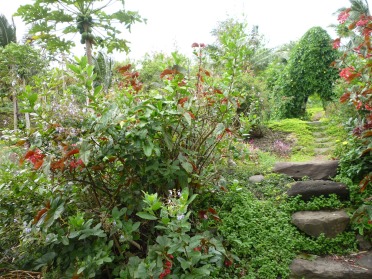
When you need to heal and build strength, where do you like to be? Me, I like to be either alone in an orderly and comfortable place, or with kind and gentle, competent people who take care of the place and might even cook for me. If there is a garden attached, and lovers of trees and flowers who might 27a16-p101064228129fruitstandgardenstroll its paths with me, all the better. I could sojourn in this place indefinitely, until I felt in my bones the renewed energy that would prompt me to go home and dig in my own garden or clean house.
Being in Rumer Godden’s books is like that. And China Court is especially so, because it is about a well-appointed house and the generations who have lived and worked and died there, servants making up beds with fresh, age-softened linens and a grandmother who secretly hand-picks little bouquets for her favorite people to find on their nightstands. It has the drama of stories going back a hundred years, if you want that, but it is mostly about being there with real humans, many of them quite sympathetic, and of course none of them requiring anything of me.

I haven’t read too far yet  🙂 but I was charmed by this one scene and wanted to share it:

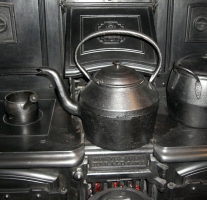
In the big house in Cornwall the large Quin Family gathers downstairs while breakfast is being cooked in the kitchen nearby. As the father Eustace reads from the Bible and prayer book… victorian-range

The smell of bacon drifts across the Lord’s Prayer — always for Eliza, the two are mingled, though she does not, at that age, get any of the bacon — and as the smell rises Eustace increases his pace….breakfast is waiting; the children, upstairs, have porridge and milk, white bread and the second best butter; but for Eustace and Adza the morning-room table is laid with porridge in blue and white plates, cream, brown bread, muffins, honey and rolls, while the bacon keeps in a silver dish over a flame, with another dish of kidneys or sausages or sometimes kedgeree.

-from China Court by Rumer Godden

Do you wonder what kedgeree is? I had never heard of it, but when I read on this page Kedgeree and saw the picture, it made me want to try making some myself. Sounds tasty!

Last week I was frying something using bacon fat left over from our Christmas feasting, and the smell of it warming in the pan brought back happy memories of my father and his mountain cabin, my grandma’s kitchen… it was curious how nourished I felt, before I had taken a bite.

I enjoyed reading about this Victorian Era breakfast and the well-supplied kitchen and staff that produced it. I sipped my tea before the fire, glad that I long ago graduated from the Porridge Upstairs stage of life, because I do like a little meat with my breakfast, though I haven’t tried kidneys yet. Winter days are cozy when taken with Rumer Godden, some bacon — and of course, prayer!

A certain reading skill is dwindling.

This year was not a good one for me sticking with books and completing them. I started reading at least three times as many as I finished. The likelihood of my getting to the end of a book in 2017 remains iffy, so to show that I had what it took at least a few times in 2016, I will list here (so you don’t have to click to the Books and Reviews page) my Books Read, most recent at the top. I wrote reviews for two of them — make that three, sort of — and you can use the links to those if you want.

At least I can say that most of these are worth reading again, and they are worthy of better reviews than I accomplished. I’m starting the new year with just one very small book in hopes of getting off to a good start!

Read in 2016

The Fellowship of the Ring by J.R.R. Tolkien
Acquiring the Mind of Christ by Archimandrite Sergius Bowyer
When Breath Becomes Air by Paul Kalanithi
Between You and Me by Mary Norris (audio)
Seventeenth Summer by Maureen Daly
The Year of Living Danishly by Helen Russell
Laurus by Eugene Vodolazkin
All the Light We Cannot See by Anthony Doerr
Babylon’s Ark by Lawrence Anthony (audio)
This House of Sky by Ivan Doig

Happy New Year! And may your own reading nourish your mind and heart!

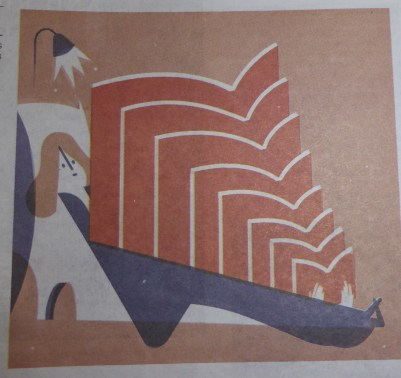
books-too-many-nyt

Illustration from the NYT supplement “Holiday Books.”
Housemate Kit said it reminded her of me.

Looking at snakes.

Having two boys of my own, and eleven grandsons, I have done my share of reading to them books about snakes, a topic on which I probably would never have read one word if left to myself. I’m so accommodating. Last week I even read many pages of a giant book about dinosaurs.

That book mysteriously appeared in my house a year or more ago and I didn’t pay much attention to it until Scout asked me to read it last week. It may have been the most boring read-aloud I have ever agreed to, and finally I said I’d had enough. After he went to bed I threw it in the trash.

Snakes are more interesting, I admitfree-green-snake-wallpaper-hd-wallpaper, because they live on the earth with us and can be observed as they really are. But still….

I sat with the grandchildren twice last week to read the snake book that is in our home library, and I re-learned several things about the reptiles. Doubtless I will re-forget most of the facts we read, too, as I always have done, even when my brain was younger and more flexible. I have read stuff like this for so many years: “Would you believe that a python can swallow a whole goat?…The snake doesn’t chew or swallow the way we do. It simply moves its body forward with its jaws wide open and ‘walks’ the animal down its throat.”

When I imagine this scene, or look at pictures of it, I think about how the snake itself is consumed by the task of consuming. Even the egg-eater, who takes only 15 minutes to finish the job and spit out the shell, can’t go anywhere or sleep or drink water, for the duration. The beautiful green flying snake can’t sense a hawk threat and take off like a spring to escape.

After Scout had gone home I came across a poem about the way a snake eats, and I started reading it with the idea of someday sharing it with him. But when I got to the last stanzas I realized that it was for me, much more than for a snake-fascinated boy. Through this poem’s impact, what I learned of snakes I won’t be forgetting. It might take a python a few hours to eat a goat. My portion is of a different calibration and I only know that I’ll be at it a while.

SLOWLY

I watched a snake once, swallow a rabbit.
Fourth grade, the reptile zoo
the rabbit stiff, nose in, bits of litter stuck to its fur,

its head clenched in the wide
jaws of the snake, the snake
sucking it down its long throat.

All throat that snake—I couldn’t tell
where the throat ended, the body
began. I remember the glass

case, the way that snake
took its time (all the girls, groaning, shrieking
but weren’t we amazed, fascinated,

saying we couldn’t look, but looking, weren’t we
held there, weren’t we
imagining—what were we imagining?)

Mrs. Peterson urged us to move on girls,
but we couldn’t move. It was like
watching a fern unfurl, a minute

hand move across a clock. I didn’t know why
the snake didn’t choke, the rabbit never
moved, how the jaws kept opening

wider, sucking it down, just so
I am taking this in, slowly,
taking it into my body:

this grief. How slow
the body is to realize.
You are never coming back.

–Donna Masini, from Turning to Fiction