Do you know how hard it is to pick up just one book at the library? I managed to do it twice this week and I felt my self-control as a great freedom; I didn’t even go into the used bookstore that is off the lobby. But since then everything has changed.
“People can lose their lives in libraries. They ought to be warned.” –Saul Bellow
When I was a child we lived ten miles from the nearest public library, and I never visited it until high school. I had lovely hours in the library in Berkeley when in the summers I visited my grandmother, and she would leave my sisters and me there for a while, and come back later when we had picked out a stack to take home. I remember checking out Anna Pavlova and Little Men when I was ten, and lying outdoors on a cot in the afternoons, in the mountains with Grandma at the Berkeley City Camp. When not at Grandma’s, our summers were too hot to manage much activity, so I sat indoors in an easy chair and read a book every day in those carefree days of youth, supplied by the bookmobile.
I think one of the books I read then was Seventeen by Booth Tarkington. When Bellezza wrote recently about Seventeenth Summer by Maureen Daly, I thought that was it, and I bought a used paperback and have been reading it, but it’s not what I remember. So I hopefully borrowed Booth Tarkington’s Seventeen from the library (closed stacks), and it’s waiting for me now. In no time at all I should be getting to it, because the Daly book is hard to put down. How can that be?
The backdrop of the story is the most luscious and lazy summer imaginable, evoked very effectively by the author’s prose. But when I’m reading it at night I don’t fall asleep, and one morning when I was still in recovery mode (She says, wondering if she will ever again not be in recovery mode…) I picked it up from my nightstand and read for an hour before getting out of bed. It is a book that makes me feel something of the leisure of my youth, when there was no need to hurry. Absolutely no need.
The worst way to read, he said, is with the thought that you do not have enough time. The only way to read is in the knowledge that there is an infinite amount of time stretching ahead, and that if one wishes to taste only a few sentences per day one is free to do so. –Gabriel Josipovici, Moo Pak
Last week on my way home from visiting my children I listened to Mary Norris reading her own Between You and Me, a book that has made me laugh out loud countless times, all by myself in the car. I’m so glad she narrated her own book, and I love her voice and her humor. She reminds me of the women in my father’s family. I could not be content, though, to only listen to it — I must have my own print copy. So I ordered one online. But I could not be content to wait for that to be shipped, and I discovered that the local library had a copy, so that was the first book I picked up.
Two days later Seventeen became available, so I went back for it. Today a dear person sent me a link to a Naomi Shihab Nye poem, “Different Ways to Pray,” and reading it confirmed in me the feeling I’ve had that I need to calm myself and sink into some poetry. I began to read more about Nye and her books. I saw that my local library had a couple of collections by her, and I also ran across this that she said:
There is a Thai saying: ‘Life is so short, we must move very slowly,’ ….Being busy has become our calling card, our sign of success, our obsession—but poetry doesn’t want us to be busy. When you live in a rapidly moving swirl, you can only view your surroundings with a glance. Poetry requires us to slow down, to take time to pause.
So I hurried over to the library and found  the one children’s book by Nye that I wanted…. and then I found a few more children’s poetry books to take with me; that’s probably the level that I am most likely to access currently.
Then on to the adult non-fiction and another book by Nye… but I could not make myself leave as quickly as I’d come. There I was with shelves of poetry and literature towering on either side of me, and I had to scan some titles, and take a few books down, and notice that a couple of my favorite poets were not even there! The armload I carried to my car included Robert Bly and W.S. Merwin.
Now, will I manage to sink in and let the poetry teach me to move. very. slowly…? I am finding it difficult to quiet down today; it seems that the effort to truly rest is wearing me out. Maybe that’s because I was awake past midnight reading about Angie, whose life before cordless phones and TV served up a flavor of time that we can hardly remember the taste of. Angie speaks of doing “leisurely things like ironing or peeling potatoes for dinner.” (Hinting at an attitude among teens that also may have become extinct soon after this book was written.) If she hadn’t recently fallen in love she’d probably be reading on the porch swing in the warm afternoons, too.
After all this rambling around the subject, I feel I must leave you with at least a little piece of a poem. So here are some lines from Nye’s children’s poetry collection titled Honeybee. They are from the poem “Girls, Girls”: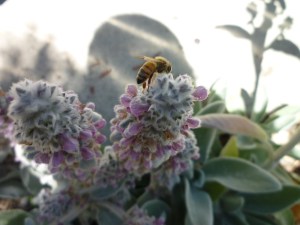
When a honeybee is alone–rare, very rare–
It tastes the sweetness
It lives inside all the time.
What pollen are we gathering, anyway?
Bees take naps, too….
 One of the books that Richard Wilbur wrote for children is Pig in the Spigot, which any lover of words should enjoy, whether you are a child or not. I can see reading it with a child who is well on the way to reading, but when I was homeschooling I often would introduce material “too early,” and that can work, too. If used with a notepad and pencil, I bet I could make this book serve as reading/phonics lessons for at least a week.
 In my last post I told you about Mr. Glad’s 40th day of repose in the Lord. On the 41st day I drove north in response to the invitation from a granddaughter to be present at the exhibit of her photography. If it hadn’t been for the request of my presence on a specific date, I’d probably have put off traveling a few weeks longer, but I took it as a gentle prod from Heaven.
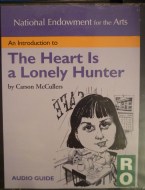 ch of recordings were produced between 2006 and 2008. For each one you get to hear some passages read from the book; background on the author or how the book came to be written, often from the author herself speaking; interesting music that seems to have been carefully chosen to go with the tone or setting; and many sound bites of other people’s responses to the story. Even if you have read the books — perhaps especially if you have read the books — it is very enriching to delve into them this way.
 t seem to engage with a whole novel in the deep way I am used to. I’m afraid I am somewhat apathetic right now about vicarious experiences and fictional characters, but I really enjoyed these Big Read introductions.
 ir parents, until they went under the bank and out of sight. Then I crossed the bridge with its watery blue-green glass bricks, to the path on the north shore. I bought a mango Italian ice, to lick as I walked briefly through an uninspired perennial garden, and then back to the bridge for a few more photos.

