“I liked thinking about people reading books in the Paris metro, since they are underground, in the earth’s dark shadow, in the artificial light of electric bulbs, with the  mute, graffiti-covered walls of corridors and tunnels rushing by their windows….”
“Above us, in the airplanes, someone is also reading a book — most often one with shiny covers, devoid of mystery, constructed on simple premises and the sincere desire for abundant royalties, but it may also be that someone up in those expanses is studying a Sufi epic or Dante and will experience illumination.
“And if this reader looks out the little window, he or she will see not black walls, as in the metro’s labyrinths, but the white gleam of clouds, a splendid, perpetually sunlit landscape, and below the threads of rivers quivering like children’s thermometers, strips of highways streaked by cars, like nervous insects, the yellow strips of sand along the sea, the dark smears of forests, sometimes snow-topped mountains, profoundly motionless, self-absorbed, autistic, and also cities chattering in different languages, resisting sleep, glowing even at midnight with feverish neon lights. Above the earth and below the earth, in metro cars and airplanes, someone is always reading books.”
-Adam Zagajewski, in Slight Exaggeration, © 2011

Nowadays most people I see on public transit or airplanes, if they are not chatting with their seatmate or sleeping, are looking at their phones or laptops. You can’t tell if they are reading an e-book or playing a game, or just working.
(I know, I know, it’s the era of masks and distancing, but please humor me. It may be temporarily necessary to do without some beloved activities, but I can still remember, and muse.)
Whenever I see anyone with an actual print book, I find it hard not to stare, to strain my neck and eyes in an effort to see just what author he is interacting with, revealing this private activity so publicly. It’s not voyeurism that motivates me, but a feeling of kinship with other readers, in an era when our numbers are diminishing. Of course, the statistics on reading trends show that a huge number of people continue to read, and I notice a few of them at the library. What’s different about the readers the plane is that I might watch them over the course of an hours-long journey; they are specific examples, and encouraging in a way that statistics can never be.
Zagajewski’s musings made me think about how we readers sometimes look outwardly like the “profoundly motionless, self-absorbed” mountain, when inside we are actually engaged in intense conversation that makes us more like the cities that “resist sleep.” I have a lot of experience with that lately, without going anywhere!

On my solo travels, twice that I remember clearly I was able to talk to perfect strangers about our reading, and I think in both cases the other person spoke to me first. The last time this happened I was looking at my Kindle Paperwhite while in line at Mumbai’s airport security, when a well dressed man next to me interrupted to ask what I was reading. Always honest in the instant, as soon as I answered I felt embarrassed and wished that I had thought to name some other, less boring recent read.
But his question was just an icebreaker, so he could find out why I was in India; talking with him, I forgot to notice how slowly the line was moving. I wonder if I will get the chance again to practice his kind of boldness and make the acquaintance of commuting or traveling readers. I would like to convey somehow my happiness to meet on my journey another lover of the printed word, who might just then be on her way to experiencing illumination.

(All photos found online.)
 “The loneliness of leaders. Sometimes I try to imagine what they read, what books the great political leaders might pick up. I don’t mean the abhorrent dictators… but genuinely great leaders. I’m not sure such leaders even exist at this historical moment, probably not, but they did exist, fortunately enough, not so long ago, during the Second World War. Poets and novelists are reluctant to remember this….”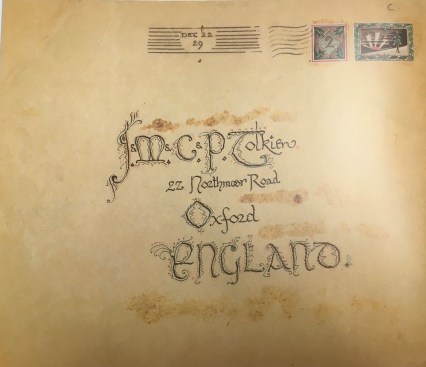
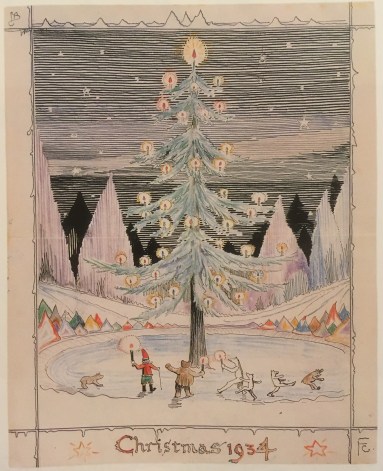 Recently I acquired Letters from Father Christmas by J.R.R. Tolkien, though in this case I think “recent” means 10-15 years ago. I’d glanced at them myself, but I think I was waiting to share the experience — to peek in on the Tolkien family and the stories that Tolkien the father created every year for his children. He wrote and illustrated them for over 20 years, starting by writing to three-year-old John, and continuing until he was only writing to his fourth child, Priscilla, with hopes that she will be hanging up her stocking “just once more.”

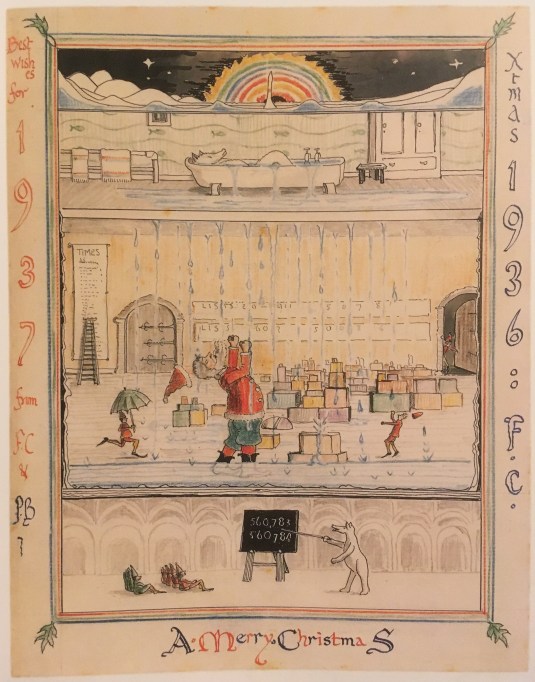
 “Another Christmas! I almost thought at one time (in November) that there would not be one this year. There would be the 25th of December, of course, but nothing from your old great-great-etc. grandfather at the North Pole.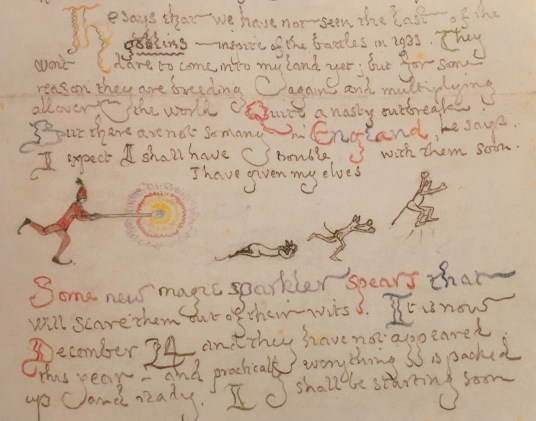




 I’m using this audio book now the way I have two or three others in the last years since I sleep alone, for the times when I don’t sleep. I put a well-known story to play on my phone, set the timer for 30 minutes, and let David or another nice person read me to sleep. This only works with voices that do not draw attention to themselves in various ways, usually by being overly dramatic.