 Wholeness was the plan, when God created the cosmos. Then, humans distanced themselves from their maker, the one with whom they had walked in the garden. Harmony between the man and the woman was broken, and they both lost connection with their true selves, which had been grounded in the Giver of Life.
C.S. Lewis imagines how an unfallen world might have looked, in his novel Perelandra, which I recently re-read. A scientist with a utopian vision comes from Earth to a strange planet — of course, we have plenty of this stuff to export! — to be the tempter of the Eve figure, the Green Lady. She struggles to maintain her natural and primal, essential oneness with her god, and the drama that ensues is full of suspense.
I suppose it is because of my non-fiction fallen-world perspective that I despaired of the Green Lady being able to withstand the arguments of the oily Weston, even while descriptions of the grace-full divine dance with humans lifted my hopes. I don’t think it’s in my power to say more about this book or the whole trilogy, and what I have just written probably makes little sense, but the story came to mind when I read the poem below. Because the Green Lady won’t remain firm unless the strength comes from knowing who she is.
In this in-between world, the time of waiting for the fullness of the Kingdom, we get moments and glimpses of unity and wholeness, an intuition of how it might feel to be in full communion with one’s own being and one’s Maker, and from there, with other people. But our parts are mostly disjointed and disconnected.
IMPOSSIBLE FRIENDSHIPS
For example, with someone who no longer is,
who exists only in yellowed letters.
Or long walks beside a stream,
whose depths hold hidden
porcelain cups — and the talks about philosophy
with a timid student or the postman.
A passerby with proud eyes
whom you’ll never know.
Friendship with this world, ever more perfect
(if not for the salty smell of blood).
The old man sipping coffee
in St.-Lazare, who reminds you of someone.
Faces flashing by
in local trains—
the happy faces of travelers headed perhaps
for a splendid ball, or a beheading.
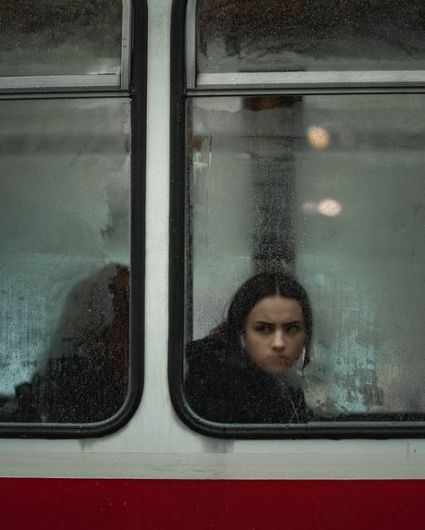
And friendship with yourself
—since after all you don’t know who you are.
-Adam Zagajewski
Father Alexander Schmemann writes about this in The Eucharist:
“… nowhere is the darkness of ignorance into which we were immersed with our fall from God more obvious than in man’s staggering ignorance of himself, and this in spite of the insatiable interest with which, having lost God, man studies himself and endeavors in his ‘sciences humaines’ to penetrate the mystery of man’s being. We live in an era of unrestrained narcissism, universal ‘turning into one’s self.’ But, as strange and even terrible as this may seem, the more elemental is this interest, the more obvious it is that it is nourished by some dark desire to dehumanize man.
“The thanksgiving offered by the Church [in the Eucharist] each time answers and destroys precisely this not only contemporary but age-old lie about the world and man. Each time it is a manifestation of man to himself, a manifestation of his essence, his place and calling in the light of the divine countenance, and therefore an act that renews and recreates man. In thanksgiving we recognize and confess above all the divine source and the divine calling of our life. The prayer of thanksgiving affirms that God brought us from nonexistence into being, which means that he created us as partakers of Being, i.e., not just something that comes from him, but something permeated by his presence, light, wisdom, [and] love….”
-Alexander Schmemann, The Eucharist
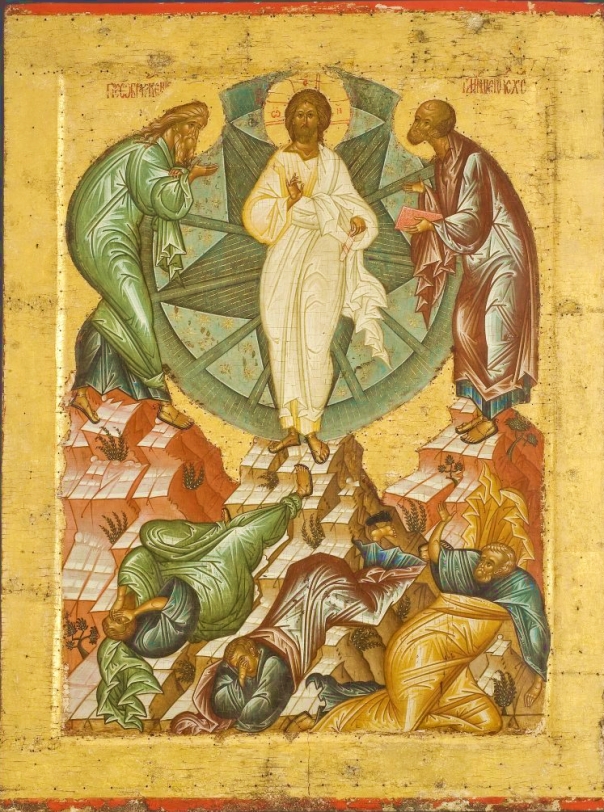


 Gladsome Lights