Tag Archives: the body

Not Star Trek mythology.

More and more I notice that people, including me, use the words brain and mind interchangeably; but they are not the same thing at all. No scientist has been able to find the mind in the brain. And when we are considering mind vs. heart, where is the heart exactly? As the Scripture says, “We are fearfully and wonderfully made.” The more researchers probe into the intricacies of the human body and its functions, the more complex we are found to be, the more questions emerge.

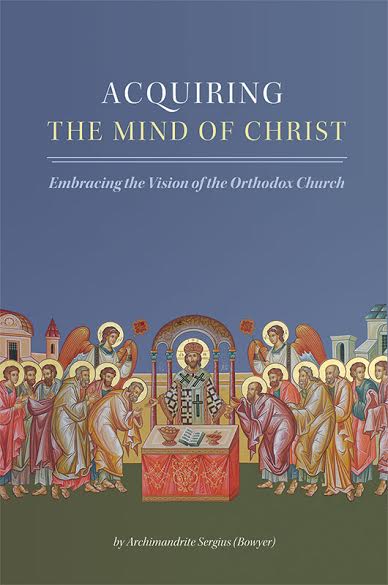
I am using the photo of the book cover at right only to illustrate one use of the word mind; it’s been a while since I read it, but I think the author may have been thinking of this passage of Scripture:

Let this mind be in you, which was also in Christ Jesus: Who, being in the form of God, thought it not robbery to be equal with God: But made himself of no reputation, and took upon him the form of a servant, and was made in the likeness of men: And being found in fashion as a man, he humbled himself, and became obedient unto death, even the death of the cross.

Father Stephen Freeman draws attention in a recent article to the way we moderns tend to think about minds and our thinking:

“We are material beings. We are not souls that have bodies, or bodies that have souls. The soul is the ‘life’ of the body, but is not, strictly speaking, a thing in itself. Most moderns mistake the soul for consciousness, and they imagine that at death their consciousness migrates somewhere else (to heaven, etc). And, we do not care very much about what then happens to the body, so long as our precious consciousness abides. This, I might add, is the mythology of Star Trek, where in at least several episodes, Spock’s consciousness is deposited in various other places. It is not, however, true Christianity.”

You can read the whole article here:  “The Secular Mind Versus the Whole Heart.”
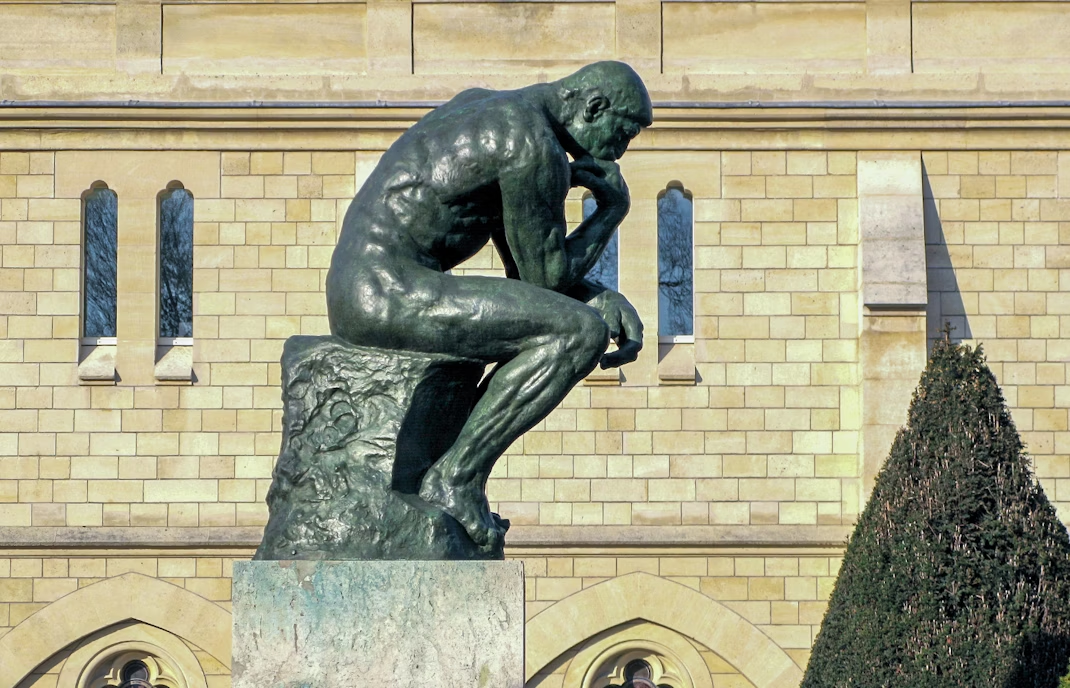
Auguste Rodin, The Thinker; Rodin Museum, Paris

Death is a change, but not an end.

AT UNIVERSITY

Puritans reckoned the cadavers
in Anatomy were drunks off the street;
idealists said they were benefactors
who had willed their bodies to science,
but the averted manila-colored
people on the tables had pinned-back
graves excavated in them
around which they lay scattered in the end
as if exhumed from themselves.

-Les Murray

This month marks ten years since my husband’s departing from his earthly life, which leads me to meditate again on this topic. And today is one of the Memorial Saturdays we Orthodox have during Lent:

“Saturday is the day which the Church has set aside for the commemoration of faithful Orthodox Christians departed this life in the hope of resurrection to eternal life. Since the Divine Liturgy cannot be served on weekdays during Great Lent, the second, third, and fourth Saturdays of the Fast are appointed as Soul Saturdays when the departed are remembered at Liturgy.” (OCA)

Les Murray’s poem recognizes something about human beings that our modern consciousness rarely grasps: the unity that exists between soul and body, and the brutality of violating the physical aspect of a fellow human.
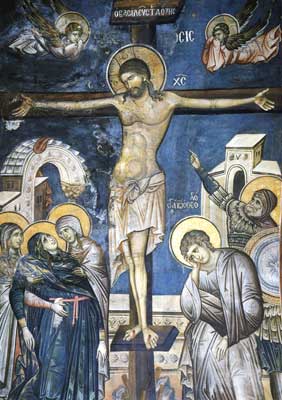
Father John Whiteford writes that sometimes,

“…you will hear people say that the deceased is not in the coffin but with Christ, for example. However, if a person dies in Christ, their souls will be with Christ, but until the general resurrection, their body remains a part of them that will one day be reunited with their souls (though their body will be transformed) — and as such, the soul apart from the body is not the whole person (2 Corinthians 5:1-5). 

If you are interested to know more about the Orthodox perspective on end-of-life issues, you might check out the Ancient Faith podcast “A Christian Ending” from Deacon Mark Barna, who has also co-authored a book by that title. Episodes of the podcast include: “Understanding Death,” “Cremation,” and “Preparing the Body for Burial,” and about a dozen more.

My late husband’s casket in our house.

In the wholeness of Orthodox vision and practice, “…death is a change, but not an end. That which we see, the body, remains important and worthy of honor. A funeral, the service of remembrance, is a sacramental gathering in the presence of God. The body is honored, even venerated. The life of remembrance, eternal remembrance, begins.”

-Father Stephen Freeman, “A Secular Death”

If you have a heavy heart, that is okay.

Saturday being the day of Sabbath rest, we Orthodox often have memorial services this day, and pray for those who rest in death, waiting for the Resurrection. For that reason I thought to share these words spoken at a funeral earlier this year. But also, my parish has seen two of our community fall asleep in death this month, and we are feeling the sorrow right now. Read on to hear what the rabbis say:

“If you have a heavy heart and are grieving, that is OK. We weep for those we love and who have loved us. One hears from time to time: ‘Oh, you should not cry. He is in a better place.’ But Christ God Himself wept at the death of his friend Lazarus. And the rabbis say that God weeps at the death of every human being. So, don’t be afraid to weep.
“You can also hear it said among some Christian groups: ‘Oh, that is not Father Anthony. He is with the Lord! That is just a shell.’ I ask you then who is that there in our midst?! You see, to be a human being is to be a soul enfleshed, that is, a soul wrapped in a physical body. Angels do not have bodies.

“The tragedy of death is that the union of soul and body is torn asunder! That is why Christ died a real human death, and rose from the dead as a real human person, his body and spirit united again. Fr. Anthony’s body is as much Fr. Anthony as is his soul which awaits the last day when it will receive a new body.”

-Archbishop Benjamin at the funeral of Father Anthony Karbo, March 2024

Memory eternal!

Beyond lullabies: the mother’s music.

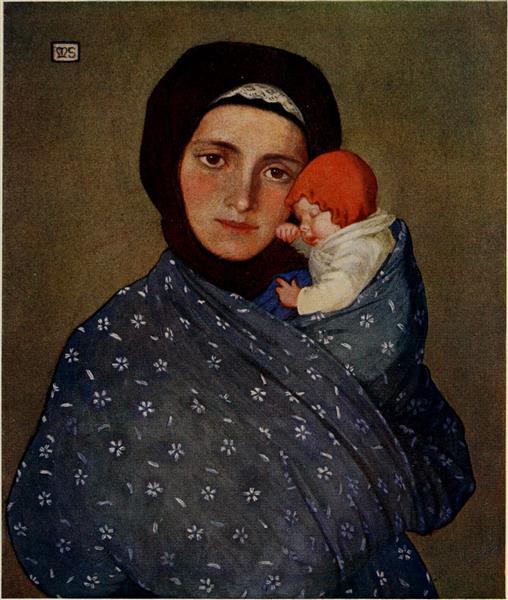
Marianne Stokes, Mother and Child at Menguszfalva

“After birth, the child further develops this primal resonance. This doesn’t happen haphazardly. The child achieves a kind of symbiosis with the mother through its creative imitations of her sounds and facial expressions; in this way, it will feel what she feels. As it takes on its mother’s happy expression, it also feels her joy; if it takes on her sad expression, it shares in her unhappiness.

“Something similar applies to the exchange of sounds: In the clinking and clanging of the mother’s language trembles the well and woe of her being, and the child who imitates that language resonates with it on the same psychological wavelength. This early resonance between child and its (social) environment leads to a unique phenomenon: The young child’s body gets ‘loaded’ with a series of vibrations and tensions that become embedded in the deepest and finest fibers of its body. They form a kind of ‘body memory’ that not only programs the function of the musculature, glands, nerves, and organs, but also predisposes the child to certain psychological conditions, or disorders.

“The human body is, in the most literal sense, a stringed instrument. The muscles that span the skeleton, and the body’s other fibers, are put on a certain tension in early childhood through imitative language exchanges. This tension determines with which (social) phenomena one will resonate; it determines the frequencies to which one will be sensitive in later life. That’s why certain people and certain events can literally strike a chord; they touch the body and, as such, touch the soul. It is for this reason that the voice can make the body ill. Or, conversely, heal it. That is why the voice is of vital importance, especially at an early age. Lack of a voice is fatal to the young child.”

–Mattias Desmet

Dmitri Petrovs