 Today I’ve been tossing out most of my beloved Touchstone and Gilbert magazines, but not before I glance at notes I’d written to myself on their covers ten or more years ago, suggesting to my mind and pen (and keyboard) topics to muse and write about. I have accumulated several boxes of such periodicals, including cooking and gardening magazines as well, every issue containing provocative information and knowledge that I hoped to incorporate into my daily life, both the active and contemplative aspects.
One of them that drew me in was short enough to reread this morning: “It All Depends: on Randomness and the Providence of God,” by Philip Rempel. Rempel compares the Enlightenment view of the cosmos as orderly clockwork to the postmodern concept of it as random and chaotic. Both end up being “dead and dreary,” especially when contrasted with the reality of the world we see in front of us, and described in the language of Christ and the church.
“For the world we observe if we open our eyes is indeed a universe filled with both structure and freedom, but the structure is never a rigid structure and the freedom is never a lawless freedom. As in a dance, or all art for that matter, where rules and creativity must work in tandem to produce something of meaning, so it is with the universe. In some sense we are part of a cosmic dance, but the dance must be structured if it is to have meaning; a universe of arbitrary motion is just as unsatisfying as a universe without motion.
“The existence of every created thing, and thus its role in the dance, is entirely and continually dependent on God, and so our movement through the cosmos and through time, which is our response to his love, must be continually focused on him and directed towards him. Particles and probabilities, and people and planets, are all twirling through the cosmos in response to God’s loving call.”
-Philip Rempel

 I came to the end of Irrational Man: A Study in Existential Philosophy, and feel that my engagement with the author and his theses has barely begun. The insights about eternal human longings down through the ages, and even small details about the lives of individual thinkers, will be rattling around in my mind for a long time to come, and I hope to refer to some of them in the future.
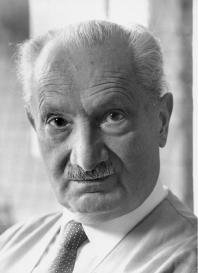
 “If man is to be given meaning, the Existentialists have shown us, it must be here and now; and to think this insight through is to recast the whole tradition of Western thought. The realization that all human truth must not only shine against an enveloping darkness, but that such truth is even shot through with its own darkness may be depressing, and not only to utopians. But it has the virtue of restoring to man his sense of the primal mystery surrounding all things, a sense of mystery from which the glittering world of his technology estranges him, but without which he is not truly human.”
 Gladsome Lights