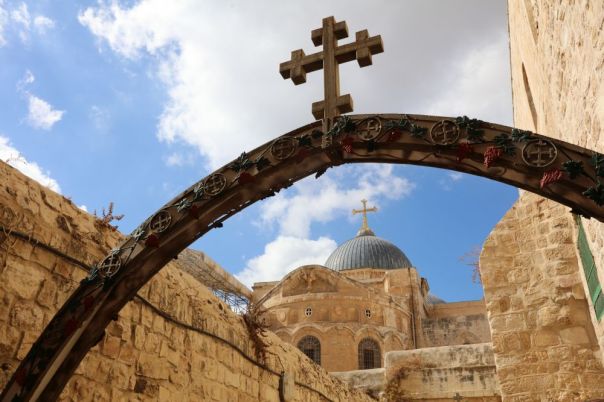
We are celebrating the Feast of the Elevation (or Exaltation) of the Holy Cross. This is a commemoration of historic events in the Orthodox Church, and an opportunity to ask ourselves what these outward expressions of faith have to do with our lives in the current age. The original events are more than a thousand years distant from us, but the human condition is unchanged.
“The Exaltation of the Lord’s Cross has arrived. Then, the Cross was erected on a high place, so that the people could see it and render honor to it. Now, the cross is raised in the churches and monasteries. But this is all external. There is a spiritual exaltation of the cross in the heart. It happens when one firmly resolves to crucify himself, or to mortify his passions—something so essential in Christians that, according to the Apostle, they only are Christ’s who have crucified their flesh with its passions and lusts (cf. Gal. 5:24). Having raised this cross in themselves, Christians hold it exalted all their lives. Let every Christian soul ask himself if this is how it is, and let him hearken to the answer that his conscience gives him in his heart.”
-St. Theophan the Recluse, Letters on the Spiritual Life
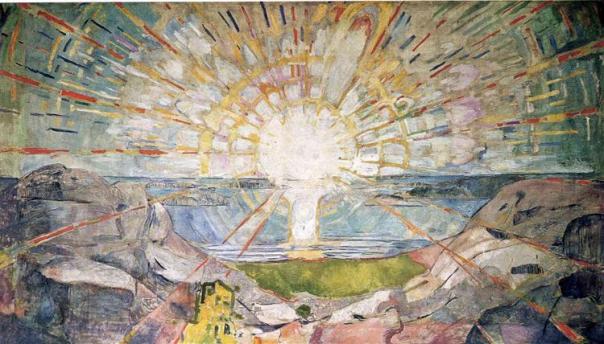
And whom do I call my enemy? An enemy must be worthy of engagement. I turn in the direction of the sun and keep walking. It’s the heart that asks the question, not my furious mind. The heart is the smaller cousin of the sun. It sees and knows everything. It hears the gnashing even as it hears the blessing. The door to the mind should only open from the heart. An enemy who gets in, risks the danger of becoming a friend.
This poem seems fitting for the season of Lent, when we make a special effort to lay aside distractions and turn inward — to make a spiritual journey, drawing near to the place where, as Christ told us, “The Kingdom of God is within you.” May we find our brook to be the River of Life, of which He also speaks: “He who believes in Me, as the Scripture said, ‘From his innermost being will flow rivers of living water.'”
HAVE YOU GOT A BROOK IN YOUR LITTLE HEART?
Have you got a brook in your little heart, Where bashful flowers blow, And blushing birds go down to drink, And shadows tremble so?
And nobody knows, so still it flows, That any brook is there; And yet your little draught of life Is daily drunken there.
Then look out for the little brook in March, When the rivers overflow, And the snows come hurrying from the hills, And the bridges often go.
And later, in August it may be, When the meadows parching lie, Beware, lest this little brook of life Some burning noon go dry!
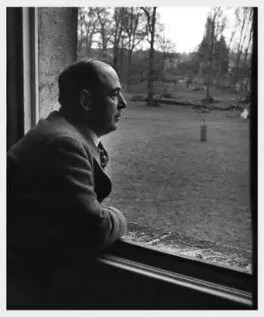
What Dorothy Parker describes in her poem below reminds me of what C.S. Lewis called sehnsucht, the heart’s longing, seemingly for its home – in God. These episodes often happen at moments when we experience something very good or beautiful, and realize deep in ourselves that it doesn’t quite satisfy, but only reveals our homesickness.
In The Weight of Glory Lewis describes this aching in our heart:
“In speaking of this desire for our own far off country, which we find in ourselves even now, I feel a certain shyness. I am almost committing an indecency. I am trying to rip open the inconsolable secret in each one of you—the secret which hurts so much that you take your revenge on it by calling it names like Nostalgia and Romanticism and Adolescence….
“We cannot tell it because it is a desire for something that has never actually appeared in our experience. We cannot hide it because our experience is constantly suggesting it, and we betray ourselves like lovers at the mention of a name. Our commonest expedient is to call it beauty and behave as if that had settled the matter. Wordsworth’s expedient was to identify it with certain moments in his own past. But all this is a cheat. If Wordsworth had gone back to those moments in the past, he would not have found the thing itself, but only the reminder of it; what he remembered would turn out to be itself a remembering.
“…These things—the beauty, the memory of our own past—are good images of what we really desire; but if they are mistaken for the thing itself they turn into dumb idols, breaking the hearts of their worshipers. For they are not the thing itself; they are only the scent of a flower we have not found, the echo of a tune we have not heard, news from a country we have never visited.”
Peder Monsted
TEMPS PERDU
I never may turn the loop of a road Where sudden, ahead, the sea is lying, But my heart drags down with an ancient load– My heart, that a second before was flying.
I never behold the quivering rain– And sweeter the rain than a lover to me– But my heart is wild in my breast with pain; My heart, that was tapping contentedly.
There’s never a rose spreads new at my door Nor a strange bird crosses the moon at night But I know I have known its beauty before, And a terrible sorrow along with the sight.
The look of a laurel tree birthed for May Or a sycamore bared for a new November Is as old and as sad as my furtherest day– What is it, what is it, I almost remember?


 “In speaking of this desire for our own far off country, which we find in ourselves even now, I feel a certain shyness. I am almost committing an indecency. I am trying to rip open the inconsolable secret in each one of you—the secret which hurts so much that you take your revenge on it by calling it names like Nostalgia and Romanticism and Adolescence….

 Gladsome Lights