Tag Archives: World War II

Shy little bird in the rib cage.

“Three forces carved the landscape of my life. Two of them crushed half the world. The third was very small and weak and, actually, invisible. It was a shy little bird hidden in my rib cage an inch or two above my stomach. Sometimes in the most unexpected moments the bird would wake up, lift its head, and flutter its wings in rapture. Then I too would lift my head because, for that short moment, I would know for certain that love and hope are infinitely more powerful than hate and fury, and that somewhere beyond the line of my horizon there was life indestructible, always triumphant.
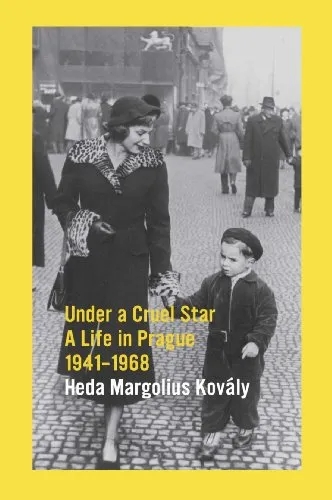
“The first force was Adolf Hitler; the second, Iosif Vissarionovich Stalin. They made my life a microcosm in which the history of a small country in the heart of Europe was condensed. The little bird, the third force, kept me alive to tell the story.”

Those are the first two paragraphs of the book Under a Cruel Star: A Life in Prague 1941-1968 by Heda Margolius Kovály, which I read last year. What a survivor that “little bird” helped the author and heroine to be, again and again; her story is gripping and intriguing in every way, and I highly recommend it. She survived Auschwitz, and near the end of the war managed to escape. She ran to her friends in Prague, but none of them dared take her in. The remainder of her story is very suspenseful, and demonstrates the strength of will and hope that continued to uphold her through the suffering and loss under Communist rule.

An interview with Heda was recorded in 1980 for “Voices from the Holocaust,” which you can listen to here: Heda Kovály. The outline of her life is laid out in a transcript and episode notes. They are a good supplement to her book, but I’m very glad I learned her story first from her earlier, very personal telling of it.

Not long after reading Under a Cruel Star, I came across the poem below, which speaks of a place such as Heda’s little bird occupied — this hidden place from which help comes in the form of a song.

LACK OF FAITH

Yes,
even when I don’t believe—
there is a place in me
inaccessible to unbelief,
a patch of wild grace,
a stubborn preserve,
impenetrable,
pain untouched by the sleeping body,
music that builds its nest in silence.”

― Anna Kamieńska, Astonishments: Selected Poems

Passion-bearer Alexander

It was from watching a movie about Sophie Scholl (I think it must have been “Sophie Scholl: The Final Days”) that I first heard of The White Rose, a non-violent youth resistance group formed in Munich in 1942. Britannica says of its members:

Coupling youthful idealism with an impressive knowledge of German literature and Christian religious teachings, the students published their beliefs in a series of leaflets under the name “the White Rose” (and later as “Leaflets of the Resistance”).

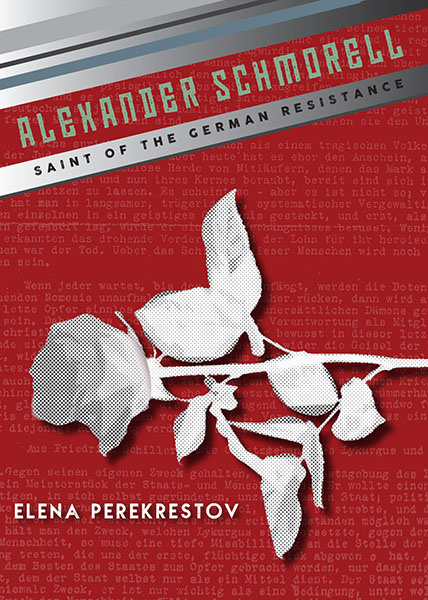
In the movie we meet not only Sophie and her brother Hans, but also friends and other members of The White Rose, one of whom is named “Alex.” A couple of years ago I learned that this was Alexander Schmorell, an Orthodox Christian and co-founder of the group.

Hans and Alexander

There is a very memorable scene — one of only two that I can bring to mind from that film — in which Hans and Sophie are throwing leaflets from the upper story of a university building. They were seen by a Nazi Party member and arrested, on February 18, 1943.

The leaflets were like nothing the Gestapo had ever seen—not rigid ideological tracts aimed at the working classes, but passionate, erudite manifestos that quoted Friedrich Schiller, Plato and Laozi. “The guilt of Hitler and his accomplices goes beyond all measure,” read the group’s fifth leaflet. “Tear up the cloak of indifference you have wrapped around your hearts. Make your decision before it is too late!Smithsonian

Hans and Sophie were beheaded four days later, along with medical student Christoph Probst. In succeeding months, many other people were arrested in relation to The White Rose, and among them was Alexander Schmorell, who was executed on July 13, 1943. In 2012 he was glorified in the Orthodox Church as a saint and passion-bearer.

Memory eternal!

Books became the only reality.

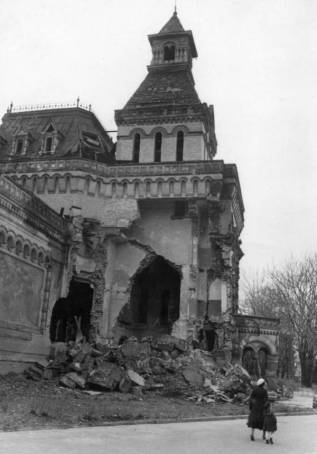
Scene from Leningrad after seige.

Joseph Brodsky was born in St. Petersburg, what was then Leningrad, in 1940. He writes in the first, title essay of his book, about his generation in postwar Soviet Russia, how they were “somewhat spared” the full experience of what their country had become: a “drab hell, with a shabby materialist dogma and pathetic consumerist gropings.”

“We emerged from under the postwar rubble when the state was too busy patching its own skin and couldn’t look after us very well. We entered schools, and whatever elevated rubbish we were taught there, the suffering and poverty were visible all around. … The empty windows gaped at us like skulls’ orbits, and as little as we were, we sensed tragedy. … The amount of goods was very limited…. we didn’t develop a taste for possessions. Things that we could possess later were badly made and looked ugly. Somehow, we preferred ideas of things to things themselves….”

I can’t help comparing the cultural environment in which Brodsky came of age to that of the generation currently in their teens and twenties. When those young people in Leningrad were trying to survive the privations at every level of their being, they didn’t have the option of comforting themselves with marijuana or escaping to the metaverse. Their daily life didn’t include such diversions as shopping at the mall for the current fashions in jeans or phones. What they did have was books:

“If we made ethical choices, they were based not so much on immediate reality as on moral standards derived from fiction. We were avid readers and we fell into a dependence on what we read. Books, perhaps because of their formal element of finality, held us in their absolute power. Dickens was more real than Stalin or Beria. More than anything else, novels would affect our modes of behavior and conversations, and 90 percent of our conversations were about novels. It tended to become a vicious circle, but we didn’t want to break it.

“In its ethics, this generation was among the most bookish in the history of Russia, and thank God for that. A relationship could have been broken for good over a preference for Hemingway over Faulkner; the hierarchy in that pantheon was our real Central Committee. It started as an ordinary accumulation of knowledge but soon became our most important occupation, to which everything could be sacrificed. Books became the first and only reality, whereas reality itself was regarded as either nonsense or nuisance. Compared to others, we were ostensibly flunking or faking our lives. But come to think of it, existence which ignores the standards professed in literature is inferior and unworthy of effort. So we thought, and I think we were right.”

-Joseph Brodsky, Less Than One

This passage gives me a clue as to a question I’ve had about Brodsky: How, born a Jew and growing up under atheist Communism, did he come to be a “Christian poet”? Not only does he say (quoted in a previous post about him) that he tries to be a Christian, but Wikipedia tells us:

Daniel Murphy, in his seminal text Christianity and Modern European Literature, includes Brodsky among the most influential Christian poets of the 20th century, along with T. S. Eliot, Osip Mandelstam, Anna Akhmatova (Brodsky’s mentor for a time), and W. H. Auden (who sponsored Brodsky’s cause in the United States). Irene Steckler was the first to categorically state that Brodsky was “unquestionably a Christian poet”.

What the writer tells us about this education he and his friends got for themselves shows the power of the vicarious experience that can be had from reading good stories. The best books helped them to endure  the “nonsense or nuisance” of totalitarian society, and at the same time gave them a broad, universal understanding of Reality. What a blessed bookishness; as Brodsky says, Thank God for that.

They fight to stay together.

Ten years later I am re-posting this review, about a book that I put off reading for a year after I bought it, mostly because of its cover design and notes. It’s a novel about Poland that won several minor awards, including the Hemingway Foundation/PEN prize in 2010. Our church women’s book group read it at my recommendation a few years ago, when I was too busy to join in. So it may be time for my own reaquaintance.

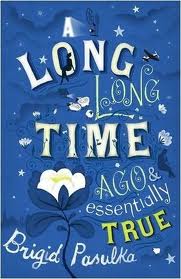
A Long, Long Time Ago & Essentially True exceeded my expectations; I don’t remember what I read on someone’s blog that got me interested, but when the book arrived and I saw the fanciful flowery cover with notes using the words “whimsical” and “romance” on the same page, I’m afraid I unconsciously relegated it to a genre of Light Reading.

A cover truer to the story.

But a story of Poland from the 1930’s to about 1990 is sure to be full of war, tyrants, secret police, lies and alcoholism. Wives and mothers can’t even mention their men who went missing years ago; their grandchildren grapple with the generational ripples of all the wounds and deaths and separations both social and physical. I had to look up the word whimsical just now to make sure of my understanding, and no, the author Brigid Pasulka never gave the impression that she was trying to be “playful, erratic or fantastical” with her subject.

The opening chapter that tells about an upright young man named Pigeon might make you think it’s all light and charming, and perhaps to some reviewers the idea of such a hero with old-fashioned morals seems like a fairy tale. He is a shining example of the classic Pole who has Golden Hands that can make or fix anything. And he loves Anielica, a sweet girl who will soon suffer much with and for him, including the long postponement of their wedding — but that turns out to be the least of their sorrows.

The novel alternates chapters about teenagers growing up during the war years with those about their granddaughter in the late 20th century. Her life, also, is nearly wrecked by many of the same old misfortunes as well as some newer ones, like drug-dealing boyfriends. Funny moments and comic aspects pepper her story, as they did her grandparents’. Being able to appreciate the comedy is one way to deal with the heartache; that doesn’t make the story a piece of humor.

Brigid Pasulka

The book was just serious enough and just long enough for my current reading “mood,” and I did not predict the ending that lifted me out of the general bleakness that was trying to smother the characters all the way through. The Polish people had several years of trying to survive and even fight against the Nazis, and then could barely catch their breath before the Soviets took over and they had to quickly shift gears and learn how to cope with a slightly different oppression, the effects of which stretched long into the future.

Through it all the protagonists in this story, the grandparents and the parents and grandchildren, fight to stay together and to protect one another. Bribes and lies and dreadful compromises at times appear to be daily necessities, but the characters’ love and perseverance keep them from the despair that lurks around the corners of their houses like a traitorous neighbor. The moral quandaries that they experience are neither explored in depth nor treated flippantly.

The author, I read on the cover, spent a year in Poland learning the language and the culture of her ancestors. She uses often untranslated Polish words lavishly throughout the story, and they aren’t always easily deciphered versions of English words, so I was frequently left wondering what I was missing, not having a Polish dictionary handy. Nor did I want to look up the many references to obscure events in Polish history which the characters mentioned. But those are my only complaints.

In the middle of meditating on the history and people of Poland I read this poem by a Pole who would have grown up during the Soviet era. The images the writer conjures up, of a field mouse, a tree, “A grass blade trampled by a stampede of incomprehensible events,” lined up very well with the impression I got from this debut novel, of a brave people surviving by means of the virtues of their humanity, which is the grace of God.

By Zofia Stryjeńsk, artist of the interwar period.