Monthly Archives: July 2010

Oregon – Part 3

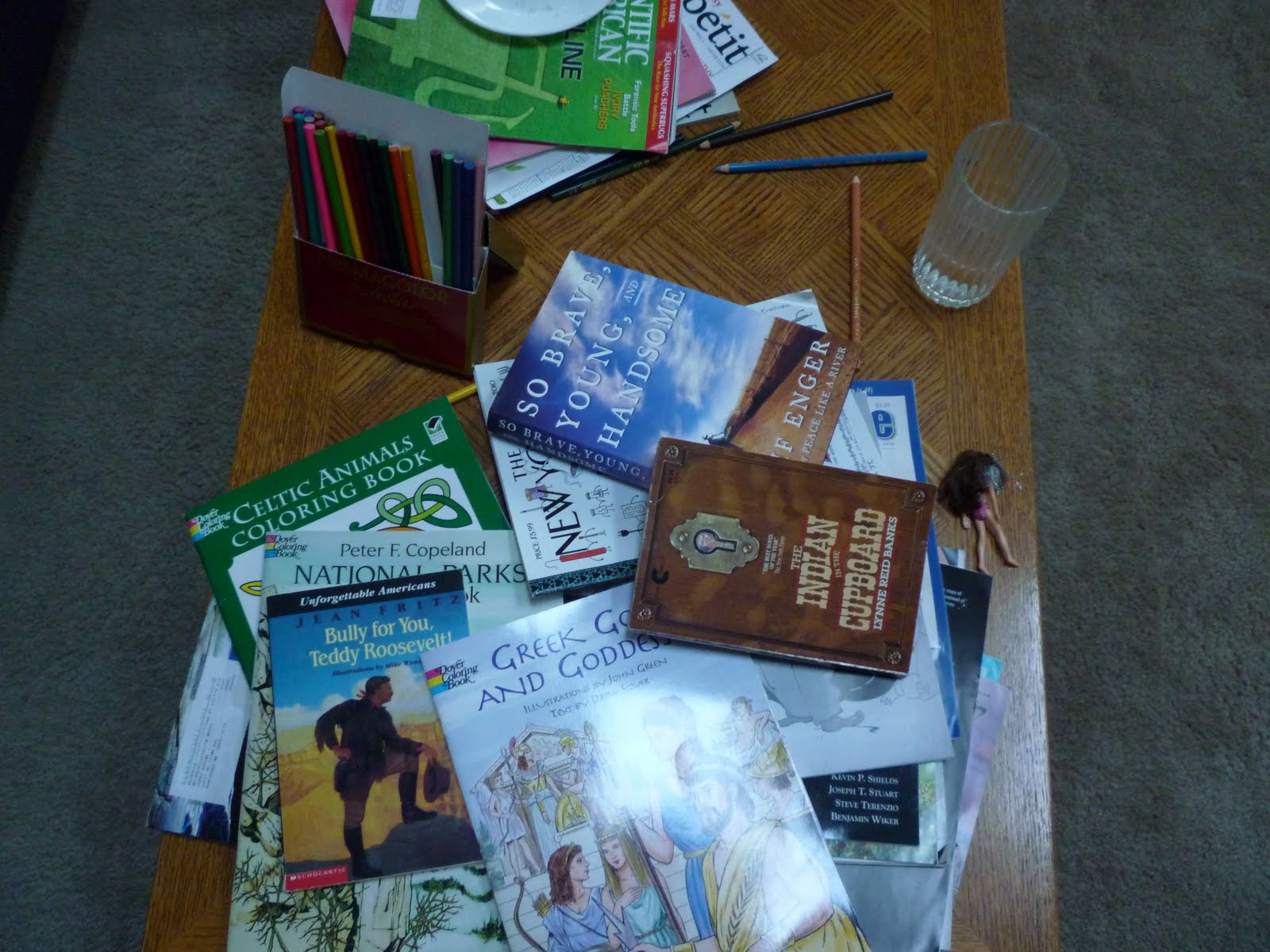
The DVD player was broken at the house we were renting–not a bad thing. The littlest kids watched several Disney movies on a video player in a bedroom, and the older boys got to reading books. I had brought a box of games and things to read, coloring books and lovely soft colored pencils. Granddaughter and I, and also her next-oldest brother colored a lot of pictures from the Greek myths coloring book, and then the Celtic animals one. At least one older boy said that Bully for You, Teddy Roosevelt was Awesome. Pearl read Mrs. Mike.

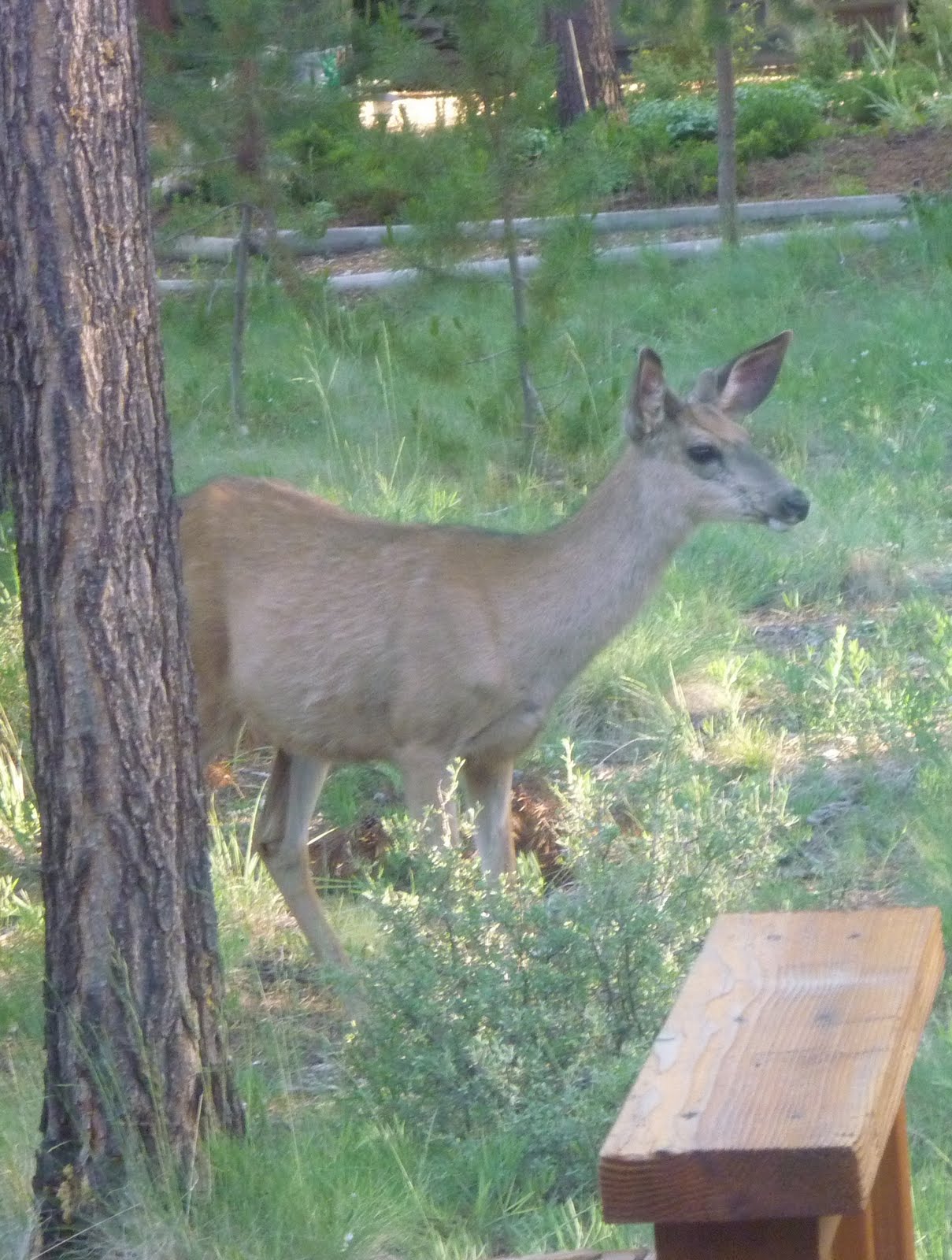
Months ago Herm gave me a small old paperback, The Singing Forest, knowing my love of deer. This leisurely stay where deer did browse in the back yard seemed the perfect place to read such a book. One afternoon we had rain and cold, so we who were hanging out at the house turned on the gas fireplace and snuggled under blankets.

Between what groceries we had brought and the few items stocked in the house, Pearl concocted some chocolate cupcakes while I curled up with my book. It’s very sweet, fascinating as a glimpse of life on a Scottish estate and also a sort of sociology of Scottish red deer. A real-life Bambi story.

Wallace Stegner’s Remembering Laughter and Collected Stories were the other books in my Oregon stack. I’ll have to think more on those before I can do justice to them by anything I can write, but I have to say that any fiction by Stegner I’ve read has been most satisfying.

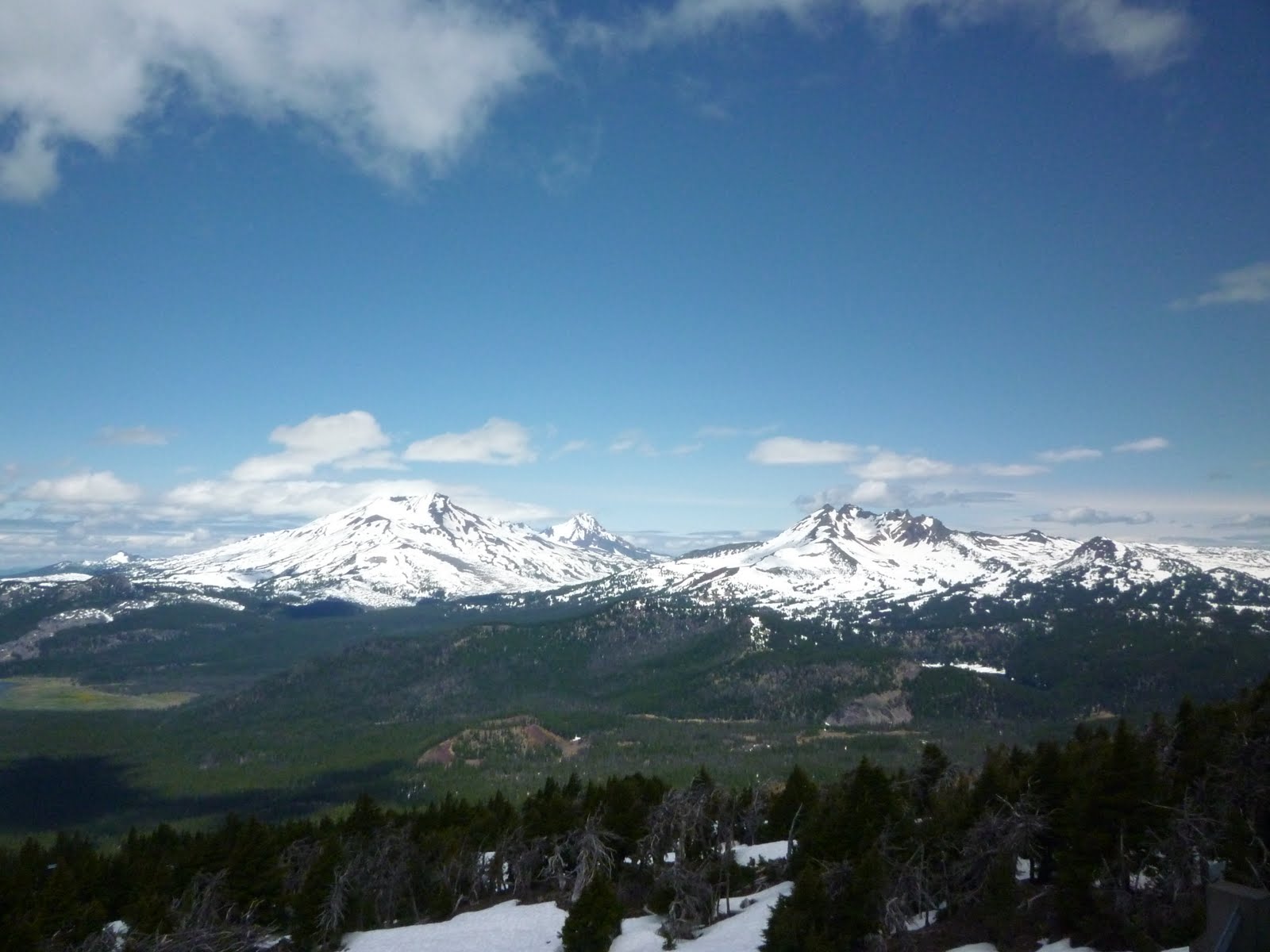
Some of us went up Mt Bachelor on the ski lift and got views of The Sisters and Broken Top. It was 36° up there so we mostly sat in the coffee shop and sipped cocoa.
Aunt and niece on the Smith Rock trail

Baby Scout was kept on task learning to crawl by having one or more cousins demonstrating and distracting him from his misery at being on his tummy. He made great progress during those few days, and has now learned that exploring is fun.


I think the next installment in the Oregon series will be the last, and none too soon, for I’m not comfortable being so behind in my reports. New and more recent adventures are always presenting themselves and wanting documentation and analysis. It is well known that I am always willing.

Sticky Rice

Ten years ago we had a Laotian neighbor who invited us to her wedding, where we experienced our first Thai sticky rice. Moist and chewy, but at the same time clean and dry enough to pick up with our hands out of a giant basket on the buffet table. It was aromatic, but different from jasmine rice.

Some years after getting the recipe from our friend I produced a good batch; she had moved away by then. The first several times it scorched cooking in a regular pot, but eventually I read online that what I needed for success was a certain type of basket steamer, which I bought at a Southeast Asian store for under $10.

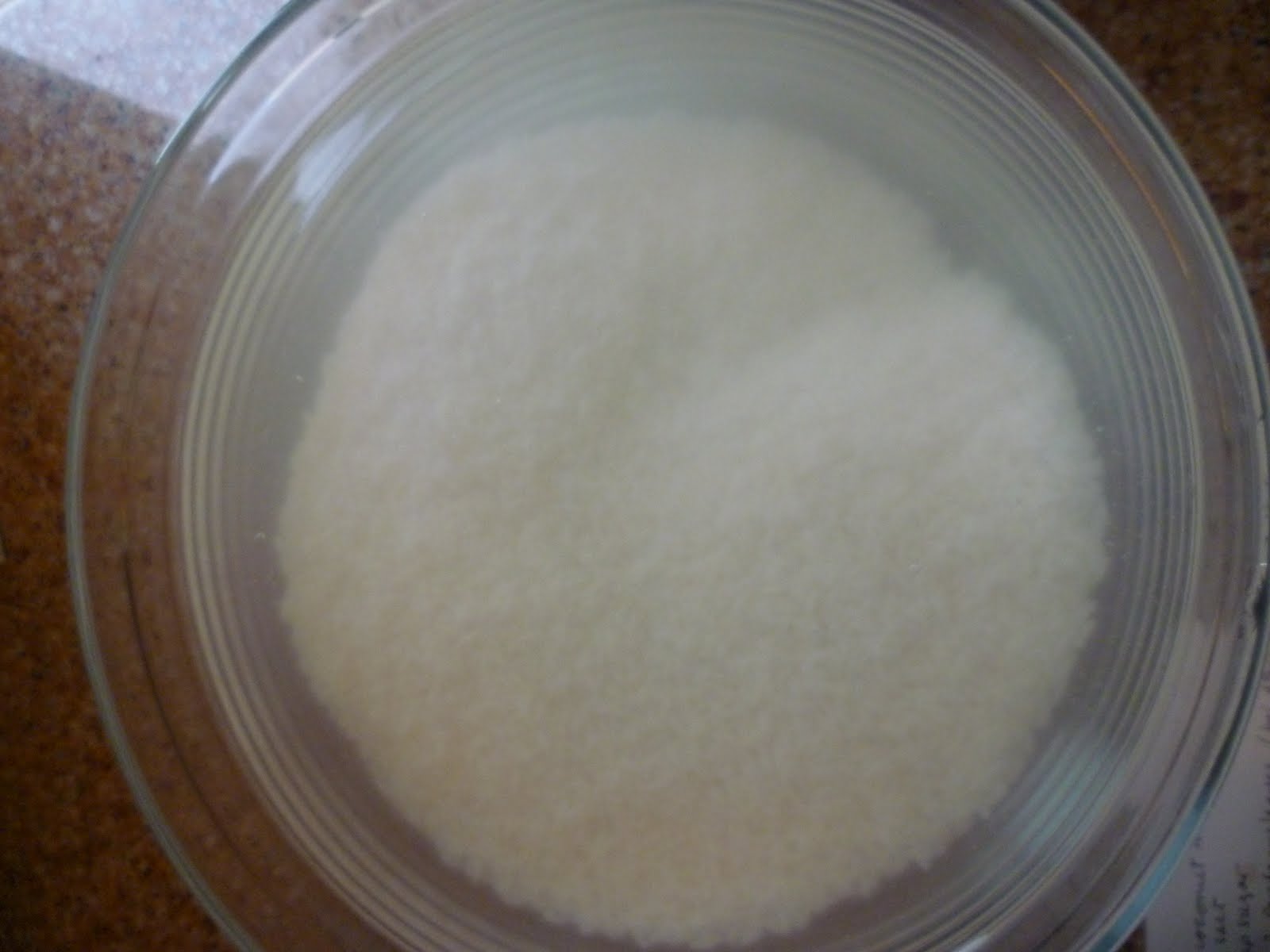
It’s so easy now to make this kind of rice. Start with a bag labeled Sweet Rice that is found at the same kind of store. The typical Japanese/Chinese/Korean Asian market near here doesn’t even have it.  I don’t have to measure, but I put three or four cups of sweet rice into a bowl for soaking, and then rinse it several times until the water is almost clear. Tonight I used four cups.

You have to soak it most of the day if you are using cold water, but I read somewhere that I could use hot water for soaking and it would only require an hour or two. So I almost always do it that way.

After soaking, heat some water in the steamer pot, drain the rice into the basket over the sink, and set the basket of rice over the steaming water. Put a sizable lid from some other pot over it to keep the steam in.It takes about 20 minutes to cook; sometimes I turn the lump of rice over midway.

When it is tender, dump it out on to a board or mat big enough that you can spread it out with a fork to cool it down, to keep it from overcooking into a soggy lump. At this point you can form it into balls, as I did for my grandchildren last week–balls that can be dipped in a coconut sauce. I often put a pile into a bowl and ladle Thai stew over it.

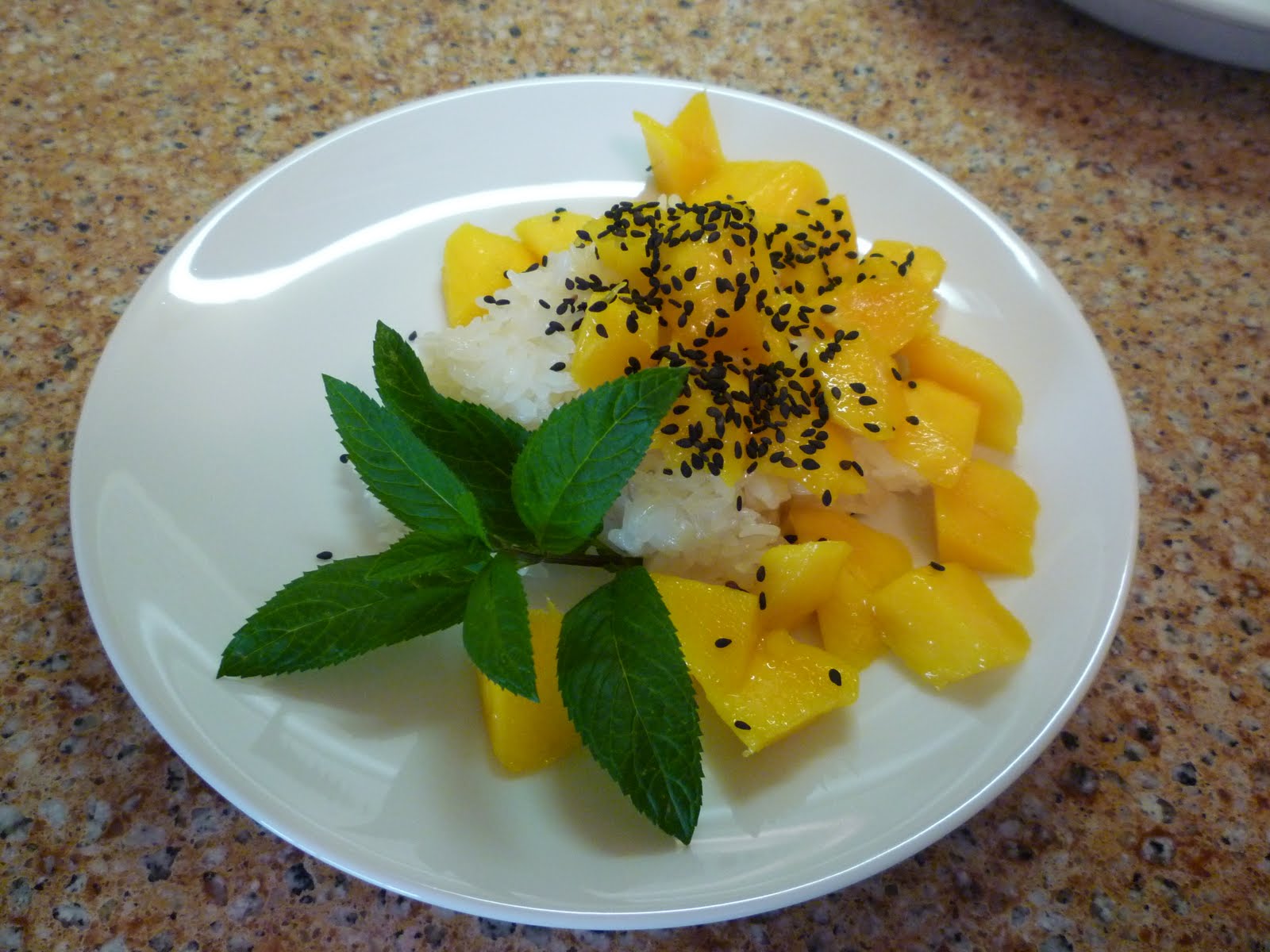
But tonight I mixed the cooked and still warm rice with sweetened coconut milk to which lime juice had been added, to make a platform for chunks of mango. Those are not ants, but black sesame seeds sprinkled on top, as I assured my husband.

A can of coconut milk, 1/3 cup sugar, 1/2 teaspoon salt and 2 tablespoons lime juice boiled together made the sauce that I poured over the rice that was still warm, then pressed it into a shallow pie plate and a pasta bowl. Within ten minutes it was firm enough to cut into wedges with a knife. It got even firmer when cold. This dish is called, naturally, Sticky Rice with Mango.

Oregon – Part 2

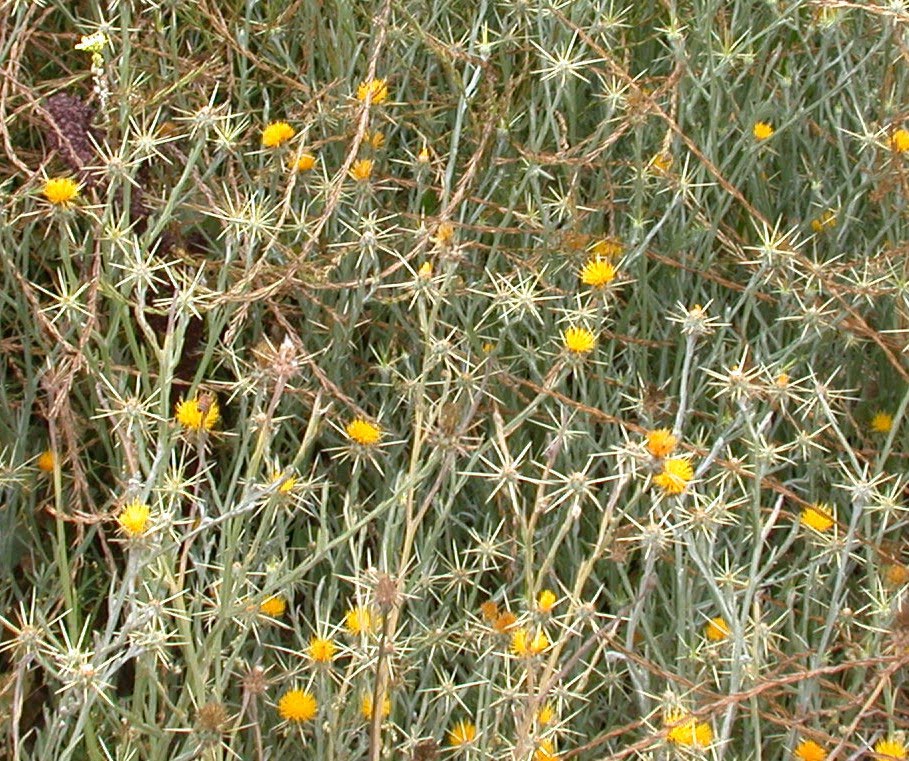
yellow star thistle

Summer isn’t glorious the way spring was, along the track we take driving north. On our way to Oregon the only flower I saw on the first leg of the journey was yellow star thistle, the most unfriendly plant, growing where I’d stopped to take pictures of lupines on my last two journeys. Oh, and buckeye, which I also don’t like. The hills are dry now, and “golden,” or just plain brown.

One plain and pale slope I glanced at reminded me of a drawing I had made in fourth grade, of a dalmatian dog standing in the foreground, with the familiar California foothills baking under blue skies behind him, and no trees to be seen. It got me thinking for quite a while, about how the hills I see more nowadays are peppered with oak trees, and therefore hadn’t connected to that odd crayon drawing that was tacked on a wall somewhere long enough to imprint into my brain.

It was a great relief to get out of those foothills and into the valley where green things are loving the sun and heat as long as they get some of that precious California water to their roots: broad fields of tomatoes, sunflowers and safflowers in long rows, and the plantings of onions still with their flowers waving in the breeze. My heart swells seeing all the lush produce, comforted by the land producing so much food.

And oh! we saw in one huge field an amazing kind of machine, that will save the backs and knees of many a farm laborer. Unfortunately we passed by too quickly to get a good look at it, but it consisted of a couple of tractors, one on each end, slowly pulling a sort of rack, on which several men lay face down, with their hands in the dirt and moving quickly. We think they were setting out small plants.

Oleanders are another kind of flower I enjoyed on the way up Highway 5. When I was a child living in the arid Central Valley, oleanders were pretty boring, but as I don’t see them every day anymore I really appreciate them. There must be many thousands planted along the highways, and they are a delight in all their many reds and pinks and white, looking cheery and hearty in spite of 100° weather.

It was 108°, actually, as we went through the town of Redding, before climbing to slightly higher altitudes. I was grateful for the air conditioning, and thought back to my childhood when we had only a swamp cooler in one corner of the ranch-style house, with the girls’ bedroom at the other corner. When coming indoors after exposure to the wilting termperatures we children liked to wet our faces and stand right in front of it, never understanding why our parents thought this was a bad idea. I first appreciated my grandma’s humor when she wrote me once that she was about to “melt into a puddle of fat” because it was so hot in usually-temperate Berkeley, and when I feel limp in the summer I always smile over this image and her spirit.

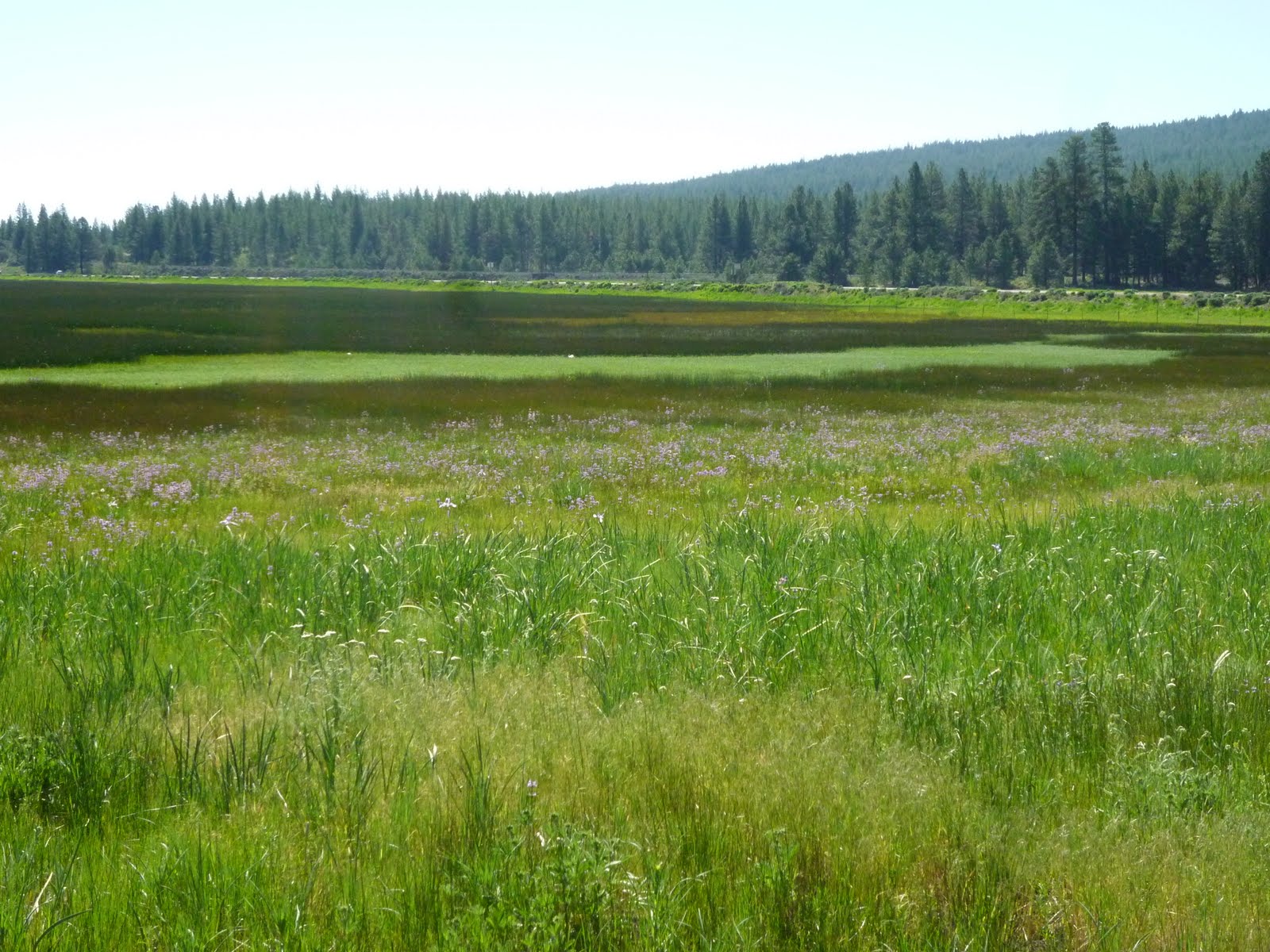
We stopped at Pippin’s house for a night on our way, where the temperature was 20 degrees cooler. The next morning, before crossing the state line, we stopped by Grass Lake, a lush and green place where a hundred gulls were congregating and making a ruckus. In this northeast corner of California you often find landscapes like this with layers of color and texture created from sagebrush, conifers, and wetlands. It all makes an ever-changing feast for the eyes. But in less than an hour we will be in Oregon–finally! More on that soon.

God is constantly willing.

Weeds grew thick and tall in my recent and repeated absences, threatening to hide and destroy the beauty of the garden I’d planted. This morning I spent an hour tidying things up and giving space to the cucumbers and peppers so that they could grow unhindered. I’d hired a girl to irrigate enough to keep everything alive, but I didn’t ask her to pull weeds.

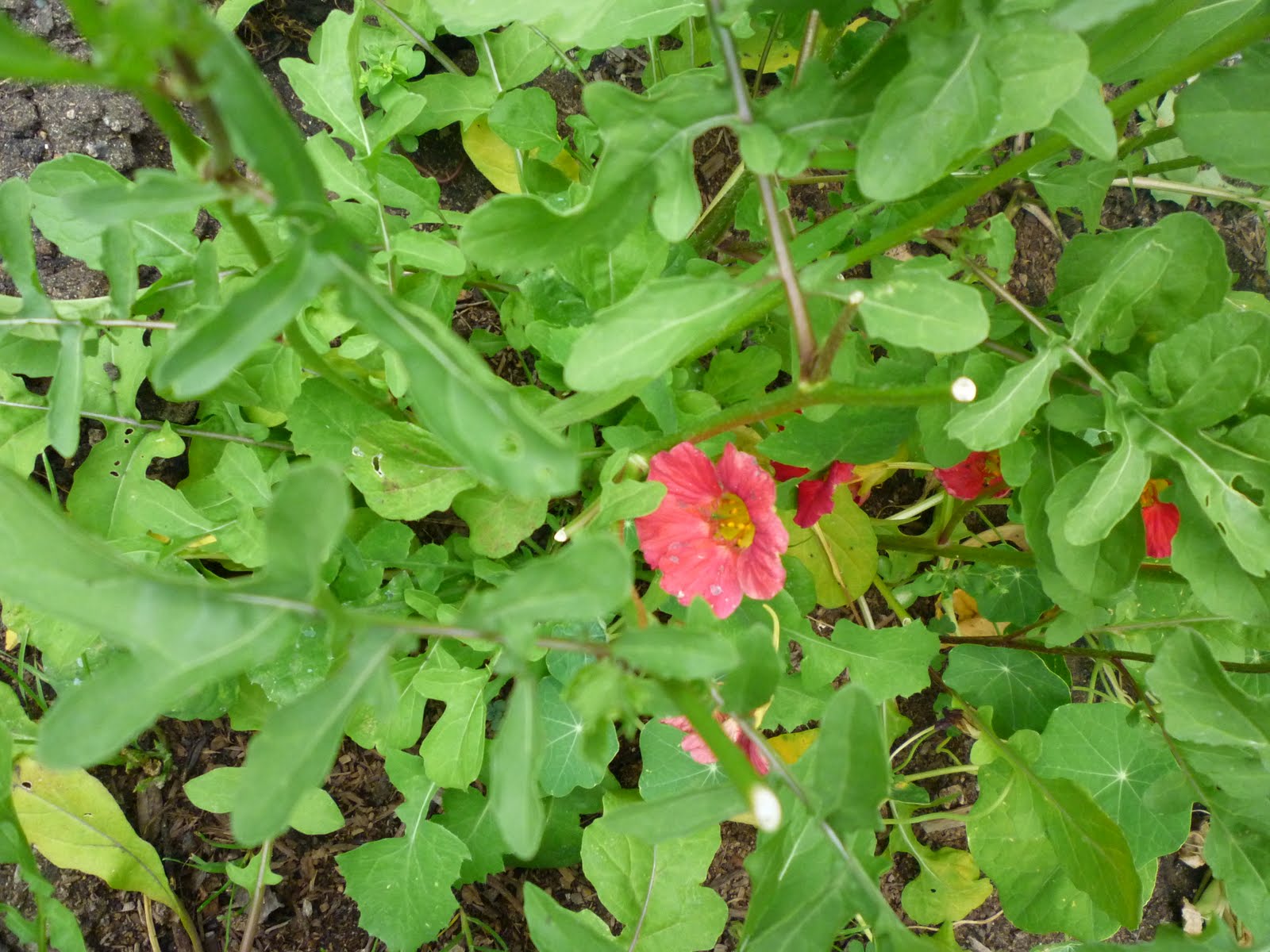
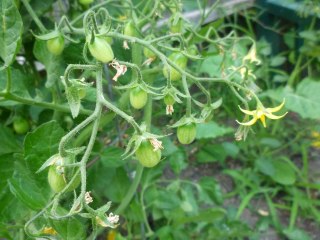
(Unripe grape tomatoes above, nasturtium in arugula below. All pictures taken just this evening.)

While hauling several baskets full to the trash I remembered my own advice to another young friend who was just falling in love with gardening. She asked me whether I thought she should do a little bit of garden work every day, or spend a couple of hours one or two days a week. I told her that the best way is to tend it a little bit every day. There is always a weed to pull, a tomato branch to be tied up, or a dead flower to be clipped off. The plants need water, and food, perhaps even a little shade from time to time.

One year our Baby was raising a pumpkin she hoped would be a huge one she could enter in the local Giant Pumpkin Contest. We were told it was advisable to put the growing pumpkin on a pallet when it was still small so that it could stay dry and be easily moved no matter how large it grew. When I got around to helping my daughter with that part of the project the fruit wasn’t very large yet, but the stem, having lain on the moist ground, had already sent out roots into the soil. This situation was hidden by a canopy of leaves, and when we hoisted the pumpkin on to the pallet, the vine stayed anchored by those roots, and the pumpkin broke off at the stem.

That was a hard lesson. I thought sadly of how a farmer, even a novice homeschooling pumpkin-grower, can’t afford to procrastinate. Any job involving a living thing has to be paced according to that creature’s rate of growth. And agriculture usually involves many living things all in relationship to one another: the plant, the soil, pests with their own life cycle, and probably others I’m not thinking of, not being a very good farmer still.

This morning’s brief mediation on how I really ought to tend more constantly to my garden continued when I later sat down at the computer to read the transcript of an interview with the Orthodox theologian and writer Vigen Guroian in which the topic of conversation turned, as is usually the case with him, to gardening, and he said “…were not God constantly willing His creation, loving His creation into existence, it would disappear.”

From my perspective as a lazy, distracted, and time-constrained gardener, I appreciate the steadfastness of our Lord in continuing His creative work moment-by-moment.  Colossians 1:17 says that he “holds all creation together.” I am one of His creatures, whom so far He has seen fit to give life and breath to every morning, making it possible for me to tend my own mini-garden, which also couldn’t live without His blessing and daily upholding.

Something G.K. Chesterton said on the subject often flits through my mind, when musing on this subject. He said, that in contrast to children, who through excess of vitality want things repeated, “…grown-up people are not strong enough to exult in monotony. But perhaps God is strong enough… It is possible that God says every morning, ‘Do it again,’ to the sun; and every evening, ‘Do it again,’ to the moon. It may not be automatic necessity that makes all daisies alike: it may be that God makes every daisy separately, but has never got tired of making them. It may be that He has the eternal appetite of infancy; for we have sinned and grown old, and our Father is younger than we.

So far, the garden hasn’t seemed monotonous to me. Every day is different there. Of course, The Creator is making the daisies, and I get to discover them, along with the roses and budding fruits and spreading spinach. I do love my garden, and will try to be more constantly willing to keep it going, imitating my Lord.