Monthly Archives: April 2014

Books in privacy and retirement.

books one openIt’s now mid-afternoon and I haven’t said a word to anyone today. It’s the largest chunk of solitude to come my way in a long time, and very welcome. In Mansfield Park, which I am still reading, I really identify with Fanny, who, if she is not talking with her one dear friend and cousin Edmund, likes nothing better than to sit in her own room or walk outdoors where she doesn’t have to take part in conversation.

Her personality and character are in stark contrast to her Aunt Norris, who does whatever she can to enjoy “all the comforts of hurry, bustle, and importance.” And to Mary Crawford, who is fatigued by resting and does not take well to “privacy and retirement.”

The meaning of retirement here is not what most of us nowadays think of, but rather a “withdrawal into privacy or seclusion.” For me, today, it helps that the skies are rainy and I’m enjoying a last chance to wear my cozy flannel shirt as I do what many people in this kind of retirement do: read.

While I and people of my sort may be secluded from people here-and-now, we are very engaged with the author and/or the characters in the book. The National Endowment for the Arts research found that those of us who read are more likely to do volunteer work and to be involved generally in our communities. This kind of rest from one kind of “labor” energizes us for other kinds of work and service.
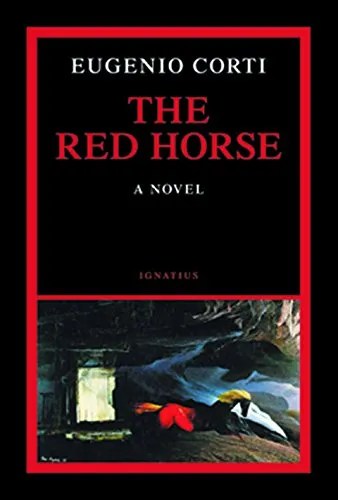
In the interest of reading a greater variety of books than I can heft while lying down in bed, I bought a Kindle. One of the first books I loaded on it is The Red Horse by Eugenio Corti, a giant of a book in every way. At least ten years ago I was deep into it, as one takes a needed vacation or The Cure at a sanatorium, but I had to give it up, mostly because of its size.

If any of my readers have read good books on e-readers, I’m open to suggestions. Many on my To Read list aren’t available on the Kindle, but it seems there are enough to keep me happy for a while. I definitely won’t be giving up altogether on printed books.

Now I must close and get myself another proper retirement accessory: a big mug of tea.

Every tongue and flower.

My first sweet pea opened on Pascha. At church the roses are abundant, and I’m grateful to be in a temperate area of the Northern Hemisphere where we can be extravagant with our flowers.

Here at home our snowball bush is going all-out for Easter. When he was a boy, Mr. Glad and his sister often had their Easter Sunday photo taken in front of a snowball bush; today I brought some of the blooms in to put on the dining table.

snowball etc Apr 21 2014

Of course, if we lacked flowers, we would still have eggs to color, and white/bright clothes to wear with our smiles and beaming faces.

I surprised myself with a desire to color eggs this year, but time ran Paschal_Egg_ Bolton Ontario Canadaout, and I displayed our small collection of pysanky for the holiday. This red egg is not one of them – I found its picture on the Web.

Another tactile and tasty symbol associated with this week is the loaf of bread called the Artos, about which I wrote last year when I was for some reason blessed to carry it in the Bright Monday procession.

Artos Bright Monday 14
Today’s Artos

But this morning what most impressed me was the sounds of worship, because our parish had many guests from two other Orthodox parishes in the area, from the Antiochian and Bulgarian patriarchates. Our Orthodox Church in America made the third. Historical events and migrations of peoples have led to the development, over centuries, of these ethnic distinctions between parishes, and we look forward to the day when the situation can be rectified.

In the meantime, we have the opportunity locally to demonstrate our unity and the glorious historicity of our common liturgy by gathering on this brilliant and shining day to pray, and to sing “Christ is risen!” in more languages than I could identify or count, not just in the Arabic, Bulgarian and English of the clergy, but others including Russian, Spanish, German, and of course Greek. Not only the words, but the tones of the hymns and the styles of chant vary quite a bit, and maybe just because it is more exotic, to my ear the Arab-style chant is especially soul-stirring.

This 10-minute YouTube sampler of many styles of Orthodox Easter hymns includes some in English, some with the lyrics displayed on the screen with the icons, and quite a few are of the sort we might typically sing in our parish, but it doesn’t include anything like what I have heard in the Arab churches near here. This one comes the closest to the deep baritone voice and style of the cantor who has often led us in worship as he did this morning. But for today’s congregation of a majority of American-born converts, I was thankful that he sang most of the hymns assigned to him in English.

Truly the Kingdom of Heaven comes to us in the Divine Liturgy, and at Pascha, as is described in the scriptures:

After this I beheld, and, lo, a great multitude, which no man could number, of all nations, and kindreds, and people, and tongues, stood before the throne, and before the Lamb, clothed with white robes, and palms in their hands; And cried with a loud voice, saying, ‘Salvation to our God which sitteth upon the throne, and unto the Lamb.’

 Christ is risen! Indeed He is risen!

P1090660

Christ forsaken.

Holy Friday, and I am sick. I see what a gift it was to be able to participate in last night’s Matins of Holy Friday service, now that I’ve already missed the first two services of the today and am just focusing on being better for the rest of the weekend.

While I am down it seemed a good thing to meditate on some words of Metropolitan Anthony Bloom from God and Man, in a chapter discussing Christ’s incarnation and death on the cross. I will share what seems a terribly truncated passage in the interest of accomplishing it today and in hopes that it will be just long enough to provoke profitable meditation. But I really wish you all could read this book that I first read last year and thought at the time, “That is the best book I have ever read.” Metropolitan Anthony:

One cannot be, as it were, plugged into life eternal and die. St. Maxim the Confessor underlines the fact that at the moment of his conception, at the moment of his birth, in his humanity Christ had no participation in death, because his humanity was pervaded with the eternal life of his divinity. He could not die. It is not an allegory or a metaphor when in the Orthodox Church on Thursday in Holy Week, we sing “O Life Eternal, how can you die; O Light, how can you be quenched?”

He died on the cross, and the operative words are the most tragic words of history: He, who is the Son of God, because he has accepted total, final, unreserved and unlimited solidarity with men in all their conditions, without participation in evil but accepting all its consequences; He, nailed on the cross, cries out the cry of forlorn humanity, “My God, my God, why hast thou forsaken me?”

…When Christ said “My God, my God, why hast thou forsaken me?” he was crying out, shouting out the words of a humanity that had lost God, and he was participating in that very thing which is the only real tragedy of humanity — all the rest is a consequence. The loss of God is death, is forlornness, is hunger, is separation. All the tragedy of man is in one word, “Godlessness.” And he participates in our godlessness, not in the sense in which we reject God or do not know God, but in a more tragic way, in a way in which one can lose what is the dearest, the holiest, the most precious, the very heart of one’s life and soul.

Crucifixion icon Russ