 For a few days I helped out the family of Soldier and Joy, as grandmas like to do when new babies are around. I mostly played with little Liam. (Scroll down fast if you can’t wait for the Liam-related pics.) We took walks around their neighborhood, in the Sacramento area where the hot summers make for some lush landscapes. In their very own back yard live two or three real orange trees, and guess what? It’s orange blossom time right now.
If you’ve never smelled orange blossoms, I hope you get the chance before you die. The scent they exude must be what Adam and Eve smelled in Eden before death came into the world. Which makes me realize, on second thought, that you won’t have missed anything if you get to heaven without experiencing orange blossoms, because the Reality of the the One who made them in order to give us something of Himself will be there to delight you so much more.
It’s a quiet and peaceful neighborhood I was pushing the stroller through. I met up with two ladies older than I who were right away taken with Liam. I asked them, “What is that scent in the air that is so sweet?” We knew it wasn’t orange blossoms, though mention was made of them.
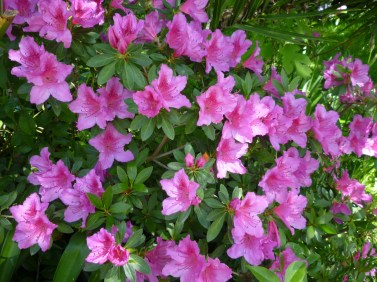
“The photinias are all blooming now,” said one woman, and that rang a bell with me, though farther down the street I came upon one of the photinias that grow as big as trees here, and a whiff of the flowers made me know that their scent wasn’t the only ingredient in the spring mix. Many, many big trees of all sorts are blooming in this town, and it’s like strolling through a bouquet.
The Raphiolepis is no doubt in the mix of scents. I’ve never seen such giant specimens before.
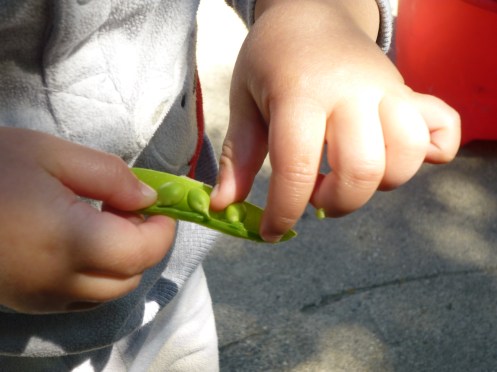
Liam seems amazingly studious of natural artifacts for a child of 21 months. As we walked past the landscaped yards or the occasional weedy strip, I plucked a dandelion more than once, and a red leaf, juniper needles and cones, and a poppy flower to hand to him. We smelled roses.
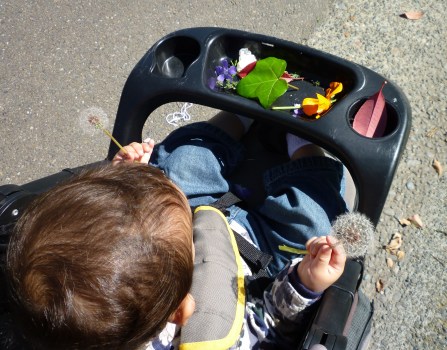
He examined each thing as he rode, and then stashed it in the tray of his stroller. When we arrived home his mother put all of the items on a plate, and that was not the end of it. He kept looking at his treasures and carrying the plate back and forth. We did the same thing the next day, and then my back was hurting.
I had ordered a compilation of Eloise Wilkin stories sight-unseen, and brought it along for Liam. He now doesn’t want to read any other book, I think partly because this one is well-suited for practicing the thumbing of the pages along their edges that children enjoy learning to do, as in a flip book — is there a word for that? It doesn’t work if the pages are too few or too thin, and certainly not with most books aimed at toddlers.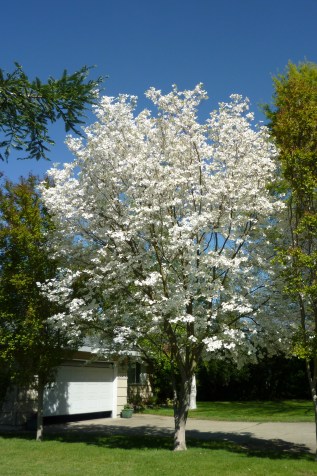
After sitting on my lap and getting acquainted with the book in this cursory way, we found pictures that bore resemblance to things in his world. Of course that is common in books for small children, but I suppose I started a new way of making connections for Liam when, as we were looking at a picture of a bumblebee and I was making the “buzz” sound, I said, “There must be bees around your orange trees right now — let’s go find out,” and we dropped the book right there to go see the real thing.
There were bees, but almost too high to see, and they were at the height of their midday frenzy right then, but L. paid close attention. That afternoon when we were playing with sidewalk chalk and water out on the patio that they shade, he suddenly looked up in the trees as though listening for the bees, and then he ran into the house to fetch the book and came out to stand underneath holding it with both hands very solemnly as he gazed up for a minute.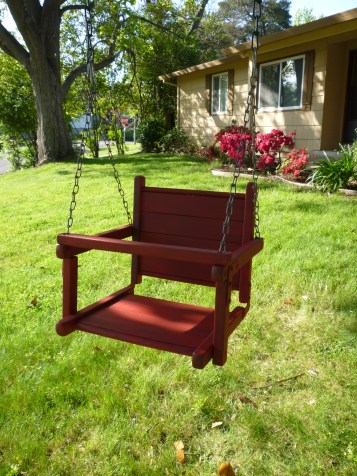
This sort of thing happened with several more connections, such as his riding toy, a bright plastic contraption with lights flashing that didn’t much resemble the humble wooden kiddie car of yesteryear featured in the book. But he saw enough likeness to believe us, and began to want to bring his toy from across the room to sit next to the couch where we were reading.
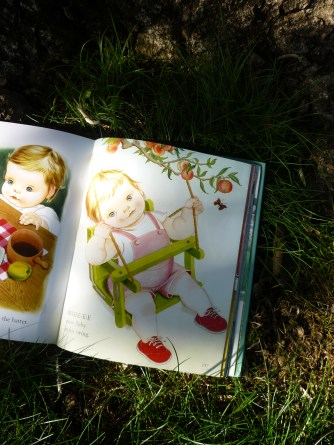
The most fun link was with the tree swing. Wilkin’s illustration in one story shows a swing that is nearly identical to the one in Liam’s magnolia tree, and he must have the book out there on the grass when I pushed him in it. I opened it to the page with the picture he wanted, and set it against the trunk where he could see it while he swung up and back and I recited “How Do You Like to Go Up in a Swing?” which poem, by the way, is also in that book. He laughed and pointed to the picture and I hoped I wouldn’t have to swing him as long as that child was swinging.

Lying in bed my last morning there, I was blessed by the songs of scores of enthusiastic birds, and the smell of orange tree flowers coming through the screen. I had been able to leave it open all night as the season is now so warm and mild. Through the glass door I could watch those orange trees take shape in the dawn.
Now I am home, where it’s mild, but not warm. I wouldn’t mind going back to Flowery Town soon. Next time I do, sometime after Pascha, I’ll give you a little report on Liam’s baby brother, or at least a nickname for the little guy. He’s very dear!
 Gladsome Lights