Diary of a mountain sojourn:
DAY 1: I arrive at the cabin overlooking a lake for my second visit this summer. The last twenty minutes I was driving through a thunderstorm with huge drops splattering the windshield and dark grey-purple clouds all around the lake when it first came into view.
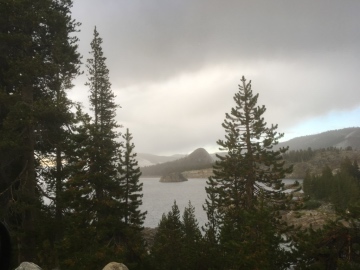
I am alone in the house until at least tomorrow night, and there don’t seem to be many people in the little village, either. It took me slightly less than six hours of driving to get here, if you don’t count the first hour when I got to the next town before realizing that I’d forgotten the keys to the gates and the cabin — so back I drove, and started over. I’m so thankful I remembered so soon; a few years ago we forgot the keys and it was inconvenient to say the least.
The quiet is so complete, it reveals the noise in my body and soul as so much jangling and buzzing and ringing. But it’s a weary and even bored kind of excitement – I hate to think of how so many of us get through day after day on this kind of “energy.”
I expect that as I go to sleep listening to God in the silence of the stars, the noise of my mad journey to get here will begin to evaporate.
DAY 2: Every time I wake and turn over in the night, the silence is there enveloping me as cozily as my sleeping bag. Until 7:00, when a bird call breaks the quiet and brings me to consciousness. Other than the Steller’s Jays, I don’t know most of the mountain birds. I do see a woodpecker occasionally.
This morning, the sky is bright blue and cloudless, but the deck is very wet, and it’s only 44 degrees. In spite of my deep sleep, I am groggy and have a slight headache from the altitude. This is a catch-up day, so I go back to bed and eventually to sleep again.
Not getting much “done” today – I’m trying to enter into that rest, in spite of a brain that can’t hold a thought. There is less oxygen up here for sure! Well, not exactly:
“The percentage of oxygen is the same at sea level as it is at high altitudes, which is roughly 21 percent. However, because air molecules at high altitudes are more dispersed, each breath delivers less oxygen to the body.”
It takes me a long time to shower and dress and to decide about breakfast. I make summer squash with scrambled eggs, and yes, I will have coffee this morning. Suddenly it seems that a big mug of coffee with cream will complete the event in the most comforting way. Will it compensate for the oxygen?
It used to be that coffee was made by my father in a percolator, and my husband always loved that strong brew. Daddy bought a second, extra large version for the rare times that we had a crowd here. But lately someone has added a French press and a grinder to the kitchen equipment, so I use that, only because it’s what I’m used to.
While eating breakfast I text with friends on my phone! Even more than using the French press, it feels a bit sacrilegious to be in contact with the world “down there.” Three or four years ago when it became an option in the cabin, I didn’t use it – but at this stage of my life I don’t crave Alone Time that is absolute, and when you are trying to coordinate meals and supplies with people who are coming later, it’s very helpful. We don’t have phone service, but those with iPhones up here can text with iPhones elsewhere, and then there is email, Facebook, etc.
Not that I know what all the etcetera are. I have no hope of catching up in the tech world; “they” are always changing things and calling it upgrading. I don’t know why Apple Photos have to be so complicated: It’s so so easy to take pictures and have them stored in Moments and Place and in the Cloud. But then I can’t find them when I want to put one in my blog!
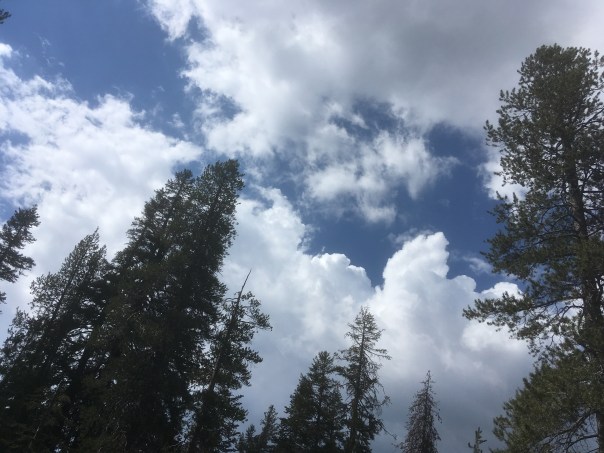
Oh, well, I can finish the post when I get home. And I want to read while I’m here. I brought The Hidden Life of Trees, by Peter Wohlleben, which one or more of my readers recommended, and am reading it on the deck surrounded by a virgin forest. But I haven’t gotten past the introductory chapters when I come to a hint that this forester author is going to be annoying.
Tim Flannery in the foreword explains a little about how trees in a forest communicate by means of fungi in their root systems. Trees send electrical impulses, they exude chemicals toxic to specific insects when one starts chewing on a neighbor… I have heard about these phenomena and want to learn more, which is why I am reading this book. Trees show us God’s glory, and He fills all His creation with His presence, including trees. I want to know and love them more.
In the introduction to the English version, the author uses half of the page space to tell the story of an ecosystem, how wolves that have been reintroduced to Yellowstone Park have “kept the [elk] herds on the move,” so that the elk aren’t defoliating the trees along the streams, the beaver are back, and so on. I understand all this.
But then he tells us that we humans ought to learn from the wolves’ “stewardship of natural processes.” Wait a minute! The wolves are just doing what comes naturally to them, as do the elk, when they “make quite a meal of the aspens, willows, and cottonwoods….” I don’t know why he doesn’t label the elk as poor stewards, because they are equally intentional in their destruction as the wolves are in their destruction. The author also doesn’t mention that the reason the wolves are keeping the elk on the move is to kill and eat them – not to promote the restoration of streams. And a wolf would eat a beaver if it were convenient.
Stewardship is intentional and not instinctive. Wikipedia: Stewardship is an ethic that embodies the responsible planning and management of resources. But why tell this story of wolves, when it has only the remotest connection to how trees communicate with one another? The motivation for doing that might make an interesting tangent to run along, but I know you are glad I won’t. I hope the author will get down to business now and tell us what he really knows about trees, and not fall into too much romantic euphemizing and speculating, but I’m not very hopeful.
The air is cooling as the sun sinks behind the peaks. Dusk comes early in the mountains. It’s 5:30. Tonight, or tomorrow, Pippin’s family will arrive and we’ll spend a few more days together. They invited me for this stay, but I arrived first, glad to get through my lethargic day without the children around for contrast.
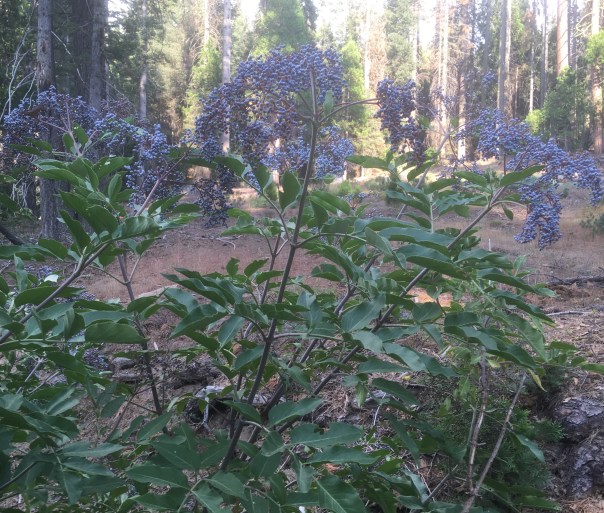
I found a way to get some photos in here, so I will publish this part of my “diary” now – otherwise it would be way too long by the time I get home. But before I go, here are some elderberries I saw on the way up yesterday. And my family just drove up… Good night!
Next day’s entry is HERE.
 Of course, every day is historic. Today grandson Brodie ate with a fork for the first time! And lest I forget, it’s the day of the Total Solar Eclipse 2017. My view was as at right.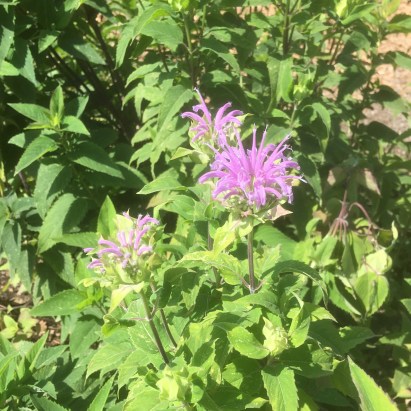


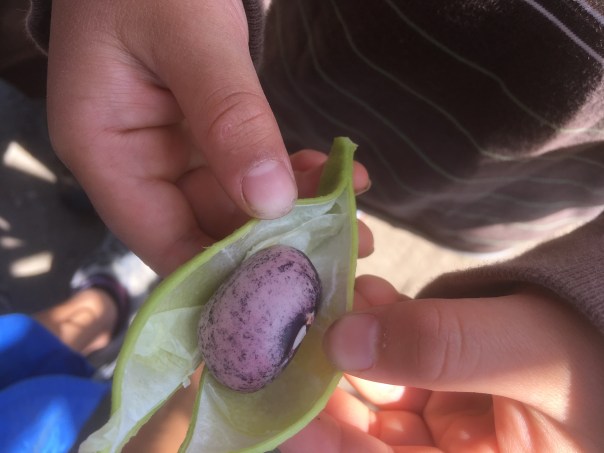
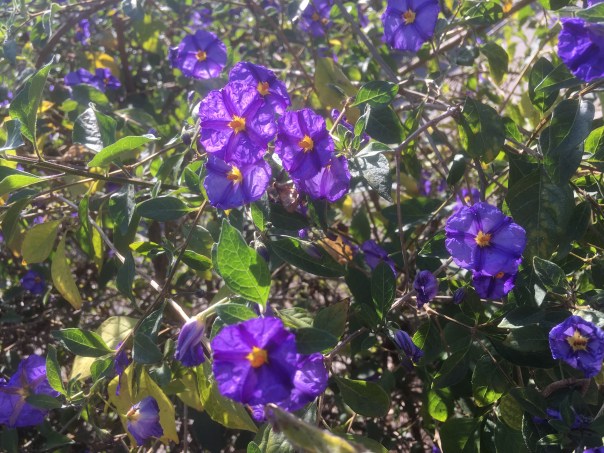
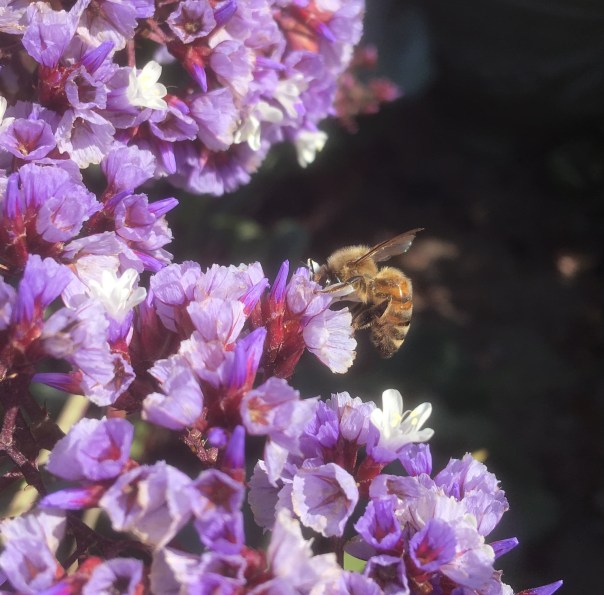

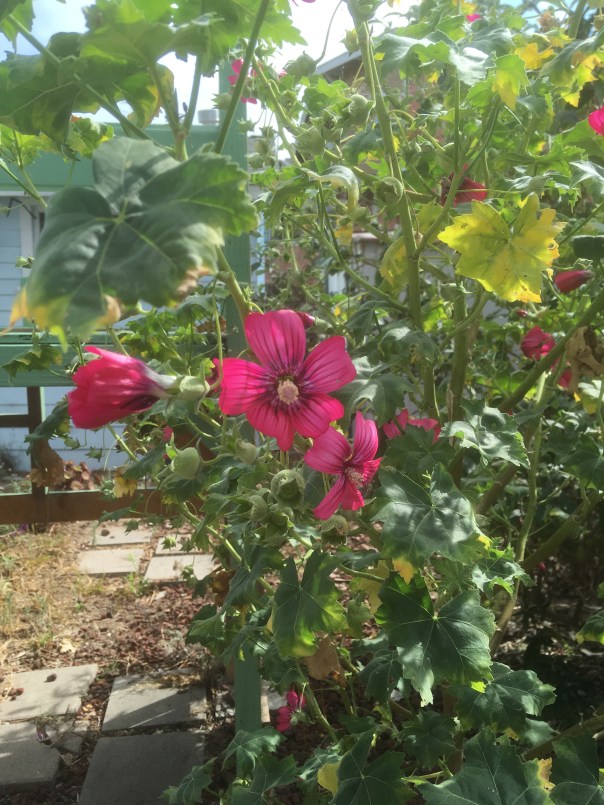


 There is one exciting thing that happened in my garden that is less directly related to the power of sunshine, and that is the hatching of bluebirds in the birdhouse! I had never seen a bluebird before, but I’d bought a bluebird house, and other people who did that got bluebirds where they’d never seen them before, either. So…





 Gladsome Lights