Monthly Archives: January 2020

The endless troubles of everyday life.

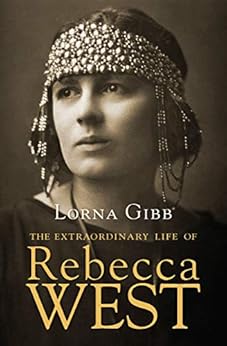
To read the biography of a brilliant writer without having read any of her writings — that seems unwise, perhaps especially in the case of Rebecca West, who appears to have put her best self into her writings. As I told one of my readers, I’m afraid if you read her biography first, you might be put off from reading her.

It may be that Black Lamb and Grey Falcon was the first of her books that I heard about, and I did intend to read it back then. It is generally considered to be her magnum opus. My friend Cathy has read it, and so far she is the only real-life friend with whom I have been able to enjoy the kind of experience that West’s biographer describes below. Our most recent venue was the agape meal at church yesterday. 🙂

For a time I owned a large volume of West’s letters, but they were either depressing or boring for me; I wasn’t familiar enough with the personages of her era, and in letters she was often critical or complaining. The Birds Fall Down I found on my father’s bookshelf; I know it happened to be there because my grandfather had been a member of the Book-of-the-Month Club, which featured it. It was fascinating and gripping, and I knew I must read it again to truly grasp it, but first I would need an in-depth history lesson on the Bolshevik Revolution. None of that has happened yet.

I only know that West experienced some satisfaction and happiness in life because of what I read in the Aubrey Trilogy. It is a story of endless troubles, theirs and their friends’, from sibling bickering to murder, but I don’t mind sharing the drama with the Aubreys, because they manage to create such beauty and familial warmth out of their meager circumstances. Even the most traumatic or heartbreaking events become opportunities for increased love and understanding, and for growing up — but without sentimentality. West wrote the story in her 60’s, when she had surely grown up, too, and grown away from the stridency of her youth.

Besides the stories of home and family relationships, there are all the other aspects of the place and culture in which they live, plus commentary on art, politics and music — pretty much any topic might and does come up in the lively Aubrey household. I plan to share a few quotes here in the days to come.

I noticed just now that Black Lamb and Grey Falcon is on Kindle. Maybe I will read it after all; or Survivors in Mexico, another book that’s been waiting on my shelf…. But here is Gibb:

“For me, as for so many of my peers, West is a shared pleasure, passed on, read, then later discussed in dingy student Soho coffee shops in the eighties, or more recently, over wine at a picnic in a garden. Perhaps the most wonderful thing of all is that, because of the eclectic nature of West’s writing, these exchanges could be on so many topics: literature, espionage, travel, the role of women, all originating from a book or article by a single author.

“West dealt with big topics, many of which still reverberate today, such as the integration of Eastern and Western religious faiths, the contradictions of femininity and power, the causes and effects of wars. Yet, in her considerations, she did not lose sight of the domestic concerns, those personal and intimate stories taking place against the backdrop of social change and unrest. As she once stated in an article for The New Yorker, she did not wish to write history as Gibbon liked to record it, but a history of the endless troubles of everyday life.”

-Lorna Gibb, in the introduction to The Extraordinary Life of Rebecca West

The opposite of not getting in trouble.

My Christmas tree is still standing in my entryway, at the bottom of the stairwell. It’s handy to have an artificial tree so that it never starts looking worn out and dried up. I didn’t get it out of its box and trimmed until very late, and then all the days this month that I was mostly in bed because of my viruses, I couldn’t even see it much. I missed many services of Nativity and Theophany in which I might have been reminded by poetry and theology of the significance of “Immanuel: God with us.”

So bear with me if I continue on the theme of the Incarnation. After all it is, as was pointed out to me not long ago, the second most important point of Christian doctrine, after the Holy Trinity. If we truly live, we live it every day. And it’s worth giving extra attention to at least once a year. 🙂

One of the days I was in bed I started listening to The Fountain Overflows by Rebecca West. I would love to hear if any of  my readers has read this book or others in the Aubrey Trilogy of which it is first. This makes the third time I will have read this novel in the last ten years, and I could count on one hand the novels I’ve read three times in my whole life. I read the other two in the series as well, This Real Night and Cousin Rosamund, and a totally different novel of hers, The Birds Fall Down.

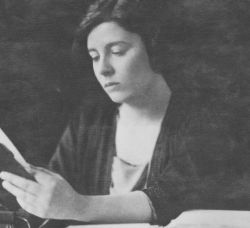
They have all made me ask what sort of woman could create these fascinating characters and dramas, portrayed by means of the most revealing dialogue and natural prose. After I started sitting up in the recliner I began to read The Extraordinary Life of Rebecca West by Lorna Gibb. It appears that there is a lot of autobiographical material in The Fountain Overflows, set in England in the Edwardian period. I don’t know if I will ever be able to write a good review of this book or any of West’s; they seem too vast and rich — and mysterious — for me to grasp, and that makes me wonder, Why am I so taken with her as a writer? and How does she accomplish this enchantment? I have some ideas — maybe they will lead to something!
The only reason I have for saying anything just now is, I ran across this passage about a Christmas Day the Aubrey Family celebrated. It contains one of the thought-provoking pearls of wisdom and understanding that are found liberally scattered throughout, not ever as little sermons, but as insights that come to the narrator Rose, or a phrase spoken by the mother as she’s trying to answer one of her children’s questions.

The father of the family wastes and loses money in various ways, so that they are always on the brink of disaster. In the passage below, the young Rose calls him “unlucky,” but the reader knows that it’s a case of children wanting to think the best of their father. His indiscretions or outright shameful behavior are the reason he and his family are always needing rescuing.

On Christmas Day the mother stays home with the maid to prepare Christmas dinner, and the father walks to church with the four children. The girls, having been musically trained to listen carefully and critically to every piece of music they hear, are often unable to enjoy anything slightly imperfect. The italics are mine:

“In church we were so contented that we did not think of the choir as music and did not approve or disapprove, but gratefully took it that it was giving tongue to what was in our hearts. ‘How bright,’ Mary whispered in my ear, ‘the silver dishes on the altar are.’ We liked the holly round the pulpit, the white chrysanthemums on the altar. Of late Mary and I had doubts about religion, we wished God had worked miracles that would have enabled Mamma to keep Aunt Clara’s furniture and saved Papa from his disappointment over the deal in Manchester, but now faith was restored to us. We saw that it was good of God to send His Son to earth because man had sinned, it was the opposite of keeping out of trouble, which was mean, it was the opposite of what Papa’s relatives were doing in not wanting to see him just because he had been unlucky. We liked the way Richard Quinn stood on the seat of the pew and, though he had been told he must be good and sit as still as a mouse in this holy place, nuzzled against Papa’s shoulder and sometimes put up his face for a kiss, certain that showing love for Papa must be part of being good.”

The picture of the family in church is sweet, but it’s the way the love of God and His willingness to come to our aid are put in a child’s very personal terms that strikes me. They paraphrase a word I really appreciate in regard to His taking on human flesh and frailty, human sin and soul-sickness and chains of death: solidarity. Glory to God in the highest!

Owls bring the night in.

In the late fall I was sitting here at my desktop after dark when I heard an owl in my back yard. I knew it was an owl because he sounded just like the ones in the movies. I don’t think I had encountered one in person ever.

But I didn’t know what species he might be. I spent a good hour listening to various owls on Cornell University’s site All About Birds, and the owl cooperated by demonstrating his distinctive call many times. He came another night not long afterward. For a while that first night I thought perhaps he was a Barred Owl, but eventually I knew for sure that he was a Great Horned Owl.

In my research I found advice about how to build a platform for this owl to nest on, how high up to attach it, and that it should go up in November so that the owls might find it when they go looking for good nesting sites in February. I did wish that I could start on one more project like that, but it was obviously not the right thing for me this year.

Probably everyone has more familiarity with owls than I do, but if you’d like to hear the calls of five owls this is a helpful Audubon page that limits itself to just that many: Identify Five Owls

You can guess how honored I felt that such a creature had visited me, even if he couldn’t be seen. His voice seemed full of romance, and let me in on the secret drama of the night. Of the five owls on the linked page, his call is surely the most pleasing, low and soft. So many owls are screechy.

Richard Wilbur wrote a poem about an owl’s voice. His own voice is more pleasant to me than that of the Barred Owl that he writes about; maybe that’s why someone came up with the explanation for a child, and why I like his poem so much. You can listen to him reading it: here.

A BARRED OWL

The warping night air having brought the boom
Of an owl’s voice into her darkened room,
We tell the wakened child that all she heard
Was an odd question from a forest bird,
Asking of us, if rightly listened to,
“Who cooks for you?” and then “Who cooks for you?”

Words, which can make our terrors bravely clear,
Can also thus domesticate a fear,
And send a small child back to sleep at night
Not listening for the sound of stealthy flight
Or dreaming of some small thing in a claw
Borne up to some dark branch and eaten raw.

-Richard Wilbur,  from Mayflies: New Poems and Translations. © 2000