Monthly Archives: November 2024

Divine Flower, Divine Wisdom.

Sophia, by Thomas Merton

AND IT WAS HERE — IT WAS AUTUMN

And it was here — it was autumn —
When I told Her: “Divine Flower,
I feel Your touch! But why have you hidden Yourself
From my sight since I was a boy?”

At the very moment these thoughts moved through my mind —
Instantly, golden azure filled the room,
And she shone before me once again —
But just Her face — Her face.

At that instant lasting bliss was born in me!
Once more my soul went blind to mundane matters.
If I gave a sober hearing to Her, I know not what I heard;
Her words were incomprehensible, talk fit for a fool.

-Vladimir Solovyov (or Soloviev) (1853 – 1900) Russia
      Translated by Ivan M. Granger
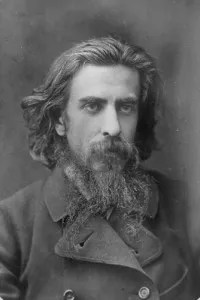
Vladimir Solovyov

Vladimir Solovyov loved Sophia, that is, Divine Wisdom. He philosophized about her throughout his life; I think this is probably a poem to that Sophia.

Solovyov  was an influential person in the late 19th century and into the 20th, and is thought to be a source for some of his friend Fyodor Dostoevsky’s characters, Ivan and/or Alyosha, in The Brothers Karamozov; he gave a eulogy at Dostoevsky’s funeral. His ideas definitely were stimulating to Tolstoy, and to many other thinkers, and he continues to be controversial in the 21st century. This article: “Holy Wisdom,” explains why his ideas about Sophia have generally not been accepted by the Orthodox Church.

Wikipedia quotes David Bentley Hart, another controversial philosopher, from his forward to Solovyov’s Justification of the Good,

“In truth, the divine Sophia is first and foremost a biblical figure, and ‘Sophiology’ was born of an honest attempt to interpret intelligibly the role ascribed to her in the Wisdom literature of the Old Testament, in such a way as to complement the Logos Christology of the Fourth Gospel, while still not neglecting the ‘autonomy’ of creation within its very dependency upon the Logos.”

The Orthodox icon of Holy Wisdom often shows a “fiery angel” seated on a throne, with the Theotokos and St. Cosmas on either side, as in the example below. There is so much to ponder about Wisdom in the Bible. Even one of these verses I chose might provide for plenty of profitable contemplation:

Do not forsake wisdom, and she will keep you;
love her, and she will guard you.
Wisdom is the principal thing; therefore get wisdom:
and with all thy getting get understanding.
Proverbs 4:6-7

But the wisdom that is from above is first pure, then peaceable, gentle,
and easy to be intreated, full of mercy and good fruits,
without partiality, and without hypocrisy.
James 3:17

But if any of you lacks wisdom, let him ask of God,
who gives to all generously and without reproach,
and it will be given to him.

James 1:5
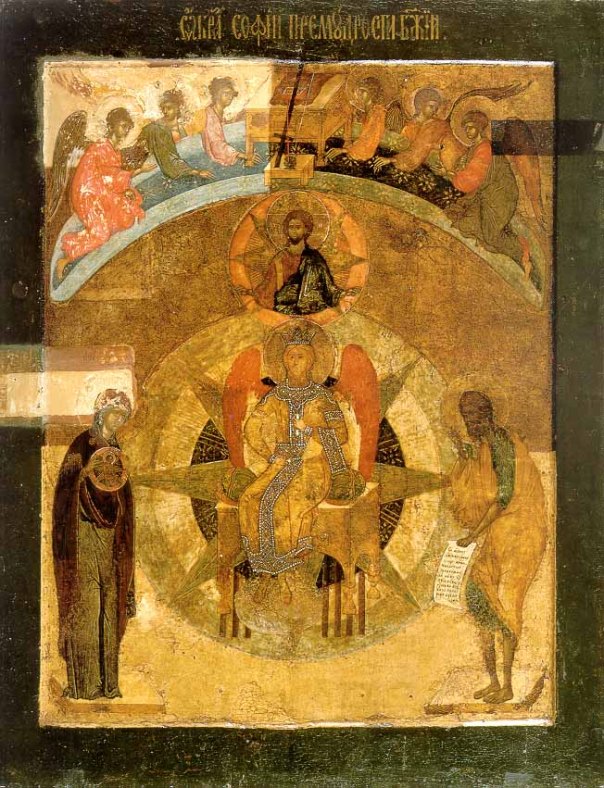
Icon “Holy Wisdom,” 15th Century, Moscow

LOVE WISDOM, and GET WISDOM.

The first light and the first song.

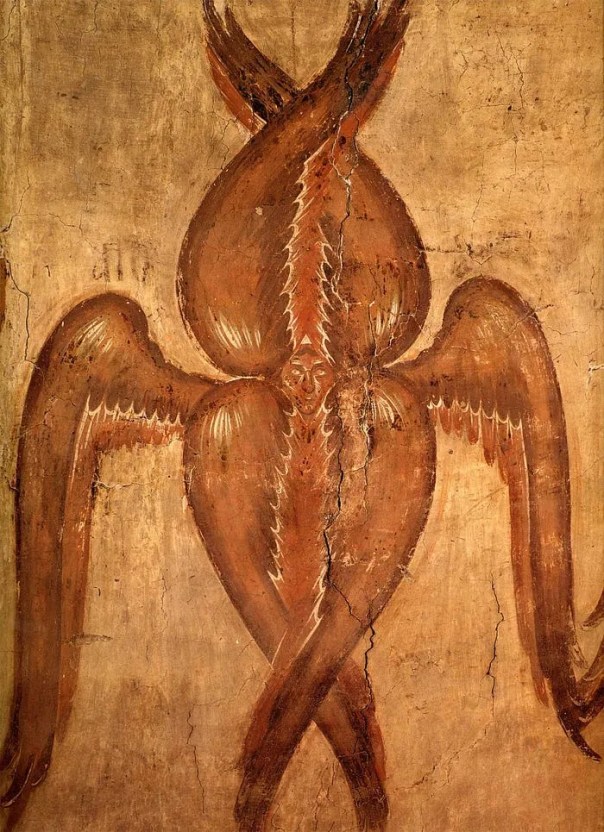
Seraph – Fresco by Theophanes the Greek, 14th century

From the Akathist to Jesus Conqueror of Death, composed by St. Nikolai Velimirovich on Pascha 1923 — Kontakion Nine, “The Choir of Seraphim”:

“We are the first light of Thy light and the first song of Thy voice; all the angels’ tongues together cannot express the glory and light of the seraphim, just as we seraphim cannot express Thy glory and radiance, Thou only begotten One, Beloved of the Father and the Holy Spirit. Among seraphim Thou art Seraph, among cherubim Thou art Cherub, among angels Thou art Angel, among men Thou art Man. Thou art all in all; and since Thou art all in all, Thou art servant of all and Lord of all; therefore, we who rule countless worlds below us serve in humility amid the unburning flame of the Divinity of the Trinity, carrying Thy love downward to Thy creature and the love of the creatures upward to Thee, singing the triumphant hymn: Alleluia.”

Last year for the Feast of Archangel Michael and the Other Bodiless Powers, I shared the songs that St. Nikolai gives to the Angels and Archangels. But I’m not sure I’ve posted a link to this article before: “The Divinely-Revealed Appearance of Angels in Icons.” It is so full of the mystery and glory of angels, as they reveal God’s great love toward us, that my heart was near to bursting from considering a small part of it.

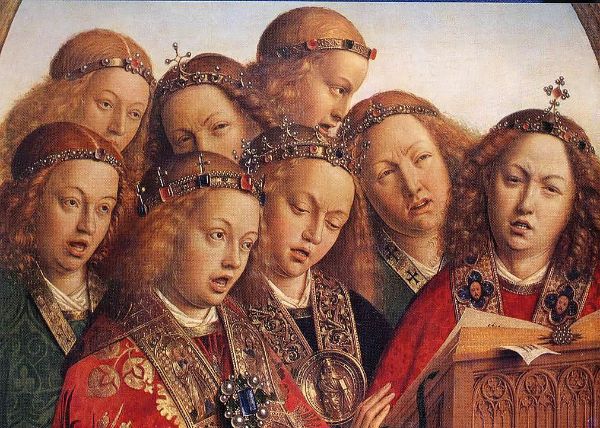
This is a good day to join with cherubim, seraphim,
and all the ranks of angels as they sing
praises to the Holy Trinity.

Jan Van Eyck, The Ghent Altarpiece

He drops by a silken thread.

More than one reviewer of Richard Wilbur’s late collection of poems noticed that after his wife died, the poet wrote more about death, as in this example below. That would be a natural response, of course, for someone 90 years old, even if he hadn’t been recently widowed.

I know it’s recommended that people of all ages live with awareness of the shortness of our lives, as in Psalm 90: “Teach us to number our days, that we may gain a heart of wisdom.” Or as another translation goes, “Teach us to realize the brevity of life….”

If our dearest friends and family have departed, it could exacerbate any feeling of weariness we already had with this earthly existence. In the same Psalm the poet mentions the less-than-thrilling aspects of life: “The days of our years are threescore years and ten; and if by reason of strength they be fourscore years, yet is their strength labour and sorrow; for it is soon cut off, and we fly away.”

A MEASURING WORM

This yellow striped green
Caterpillar, climbing up
The steep window screen,

Constantly (for lack
Of a full set of legs) keeps
Humping up his back.

It’s as if he sent
By a sort of semaphore
Dark omegas meant

To warn of Last Things.
Although he doesn’t know it,
He will soon have wings,

And I, too, don’t know
Toward what undreamt condition
Inch by inch I go.

~ Richard Wilbur

Richard Wilbur was a lot smarter than an inchworm, so I like to think he had this verse from I Corinthians in mind when he wrote those last lines: “But as it is written, Eye hath not seen, nor ear heard, neither have entered into the heart of man, the things which God hath prepared for them that love him.”

Because the Preparer is Love, our Last Things, though unimaginable, will be the best.


I first shared this poem of Wilbur’s ten years ago, before he had passed over, into what we might think of as the pupa stage; today I read this about the inchworm:

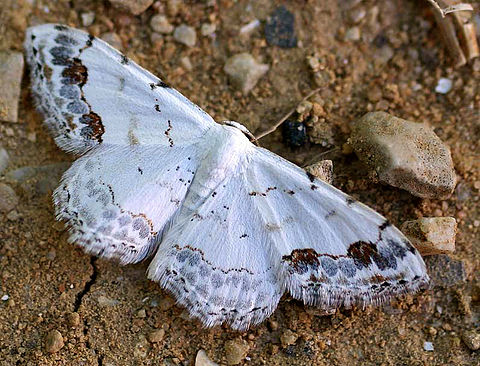
“After the larva hatches, he feeds on leaves for about a month before he drops to the ground via a silken thread. In late spring or early summer, the larva burrows up to 4 inches into the ground, spins his cocoon and pupates. If he’s a fall worm, he’ll emerge in the fall, usually between November and early December. If he’s a spring worm, he’ll wait until the next late winter to emerge.”

At the time of Wilbur’s death I posted one article written about him for the occasion, but just now I found another tribute in USA Today, in which the journalist remarks on the unusual quality of happiness in this poet, and quotes Wilbur:

“I think many people associate happiness with shallowness,” Wilbur told the AP. “What people don’t want is someone who is complacent. And I know that I am not a complacent man.”

Richard Wilbur was the farthest from complacent that I can imagine. He spent his life being attentive to the world around him and pursuing love and beauty. I hope that in his present state he knows even more what C.S. Lewis meant when he said:

“Joy is the serious business of Heaven.”

Geometer inchworm moth – Scopula Decorata or Middle Lace Borer

Knowing the ground holy.

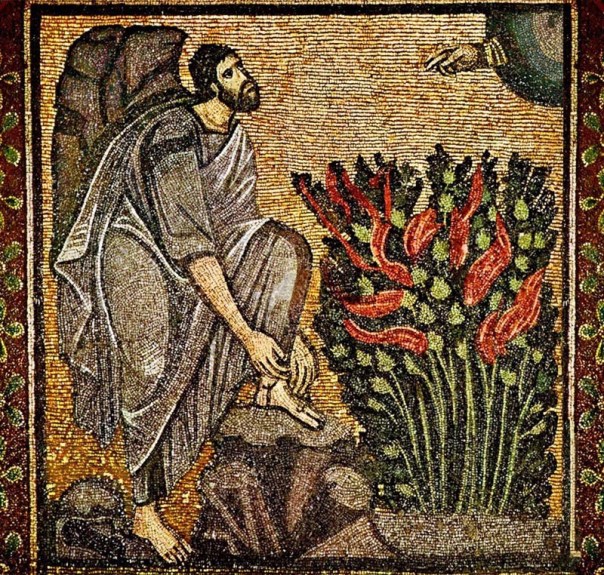
THE BUSH

I know that bush,
Moses; there are many of them
in Wales in the autumn, braziers
where the imagination
warms itself.  I have put off
pride and, knowing the ground
holy, lingered to wonder
how it is that I do not burn
and yet am consumed.

And in this country
of failure, the rain
falling out of a black
cloud in gold pieces there
are none to gather,
I have thought often
of the fountain of my people
that played beautifully here
once in the sun’s light
like a tree undressing.

-R. S. Thomas

Mosaic of Moses and the Burning Bush, St. Catherine’s Monastery, Sinai