Orthodox Christian, widowed in 2015; mother, grandmother. Love to read, garden, cook, write letters and a hundred other home-making activities.
View all posts by GretchenJoanna →
In the U.K. they are coming to the end of Insect Week, sponsored by the Royal Entomological Society. (But in this post I am showing only my own photos of California insects.) I heard about Insect Week from Blogger Katie, whose butterfly embroideries I have admired for a while at ArtyMissK. Her photography is fantastic, too; by it she reveals here the glory of a “simple” black Dor beetle, and many other examples. Have a look at these “Little Things That Run the World”:
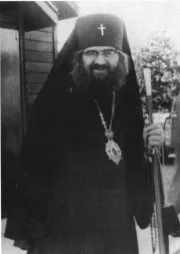
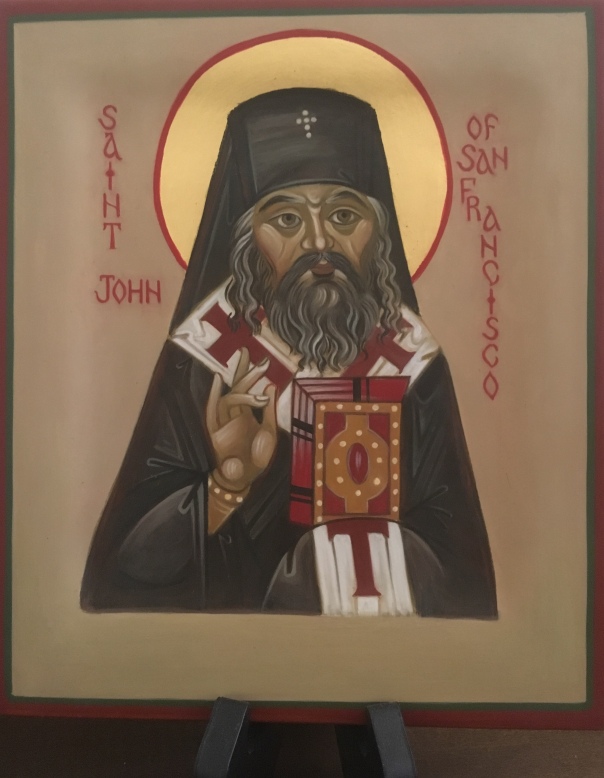
It is the 30th anniversary of the canonization of St. John (Maximovitch), Archbishop of Shanghai and San Francisco. At Holy Virgin Cathedral, “Joy of All Who Sorrow,” the celebration of the feast will spread over three days this week, and members of my parish expect to travel there to participate.
You can read the life of St. John and why he is called “The Wonderworker” – here.
On this joyous occasion I want to share this exhortation from the saint:
Though a man may be found in a weak state, that does not at all mean that he has been abandoned by God. On the cross, the Lord Jesus Christ was in trouble, as the world sees things. But when the sinful world considered Him to be completely destroyed, in fact He was victorious over death and hades. The Lord did not promise us positions as victors as a reward for righteousness, but told us, “In the world you will have tribulation – but be of good cheer, for I have overcome the world”.
This year in my parish the birthday of St. John the Baptist, June 24th, falls on Holy Spirit Day, and our youth are also heading off to church camp, so I wasn’t paying close enough attention. Ideally I’d have shared about it last night, on St. John’s Eve, because this year that is the day that has captured my imagination.
Father Malcolm Guite has written more than one sonnet for the celebration of St. John’s Day, the birth of St. John the Baptist. Here is one of them, prefaced by his notes on the feast:
“Now, with the summer solstice, we have come to midsummer and the traditional Church festival for this beautiful, long-lit solstice season is the Feast of St. John the Baptist, which falls on June 24th, which was midsummer day in the old Roman Calendar. Luke tells us that John the Baptist was born about 6 months before Jesus, so this feast falls half way through the year, 6 months before Christmas!
“The tradition of keeping St. John’s Eve with the lighting of Bonfires and Beacons is very ancient, almost certainly pre-Christian, but in my view it is very fitting that it has become part of a Christian festivity. Christ keeps and fulfills all that was best in the old pagan forshadowings of his coming and this Midsummer festival of light is no exception. John was sent as a witness to the light that was coming into the world, and John wanted to point to that light, not stand in its way, hence his beautiful saying ‘He must increase and I must diminish’, a good watchword for all of those who are, as the prayer book calls us, the ‘ministers and stewards of his mysteries’.”
Midsummer Eve Bonfire – Nikolai Astrup
ST. JOHN’S EVE
Midsummer night, and bonfires on the hill Burn for the man who makes way for the Light: ‘He must increase and I diminish still, Until his sun illuminates my night.’ So John the Baptist pioneers our path, Unfolds the essence of the life of prayer, Unlatches the last doorway into faith, And makes one inner space an everywhere. Least of the new and greatest of the old, Orpheus on the threshold with his lyre, He sets himself aside, and cries “Behold The One who stands amongst you comes with fire!” So keep his fires burning through this night, Beacons and gateways for the child of light.
I just now figured out from this Wikipedia entry the source of the word bonfire:
“In England, the earliest reference to this custom occurs in the 13th century AD, in the Liber Memorandum of the parish church at Barnwell in the Nene Valley, which stated that parish youth would gather on the day to light fires, sing songs and play games. A Christian monk of Lilleshall Abbey, in the same century, wrote:
“‘In the worship of St John, men waken at even, and maken three manner of fires: one is clean bones and no wood, and is called a bonfire; another is of clean wood and no bones, and is called a wakefire, for men sitteth and wake by it; the third is made of bones and wood, and is called St John’s Fire.'”
The summer solstice always marks in my mind the beginning of summer, so I’m out of sync with the ancients who called it Midsummer…. even though the other end of the year does seem like Midwinter. Where I am, the heat is just now escalating, and definitely not at its peak, and for that reason I think my personal date for Midsummer would be sometime in July or August. When I get that certain feeling, I’ll let you know what date I choose.
Jules Breton – Midsummer Night Dance in Courrires
Only recently did I learn about St. John’s Eve celebrations at all. [Update: see the video link from Lisa in the comments below, for much more history of the day.] Some online Christian friends in England and Ireland gathered around bonfires last night — while I in California was still at church celebrating Pentecost. I doubt I will ever be able to join such festivities over there… maybe I should try to rouse interest in planning a West Coast Midsummer Fest for 2025. Does that sound fun to you? And do you feel that where you are, it is truly Midsummer — or Midwinter?
The Sun — Giuseppe Pellizza da Volpedo
(If you enjoy the sonnets from Malcolm Guite, remember that most of them have been published in his several collections. The one here can be found in Sounding the Seasons, his cycle of seventy sonnets for the Church Year.)
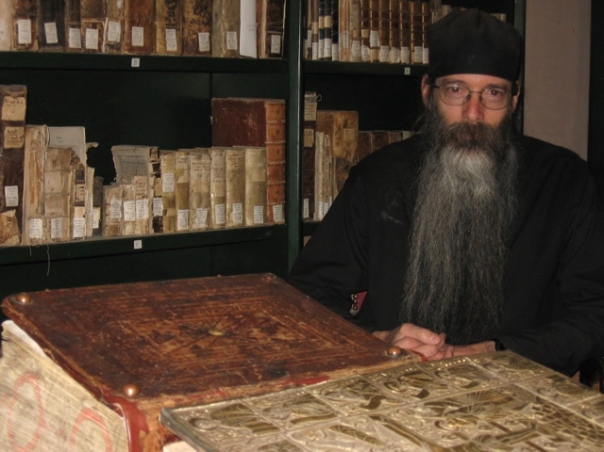
When the Getty Museum in Los Angeles hosted the exhibition “Holy Image, Hallowed Ground: Icons From Sinai” in 2006-07, the courier and caretaker of the artifacts on display was Father Justin Sinaites.
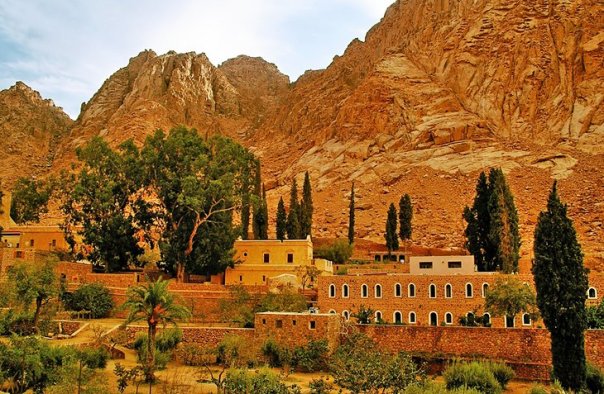
He is the librarian at Saint Catherine’s Monastery on Mount Sinai, where the extremely dry climate has kept ancient manuscripts from deteriorating the way they might in many places in the world. This monk librarian came from Texas to the Egyptian monastery many years ago; at least once before I mentioned him on my blog after my late husband and I heard him speak in Berkeley, California.
As I write, the sun has set on this Sunday of Pentecost, a celebration full of joy and light. So we are now, according to Church Time, in the day after, on which the Orthodox Church celebrates Holy Spirit Day; Father Justin has written a blog post about how they keep the feast at St. Catherine’s: “Liturgy at the Peak of Mount Sinai”:
“Every year, we celebrate the Divine Liturgy at the peak of Mount Sinai on the day after Pentecost, the Monday of the Holy Spirit. This year, we were joined by pilgrims from Greece and Russia. We made the ascent in the night, and began the Liturgy at 4:00 AM.”
“I didn’t go from El Paso, Texas, to Sinai, in one big step. There were lots of little steps. But even in El Paso, I read the account of Moses and the Exodus in the Bible. I saw Cecil B. DeMille’s “The Ten Commandments,” which contains scenes filmed at the traditional Sinai, with Charlton Heston climbing up the mountain, and walking along a ridge with the Sinai range in the background. Also, El Paso is a desert. I used to wander in the desert for hours and came to love the stark beauty of the desert landscape. All of this was in the background when I began to read about the history and the theology of the Orthodox Church.”
If you are interested in the manuscript collection itself, you may want to look at: This Reuters article, which explains that the abbot of the monstery feels an urgency about completing the project of digitizing all 4500 manuscripts in the library, many of which are in the Syriac and Arabic languages, and very rare.
But today, all I want to do is visit Fr. Justin’s blog, and through his photographs get another glimpse of the daily life and worship at Saint Catherine’s, Sinai.


 This year in my parish the birthday of St. John the Baptist, June 24th, falls on Holy Spirit Day, and our youth are also heading off to church camp, so I wasn’t paying close enough attention. Ideally I’d have shared about it last night, on St. John’s Eve, because this year that is the day that has captured my imagination.


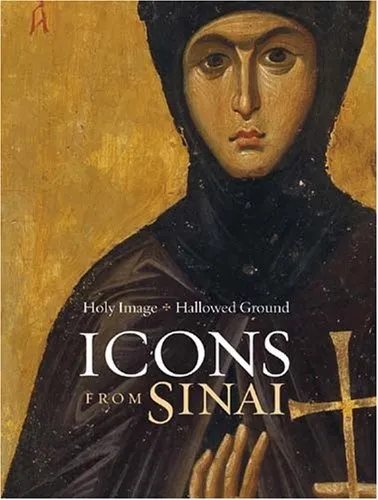 When the Getty Museum in Los Angeles hosted the exhibition “Holy Image, Hallowed Ground: Icons From Sinai” in 2006-07, the courier and caretaker of the artifacts on display was Father Justin Sinaites.