Category Archives: Advent

Red for the Word made flesh.

When the doorbell rang one evening after dark, dark coming so early this season, Susan and I were both on our guard, because we are two vulnerable women and we weren’t expecting anyone.

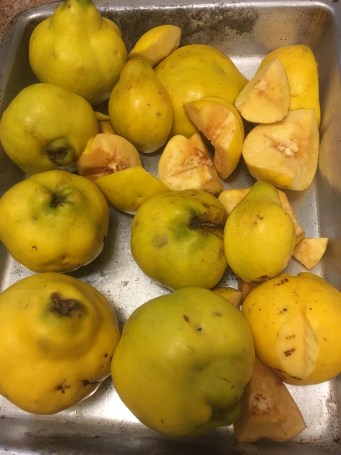
I have a peephole in my door, and I peeped, and saw that it was a human shape and not a package on the step, but I had to turn on the porch light to see if it was someone I recognized. It was Linda! Linda is  my friend who took me to the Heirloom Festival recently. She has been gifting me with garden things for four decades, and she’d mentioned last month that her neighbor — they live fifteen miles from here! — had some quinces she would try to bring me. Here she stood at my door with a dozen in the bottom of a shopping bag. I kissed her.

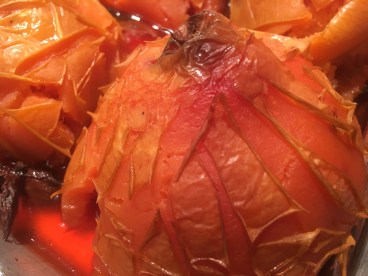
She’d heard about the puny and rock-hard fruits I’d gathered and tried to use, but this will be my last mention of that batch, because these were perfect. For a couple of days I let the good quinces perfume the kitchen, and then I faced the challenge of making use of them for food, when I didn’t have time to peel them. I took time instead to find a recipe for oven-poaching whole quinces with star anise, lemon, honey and cinnamon. As they baked, the whole house filled with an even complex and delicious aroma.

It is worth cooking quinces just to see how the fruit changes to this beautiful orange-pink color. I found it festive in Christmasy way, partly because I had that morning heard a talk that our rector gave the children after Liturgy, about the sequence and meaning of the layers of vestments that he puts on for the services, and he started out telling what the different colors symbolize.

Liturgical churches do not all use the same colors for various seasons or feasts on the calendar, and there are numerous options and meanings. But during Advent in our tradition, the vestments and altar cloths are red, as we are anticipating the birth of the Savior born to a human mother, who gave him human flesh and blood. Red for blood. To remind us of that tenet of our Christology.

In the beginning was the Word, and the Word was with God, and the Word was God.  He was with God in the beginning.  Through him all things were made; without him nothing was made that has been made.  In him was life, and that life was the light of all mankind. The light shines in the darkness, and the darkness has not overcome it.

The Word became flesh and made his dwelling among us. We have seen his glory, the glory of the one and only Son, who came from the Father, full of grace and truth.

-The Gospel of John

His mirror, sister, Bride.

Malcolm Guite has given us a rich treasury in the poetry anthology he assembled, Waiting on the Word: A Poem a Day for Advent, Christmas, and Epiphany. For each poem he writes what he calls a “reflective essay,” and they are wonderfully enlightening for someone like me whose education in poetry is minimal.

I was browsing the paperback last night just before falling asleep, and when I read this poem by Christina Rossetti I got the idea to post it here on its eponymous day — but I lost that thought altogether with consciousness. Guite has put it on his blog on the proper day, where you can hear him read it if you like. But to read his thoughts you’ll have to get the book itself.

For the Orthodox, what we call the Nativity Fast does not begin on a certain day of the week approximately four weeks before the Feast of the Nativity of Christ, but always on November 15, making it 40 days long. It’s consistent, but wouldn’t make a tidy title for a poem!

ADVENT SUNDAY

BEHOLD, the Bridegroom cometh: go ye out
With lighted lamps and garlands round about
To meet Him in a rapture with a shout.

It may be at the midnight, black as pitch,
Earth shall cast up her poor, cast up her rich.

It may be at the crowing of the cock
Earth shall upheave her depth, uproot her rock.

For lo, the Bridegroom fetcheth home the Bride:
His Hands are Hands she knows, she knows His Side.

Like pure Rebekah at the appointed place,
Veiled, she unveils her face to meet His Face.

Like great Queen Esther in her triumphing,
She triumphs in the Presence of her King.

His Eyes are as a Dove’s, and she’s Dove-eyed;
He knows His lovely mirror, sister, Bride.

He speaks with Dove-voice of exceeding love,
And she with love-voice of an answering Dove.

Behold, the Bridegroom cometh: go we out
With lamps ablaze and garlands round about
To meet Him in a rapture with a shout.

-Christina Rossetti

A story, and thoughts for Advent.

The greatest pleasure and thrill of Christmas can’t be had without a little waiting, something like children of yore had to do, when their Christmas trees weren’t even ready for viewing until Christmas Day.

Seven years ago Pom Pom hosted a Childlike Christmas (blog) Party, a party to which we were invited to show up via our blogs four times during December. This year she hopes we will join her every day during December, but this time it’s a more general theme: Advent Blogging. Maybe it is the child in me that is once again saying, in spite of the much greater challenge, “Sure! No problem!” I am updating this post from back then as I join in seven-years-later, partly because I wanted to retain a quote from Pom Pom’s 2011 party announcement:

“Yesterday I asked my students, ‘Why the big greed festival over the holidays? Aren’t we fine right now? Don’t we have enough?’ …Here at Pom Pom’s Ponderings, we are going to think about the simple pleasures of the holidays, the childlike wonder that doesn’t involve the ka-ching ka-ching of the cash register….four holiday Wednesdays of posts that attend to the simple childlike thrills of Christmas. ….that babe in a manger and the children He loves and cherishes.”

The babe in the manger is, of course, the One whose Advent we are anticipating, but I feel the topical field to be pretty wide open. I will be writing about whatever I am doing and thinking during this season, knowing that He is the life and breath of me and everything.

The modern world likes to jump into Christmas immediately after Halloween or Thanksgiving, but the more traditional way to celebrate involves some Anticipation and Preparation. Children might think of it as Waiting and Getting Ready. Some of us have been in Advent, which we call the Nativity Fast, since November 15th.

I’m not experienced in helping children to forgo the treats that are pressed upon them in every shop and neighbor’s house at this time of year, but even before I found the Church and its traditions I tried to keep the family thinking ahead to a special Holy Day, and not just because of the presents.

We need some weeks to sing “O Come, O Come, Emmanuel!” and for it to register in our minds that God’s people had to wait many generations and thousands of years for the coming of the Savior. A little bit of suffering in the form of doing without the usual quantity of food, or rich foods (in the Orthodox Church we eat less, and almost vegan, when fasting) can make it more real for us that the world before Christ was suffering under the curse of sin. We feel our own weakness, too, when eating less, and that can soften our hearts.

Why the photo of Holy Trinity Cathedral above? My church and sister churches sponsor Advent retreats every year, usually a day or half a day when we can hear a lecture and attend services together to help us focus on the coming feast in a fruitful way. One year I attended one at Holy Trinity and took the picture.

A children’s book that might contribute to a child’s understanding of time, and the processes that are necessary preliminaries to accomplishing a goal, in particular a few points on the timeline of our salvation history, is The Tale of Three Trees, “a traditional folktale retold by Angela Elwell Hunt with illustrations by Tim Jonke.”

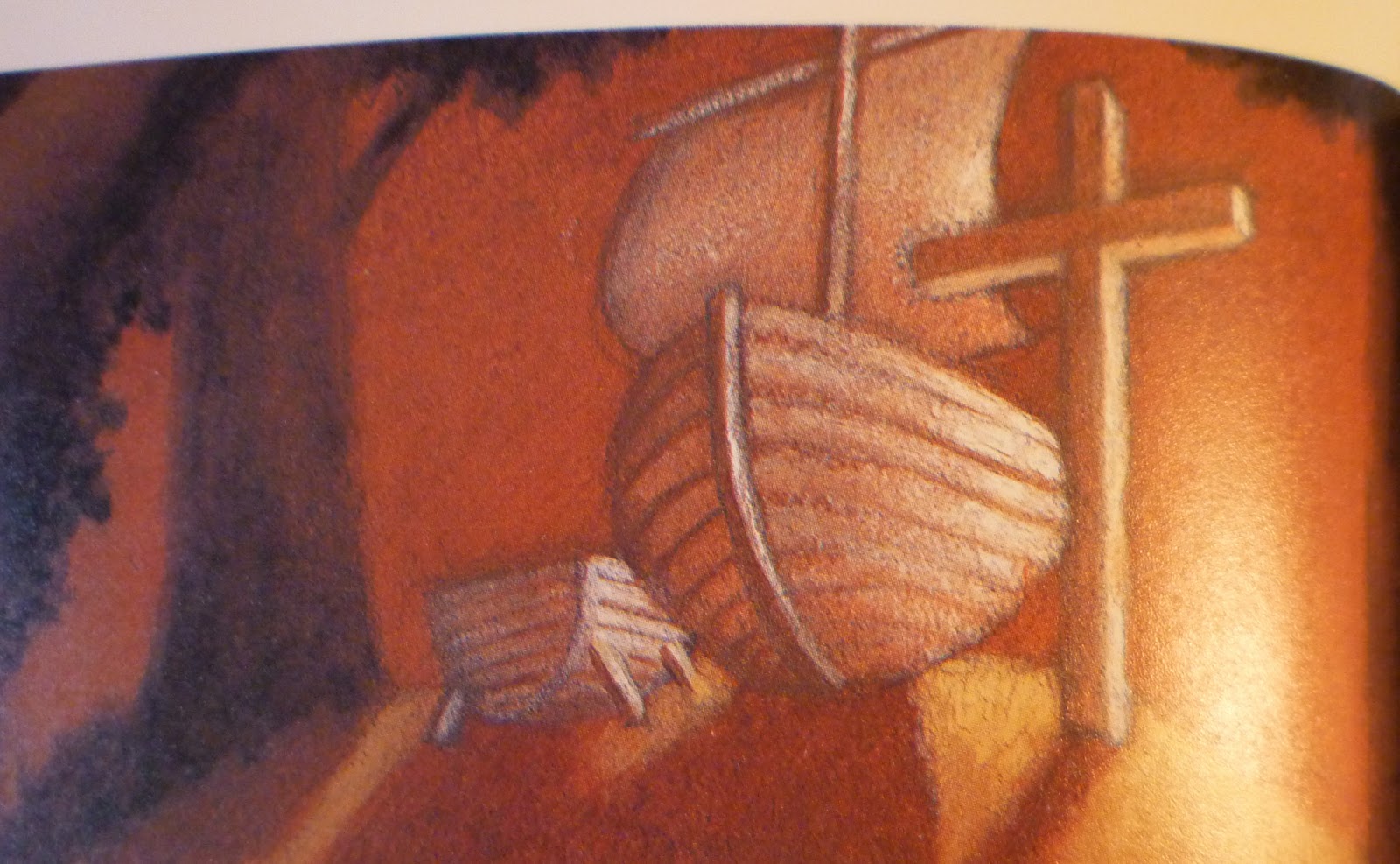
Three small trees stand on a hilltop and dream about what they might do when they are grown. One wants to be a treasure chest, one a sailing ship that carries kings, and one just wants to stay where it is and point to God.

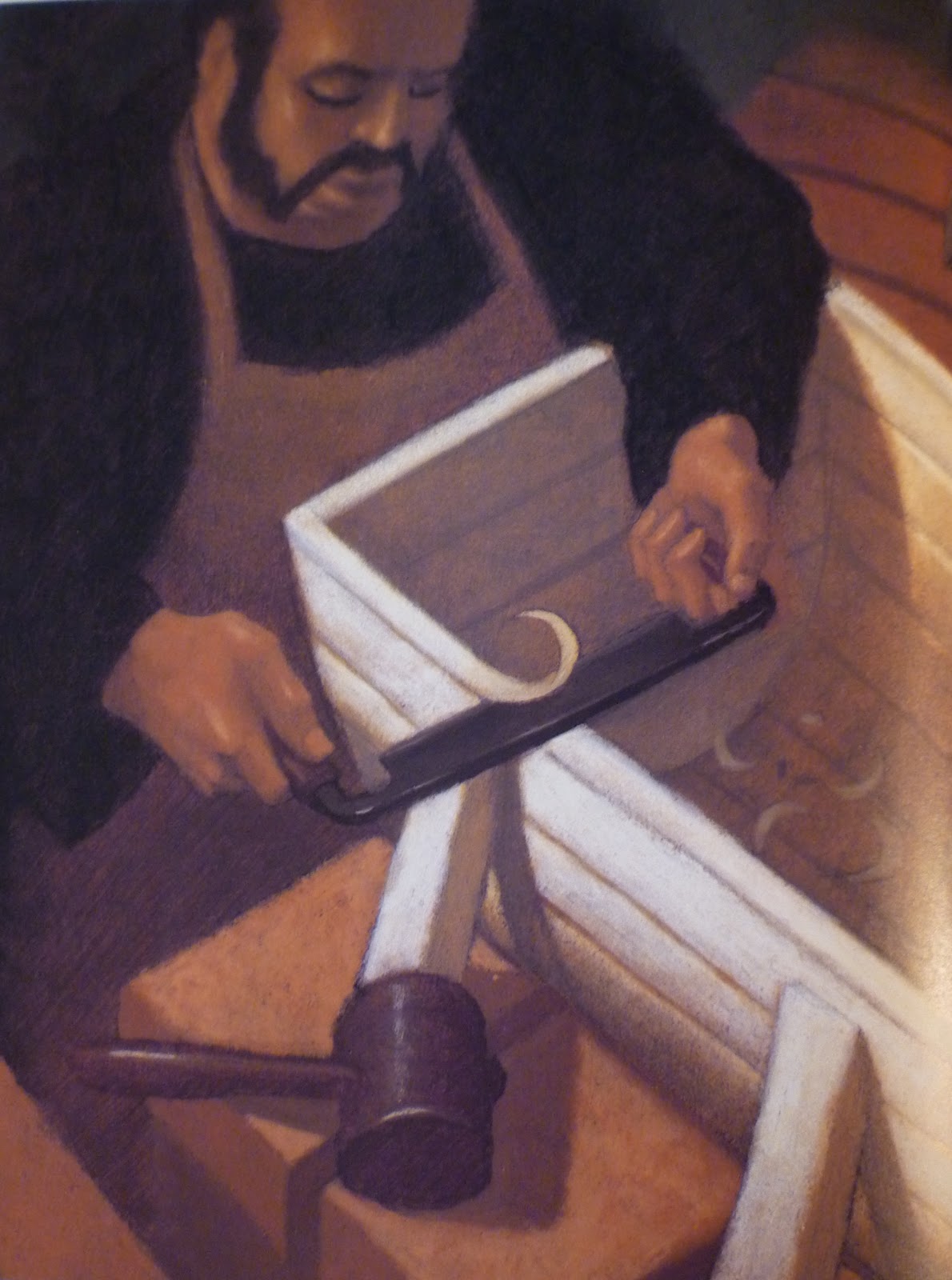
It takes many years for them to get big enough to be cut for lumber and fashioned into items that play a part in the earthly life of our Lord. The first tree is made into a manger — and this first creation of wood that the Christ Child came in contact with establishes the story as one for Christmas.

All the trees feel initial disappointment and humiliation, none more so than the one that is made into a rude cross and used for violent purposes: “She felt ugly and harsh and cruel.” But in the end all of the trees realize the blessedness of being used for the glory of God, and the young reader is reminded of the reason a Baby was born at Bethlehem.

Even our Lord Jesus went through a period of preparation, growing up as a man for 30 years before He began His ministry, but He surely wasn’t idle during that time. As we wait for Christmas we can prepare our hearts by prayer and fasting and acts of love.

Those of us with families are blessed to have many possibilities under what might be the Acts of Love category. (They might even include some noise of cash registers, but I won’t say any more about that at this party.) I know I typically have things like cookie-baking, doll-clothes-sewing, decorating and menu-planning and making up beds on my list.
The truth is, I’m not very good at being child-like before Christmas. I feel so many responsibilities that children don’t have to concern themselves with, and I get pretty busy with all the fun type of preparations, not to mention all of the usual work that doesn’t stop.

Somehow, though, all of that, when combined with participation in the church traditions and services, adds up to make me feel some of the longing and the weakness that are appropriate right now.

It’s hard to juggle everything, including trips to the post office or the extra shopping and chores, with the quietness we long for. Maybe that tale of the trees has a meaning even for me as a grownup, about being used for His purposes, and finding comfort and courage in that, even when things are crazy with hammers and saws, blood and humiliation.

One thing more about children: Their feeling about Christmas, as I have heard, but can’t quite remember, is that it takes forever to get here! For me, it comes on like a bullet train. Will I even be able to notice each day before it is gone, long enough to post something? In any case, as Metropolitan Anthony says,

“…if the time ahead has a meaning that is necessary for us, it is inevitably coming towards us at a sure and regular pace, sometimes more quickly than we could run to meet it.”

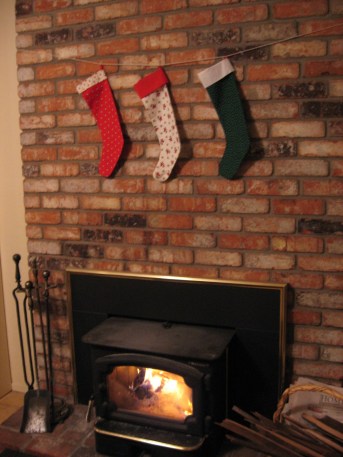
Sometimes more quickly? I just got a funny picture in my head of the children running out ahead to meet Christmas, and us adults dragging them back by their sleeves with one hand, while we try to write the last batch of Christmas cards (or today’s blog post) with the other. Here’s an idea: Let’s all stop, and sit by the fire to read another Christmas story!
Rambling from roots to rest.

On the tail of my recent mention of trees and their strength, I was impressed by the tree roots in this collection of photos in The Guardian, “Root Force.” My wandering mind led me from there down this bloggy path to make the kind of word-thing that is too long because I didn’t have time to make it shorter.

Italian cypresses and giant oaks, pine trees with thick trunks arching over lawns — the neighborhood in which I’ve been walking the last few days is a good one for a tree-lover, but it’s fairly new (not 50 years old yet) and manicured, not the kind of place where one is likely to see trees who have managed to exert their wills in the way of this example from the article.

FullSizeRender

This photo is compelling, and led me to search and find online many more cases of invasive tree roots, and I also know one firsthand. At my husband’s childhood home a steel post had been stuck in the earth to stake a young tree that, presumably while everyone was watching (whether out of the corners of their eyes, or faster than they could blink their eyes, I can’t say), grew up and around to swallow its supporting rod. But not completely; the top of the stake appeared to grow ungracefully out of the huge trunk.

Does it seem off topic, my telling you about  the tree trunk, not the root? We must remember that all the parts are connected.

What occurs to me is that to live on a piece of land, to have a house or gate or sidewalk which you essentially give over to a living plant, is to show a deference to nature or at least a willingness to co-exist even in the likelihood that you, the human, will be the one to relinquish something. Or does it show that everyone was too busy or lazy to care? Many times I have let smaller plants in my garden have their way, but I somewhat regret that I haven’t had enough trees in my life, or lived ages in one place, for this to happen with great woody specimens.

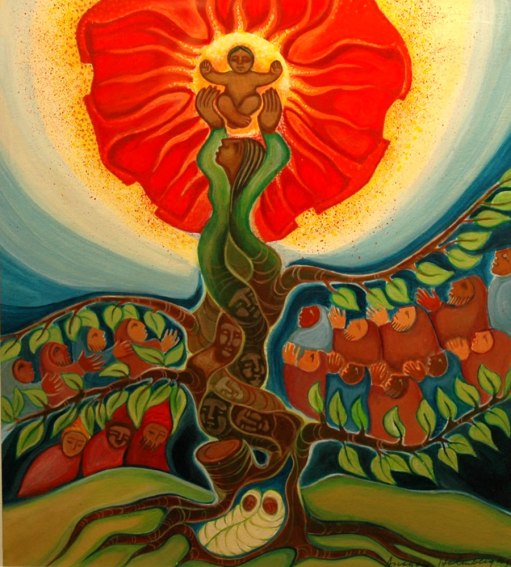
All the roots and trees passing by my eyes and through my mind this week bring me around to the Incarnation, the birth of Christ which we are celebrating. That’s because the most persistent and enduring life system, if you will, is the Root of Jesse, and the Branch that sprouted, mentioned in Isaiah 11. Iconographers have painted this flowing of our salvation history, and it is the inspiration for many other types of illustrations, like this dramatic interpretation by Ansgar Holmberg:

  Jesse tree rj- ansgar

Some excerpts from the passage in Isaiah:

A shoot will come up from the stump of Jesse; from his roots a Branch will bear fruit.

The wolf will live with the lamb, the leopard will lie down with the goat, the calf and the lion and the yearling together; and a little child will lead them.

They shall not hurt nor destroy in all my holy mountain: for the earth shall be full of the knowledge of the Lord, as the waters cover the sea.

And in that day there shall be a root of Jesse, which shall stand for an ensign of the people; to it shall the Gentiles seek: and his rest shall be glorious.

I am pleased to have arrived at a Christmastime theme, a history and reality that leads many of my friends to put up a Jesse Tree decoration during Advent. Christ is somehow the Root and the Branch and the whole Tree of Life. It’s just one of the ways that the metaphor of trees and roots and branches is used in the Bible to reveal God’s plans and ways to us. No wonder I love trees: I admire them for their strength and grace, but I am myself alive with the same sap that is the Source of all root and tree life.

My own preference for letting trees take over is a romantic and privileged one; I don’t live where hardwood forests perennially compete with farmers for every plot of soil, or where such things as Weed Trees can be talked about knowingly. We were told via Adam and Eve to have dominion over nature, which at the least means conserving it and managing it. A gate that can’t function as a gate because some roots have essentially ruined it is not a sign of good husbandry after all, though it makes a pretty picture. Other clashes that come to mind involve roots doing bad things to pipes; the play of humankind with  trees is not always artistic, because the design elements are always in flux.

Time is a factor you don’t want to ignore in this sort of interplay. So many people disregard it, not imagining what a nursery sapling might become in 20 years, roots and branches reaching out and down and to the sky. Living in the  moment doesn’t excuse us from the responsibility to plan for the future, taking into account the nature of living things to change and grow.

Even God plans, and caused His good will to be planted especially in the family of Jesse, the father of King David, from whose tribe our Savior blossomed forth. He had a very long-range perspective and intention, and we haven’t seen the end of it.

The imagery in The Guardian, and the language that connotes for me destruction and relinquishment, seem to contrast with the words of Isaiah quoted above. Nature will be at peace in the day of which the prophet speaks, and a great order will prevail because of the knowledge of the Lord. It will be a large space where all of God’s creation can function as intended, with plenty of room for partnership and concord between mankind and the rest of creation. What struck me most was that last line above: “His rest shall be glorious.”

I’ve been wanting to post again a link to the carol Jesus Christ the Apple Tree, in which we are appropriately encouraged in Christ to “sit and rest awhile.” I think it’s what I’ve been longing to say — and for that we don’t have to wait until Christmas.