Category Archives: books

Space is the womb of life.

G.K. Chesterton said he believed that…the most practical and important thing about a man is still his view of the universe.” (I can’t find the source for that quote; does anyone know it?)

[update: The quote is from Heretics, and in larger context it goes,

“There are some people, nevertheless — and I am one of them — who think that the most practical and important thing about a man is still his view of the universe. … We think that for a general about to fight an enemy, it is important to know the enemy’s numbers, but still more important to know the enemy’s philosophy. We think the question is not whether the theory of the cosmos affects matters, but whether in the long run, anything else affects them.”]

He would have liked this article I read in Touchstone magazine, “Lost in Space.” In it Michael Baruzzini compares the viewpoints of Carl Sagan and C.S. Lewis’s Space Trilogy character Elwin Ransom, and relates what modern astronomers have discovered about just how empty it is out there.

Ransom’s thoughts are quoted in the article, and they are appealing in their expression of what seems to me the nurturing and provision of the Creator:

 “…the very name ‘Space’ seemed a blasphemous libel for this empyrean ocean of radiance in which they swam. He could not call it ‘dead’; he felt life pouring into him from it every moment. How indeed should it be otherwise, since out of this ocean the worlds and all their life had come? He had thought it was barren: he saw now that it was the womb of worlds, whose blazing and innumerable offspring looked down nightly even upon the earth with so many eyes….”

Baruzzini: “Where Lewis had Ransom find a life-giving environment, Sagan found affirmation of man’s essential loneliness. While Sagan’s picture of space focused on the vast distances and vacuity of the heavens, Lewis’s character, eschewing the nihilism of modern sentiment, focused on the connections between the planets and space.

“Who was right? Is space really just a vast, empty void, as Sagan imagined? Or is the earth not rolling through emptiness, but floating in a cosmic sea of light and radiance, as Lewis envisioned?

“It turns out that Lewis was largely right.”

space240-small-magellanic-cloud_66026_600x450

“Without the astrophysical processes that power the stars, the very matter that makes up our bodies would not be here. Science writer Simon Singh points out that this means we are made of nuclear waste; Carl Sagan for once got it right, and poetically so, when he stated that this means we are made of star-dust. In either case, Lewis’s instinct is confirmed: Space is the womb of life; it creates the very matter from which life and its home on earth is made.”

Read the whole article here.

Linking up to Weekends With Chesterton.

Books in privacy and retirement.

books one openIt’s now mid-afternoon and I haven’t said a word to anyone today. It’s the largest chunk of solitude to come my way in a long time, and very welcome. In Mansfield Park, which I am still reading, I really identify with Fanny, who, if she is not talking with her one dear friend and cousin Edmund, likes nothing better than to sit in her own room or walk outdoors where she doesn’t have to take part in conversation.
Her personality and character are in stark contrast to her Aunt Norris, who does whatever she can to enjoy “all the comforts of hurry, bustle, and importance.” And to Mary Crawford, who is fatigued by resting and does not take well to “privacy and retirement.”

The meaning of retirement here is not what most of us nowadays think of, but rather a “withdrawal into privacy or seclusion.” For me, today, it helps that the skies are rainy and I’m enjoying a last chance to wear my cozy flannel shirt as I do what many people in this kind of retirement do: read.

While I and people of my sort may be secluded from people here-and-now, we are very engaged with the author and/or the characters in the book. The National Endowment for the Arts research found that those of us who read are more likely to do volunteer work and to be involved generally in our communities. This kind of rest from one kind of “labor” energizes us for other kinds of work and service.

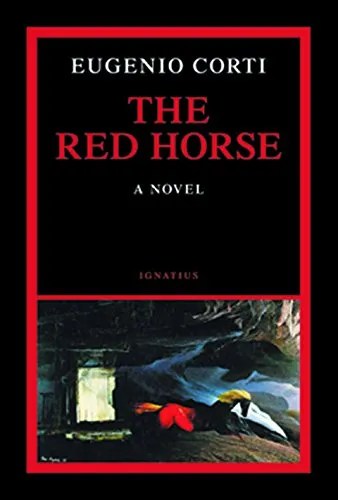
In the interest of reading a greater variety of books than I can heft while lying down in bed, I bought a Kindle. One of the first books I loaded on it is The Red Horse by Eugenio Corti, a giant of a book in every way. At least ten years ago I was deep into it, as one takes a needed vacation or The Cure at a sanatorium, but I had to give it up, mostly because of its size.
If any of my readers have read good books on e-readers, I’m open to suggestions. Many on my To Read list aren’t available on the Kindle, but it seems there are enough to keep me happy for a while. I definitely won’t be giving up altogether on printed books.

Now I must close and get myself another proper retirement accessory: a big mug of tea.

Tales from Flowery Town

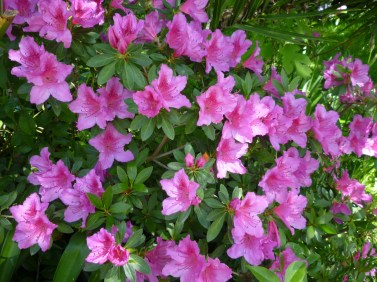
FT azaleasFor a few days I helped out the family of Soldier and Joy, as grandmas like to do when new babies are around. I mostly played with little Liam. (Scroll down fast if you can’t wait for the Liam-related pics.) We took walks around their neighborhood, in the Sacramento area where the hot summers make for some lush landscapes. In their very own back yard live two or three real orange trees, and guess what? It’s orange blossom time right now.FT orange blossoms

If you’ve never smelled orange blossoms, I hope you get the chance before you die. The scent they exude must be what Adam and Eve smelled in Eden before death came into the world. Which makes me realize, on second thought, that you won’t have missed anything if you get to heaven without experiencing orange blossoms, because the Reality of the the One who made them in order to give us something of Himself will be there to delight you so much more.

It’s a quiet and peaceful neighborhood I was pushing the stroller through. I met up with two ladies older than I who were right away taken with Liam. I asked them, “What is that scent in the air that is so sweet?” We knew it wasn’t orange blossoms, though mention was made of them.

FT photinia 4-14
Photinia flower

“The photinias are all blooming now,” said one woman, and that rang a bell with me, though farther down the street I came upon one of the photinias that grow as big as trees here, and a whiff of the flowers made me know that their scent wasn’t the only ingredient in the spring mix. Many, many big trees of all sorts are blooming in this town, and it’s like strolling through a bouquet.

FT raphiolepis & mailbox 4-14
Pink Raphiolepis

The Raphiolepis is no doubt in the mix of scents. I’ve never seen such giant specimens before.

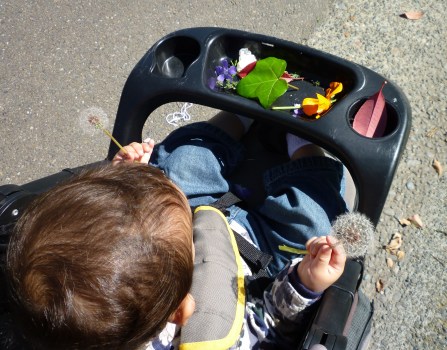
Liam seems amazingly studious of natural artifacts for a child of 21 months. As we walked past the landscaped yards or the occasional weedy strip, I plucked a dandelion more than once, and a red leaf, juniper needles and cones, and a poppy flower to hand to him. We smelled roses.

FT P1090307

He examined each thing as he rode, and then stashed it in the tray of his stroller. When we arrived home his mother put all of the items on a plate, and that was not the end of it. He kept looking at his treasures and carrying the plate back and forth. We did the same thing the next day, and then my back was hurting.

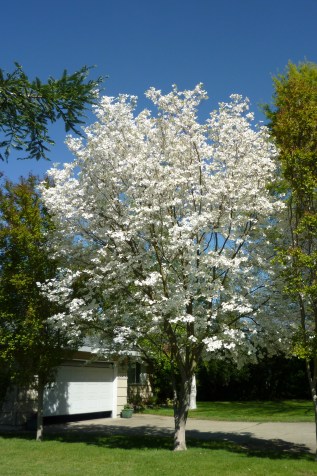
I had ordered a compilation of Eloise Wilkin stories sight-unseen, and brought it along for Liam. He now doesn’t want to read any other book, I think partly because this one is well-suited for practicing the thumbing of the pages along their edges that children enjoy learning to do, as in a flip book — is there a word for that? It doesn’t work if the pages are too few or too thin, and certainly not with most books aimed at toddlers.FT white tree

After sitting on my lap and getting acquainted with the book in this cursory way, we found pictures that bore resemblance to things in his world. Of course that is common in books for small children, but I suppose I started a new way of making connections for Liam when, as we were looking at a picture of a bumblebee and I was making the “buzz” sound, I said, “There must be bees around your orange trees right now — let’s go find out,” and we dropped the book right there to go see the real thing.

There were bees, but almost too high to see, and they were at the height of their midday frenzy right then, but L. paid close attention. That afternoon when we were playing with sidewalk chalk and water out on the patio that they shade, he suddenly looked up in the trees as though listening for the bees, and then he ran into the house to fetch the book and came out to stand underneath holding it with both hands very solemnly as he gazed up for a minute.FT P1090413

This sort of thing happened with several more connections, such as his riding toy, a bright plastic contraption with lights flashing that didn’t much resemble the humble wooden kiddie car of yesteryear featured in the book. But he saw enough likeness to believe us, and began to want to bring his toy from across the room to sit next to the couch where we were reading.


P1090409


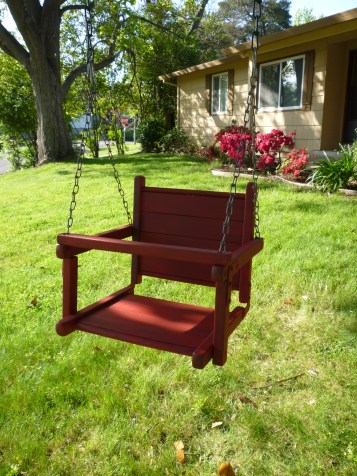
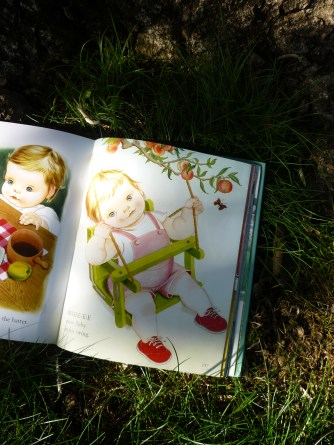
The most fun link was with the tree swing. Wilkin’s illustration in one story shows a swing that is nearly identical to the one in Liam’s magnolia tree, and he must have the book out there on the grass when I pushed him in it. I opened it to the page with the picture he wanted, and set it against the trunk where he could see it while he swung up and back and I recited “How Do You Like to Go Up in a Swing?” which poem, by the way, is also in that book. He laughed and pointed to the picture and I hoped I wouldn’t have to swing him as long as that child was swinging.


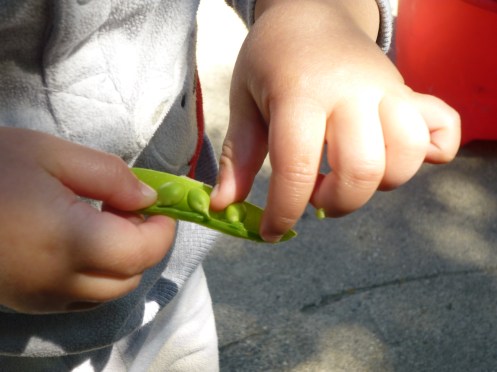
FT peas

FT orange tree

Lying in bed my last morning there, I was blessed by the songs of scores of enthusiastic birds, and the smell of orange tree flowers coming through the screen. I had been able to leave it open all night as the season is now so warm and mild. Through the glass door I could watch those orange trees take shape in the dawn.

Now I am home, where it’s mild, but not warm. I wouldn’t mind going back to Flowery Town soon. Next time I do, sometime after Pascha, I’ll give you a little report on Liam’s baby brother, or at least a nickname for the little guy. He’s very dear!

Whether eager or not – books.

There is a great deal of difference between
an eager man who wants to read a book,
and a tired man who wants a book to read.

— G.K. Chesterton in Charles Dickens

I can’t relate to the tired man mentioned in this quote, because if I am ever too tired to be eager about it, I don’t enjoy reading at all. Short of totally drained, my style of “deep reading,” which requires a pencil or red pen for underlining and note-taking even for novels, is what I most like to do when fatigue sets in. In the years when I was worn completely down by evening, having provided the education, meals and home base for a passel of children and a husband, the most calming thing was to get in bed with a book of theology.

But the comparison Chesterton makes leads me to think about uses of books. It sounds as though the Tired Man is using a book, whereas the Eager Man wants to engage with and receive from the author of a specific book.

All the same, when I am an Eager Woman I seem to need several choices, not always being in the mood for meeting up with any and every interesting author. My family have been very good to me of late, providing many of these options.

My sister-in-law gave me Feather Crowns by Bobbie Ann Mason, not a book I’d have picked up otherwise; I’d never heard of the author. The prose was lovely, and transported me to Kentucky in 1900, to the house of a woman truly great with child. When she gives birth to quintuplets her home and family become the center of a community effort on the part of the women to help her with the babies, at which point I could smell the cornbread and hear the household sounds and the birds outside her window.

The closeness of the community and the friendliness and openness of the country people that are initially so appealing in this story soon set off alarms in my mother’s heart, when complete strangers hop off the train and come right in without knocking, to pick up the babies without asking. This very domestic story became a thriller for me as I turned the pages wanting to find out how fame was going to affect the babies, the marriage, the community — and most of all, the mother. I can enjoy engaging with a writer of fiction if she does a good job, and Mason qualifies.

Poetry provides a different kind of connection with the author, a relationship in which I feel most like the receiver of gifts, though of course I can’t help but bring something to the encounter. That’s why I don’t bother with many of the poems that come my way: I don’t have whatever it takes to hear what is in that particular poem, and I can tell right away. On the other hand, maybe poetry books are the sort that I want to read when I am on the verge of exhaustion. A good poem can give at several levels, depending on my state of mind.
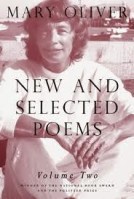
Mary Oliver has a higher-than-average success rate with me, so I’m looking foward to delving into this collection that was a birthday gift from my husband. I’ve posted some of her poems on my blog in the past, but right now I just want to share a quote from her that makes me feel a connection to her as a fellow-writer, too. The quote within a quote, from Wikipedia:

She commented in a rare interview, “When things are going well, you know, the walk does not get rapid or get anywhere: I finally just stop, and write. That’s a successful walk!” She says that she once found herself walking in the woods with no pen and later hid pencils in the trees so she would never be stuck in that place again.

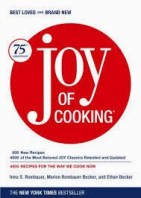
Another kind of book for less energetic times is a good cookbook, and The Joy of Cooking has been perfect for leisurely hours of perusal throughout my married life. Mr. Glad accommodated my desire for the 75th-anniversary edition, so I’ll be ready when that mood strikes.
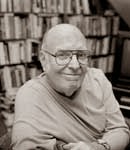
I get poems in my inbox every day from two poetry websites, and last month one of them was by X.J. Kennedy, whose name I recognized as co-editor with Dana Gioia of a poetry textbook I bought a  while back for the purpose of improving my receptivity to poems. I started reading about Kennedy and found that he himself has specialized in writing poems and stories for children.

So I borrowed a few of his books from the library and discovered some that I wanted to buy for my grandchildren. I read one of his stories, too, The Owlstone Crown, which I don’t think worth anyone’s time unless you have absolutely nothing else at hand.

My favorite by him was the children’s introduction to poetry that he wrote and compiled, Knock at a Star. I have now bought several copies on Amazon at one cent each, plus shipping, of course. The poems Kennedy collected are all of a sort that I would feel good about my children or grandchildren reading. I am not at home with the book at the moment so I will have to write another post about it when I can give some examples.

Where I am is at the home of Soldier and Joy and Liam. 21-month-old Liam and I are eagerly reading scores of books, but not always in the focused way I prefer. Often we get a page or three into the book when he gently closes that one and jumps down off my lap to bring a replacement from his bookshelf. But I am patient; so far I haven’t given up being an Eager Reader.

Linking up to Weekends With Chesterton