I only heard by just now reading this blog post, from a friend of mine whose mother and I are friends and fellow home-lovers. Edith Schaeffer through two of her books, What is a Family and The Hidden Art of Homemaking, helped me in many ways to develop my own style and philosophy of homemaking.
Several particular principles and practices, from the importance of caring for the sick to table decorating, became part of my being and contributed to the joy of being the woman of my home. She was the first decidedly Christian person I read who understood the importance of beauty in the home, and she gave many (I remember I thought almost too many!) examples of how one might create a home environment that was rich in all the important things, even if worldly riches were lacking.
I am very thankful for this sister in Christ. May she rest in peace, and may her memory be eternal.
My thoughts about children’s books and Lent converge on this excerpt from Richard Wilbur’s More Opposites, which I think one of The Most Fun collections of poems and drawings. I don’t even require another person to read Wilbur’s humorous poems to — they often make me chuckle contentedly or muse to myself. I see that I already posted this particular one, but it was years ago, and I for one can use it often.
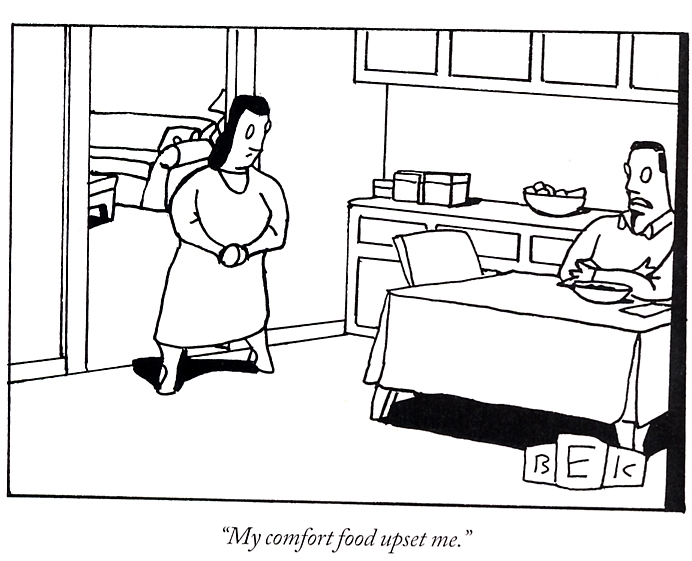
The illustrations of this question in the book include a simple drawing of people with distressed faces holding their tummies. I think the cartoon at bottom makes a similar companion to the poem.
It’s #15 in the More Opposites book:
The opposite of less is more. What’s better? Which one are you for? My question may seem simple, but The catch is — more or less of what?
“Let’s have more of everything!” you cry. Well, after we have had more pie, More pickles, and more layer cake, I think we’ll want less stomach-ache.
The best thing’s to avoid excess. Try to be temperate, more or less.
There is a Mennonite cookbook titled More With Less, from which I gleaned many good cooking ideas in the early days of my homemaking career. But more valuable than the actual recipes was the refreshing concept that one might have more health and more enjoyment of eating and probably more money to spend on other things if you ate less.
Of course this is something we need to keep in mind all the time, not just during Lent. The church fathers caution us not to eat so much food that we aren’t able to pray after eating it; an overfull stomach hinders prayer. If it’s possible that Less Food = More Prayer….
Let’s just pause and think on that.
Yes, January 3rd is the date J.R.R. Tolkien was born in the year 1892. Once I actually gave a party in his honor, on what would have been his Eleventy-First Birthday.
At the end of 2011 several of us Glad people did see the new Hobbit movie. We were reminiscing about our distant historical connection with lovers of everything Tolkien. The main claim to fame I can see is that Kate started an e-mail discussion list on Tolkien’s writings, characters and stuff called Hobbit-Hole. She does still have friends from that group, but she had forgotten that she was the creator of it.
Some 20 years ago I read the whole Rings trilogy to all the children. Kate was probably too young to appreciate it then. And I read The Hobbit myself twice. Seeing Peter Jackson’s movie made me want to read it again, to remember the amiable and heartwarming spirit of it, which I didn’t find in the movie, though I did like the film enough overall.
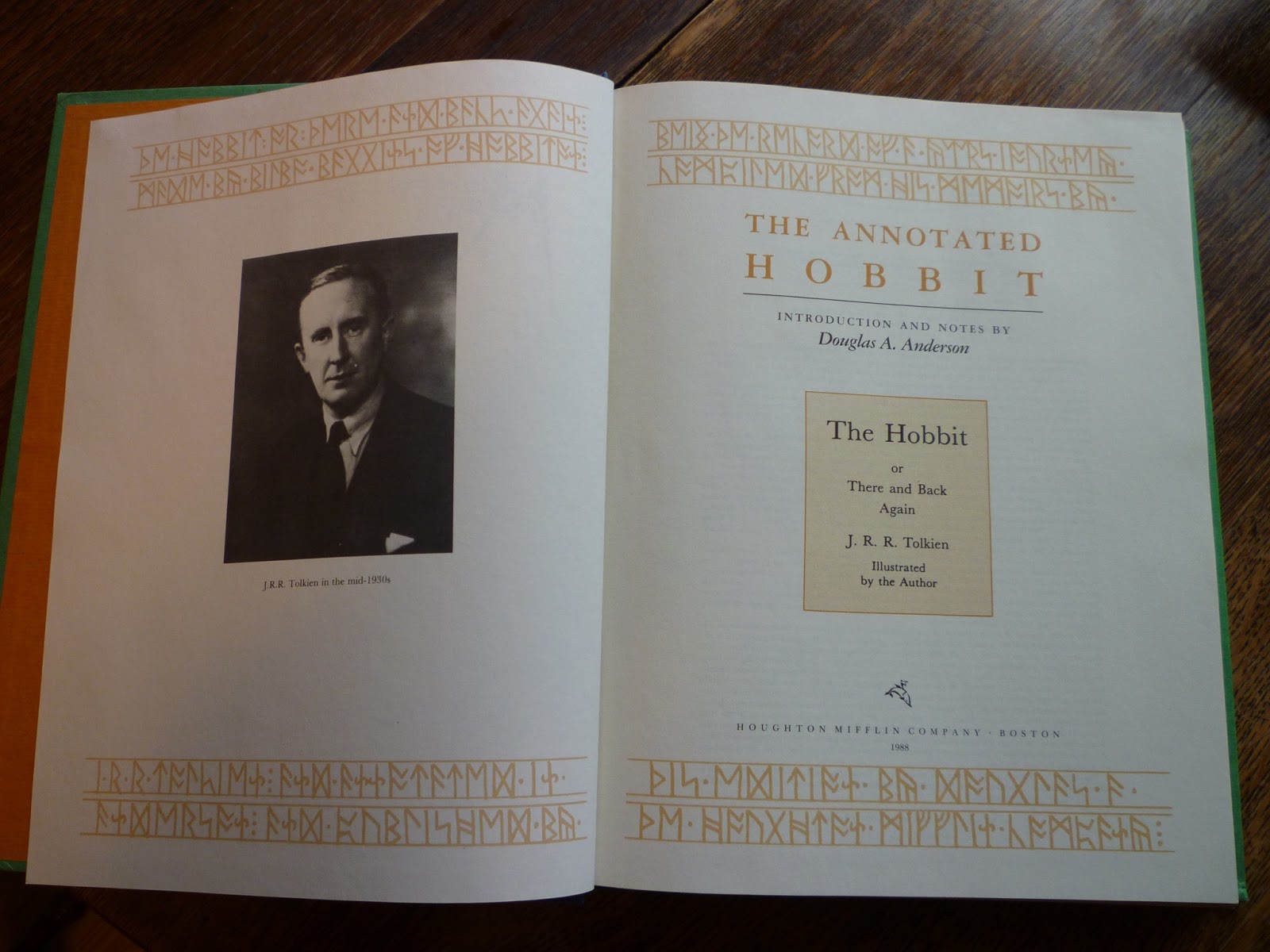
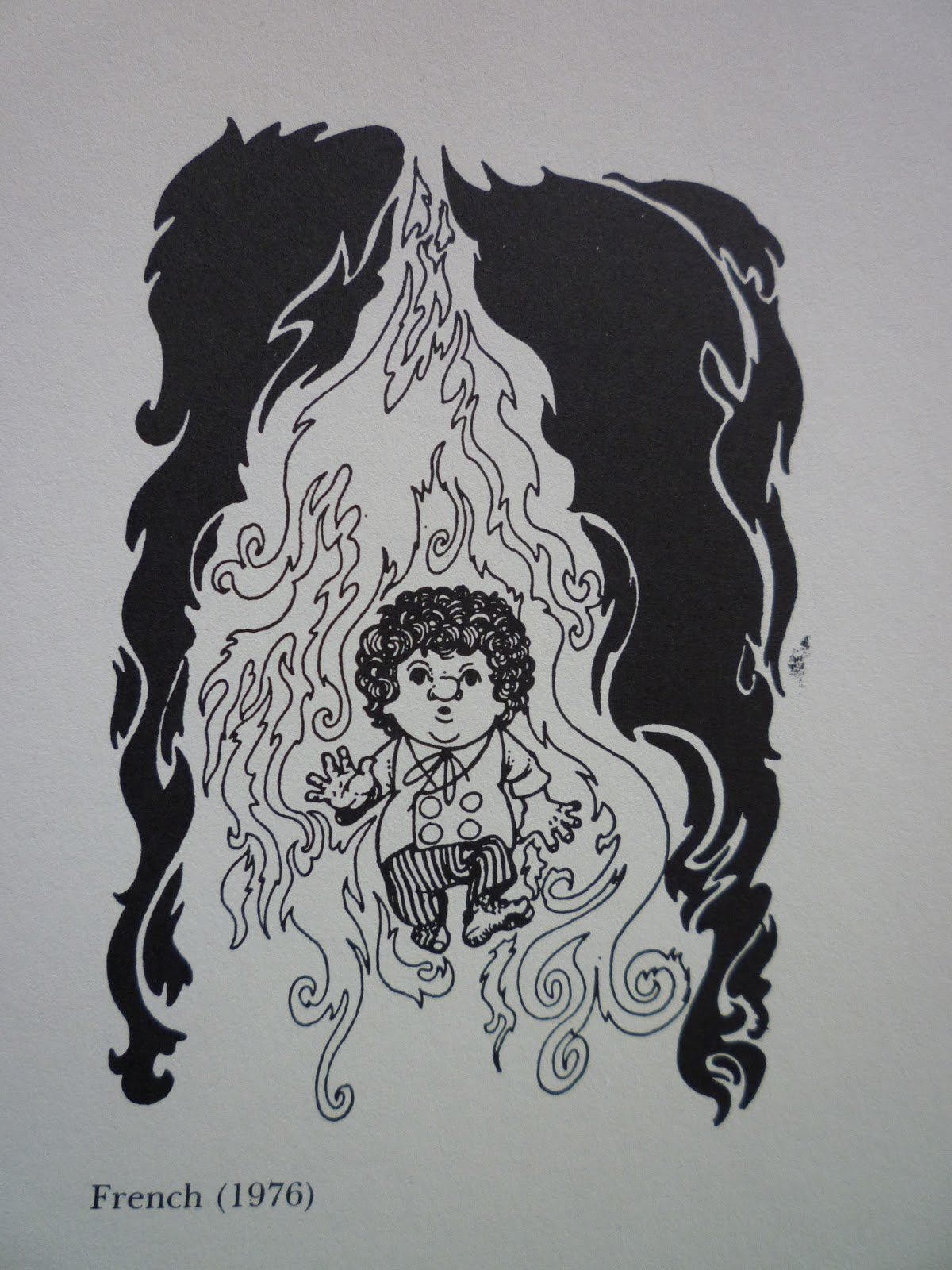
And Pippin eagerly offered her own annotated edition for Mr. Glad and me to read aloud together. We plan to start today, on the author’s birthday. Leafing through the pages of this book made me excited to begin, and I thought I’d share a few illustrations with you, too. Maybe if you click on the pictures you can see them better in a larger version.
I’m not feeling too adventurous at this time of year – well, truthfully, at any time of year. But right now I’m going to get a fire going in the woodstove so we’ll be all ready to cozy up and read about the adventures of a Hobbit.
On this Sunday in the Orthodox Church we remember the Holy Forefathers, the faithful ancestors of Christ, many of whom are named in a long list in the services yesterday and today, men and women like David, Jael, Daniel, Rachel, Moses and Ruth….
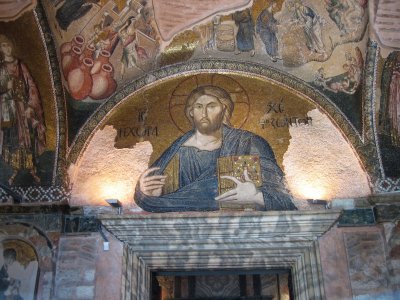
“The Land of the Living” – Chora
And the hymns sing of how they all, long since passed from this earthly existence, are even now “in the Land of the Living.” Thomas Hopko in The Winter Pascha mentions a church near Constantinople where a huge mosaic of Christ is named: “The Land of the Living.” I found a photo of it (above).
I learned in the short account of the life of Athanasius at the beginning of his On the Incarnation that the last and worst persecution of Christians ended in Egypt in 311 A.D., when Athanasius was about fourteen. From the age of five he had lived with the constant threat of death, and with the ever-present reality of persecution of his friends and family. The behavior of the ungodly is irrational and inhuman, and tends to cause great pain and suffering, often unto death, not only of the innocent but also of the most Christ-like. As an adult the scenes and events of his childhood seem to be fresh in his mind when he writes:
“A very strong proof of this destruction of death and its conquest by the cross is supplied by the present fact, namely this. All the disciples of Christ despise death; they take the offensive against it and instead of fearing it, by the sign of the cross and by faith in Christ trample on it as on something dead. Before the divine sojourn of the Saviour, even the holiest of men were afraid of death, and mourned the dead as those who perish. But now that the Saviour has raised his body, death is no longer terrible, but all those who believe in Christ tread it underfoot as nothing, knowing full well that when they die they do not perish, but live indeed, and become incorruptible through the resurrection. But that devil who of old wickedly exulted in death, now that the pains of death are loosed, he alone it is who remains truly dead.”
I started composing this post about death and the saint’s childhood before the horrific murders at a Connecticut school last week. I found the description Athanasius gives, of people bravely and even joyfully facing death daily, foreign to my 21st-century suburban self. But the topic turns out to be pertinent, and the recent stories of gutsy teachers in our own country inspiring — especially when taken with the letter from our Archbishop Tikhon after that event:
“Concerning those who have fallen asleep, Saint Paul exhorts us not to “grieve even as others who have no hope” [1 Thessalonians 4:13]. And yet, herein he does not forbid us from grieving. Now is the time for us to weep, but we must weep with the firm hope that comes from our faith in our Lord Jesus Christ. “Shed tears, but remain calm; weep modestly, and with fear of God,” writes Saint John Chrysostom. And following this example, each of us must strive to transform our sorrow into prayer.
Just this week I was asked to tell one of my favorite Bible verses, one that readily comes to mind without effort. It is always this one, that speaks of our complete dependence on the Lord as our LIFE, whether living or dying. Our leaves will not wither, because Christ Himself is The Land of the Living.





 Gladsome Lights