 Earlier this year I was prompted to think about who were my favorite audiobook narrators. It was soon revealed how very many I have! I was glad the request was for the narrators who I find truly add to the reading experience, and not the ones to avoid, because that would not be as pleasant an activity as I was engaged in, perusing through the titles I have listened to.
I’m thankful that the “bad” narrators are much fewer than the good. A good narrator lets me get lost in the story, and the bad ones are distracting in the various ways they draw one’s attention to their reading instead. I will list the narrators along with one or more books that made me love them:
Ralph Cosham (Geoffrey Howard) in How Green Was My Valley and many C.S. Lewis books, e.g. the Ransom Trilogy.
Peter Bishop in The Witness of Poetry.
 Mike Fraser in The Timeless Way of Building.
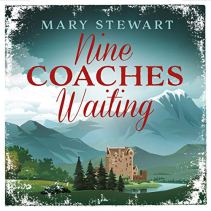
Ellie Heydon in Mary Stewart novels.
Arthur Morey in The Technological Society.
Andrew Sachs in Silas Marner.
Tom Stechschulte in Up and Down California.
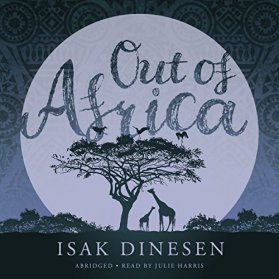
Julie Harris in Out of Africa (unfortunately abridged).
Derek Perkins in G.K. Chesterton books.

Flo Gibson, in books about adventurous women, such as A Lady’s Life in the Rocky Mountains, and Letters of a Woman Homesteader.
Eleanor Bron in Elizabeth von Arnim books.
Neil Hunt and David Rintoul in Nevil Shute novels.
Stefan Rudnicki I first heard reading The Aviator, and I thought he was perfect for that story told in the first person. I began searching on Audible to see what other books he had narrated, and that is how I came to read Blitzed: Drugs in the Third Reich.
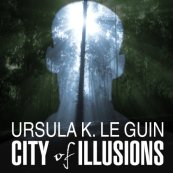
I started listening to a Joseph Conrad novel done by him, and was amazed at how differently, but also smoothly, he narrated that character’s voice — and not just the accent. Seeing that he was the narrator of the Ursula LeGuin novel City of Illusions made me willing to try it, and his narration of The Captive Mind was just right for conveying Czeslaw Milosz’s writing voice.

The protagonist of The Aviator is Russian, and I wondered if the narrator was Russian — how did he get that accent so well, but not overdo it? That’s why I researched Stefan Rudnicki more than any other narrator, and I learned that he was born in Poland. I also found this video in which he, along with other skilled veteran readers, leads a Round Table Discussion with several relatively new narrators, on the topic of improving their narration.
The whole narration “industry” is fascinating. It seems that participating in it is a satisfying way for older actors to keep working, at a pace that fits their slower stage of life. From reading reviews, I can tell that we listeners don’t all appreciate the same narration style. Are any of these your favorite narrators, too?


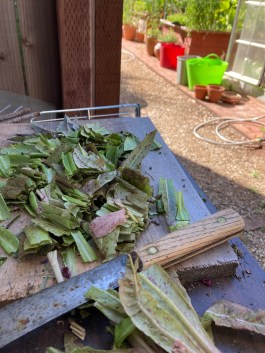 The lettuces that had bolted I chopped up and gave to my worms. Out there I set up a board by way of a chopping block just for this purpose. I probably have four times as many worms as I started with last fall, because the man who gave me my starter batch moved far away and couldn’t take his worm farm; he gave them all to me! He consolidated all three or four of his bins into one new one, before bringing it to my house, so I fear that they are overcrowded, and I plan to modify my set-up so that they have more room. But they seem to be doing well on the diet I provide.
 Brussels sprouts. There was cold tea as well, pretty fancy stuff that had just arrived today.

 A lovely thing happened on this gardening day: I received in the mail this book The Fragrance of God, by Vigen Guroian (2006). I noticed it online when I was buying the new edition of Tending the Heart of Virtue: How Classic Stories Awaken a Child’s Moral Imagination. The Fragrance book seems to be on the same theme as the author’s previous book, Inheriting Paradise: Meditations on Gardening. I couldn’t help leafing through it right away, though I was too busy to give it proper attention. Just now I did take time to glean one quote with which to end my mostly garden post. I am reveling in my own heart’s portion of Paradise tonight.
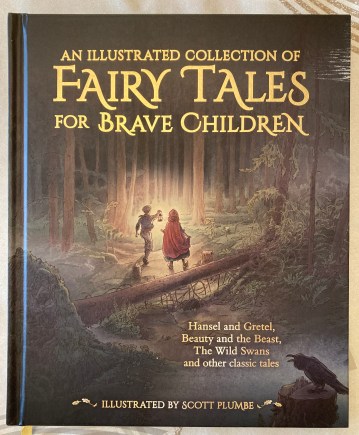
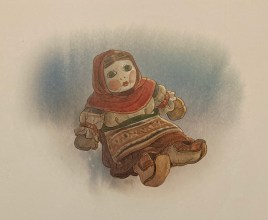 Raj and I got to the end of Stuart Little, and the same day both boys cozied up to me after their baths while I read the last of the seven stories in Fairy Tales for Brave Children. That book contains works from the Grimm Brothers, Hans Christian Andersen, and other folk tale collections. Tonight we read “Vasillisa,” from Russia, which is a Cinderella sort of story, but with a doll who helps the disdained sister to do mountains of work.
 Gladsome Lights