Category Archives: culture

Gleanings – The Vocabulary of Artists

Fr Patrick pantocrator domeTo convey to our imagination an abiding sense of the world’s goodness and givenness, artists require a vocabulary capable of such representation. Many of the conventional aesthetic resources of the contemporary arts are well suited to expressing anxiety, alienation, chaos and violence, but are not as capable of evoking innocence, simple purity, or quiet delight. (I’m more and more convinced that the omnipresence of relentless rhythm sections, even in love songs, is an expression of the mechanistic and brutish presuppositions of a culture convinced that all life forms are the end-result of a mindlessly competitive process of mere survival.)

–Ken Myers

“From Heavenly Harmony” in Touchstone Nov/Dec 2014

Lin Yutang likes autumn best.

If you like thought-provoking quotes as much as I do, you might sometime run across one by the eloquent Lin Yutang. I find that I did have a quote by him about autumn in my files, so that is probably how he came under my radar recently, long enough for me to decide to borrow his book The Importance of Living from the library. It was in the closed stacks, and looks old and Chinese. But as Samuel Butler said, “The oldest books are only just out to those who have not read them,” and for me, Lin Yutang is definitely a new and exciting discovery.

I expected a small book of proverbs, perhaps, but The Importance of Living is a large conversational and philosophical treatise that I won’t be ableLin Yutang - Living to read in bed. I may have to buy a copy, because in the very first paragraph of the preface I found beautifully written lines that drew me in to his mind and his ruminations:
“Very much contented am I to lie low, to cling to the soil, to be of kin to the sod. My soul squirms comfortably in the soil and sand and is happy. Sometimes when one is drunk with this earth, one’s spirit seems so light that he thinks he is in heaven. But actually he seldom rises six feet above the ground.”

I opened the book randomly in the middle and there, also, his words were worth thinking about as poetry or motivational talk. Did someone very gifted translate the works of this Chinese man? No, he wrote in English in such a graceful way that it is pure joy to read him aloud.

Lin Yutang was born in China in 1895 of Chinese Christian parents. His father was a pastor and a very progressive, forward-thinking man who made sure that Lin learned his Bible stories and went to the schools that produced the best speakers of English. He eventually got a degree from Harvard and another from Leipzig University.

I began to read The Importance of Living aloud with Mr. Glad. I usually do the reading because I enjoy it more than he does, and I immediately noticed the easy flow of Lin’s prose and the equally smooth progression of ideas. Everything he says makes perfect sense given his worldview in 1937, and at that time he was no longer a Christian.

What happened? Mr. Glad and I were very curious, because we had information Lin didn’t have at the time; we knew that later in life he would return to the faith and live to write about it, in his book From Pagan to Christian. So we stopped reading Importance and started in on the book about his spiritual journey that he wrote about 20 years later.

Putting together what he says in the relatively little we have read of him so far, I can tell you this about Lin’s first change of mind: As soon as he came of age to notice, he realized that he had not received the usual Chinese philosophical or literary heritage, much of which was typically learned through the theater; the theater was forbidden to Lin and his siblings who were in some ways raised as Puritans. He hadn’t taken the time to learn to write beautiful calligraphy, either, so he found that he was by Chinese standards completely uncivilized. At this point the one very Chinese thing he did know was intense shame.

He felt he had to go back and learn to be an authentic Chinese man, and having learned as a child the diligence and study habits of a Puritan, he did a very thorough job of learning Chinese philosophy and literature, not to mention a stunningly broad understanding of Western culture. This knowledge base combined with the ability to think and write about all that he has figured out — or is figuring out, as the story evolves — makes him fascinating to me.

We haven’t progressed very far in either of these books, but having this articulate author “friend” to explain Chinese culture and history to me from the inside has given me an interest in that part of the world that I have always lacked. So I hope to read more, and I expect to have more to share. But for now, I’ll close with his quote from My Country and My People about the lin_yutangseasons of the year.
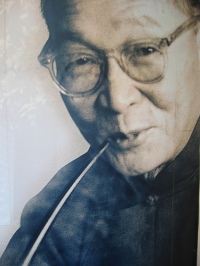
“I like spring, but it is too young. I like summer, but it is too proud. So I like best of all autumn, because its tone is mellower, its colours are richer, and it is tinged with a little sorrow. Its golden richness speaks not of the innocence of spring,nor the power of summer, but of the mellowness and kindly wisdom of approaching age. It knows the limitations of life and is content.”

This meditation seems to me an expression of a perspective that could be both Chinese, as he felt at the time, and truly Christian. I’m looking forward to reading more of the kindly wisdom of Lin Yutang.

Let them believe.

It is assumed that the skeptic has no bias; whereas he has an obvious bias in favor of skepticism.

That is the one eternal education:
to be sure enough that something is true
that you dare to tell it to a child.

— G.K. Chesterton

These quotes having to do with teaching and learning remind me of something I read years ago when we were in the middle of our 25 years of homeschooling. It was in John Senior’s book The Restoration of Christian Culture, which I had borrowed and still don’t own, so it may be that I am not remembering it exactly right. I’d love it if any of you know enough to correct me or just articulate more clearly what I am trying to get at.

Dr. Senior warned parents against teaching children what modern educators call “critical thinking,” because it would turn them into skeptics and take away the simplicity of their childhood. They need to be taught to believe, rather than to doubt, and to have their joy and love for the world nurtured. If we teach them to be skeptics we are guilty of stunting their souls.

I thought about these things when I read an article by Ken Myers that was published last summer in Touchstone, titled “Trinity & Modernity” (unfortunately not available online). In it he introduces us to the book The One, the Three and the Many: God, Creation and the Culture of Modernity by Colin Gunton, and Myers discusses the fragmentation of current culture and thought, and the necessity of Trinitarian faith and the Body of Christ if we are to be saved from “modernity’s fatal confusion.”

His introductory paragraphs are what I want to share here, about our universal Christian story:

“We have been told that to be postmodern is to approach metanarratives — the Big Stories that explain Life, the Universe, and Everything — with incredulity. Of course, this raises the question of whether or not this definition of the postmodern temperament is itself a metanarrative…”

“…I do detect among most younger people a yawning indifference to efforts to explain history or theology or ethics or art in terms of grand and arching chronologies or chronicles. I suspect their minds and hearts have been colonized by thousands of what [Jean-François] Lyotard called petit récits, small amounts of highly particular and often idiosyncratic episodes, all blithely disconnected from any framework, all resistant to organization in any structure of meaning. Perpetual exposure to a numbing torrent of bewildering bursts of narrativish fragments — increasingly in fewer than 140 characters — leaves little time or mental space for attending to connections and causality.

“I remain unrepentantly pre-modern in my love of metanarratives. If the gospel has any power, it is only because it tells a great story that explains all things. It is a very particular story and it makes universal claims, which make both card-carrying moderns and postmoderns nervous. It was foolishness to the Greeks as well.

“This fragmentation and lack of understanding was a problem even in Chesterton’s day, but certainly it’s worse in more recent decades, with the giving over of education to a woefully pragmatic vision (Perhaps we do have a metanarrative: Do Whatever You Have To, To Get a Good Job.) and the gazillion bits of information and “communication” of the computer age.”

In my case, I always had Truth to tell to my children, because I knew at heart that Christ was the “yea and amen to all the promises of God,” and God was the Creator and upholder of everything. But in my experience the Protestant Evangelical world lacked cohesion, and certainly the continuity with the historic faith that would make it a true metanarrative.

It was incomplete, fragments that could not explain Everything, and I am sorry that I couldn’t tell my young children the Big Story that I am learning now, now that I am coming to know Christ and His Church. In The Church we have Christ the Head of the body. They go together, and can’t really convey the faith any other way. Christ comes to us in His Church, “the fullness of Him that filleth all in all.”

The intellectual focus of the West — which even we in the Eastern Orthodox Church breathe in the air of the modern world — seems to make it hard for me to avoid skepticism in myself. I can’t see that anything but prayer and sacrament can keep my heart tender and trusting. Let’s pray for the children, too, that they might be saved from the spirit of the age.

Linking up to Weekends with Chesterton

It takes wisdom to be content – or discontent.

Comforts that were rare among our forefathers are now multiplied in factories and handed out wholesale; and indeed, nobody nowadays, so long as he is content to go without air, space, quiet, decency and good manners, need be without anything whatever he wants; or at least a reasonably cheap imitation of it.

–G.K. Chesterton in Commonwealth, 1933

I don’t know that my comments on this ironic statement can add much, but for my own sake I will think while I type, and ramble as I think. GKC’s words startle me out of feeling guilty for complaining about modern life — after all, “We are so well off!” We have (noisy) leaf blowers so we don’t have to spend so much time raking. We can stop for fast food on our mad trips up the interstate, and while we eat off paper plates at dirty tables and lick our fingers we can be thankful we didn’t have to go to the trouble of finding a picnic spot by the river.

My first encouragement to question the amassing of things we don’t really want was 40 years ago, in the La Leche League’s Womanly Art of Breastfeeding. The motive was to help women cultivate a peaceful home in which they would have the time to leisurely nurse their babies; that goal would require sorting out one’s priorities concerning what we now call lifestyle choices. Do you really want your tabletop cluttered with knick-knacks, the author wrote, or might you enjoy having clear surfaces that are easier to keep clean and will ultimately be, in their simplicity, more pleasing to the soul?

The whole concept of More With Less has gained ground in the last decades, but Chesterton’s words reveal how easy it is to lose, bit by bit, the most valuable and wholesome “comforts” that our poorer forebears had in abundance, and not even notice what we have given in trade. Note that intangibles such as decency and good manners are on the list, to remind us that civilization is more than physical comforts.

The book Margin by Richard Swenson comes to mind here. He writes (first in 1995) about how the  people he doctored in third-world countries were by-and-large happier than the Americans back home, and he analyzes the reasons why. Even without health care and modern technology, they enjoyed several of the things mentioned in the quote, in good measure.

My own life provides the leisure that Josef Pieper calls the Basis of Culture, enough of it that I can take the time to ruminate on several facets of Chesterton’s clever jibe. At this stage, for myself, I can’t complain. But I pray that I’ll always have the wisdom to know what I want and need to go without, for the sake of being content.


 Linking up to Weekends with Chesterton.