 In my last post I told you about Mr. Glad’s 40th day of repose in the Lord. On the 41st day I drove north in response to the invitation from a granddaughter to be present at the exhibit of her photography. If it hadn’t been for the request of my presence on a specific date, I’d probably have put off traveling a few weeks longer, but I took it as a gentle prod from Heaven.
In spite of many episodes of homesickness, the excursion turned out, as I knew it would, to be full of fun, beauty, and love – all good things for someone in my situation.

The first day’s drive took me about eight hours, which is too long, in my mind, to be reasonable and healthy, even if I did stop a few times and even took pictures at my favorite rest area among the olive groves. In the future I hope I can break up car trips so that no one leg of a journey keeps me behind the wheel more than half that long.
It shouldn’t be hard, because I have friends and family all over the place who can make an overnight stay worth the pause in getting to whatever place where I might sojourn longer.
In the car I listened to the radio when I could get a good classical or jazz station, and also to some more of The Big Read book introductions from the National Endowment for the Arts. I told you previously about that program and two of the recordings in this post.
The disks I found at the library for this trip were introductions to:
Housekeeping by Marilynne Robinson
The Death of Ivan Illyich by Leo Tolstoy
Old School by Tobias Wolff
The Heart is a Lonely Hunter by Carson McCullers
To Kill a Mockingbird by Harper Lee
This bat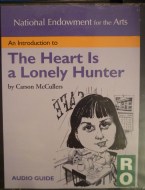 ch of recordings were produced between 2006 and 2008. For each one you get to hear some passages read from the book; background on the author or how the book came to be written, often from the author herself speaking; interesting music that seems to have been carefully chosen to go with the tone or setting; and many sound bites of other people’s responses to the story. Even if you have read the books — perhaps especially if you have read the books — it is very enriching to delve into them this way.
Robert Duvall, whose film debut was as Boo Radley in “To Kill a Mockingbird,” tells us his feelings about that story and the experience of acting in what is considered one of the truest film adaptations of a novel you can find. Elizabeth Spencer is a southern writer who also contributes quite a bit to the To Kill a Mockingbird intro. She sounds like someone who might have lived in the fictional town of the novel, and I found her very appealing, for both the sound of her voice and for her comments such as, “This is a book that hits the bulls-eye, and that bulls-eye is the heart. Too few books have a basis in love.”
Tobias Wolff is himself one of the commentators on the intro to his book, which is somewhat autobiographical, about a prep school in which all the boys want to be writers. Marilynne Robinson also speaks on the recording about her book, musing on the process of writing Housekeeping, and how she came up with the name of Fingerbone.
I am so impressed with the artistry that goes into these audio presentations, and even more appreciative of them at this time, when I can’ t seem to engage with a whole novel in the deep way I am used to. I’m afraid I am somewhat apathetic right now about vicarious experiences and fictional characters, but I really enjoyed these Big Read introductions.
My route up Highway 5 to southern Oregon took me through the town of Redding, and the cramped feeling in my legs by that time was demanding more than a brief stop at a rest area. It made sense to visit the relatively new Sundial Bridge that spans the Sacramento there very close to the freeway, with the lovely and leisurely Riverfront Park paths on either side. I think my visit last week was my third, to this bridge that is only for pedestrians and bicycles, and I had come on a perfect spring day. I was still wearing long sleeves, having started out in cool temps at noon, but all the walkers and cyclists were in tank tops and shorts.
I walked along the trail on one side of the river and followed some goslings with the ir parents, until they went under the bank and out of sight. Then I crossed the bridge with its watery blue-green glass bricks, to the path on the north shore. I bought a mango Italian ice, to lick as I walked briefly through an uninspired perennial garden, and then back to the bridge for a few more photos.
My little walk along the river was very therapeutic I guess, because I arrived at my destination without any of the aches and pains I often would have after sitting and driving so long. After visiting with Pathfinder’s tribe I fell into bed so I’d be ready for the next day’s fun.

 Father Alexis Trader in another article on grief, excerpted and linked below, discusses not just the memories we hold of those who are departed, but the love that binds us to them even after our former connection is gone forever. Notice that it is not the loved one who is gone forever, but the nature of the relationship.
 she had “made at Bible study to represent spreading God’s love.” She also wrote to invite me to drive north to their house next month to see the exhibit that includes some photography from a class she is taking. I am not making firm commitments that far ahead, but I feel the love pulling me.
 to figure out how long ago that was! I told him about how I am planning to have the pool removed, and he looked over the equipment and discussed the job I need to get bids for. He owns a pool himself so he is a good person to talk to.


 This morning I attended Bright Saturday Liturgy and was freshly struck by some of the prayers that I have prayed every week for almost a decade now. Like the prayer that we might “complete the remaining time of our life in peace and repentance.” Yes, that is the journey I am on. One thing is needful.
 Gladsome Lights