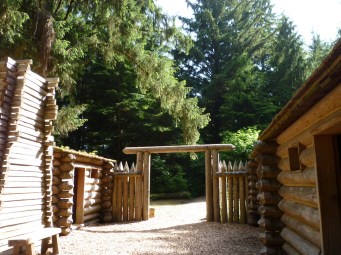
 In 1805 Lewis & Clark came to Astoria, or more precisely, to the mouth of the Columbia River where the city would be founded a few years afterward. In the next century, during World War II, my in-laws came at the orders of the U.S. Navy. Last week my husband and I made our first visit to Astoria.
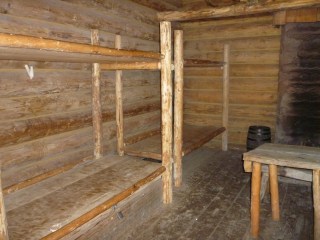 |
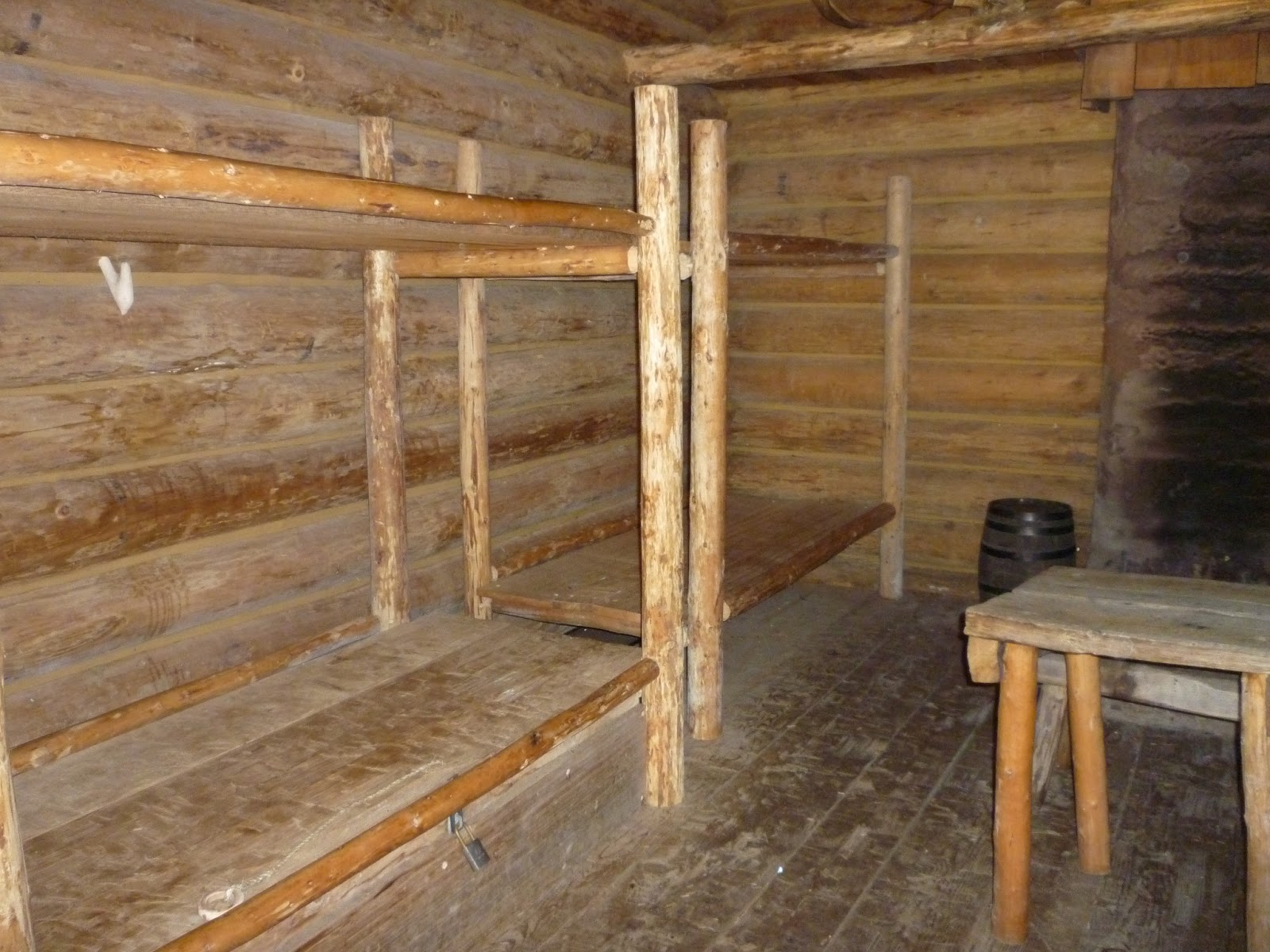
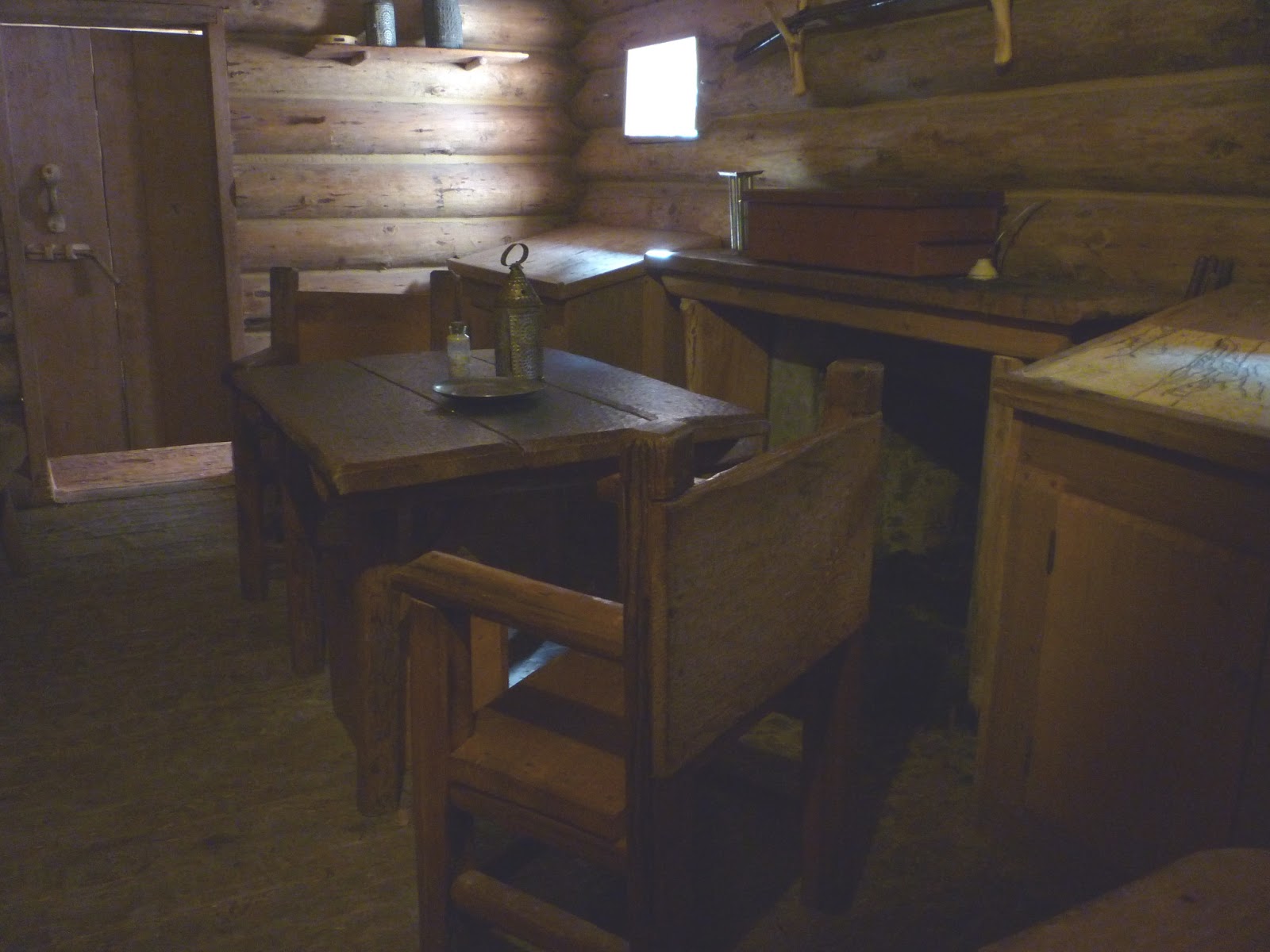
| Bunkhouse for the soldiers |
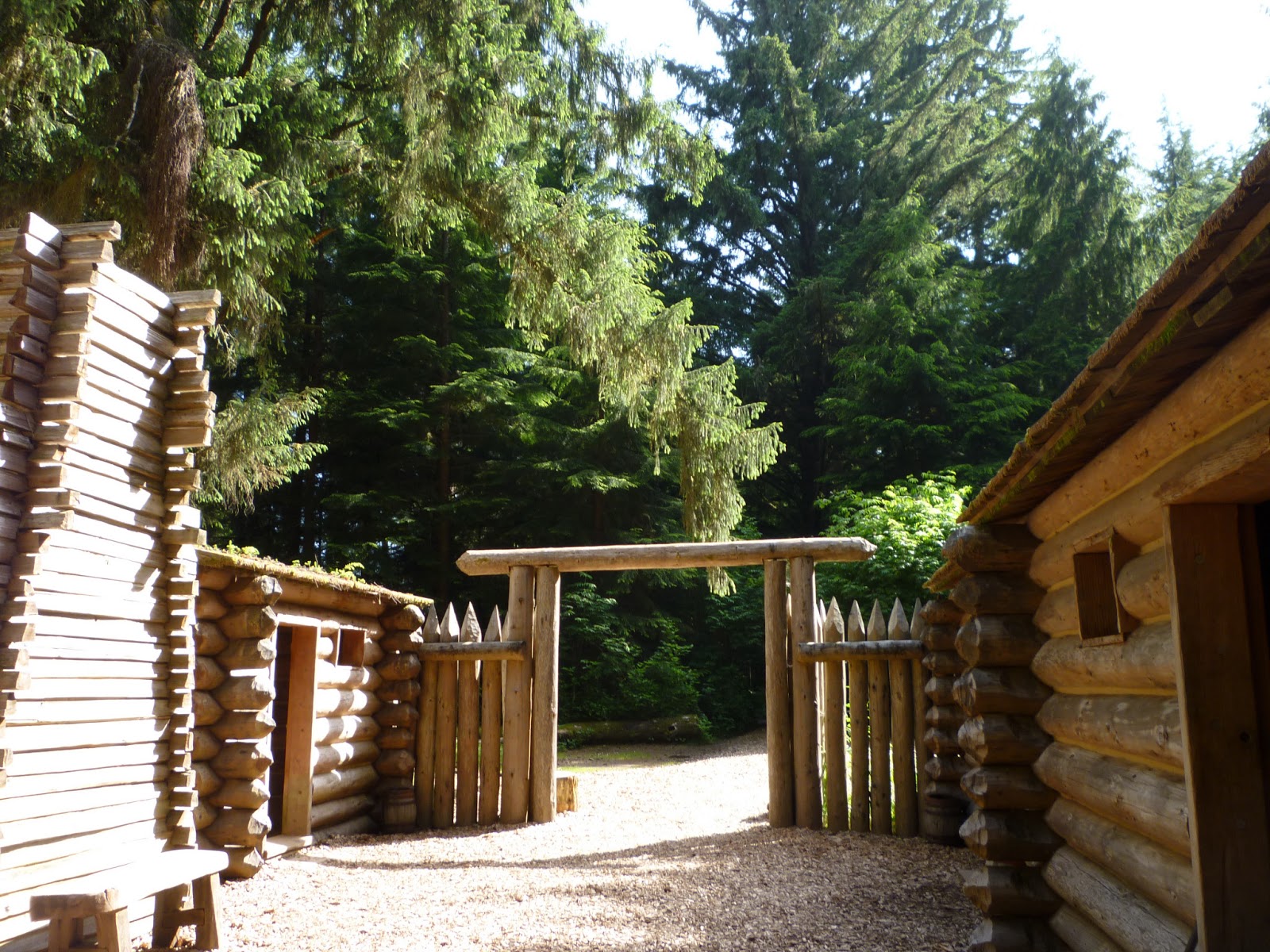
We didn’t stick around nearly long enough to satisfy my traveling style, which is marked by a desire to make a home for at least a week or two in every place I visit. But only a minute is required to introduce a thought or fact and pique my interest; that’s what happened at the Fort Clatsop park where replica log cabins have been built showing how the Corps of Discovery sent out by Thomas Jefferson lived for their 106 very wet days there.
 |
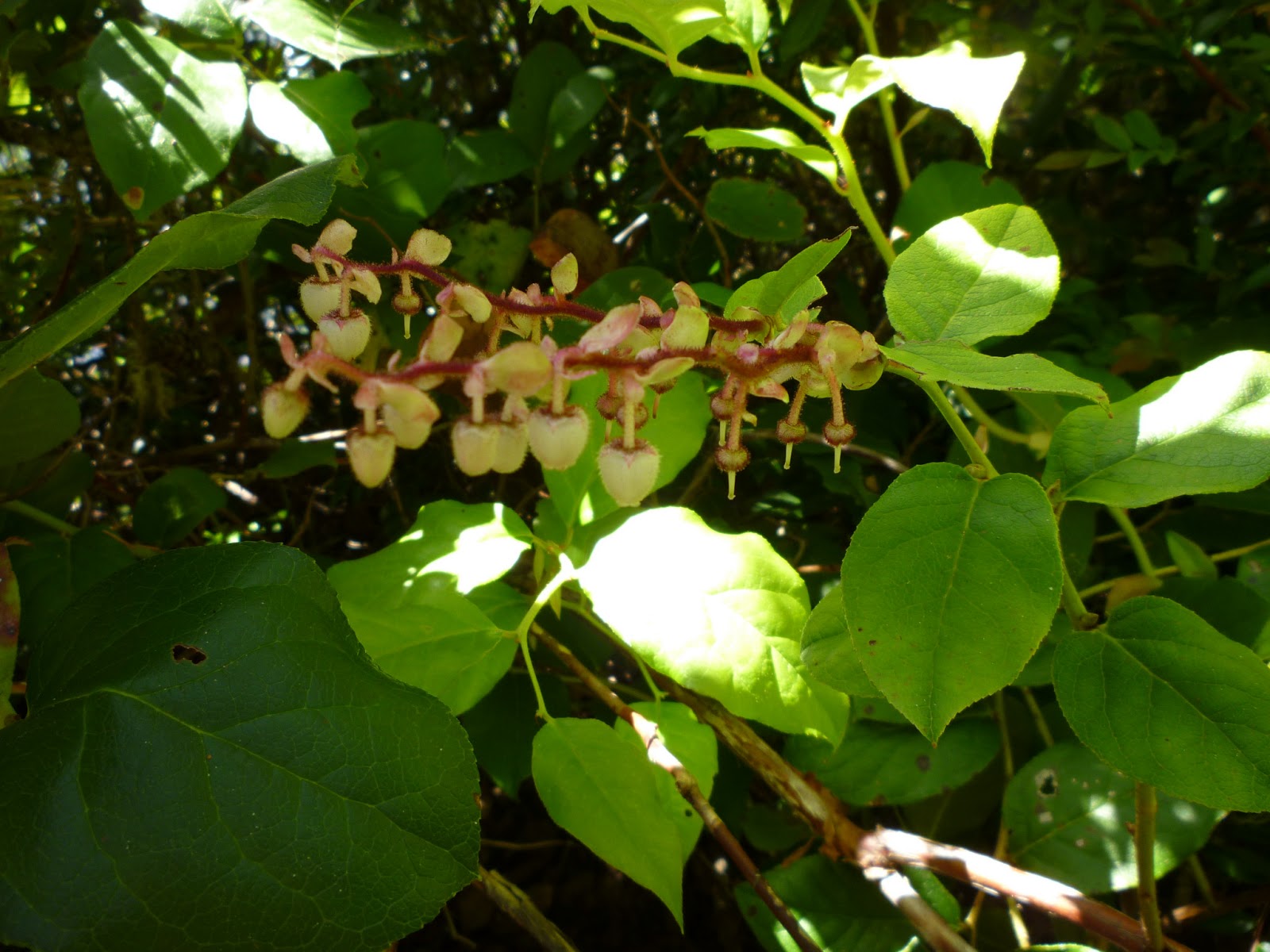
| Astoria front yard with salal |
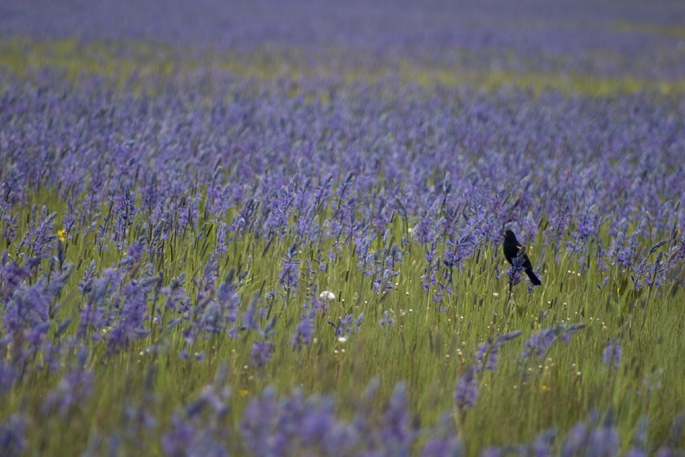
I told the docent that one thing I’d remembered from reading about Lewis & Clark with the children more than ten years ago was that when the party arrived at the Pacific Ocean (it was November) they turned up their noses at the salmon, being meat-loving guys. Well, it wasn’t so simple, she replied. Back in September when they were famished because game was scarce, they had traded with the Nez Perce Indians for camas root (camassia quamash) and dried salmon, which made them sick, so they associated that unpleasant experience with the fish….and besides, there wasn’t a lot of salmon to be had at that time of year at the mouth of the Columbia.
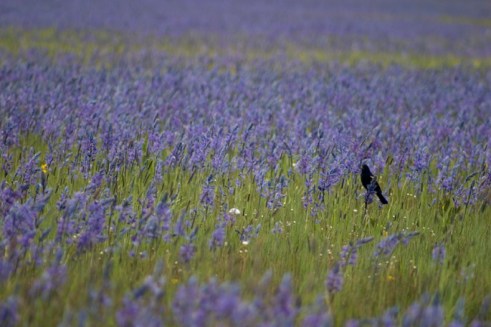 |
| field of camas in bloom (not my photo) |
|
|
The woman was focused on taking down the flag and didn’t even notice that I was asking questions: What was it about the camas root that was bad, why did the Indians give it to the explorers, and what was it doing with the salmon? She had made it sound like they were eaten together. So I had to do my own research when I got home, and of course more questions are raised the more knowledge one gets.
 I haven’t found anything leading me to believe that the men of the Corps of Discovery despised salmon. They didn’t write a lot while they were at Fort Clatsop; it was a relatively boring life after the excitement of getting there, and the social life was lacking compared to the previous winter, as the coastal Indians were into commerce, not partying. But in the journal accounts before and after the uncomfortable camas episode there are many passages that mention the eating of salmon with no negative comments.
One thing they did record about the food at the coast was that they had obtained salal berry bread — probably a “cake” of dried berries — from the Clatsop Indians. That got my attention, because we had seen thousands of salal bushes on and near the Oregon Coast. The leaves may look familiar to anyone who has enjoyed bouquets of flowers from florists, because they are used extensively in flower arrangements.
 |
Salal in flower –
Gaultheria shallon |
Over the last few days Mr. Glad and I both have become engrossed in the journals of Meriwether Lewis and George Clark and others of the company, because of questions raised during our brief stop at the fort. I read on the blog of Frances Hunter, who has written at least one book on the expedition, that the reason the easterners had debilitating digestive ailments for a week after eating camas was that they were “unaccustomed to eating much fiber.” But in the paragraph before, she wrote that because the hardtack supplies had been depleted, the men had for some time been eating more corn, beans, and squash than was usual.
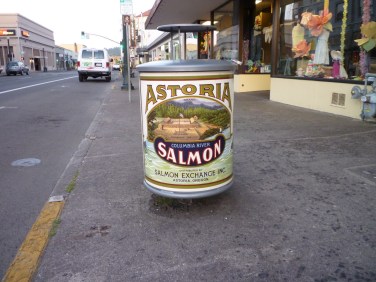 |
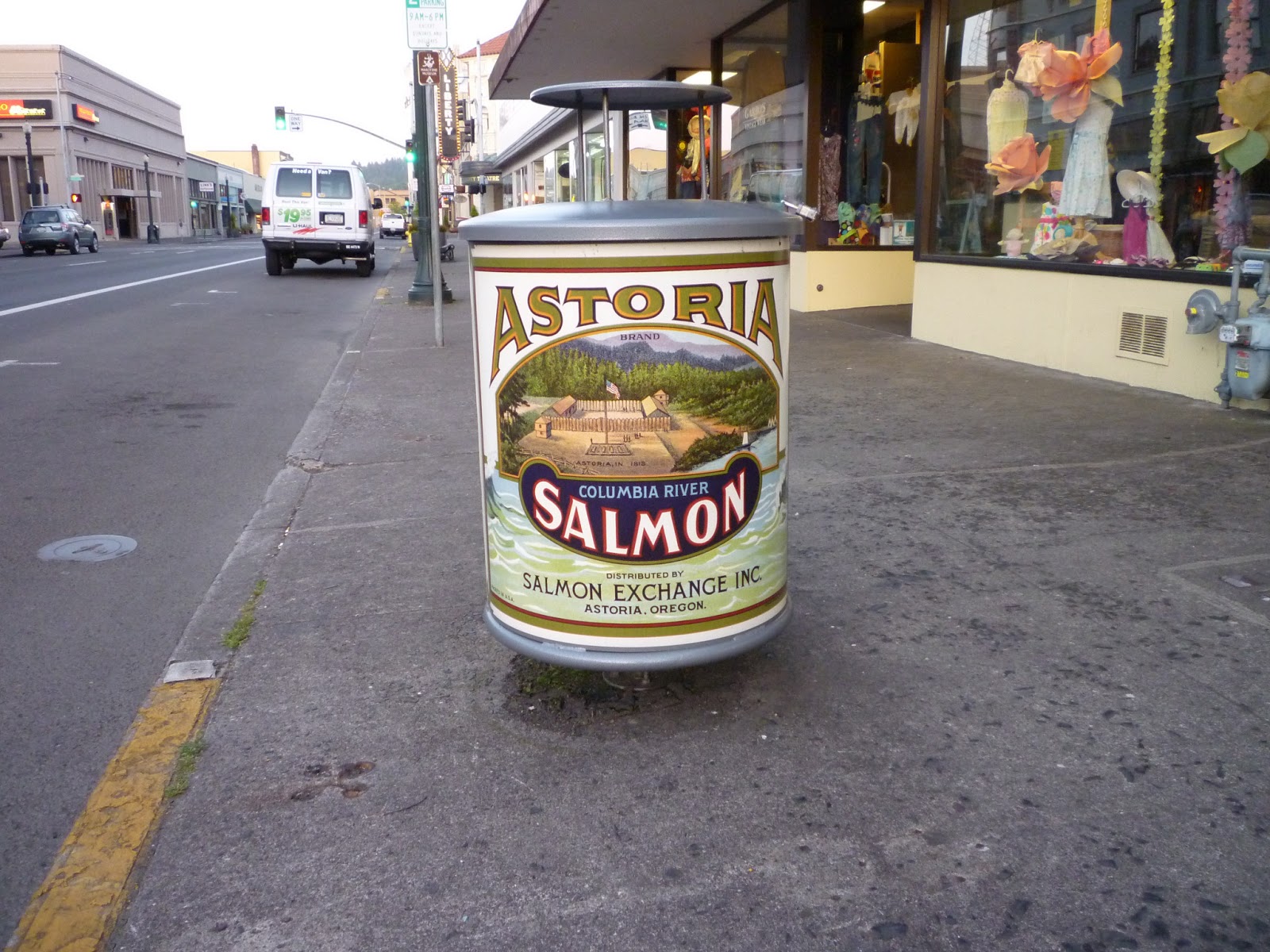
| An Astorian garbage can poses as a giant can of salmon. |
Many people aren’t aware of which foods have fiber and which don’t, and maybe Hunter is among the ignorant. The “three sisters” of Indian staple vegetables have plenty of fiber, as do the berries that the soldiers had been eating all along. And while an excess of fiber might cause bloating and cramping, it wouldn’t normally cause vomiting and diarrhea. But the explorers themselves did attribute their illness to the salmon and camas.
Lucky for me I ran into The Natural World of Lewis and Clark by David A. Dalton, which treats the aspects of Lewis & Clark’s journeys that I’m currently wanting to know about. I learned that the main starch in camas roots is inulin, and the book explains how humans lack the enzyme to digest inulin in our stomachs. It goes straight to the intestines where fermenting bacteria digest it and produce gases, a process similar to what happens when someone who doesn’t usually, eats beans.
 The Indians had a way of cooking the camas root that has been shown to break down the inulin and make the resulting food more digestible: they cooked the roots in a pit for several days until they turned into a mush reportedly as sweet as molasses. The Nez Perce had digestive systems that were accustomed to this food, and they probably knew to eat it in moderation, while the Corps ate lots, being quite hungry at the time.
Later after they had success at hunting and ate some meat, they felt better, until they boiled some camas root — note, they didn’t deep-pit it — and their bloating reoccurred. Eventually they figured out how to eat the stuff, which they came to consider a comforting part of their diet.
 Dalton informs us about salmon in his book, as well, that in large quantities it has a laxative effect. So now I feel that I have a much better understanding of one little point of history, not about dates or kings or wars, but — food!
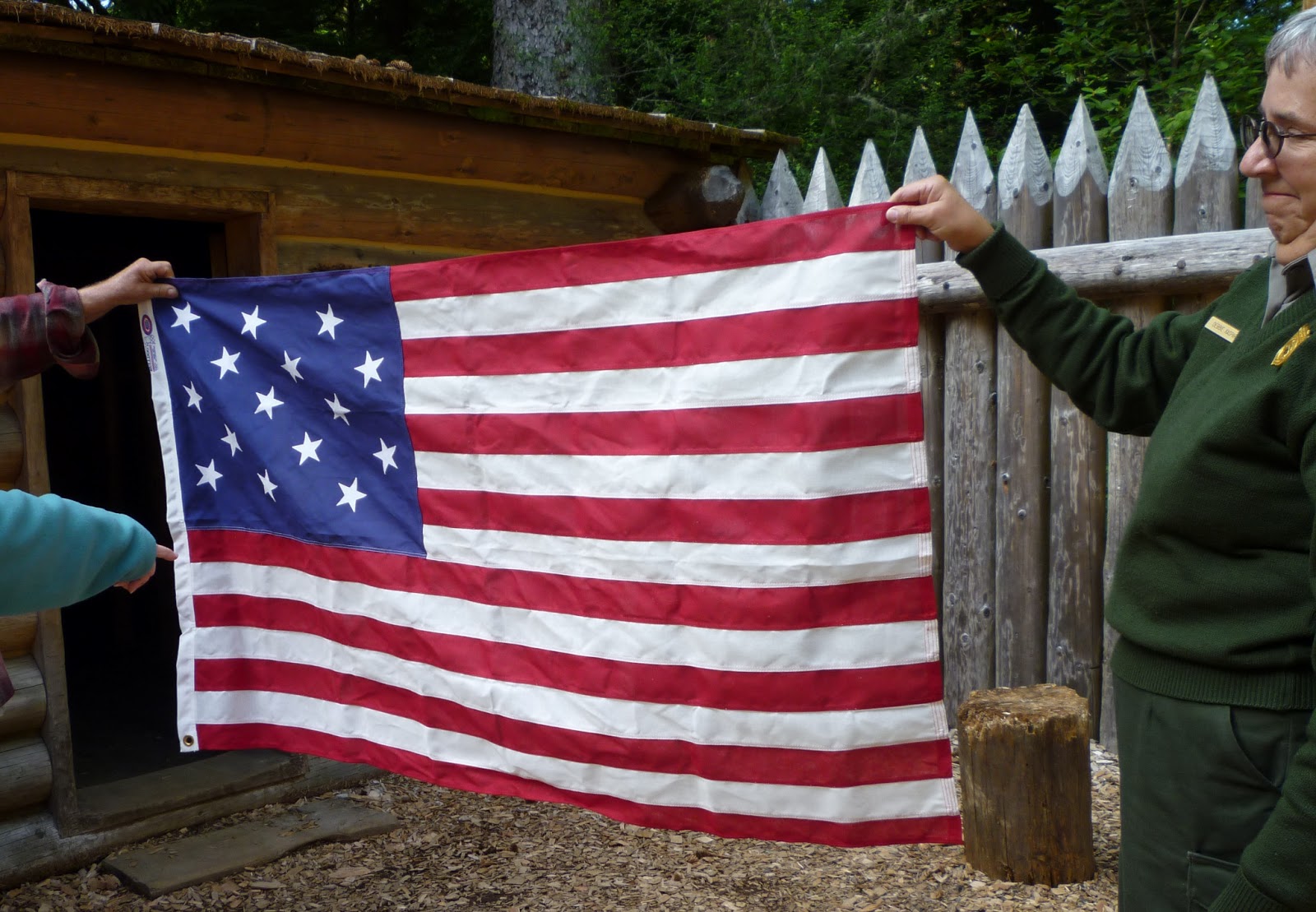
If you are a stickler for historic detail, you might have noticed that the replica flag the docents now fly over the fort does not match the original in its proportions. This page shows all the flags in our nation’s history. Most of them don’t have proper names, but this one is called The Star Spangled Banner.
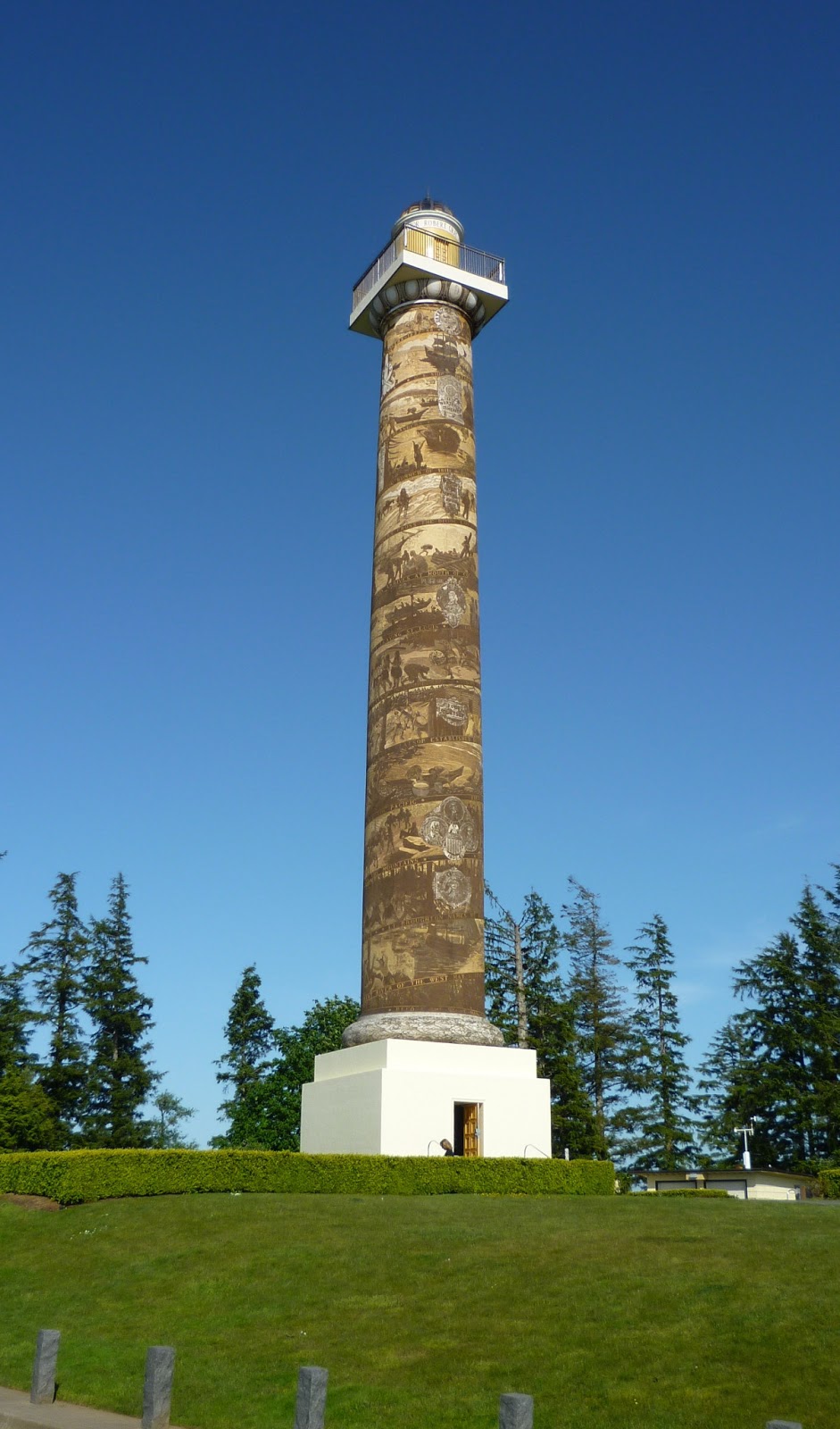
While in Astoria we climbed the 164 steps to the top of the Astoria Column, which gives a broad view of the rivers and town. A spiral of painted relief murals on its surface shows scenes from Oregon history, including this enlarged one below that I found online and that shows a Lewis and Clark event.
I did love looking due south from the column at the large Youngs River, and at the smaller Lewis and Clark River to the right of it, flowing from the southwest. Even before they join the Columbia at its mouth, they make this beautiful scene.
The Lewis and Clark expedition has always captivated me. Because several of the party kept detailed journals, we who didn’t accompany them can vicariously enjoy the fun of discovering rivers and flowers and people groups, while escaping the scary and miserable experiences. By this short and comfortable, warm and well-fed expedition of my own, I have by my plant-identification efforts and by spending a while in the land where they reached their goal felt a new kindredness with these brave men.
I’d like to read more of their journals, but I’d like even better to spend more days in this corner of Oregon next time. I would hope to discover a pretty blue camas flower.







 Gladsome Lights