Category Archives: love

You will know it by its seriousness.

I first read this poem on Victoria’s blog aproposofnothing. Just recently I came across it again and find it as enlightening and encouraging as the first time I read it, but of course for some different reasons, as every day is a new challenge.

God speaks to each of us as he makes us,
then walks with us silently out of the night.

These are the words we dimly hear:

You, sent out beyond your recall,
go to the limits of your longing.
Embody me.

Flare up like a flame
and make big shadows I can move in.

Let everything happen to you: beauty and terror.
Just keep going. No feeling is final.
Don’t let yourself lose me.

Nearby is the country they call life.
You will know it by its seriousness.

Give me your hand.

― Rainer Maria Rilke, Rilke’s Book of Hours: Love Poems to God 

Our mother has fallen asleep.

 Today is the Feast of the Dormition, dormition meaning falling asleep.
It’s the day we have a funeral, so to speak, for the Mother of our Lord,
the Theotokos.


Our rector in his homily mentioned a couple of things that made an impression on me. Mary is not “the great exception” as some might teach. But she is our Great Example. She loved God and said “Yes” to Him, she bore Him in her heart and soul as well as in her body, and because of this love she suffered painfully with him as she stood by the cross.

Loving God was everything to her.

This love was expressed at the Incarnation and in its icon where we see her holding Christ in her arms. But in the icon of the Dormition, the detail shows Christ holding her in His arms. And of course that is where we also want to be when we fall asleep, with the resurrected Lord Jesus Christ.

 A blessed feast to all!

What I love and don’t fear – domiciliphilia

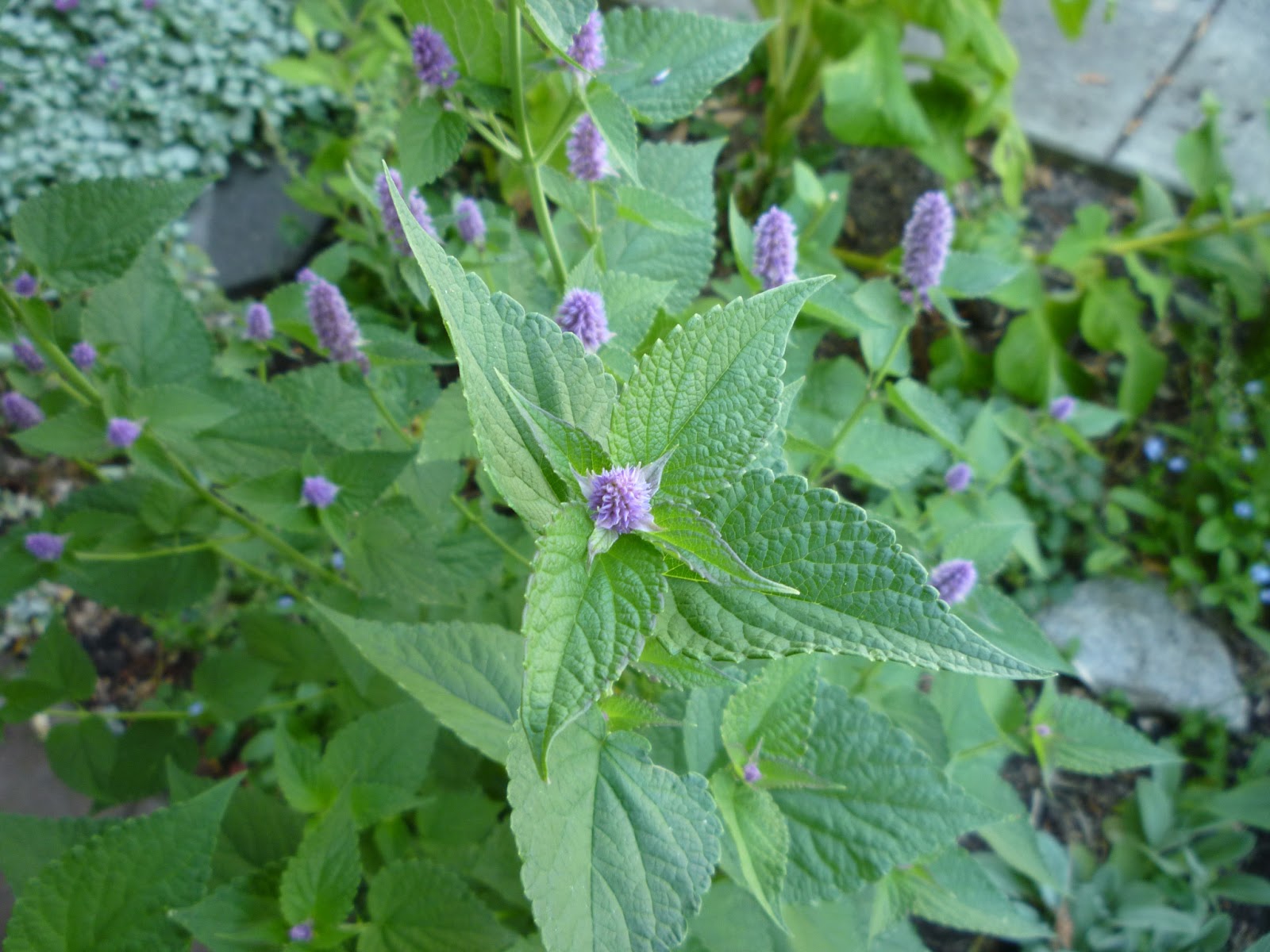
hyssop beginning to flower

Hyssop is blooming in my garden, reminding me of Psalm 51: Thou shalt sprinkle me with hyssop, and I shall be cleansed. Thou shalt wash me, and I shall become whiter than snow. Three years ago seeds must have fallen into the ground from the plant I’d bought; why they waited so long to sprout this spring, I don’t know.

The zinnias are going strong, and now the purple coneflowers are coming on. I got distracted and forgot about them when they were dormant and the foxgloves were dominating that space, and by planting the red zinnias I broke my rule about not having red and magenta-colored flowers together. That could have been a disaster!

But they seem to be getting along o.k. Even when the landscape is not living up to my visions, I’m relaxed out in the garden in the midst of my accomplishments. They are really God’s accomplishments; the little contributions I made could never on their own have created the splendor that is right here in my back yard.

An orange dragonfly posed for a picture.

I have joked that I approach agoraphobia, but that was coming at the truth from the wrong direction. I just love being home and working at home. Until I came home to the Orthodox Church, I dragged my feet even about going to church, much as I loved the people there, and God. And though I will gladly drive and fly all over the country and even the world to see and be with those dear to me, it’s annoying just having to run errands in my town and break my concentration, my focus on home.

It’s not laziness, it’s an attentiveness that encompasses many kinds of mental and physical work. You’ve seen the long lists of things homemakers are called upon to do; well, I have my own intensely personal version of that list, and only God knows all that is on it, what burdens I carry and how light they are here in my realm.

No, I don’t fear going out, I don’t have a phobia of The Marketplace. But when I do go, it is always with the anticipation of feathering my nest with things I will bring back, or with the confidence that I will soon return to the place where I am most alive and productive…and the hope that having accomplished those outside tasks I will have a longish reprieve from distractions, and be able to get on with my best work.

I’m not agoraphobic, I’m domiciliphilic.


What the World Needs Now

A recent confluence of thoughts began with hate and destruction, in a blog post from Fr. George:

When we dream about changing the world, we are expressing our own dissatisfaction with it, and thus our rejection and disdain for it. Can you really change something you hate? Not really. What you really want to do is kill it. We want to destroy the world to build one of our own liking.

To love is to accept things as they are, calling the good as good and the bad as bad, and not needing to change them in order to accept them. The truth is you can only change yourself, and even there we have limits because we were all made in certain ways and some things were not made to change.

Fr. George’s exhortation to love and accept “things as they are” brought to mind this poem by Mary Oliver that I have posted in the past:

MESSENGER

My work is loving the world.
Here the sunflowers, there the hummingbird —
equal seekers of sweetness.
Here the quickening yeast; there the blue plums.
Here the clam deep in the speckled sand.

Are my boots old? Is my coat torn?
Am I no longer young, and still not half-perfect? Let me
keep my mind on what matters,
which is my work,

which is mostly standing still and learning to be astonished.
The phoebe, the delphinium.
The sheep in the pasture, and the pasture.
Which is mostly rejoicing, since all ingredients are here,

which is gratitude, to be given a mind and a heart
and these body-clothes,
a mouth with which to give shouts of joy
to the moth and the wren, to the sleepy dug-up clam,
telling them all, over and over, how it is
that we live forever.

When I pay attention, I can hear that a message is always being sent my way, a choice is set before me every day, and on some days it seems to come every few minutes: Will I receive life, and my life, as a gift, or will I fight against what is handed to me, and try to create my own life and self the way I see fit?

I’m familiar with the teaching from wise church fathers that acceptance is a large part of humility. And when I read this passage from Metropolitan Anthony (from “Meditations on a Theme”) it seemed to go right along with these other expressions I’ve gathered here, on what should be my attitude in this life I’ve been made steward over. Met. Anthony credits St. Theophan as the source of his comments about how the earth can teach us:

Just think about what earth is. It lies there in silence, open, defenseless, vulnerable before the face of the sky. From the sky it receives scorching heat, the sun’s rays, rain, and dew. It also receives what we call fertilizer, that is, manure—everything that we throw into it. And what happens? It brings forth fruit. And the more it bears what we emotionally call humiliation and insult, the more fruit it yields.

Thus, humility means opening up to God perfectly, without any defenses against Him, the action of the Holy Spirit, or the positive image of Christ and His teachings. It means being vulnerable to grace, just as in our sinfulness we are sometimes vulnerable to harm from human hands, from a sharp word, a cruel deed, or mockery. It means giving ourselves over, that it be our own desire that God do with us as He wills. It means accepting everything, opening up; and then giving the Holy Spirit room to win us over.

This week I’m getting ready for a trip to the mountains, to My Lake (see posts with the label cabin). I’ll be getting the garden watered, and in the mountains I’ll be seeing lots of earth and its fruiting forests and wildflowers. I will try to take it all as a reminder to open up and give the Holy Spirit room.