Category Archives: nature

The living enchantment of September.

In addition to several poems that he shares in his recent post about September, including those of Derek Mahon, Howard Nemerov, and Bashō, Stephen Pentz offers this thought:

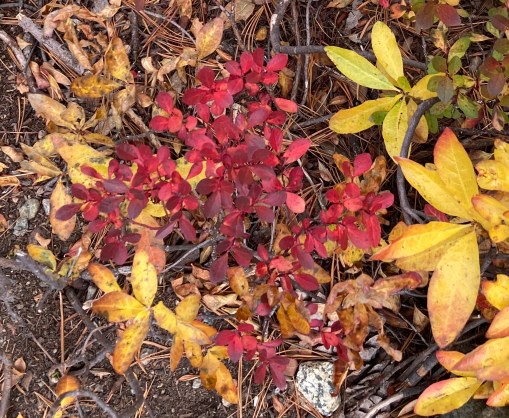
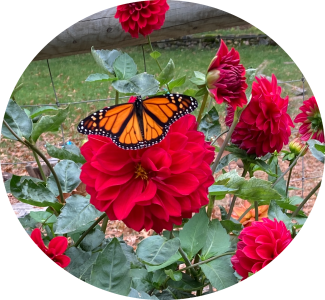
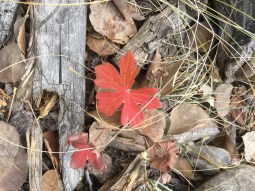
“I have a vague notion of what occurs when ‘the ecliptic and equator cross.’ Something to do with the movement of spheres, I suspect. But I’m reminded of my oft-repeated first principle of poetry: Explanation and explication are the death of poetry. Here is a wider principle I have adopted at this moment: Explanation and explication are the death of enchantment. The enchantment of the World, of course. Mind you, I accept the existence of the ecliptic and the equator. This is not an anti-scientific manifesto. I simply prefer, for instance, a single butterfly or a single leaf, with no explanations attached.”

-Stephen Pentz on his blog, First Known When Lost

Here is one of the poems:

THRESHOLD

When in still air and still in summertime
A leaf has had enough of this, it seems
To make up its mind to go; fine as a sage
Its drifting in detachment down the road.

-Howard Nemerov

I hope you will visit his blog and read the whole loving tribute, including evocative works of art, to the month that is soon to be gone for another year.

Bitter Cherry

I told myself that I did not need to stop for wildflowers on my drive home from the cabin. I have seen plenty of them already to satisfy, on this trip and throughout my life — and I needed to make up for lost time. It always takes longer than I anticipate, to turn off the water, to turn the water heater to pilot, to leave the cabin clean for the next family members who will come. It was midmorning before I locked the door and headed out.

But my self did not listen. Only a few minutes down the hill and she insisted on stopping to notice exactly how tall the Ranger’s Buttons are this year. And then to get close up to the  most brilliant goldenrod ever. And so it went. She wanted to stop by a particular intersection where sneezeweed have been seen before, and they were there again. So she (that is, I) said hello, and remarked on how well they were looking, and blessed them. The gooseberries were so thick and red I could see them without even slowing down, and I wished that I had time, and a big bucket in which to carry some home.

The only plant I stopped for that I think was new to me was this tall shrub in the Rose family called Bitter Cherry or Prunus emarginata. I did stop to admire it and let Seek identify it. When I got home I read more about it. Some people say it is so bitter it is inedible, but others say it is usable for jam, if you add enough sugar. One person was trying to pick branches to decorate a lodge, but the bears had evidently arrived beforehand, and I guess they don’t mind the bitterness. The ones I saw were in their prime; after meeting them, I was content to leave further plant research for another time, but not without taking one post to share their beauty.

I am surrounded by Your heralds.

“Your birds awaken me in the morning, and the murmur of the lake lulls me to sleep in the evening. But it is not the birds that awaken me, nor the lake that lulls me to sleep, but You, O Lord, Master of the voice.

“You lend Your voice to the birds and the midnight murmur to the lake. You have lent a voice to every throat, and have put a story into every creature. I am surrounded by Your heralds, as a student by many teachers, and I listen to them tirelessly from dawn to dusk.

“O Lord, Master of the voice, speak more clearly through your heralds!

“The sun speaks to me about the radiance of Your countenance, and the stars about the harmony of Your being. The sun speaks in one language, and the stars speak in a different language, but all the languages flow out of the same vocal cords. The vocal cords belong to You, and You uttered the first sound that began to tremble in the deafness and formlessness of nothingness, and it broke into countless sounds and heralds, as a thundercloud breaks into rain drops….”

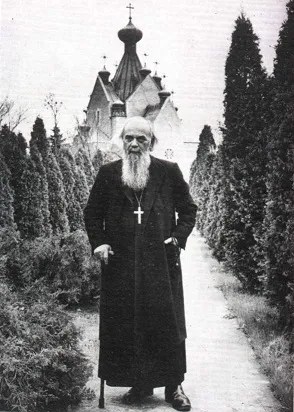
-St. Nikolai Velimirovich, from XXVII, Prayers by the Lake

I am pondering St. Nikolai’s plea, that the Lord speak more clearly… If we can’t understand, isn’t the problem that we are hard of hearing? But maybe it is his way of saying, “I am straining the ears of my heart, Lord, to know You better.”

When I found this particular prayer yesterday, it resonated with my own experience here in the mountains, where so much of my attention is focused on the birds, the clouds, and yes, the stars. After a thunderstorm one evening, I went out and found the sky full of them, declaring the glory of God, in their voices that are deep silence.

One afternoon when I sat on the deck reading, the silence caught my attention. At home in the suburbs, I have learned not to pay attention to all the neighborhood noises, and the freeway sounds that come on the wind from a mile away. Some hours are quieter than others, but if I listen closely, there is always the ticking of a clock, or the cars in the street. When I noticed that forest silence that my ears are not used to, I concentrated hard, to discover what might be in it. And all that I could take in was the pine boughs moving in the breeze.

This poem from St. Nikolai’s collection is not really about the voice of God in silence. He goes on past what I quoted to talk about words and stories. It has truly been lovely for me to be slowed down by having fewer matters to attend to; to tune in to the “stories,” as it were, in the activities of the animals here, and to study a few plants. I saw another new-to-me plant not far from lakeside, called an American Parsley Fern:

I could watch the animals all day, I think, from my first-rate viewing perch. Chickadees are plentiful, and a junco made an appearance. I’m thankful that my sister suggested that I bring up some food that the chipmunks would like. This morning two chipmunks came to the slider and ran up and down, peering in with their paws against the glass. Do they know that the seeds come from the other side?

What I have been putting out for them is a mix of seeds and peanuts, and now a gang of Steller’s Jays have come for a share. As many as four at a time were interested.

They are truly handsome birds, with their shiny royal blue feathers. Of course they are greedy, and don’t have pretty voices, but they belong to this place, as it belongs to them. I’m happy that our stories overlapped for a short time, and wouldn’t mind if they did wake me in the mornings — but when I wake everything is still very quiet, and the sky that’s visible between the trees outside my window is turning from gray to pale blue.

In the weeds and happy about it.

On my way up the mountain earlier in the week I came across several plants whose common names include the word weed: Two tarweeds and two vinegarweeds. They all got my attention by the way they added color to the drying-out landscape of late summer.

When I was still only approaching the foothills, I saw bluish plants dotting the yellow-brown expanse stretching out away from the road, and it didn’t look like anything I had ever noticed before.

It may be that in the past they were not as tall and visible from the road, and that this year’s extra rainfall helped Trichostema lanceolatum to thrive. It was hard to get a picture of it without my socks attracting various stickers waiting in ambush, but this closeup on Wikipedia shows what a graceful flower form is hidden in the overall unimpressive bush:

“The plant is an important pollen source for native bees and other insects. When a pollinating insect alights on the lower lobes of the corolla, and inserts its mouth parts into the nectar-containing lower section of the same tube, the narrow corolla portion above is straightened and snaps rapidly downward brushing pollen onto the insect’s back.

“The volatile oils make it unpalatable to grazing and foraging animals.

“The indigenous peoples of California used this as a traditional medicinal plant, as a cold and fever remedy, a pain reliever, and a flea insect repellent.”

The two species of tarweeds caught my eye a little further on. I think it was mostly Fitch’s Tarweed, Centromadia fitchii, that had turned the slopes and flatlands gold in large swaths on either side of the highway.

But the more photogenic plant I managed to get close to was Heermann’s Tarweed (according to my Seek app), Holocarpha heermannii. Both of these plants are in the Aster Family, but different genera. A lot of tarweeds are in the Madia Family, but it seems that Heermann’s is irregular.

The second plant called vinegarweed grows along the roads in the High-er Sierra. When I first met it in 2009, it didn’t occur to me to taste it; maybe if I had, the idea of vinegar would have been uppermost? But my mind immediately wanted to call it Purple Haze, or Lavender Mist.

It typically gets my attention as I come  around a curve in the road, floating as a long pastel smudge on the shoulder. That first sighting was long before I had any kind of nature identification app, and when I eventually found someone who could tell me what it was (Sierra Vinegarweed or Lessingia leptoclada), that amateur botanist told me that if it had been up to her, she’d have named it Lavender Groundsmoke. The hope of encountering these flowers again would alone be enough to bring me up to the mountains every summer.

The last plant I will share has no connections to vinegar or tar; it is the favorite Mountain Pride, or Newberry’s Penstemon. In an average year, its flowers would have faded to brown by now, and in fact most of them have. But the snow hung on so late here this summer, till the end of July, that the earliest wildflowers had to wait at least a couple of weeks longer to emerge. I was happy to find one bloom of Mountain Pride still fresh and bright. These plants that sit overlooking the lake are a landmark for me, announcing at the end of my journey to the cabin, You have arrived!